The Impact of Digital Innovation on Modern Dental Care
The transformation of dentistry into an efficient and precise science has come as a result of digital technologies, artificial intelligence, and high-precision imaging. It is true that Digital dentistry Dubai has revolutionized the way dentists improve diagnosis, treatment planning, and treatment outcomes. Patients experience a seamless continuum of care through a fully digital treatment workflow at our clinic. The process of treatment begins with a fully digital consult and concludes with a full restoration. By integrating modern technology, AI-driven diagnostic tools, and years of clinical expertise, we give our patients care that significantly gives safety, accuracy, and efficiency.

The Digital Dentistry Revolution
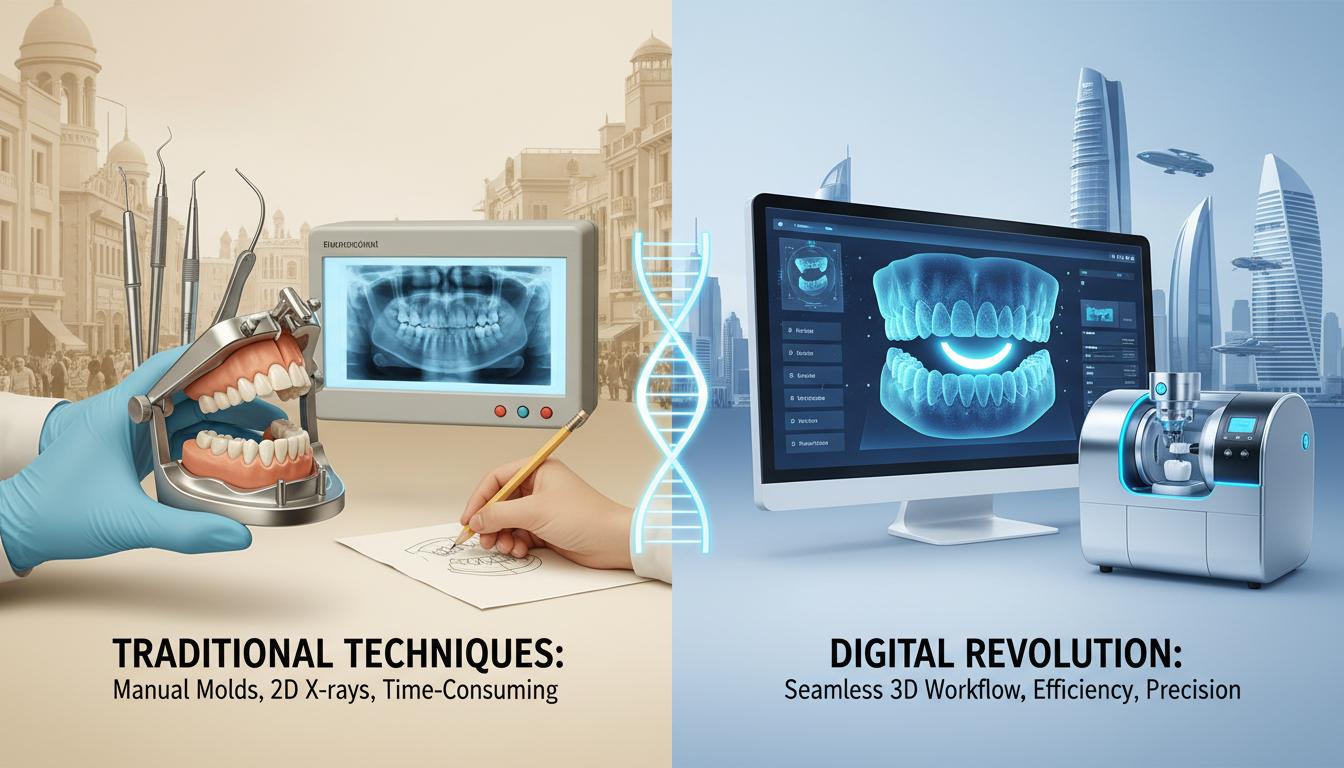
Earlier dental techniques relied on occlusal analysis, multidimensional imaging, clinical examination and modern-day manual and automated systems. Although the traditional systems could provide the closure desired from a dental professional, the systems and, more importantly, the predicted reality that technologically advanced systems can provide were fundamentally different.
As a result, present-day digital dentistry in Dubai has the ability to optimally visualize three-dimensional structures, quickly analyze and assess the appropriate information from the vast repository of data, and most importantly, provide and implement a targeted and interactive treatment protocol, digitally and personalized, for each individual patient.
This digital revolution has given rise to dentistry’s new reality. This paradigm shift has witnessed a remarkable improvement of treatments, a significant shortening of procedures, and a tremendous increase in the comfort and satisfaction of the patients.
3D Diagnostics Integrating CBCT Technology
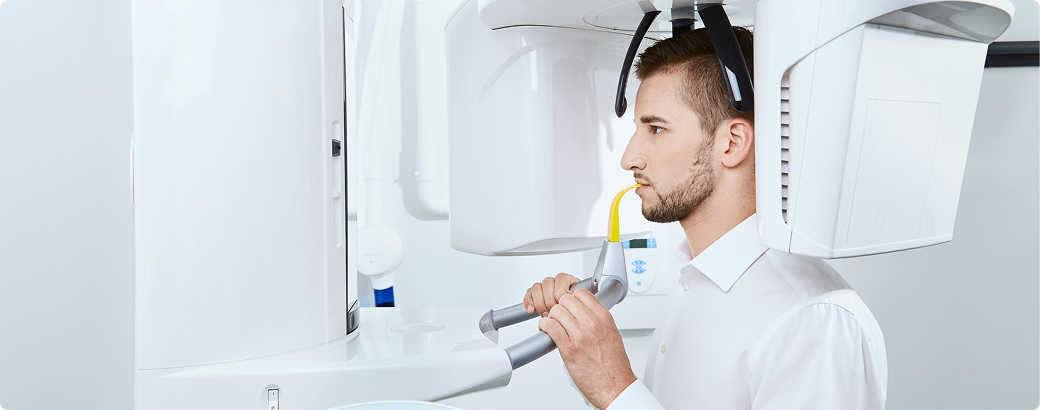
CBCT dental scan Dubai has made impressive strides over the years. One significant step forward has been the development of cone-beam computed tomography (CBCT) and its ability to provide high-resolution and three-dimensional images of the oral and maxillofacial structures.
CBCT provides a complete three-dimensional view of nerves, jawbones, and surrounding structures. More than traditional two-dimensional radiographs, this level of visualization supports the dental practitioner in the complete analysis of the structures in complicated cases.
Advantages of 3D CBCT Imaging
- Precise Dental Implant Planning Dubai: Restorative dentistry with dental implants is a delicate procedure. Careful planning, with the help of 3D dental imaging Dubai, is necessary to provide the optimum position of the implant and avoid critical structures such as nerves and sinuses. This imaging technique helps in gaining high confidence/being reassured.
- Safety of the Procedures: Successful dental procedures require careful planning and accurate imaging. 3D imaging helps in identifying and mapping the pathways of the nerves and helps in the uncovering of the hidden bone/abnormalities so as to avoid unnecessary cause for liability.
- Less Invasive Treatment Techniques: Due to the great detail that is provided, surgical approaches require less time. More tissues can be preserved, and the recovery time of the patient will be reduced.
- Lower Radiation Exposure: For modern CBCT systems, mitigation of exposure to radiation, while still producing quality images, is a design priority. Also, because of its ability to capture volumetric data, CBCT dental scan Dubai offers much lower radiation doses than traditional CT scans while still providing detailed diagnostic information.
AI in Dental Diagnostics
AI is transforming many industries, such as healthcare, and the world of dentistry is no different. In the field of practice, dentists use AI to support diagnostic systems to analyze radiographs and data from digital scans, which assist in the early detection of problems as they come.
In addition, AI dental diagnosis Dubai supports diagnostic systems that use machine learning and have been trained on thousands of images. AI can see and detect things that the average human would miss in patient data.
The Use Of AI In Dental Diagnostics
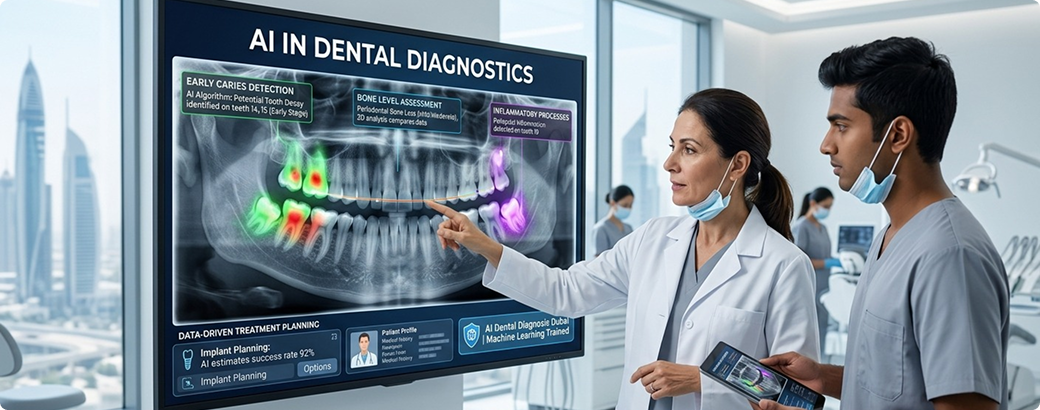
- The Early Diagnosis of Caries: One of the earliest and most popular problems in the world of dental issues is tooth decay. AI is able to analyze digital radiographs to identify issues of caries. When decay is identified early, patients can receive treatment that is less invasive.
- Assessment Of Bone Levels: In the evaluation and diagnosis of periodontitis, the sustainability of the teeth, the bone level, and its variations are of particular importance. AI can analyze and present variations in bone levels using clinical data and its changes, which helps the clinician in his/her diagnosis.
- Identification of Inflammatory Processes: Detecting inflammation in the jawbone or adjacent tissues can be challenging with conventional diagnostics. The AI analysis offers the potential for pinpointing earlier and more clinically effective processes to intervene or treat inflammation/infection.
- Data-Driven Treatment Planning: AI systems can support the construction of treatment pathways based on evidence with the analysis of extensive patient records. Such systems also aid in the assessment of various treatment options and the selection of the best treatment paradigms for the patient.
Humans Are Still Essential
AI will not replace trained professionals, and their intelligence and judgement will still be essential. AI will be helpful in aiding professionals with supportive tools to help with decision-making and learning to better perform their jobs.
In the clinic, the dental professionals finalize and verify all the AI completed imaging. AI helps them by pulling examples, imaging, and showing them a list, but it is still our clinical experts who decide everything.
Having both AI and professionals helps to keep safety, quality, and care at the highest level.
Completely Digitized Treatment Process
A digital process is good for both the dentist and the patient. Each point is designed for optimal efficiency and precision, from the digital consultation to the final restoration.
Instead of using traditional molds, which can be uncomfortable for patients, the dentist can use digital molds that are faster and better for the patient. The dentist can use software to make restorations like crown and bridge implants.
A digital process is completed faster, and it decreases the number of appointments it takes, and the quality of the final restoration is improved.
Increase Experience for Patients
The advancements in high-tech dentistry enhance the experiences of the patients as well as the practitioners.
With the use of digital models and 3D images, patients can better understand their conditions and the possible treatment options.
Digital technologies help minimize procedure-associated discomfort and reduce recovery periods. Patients benefit from faster, less stressful, and less invasive procedures.
The Future of Dentistry
The first step is the use of digital technologies and artificial intelligence, and the potential for further development is limitless, as it can encompass every branch of medicine.
The primary advantages of the technologies are that they can provide AI-based diagnostics, higher-quality technology in recording digital images, and more refined robot-assisted surgery.
The primary objective of the clinics is to provide the operating technologies to improve the existing dental health services.
Conclusion
AI dental diagnosis Dubai clinics offer safe, precise, and efficient dental services such as AI-supported diagnostics and advanced technologies like 3D imaging.
At our clinic, a completely digital workflow means personalized patient care is digitally optimized by the clinic, from the first diagnosis to the last restoration. We use technology, expertise, and patient-centered care to redefine modern dentistry. A single appointment is typically required with a digital restoration and improved esthetics.