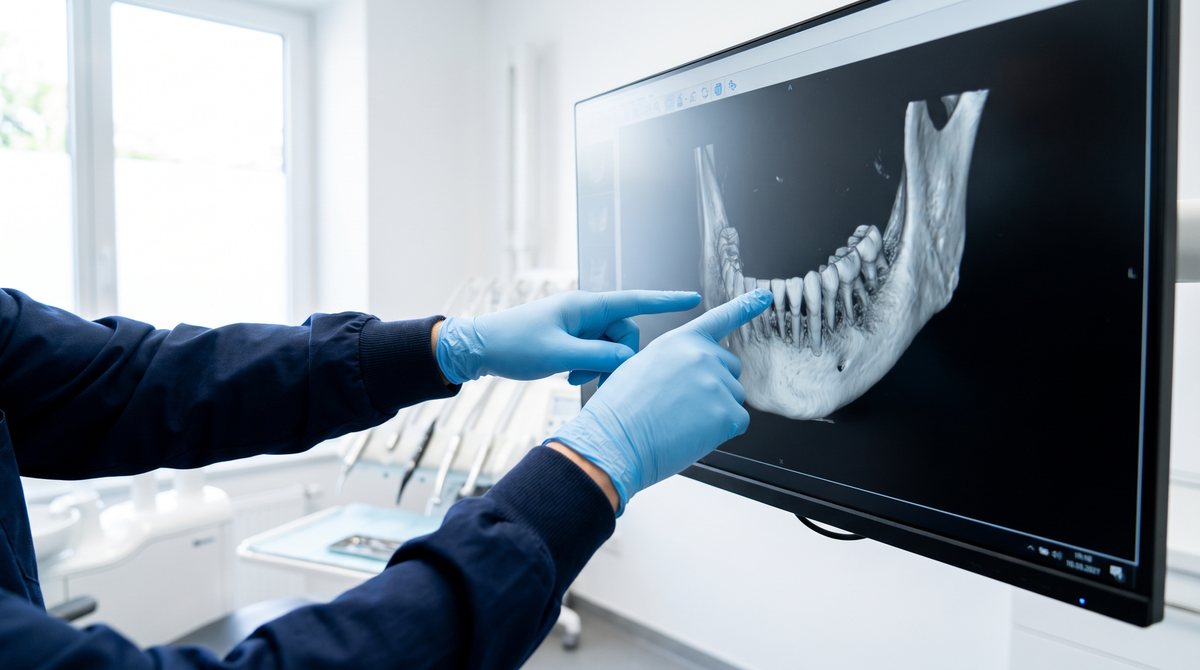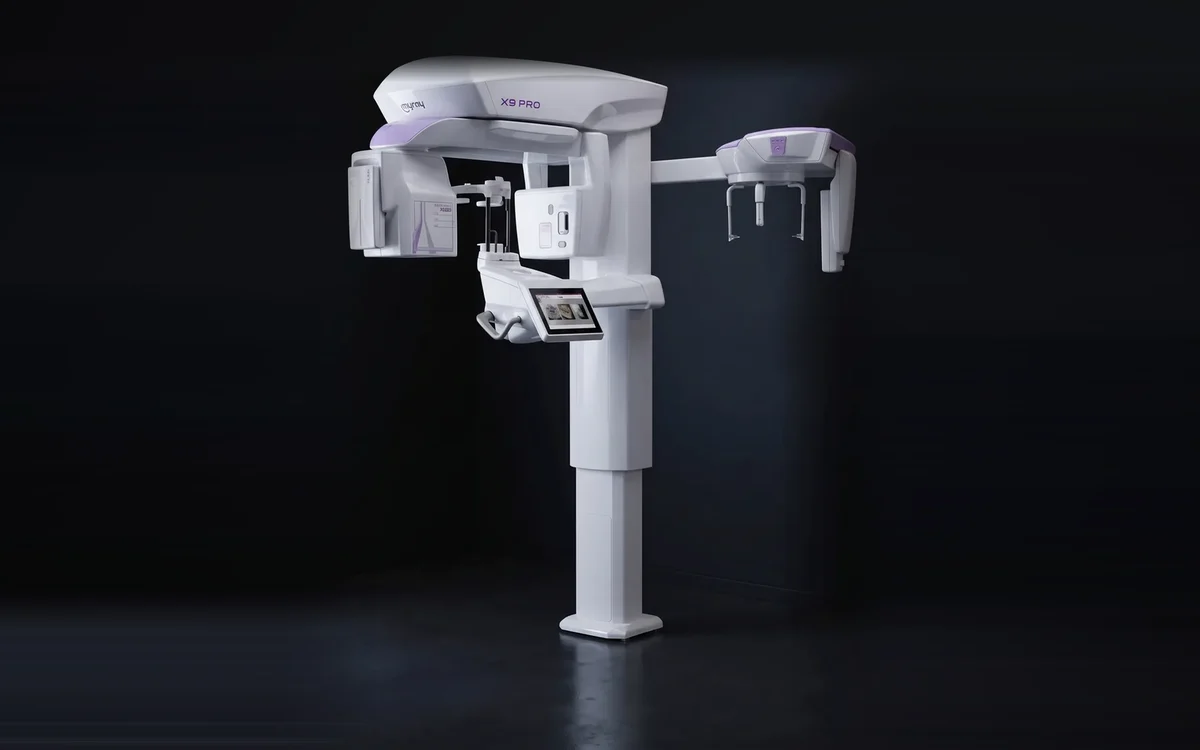
MyRay Hyperion X9 Pro
Cone beam scan for bone and nerve before planning.
Full arch on four or more implants
When many or all teeth are missing, a fixed bridge on four or more implants can be an option. After the examination we explain which solution suits you, how the treatment works and what it costs.
Implant surgery by Dr. Ayse Yilmaz Bastug, oral and maxillofacial surgeon. Prosthodontic planning and restorations by Dr. Mohammad Shaker, DHA Specialist Prosthodontist.
Patient guide
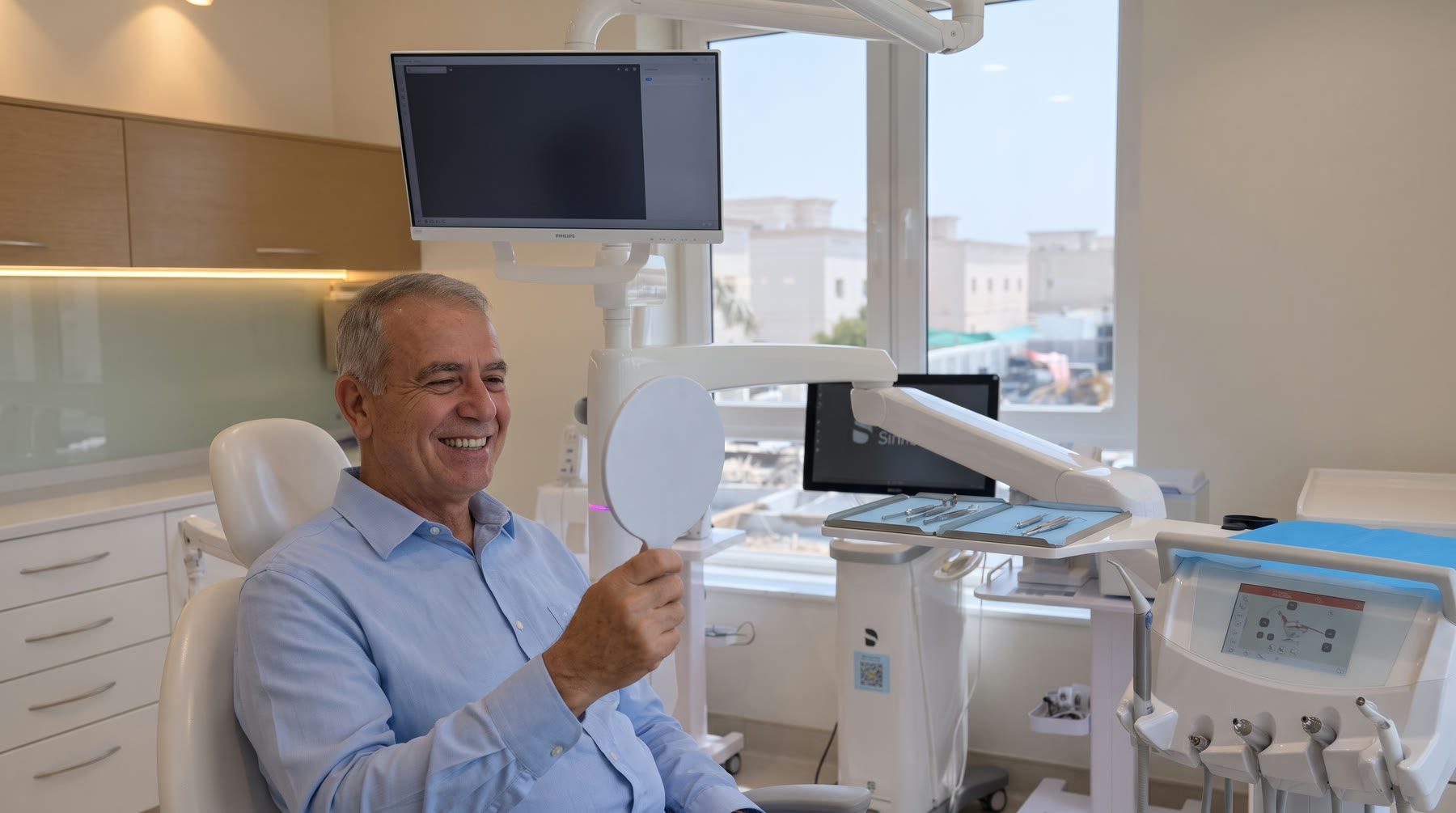
All-on-4 is a way to replace all the teeth in one jaw with a fixed bridge that is screwed onto four implants. You do not take it out at night, there is no plate over the palate and no adhesive, and you clean it much like natural teeth.
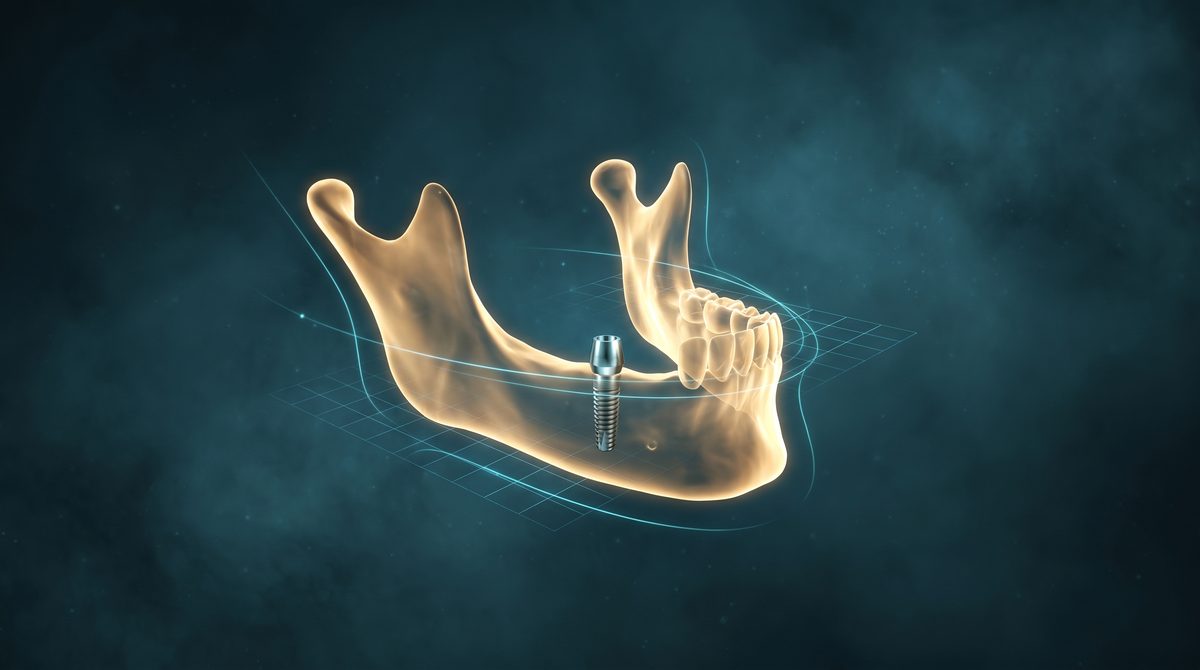
The idea behind the concept is simple. The two front implants stand upright, and the two back implants are tilted. Tilting lets them use the stronger bone towards the front of the jaw and avoid the sinus in the upper jaw and the nerve in the lower jaw. In many patients this avoids extensive bone grafting.
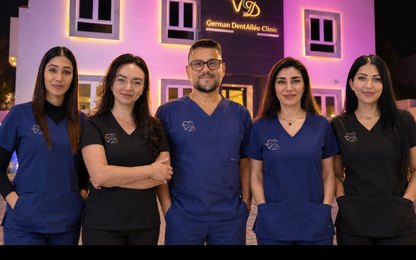
At German DentAllée Clinic in Jumeirah 1, a full arch is treated as a prosthodontic decision first. Dr. Mohammad Shaker, DHA Specialist Prosthodontist, plans the new teeth: their length, their position under the lip, the bite, speech and how you will clean them. Dr. Ayse Yilmaz Bastug, DHA specialist in oral and maxillofacial surgery with implantology privileges, then places the implants where that plan needs them.
This page explains who All-on-4 is suitable for, how the treatment day and the months after it look, the difference between the temporary and the final bridge, what affects the cost, and how to keep a full arch healthy for many years.
Is this for you?
Step by step
Bone, nerves and sinuses are assessed, with a 3D scan when it is medically needed. You hear honestly whether All-on-4 suits your jaw.
The position of the four implants and the shape of the new teeth are planned first. You receive the full plan with all costs before anything starts.
Our oral and maxillofacial surgeon removes failing teeth and places the implants under local anaesthetic.
Where the implants are stable enough, a fixed temporary bridge is attached soon after surgery, so you do not leave without teeth.
After healing, Dr. Mohammad makes the final bridge from a digital scan and fixes it on the implants.
That depends on what your teeth need, so a price without an examination would not be honest. After the examination you receive a written treatment plan with all costs, before anything starts. Payment and insurance
What changes the cost
The surgery can cause swelling and discomfort, and how many implants you need depends on your bone. Not every jaw is suited to a fixed bridge, which the examination shows.
Your next step
Or call 800 433 368 (toll free) · Sat to Thu 9:00 to 18:00 · Fri closed
All-on-4 is meant for people who have lost all or most teeth in one jaw, or whose remaining teeth are failing and cannot be saved with reasonable effort. Typical situations are a full denture that moves when you eat, many loose teeth after years of gum disease, or a mouth full of old bridges and crowns that keep breaking.
It is not the right solution for everyone. If several healthy teeth can still be kept, keeping them is usually better, and a smaller treatment such as single implants, a bridge or a partial denture may be enough. Tooth structure is precious, and we do not remove healthy teeth to make a full arch possible.
Enough bone in the front part of the jaw to hold four implants firmly, and a safe distance to the sinus and nerve for the tilted implants. Where bone is very thin, more implants, bone grafting or a different design may be needed. Some patients are better served with six implants, which is planned the same way.
Diabetes should be well controlled. Smoking increases the risk of complications and is discussed openly. Some bone medications and radiotherapy of the jaw need careful planning with your doctor. None of this is decided on a phone call: it is decided at the examination.
A full arch changes how your face looks in profile, how your lips are supported and how you pronounce certain sounds. That is why planning starts with the teeth, not with the implants.
At the first appointments your face, lips and current teeth or denture are recorded. When it is clinically needed, a cone beam scan on the MyRay Hyperion X9 Pro shows bone height, bone width, the sinuses and the nerve in 3D. One scan takes 6.4 seconds. Dr. Mohammad then sets up the new teeth digitally in the right position, and the implant positions are chosen underneath them.
Where it helps, a surgical guide is made from this plan, which helps transfer the planned implant positions to the mouth. Small adjustments during surgery can still be necessary. You see the plan on screen and can ask about every detail: how long the teeth will look, how the smile line will be, how much gum colour the bridge will show.
Before anything is booked, you receive a written treatment plan with every step, the expected time frame and all costs. If both jaws are treated, the plan explains whether they are done together or one after the other. Our full mouth rehabilitation page explains how a larger plan is put together.
Surgery day is longer than a normal appointment. Remaining teeth that cannot be saved are removed, inflamed tissue is cleaned out and the four implants are placed. Dr. Ayse performs the surgery under local anaesthetic. Nitrous oxide is available if you are anxious, and the anaesthetic can be given with the Wand, a computer controlled system that works slowly and evenly. You hear in detail how the day is organised in advance.
Local anaesthetic is used during surgery. You may feel pressure, and the long sitting can be tiring. How much discomfort you have afterwards varies from person to person. You should plan the rest of the day and the following one or two days calmly at home, and come with someone who can take you home. Many patients plan a few days off work, depending on the extent of the surgery.
Where the implants are firm enough in the bone, a fixed temporary bridge is attached soon after surgery, so you do not leave the clinic without teeth. Whether this is possible depends on the stability of the implants on the day and on the overall clinical assessment. If a fixed temporary bridge cannot be attached, your plan explains the alternative for the healing phase. The temporary bridge is lighter and is not made for hard food: during healing you eat soft.
After surgery the implants grow into the bone over several months. The gums also change shape as the extraction sockets heal. That is why the first bridge is a temporary one: it is adjusted while your mouth settles.
Once healing is complete, Dr. Mohammad records the implant positions with a digital scan, checks the bite and the look of the teeth with you, and the final bridge is made. Larger work like this is produced by our partner laboratory, Deutsche Technik DL in JLT, Dubai. The final bridge is stronger than the temporary one and is designed to be cleaned from underneath. Its material is chosen in your plan according to your bite, the space and how you clean, and the plan explains how it is maintained and repaired.
The final bridge is screwed onto the implants. You cannot take it out yourself, but the clinic can remove it when this is clinically needed. This is an advantage in the long run: the bridge can be cleaned thoroughly, checked and, if needed, repaired without new surgery. Over the years, parts of the bridge or the implant components may need repair or replacement.
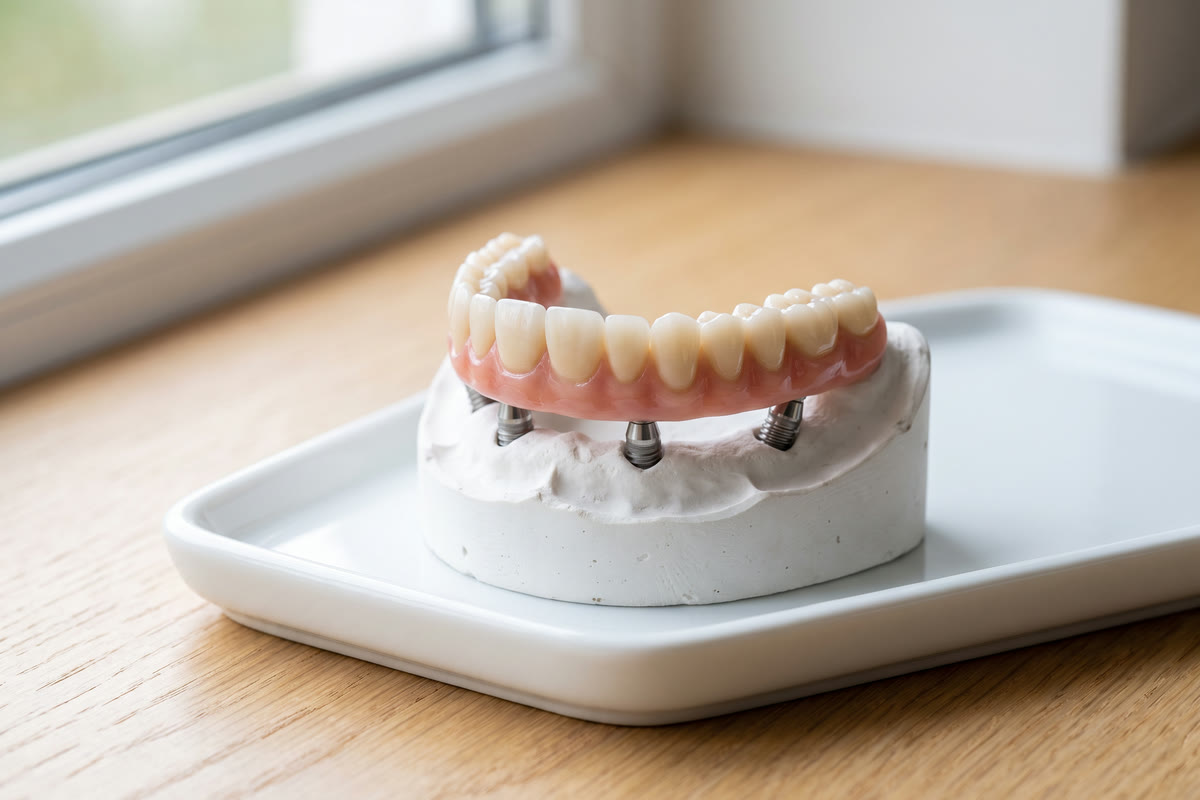
Many patients notice the difference at the dinner table first. A fixed bridge does not move when you bite, so you can chew foods again that were difficult with a loose denture. Taste is often more natural because the palate is not covered. Speech can feel different for a few days while your tongue gets used to the new shape.
Cleaning is a daily routine, not a big task. You brush the bridge like natural teeth, clean underneath it with a water flosser or special floss, and come for professional cleaning with Afra, our DHA licensed dental hygienist, at intervals that are set for you. During those visits the implants are checked. The bridge is only taken off when it is clinically needed, for example for deposits you cannot reach, inflammation or a mechanical problem.
If you grind your teeth at night, a night guard can help reduce the risk of damage to the bridge. Night grinding is one of the most common reasons why full arch bridges chip. More on our jaw and TMJ page.
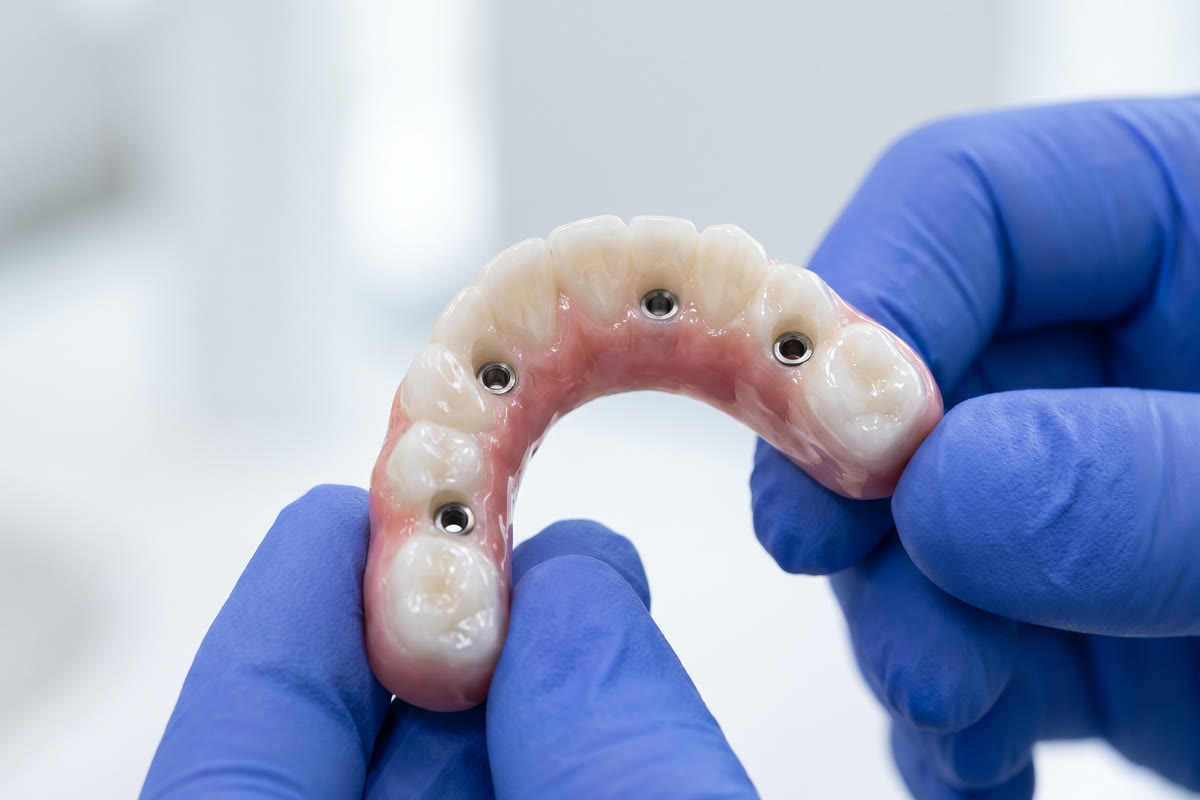
A full fixed bridge is one option among several, and an honest plan compares them.
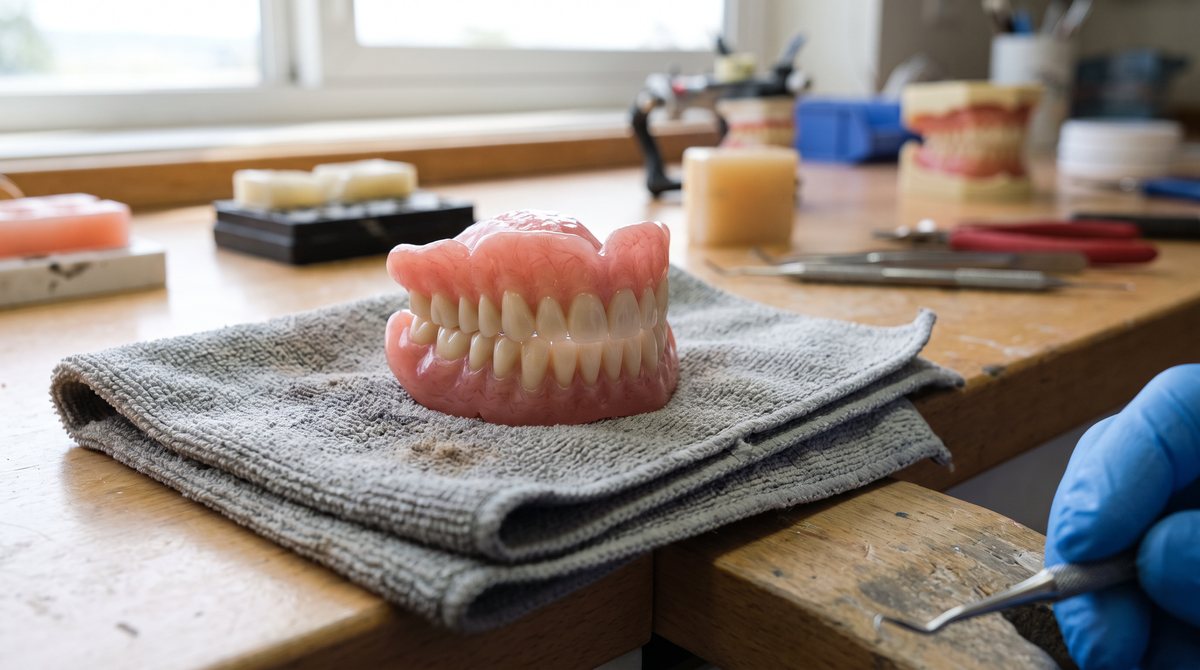
In the lower jaw, two or more implants can hold a removable denture that clicks into place. In the upper jaw usually at least four are needed, depending on the design and the bone. It costs less than a fixed bridge and is easier to clean, but you take it out at night. It is described on our dentures page.
Without surgery. A well made denture can work well, especially in the upper jaw. In the lower jaw, hold is often the main problem.
If a few strong teeth remain, a telescopic denture or single implants combined with your own teeth can be a good solution.
Where bone allows and the bite is strong, five or six implants can share the load. Which number is right is decided after assessing the scan, your bite and your health.
Timeline
Examination, photos, a 3D scan when clinically needed, and discussion of your wishes.
Teeth set up digitally, implants planned underneath. Written plan with all costs.
Extractions where needed, four implants placed, fixed temporary bridge attached where the implants are stable enough.
Swelling and bruising settle. Soft food only. Check-ups and stitches removed.
Implants heal into the bone, gums settle. The temporary bridge is adjusted if needed. Bone grafting or slower healing can make this phase longer.
Digital scan, try-in, final bridge fixed on the implants.
Professional cleaning and checks at intervals set for you. The bridge is removed by the clinic only when it is clinically needed.
Technology
Cone beam scan for bone and nerve before planning.
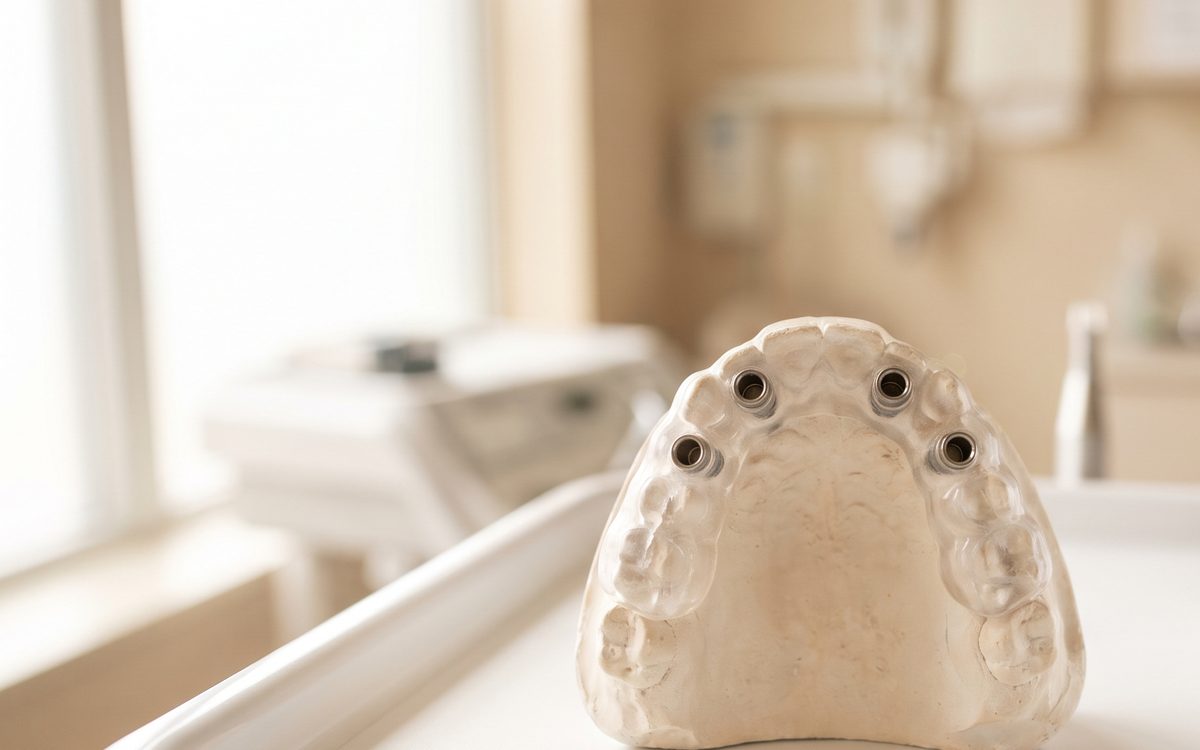
A surgical guide helps transfer the 3D plan to the mouth.
The final bridge is designed from a scan, not from paste.
Myth or fact
MythAll-on-4 means everything is done in one day.
FactSurgery and, where the implants are stable enough, a fixed temporary bridge can happen in one day. The final bridge follows after several months of healing.
MythFour implants are not enough for a whole jaw.
FactFor many jaws four well positioned implants carry a full bridge. Where the bite or bone needs more, five or six are planned.
MythYou need lots of bone grafting first.
FactTilting the back implants often avoids larger grafting. The 3D scan shows whether this works for you.
MythFixed teeth cannot be cleaned properly.
FactThe bridge is designed to be cleaned underneath, and the clinic can remove it when this is needed.
More answers
Tap a question to open the answer. Anything else, ask us on WhatsApp.
A full arch treatment is a larger surgery, and it is right that you think about it carefully. Results can vary from person to person. These are the main points we discuss with every patient.
Three ways to replace all teeth in one jaw. Each has its place.
| All-on-4 fixed bridge | Implant retained denture | Full denture | |
|---|---|---|---|
| Fixed or removable | Fixed, only the clinic removes it | Removable, clicks onto implants | Removable |
| Palate covered (upper jaw) | No | Often less than a full denture | Yes |
| Implants | Usually four, sometimes more | Two or more in the lower jaw, usually at least four in the upper jaw | None |
| Chewing | Close to natural teeth | Much more stable than a full denture | Limited, especially in the lower jaw |
| Cleaning | Brush plus water flosser, regular professional cleaning | Taken out and cleaned, implants brushed | Taken out and cleaned |
| Surgery | Yes, one longer session | Yes, often less extensive depending on the case | No |
| Cost level | Highest of the three | Medium | Lowest |
People who have lost all or most teeth in one jaw, or whose remaining teeth cannot be saved, and who want fixed teeth instead of a removable denture. Whether it suits you is decided after the examination, the imaging that is medically needed, your bite and your general health.
Often yes, because the back implants can be tilted to avoid the sinus and the nerve. The examination and imaging show what your jaw allows.
Where the implants are stable enough, a fixed temporary bridge is attached soon after surgery. Your plan tells you what to expect.
The surgery is done under local anaesthetic, with nitrous oxide if you wish. Afterwards there is swelling and soreness for several days, managed with painkillers. How much discomfort you have varies from person to person.
Surgery and the temporary bridge in one day where possible, then several months of healing before the final bridge. Your plan includes a time frame.
It depends on one or both jaws, the number of implants, extractions, bone grafting and the bridge material. After the examination and imaging you receive a written plan with all costs. We do not quote prices without an examination.
Yes. Cash, card, bank transfer, or instalments with Tabby or Tamara. We do not bill insurers directly, but you receive the documents you need to submit a claim. Whether anything is reimbursed depends on your policy and may need preauthorisation, so please check with your insurer first.
The number of implants. Six implants share the load across more points, which can help with a strong bite or softer bone. The right number is decided after assessing the 3D scan, your bite and your health.
Like natural teeth, plus a water flosser and regular professional cleaning with our hygienist.
No, it is screwed onto the implants. The clinic can remove it when this is clinically needed, for example for cleaning, checks or repairs.
With good care and regular checks, many years. The bridge can be removed by the clinic when needed, and individual parts can be repaired or replaced.
Soft food for several weeks while the implants heal, then gradually firmer food once the final bridge is in. Your dentist tells you which foods are suitable during healing.
Dr. Ayse Yilmaz Bastug places the implants. Dr. Mohammad plans the teeth and makes the temporary and final bridge.
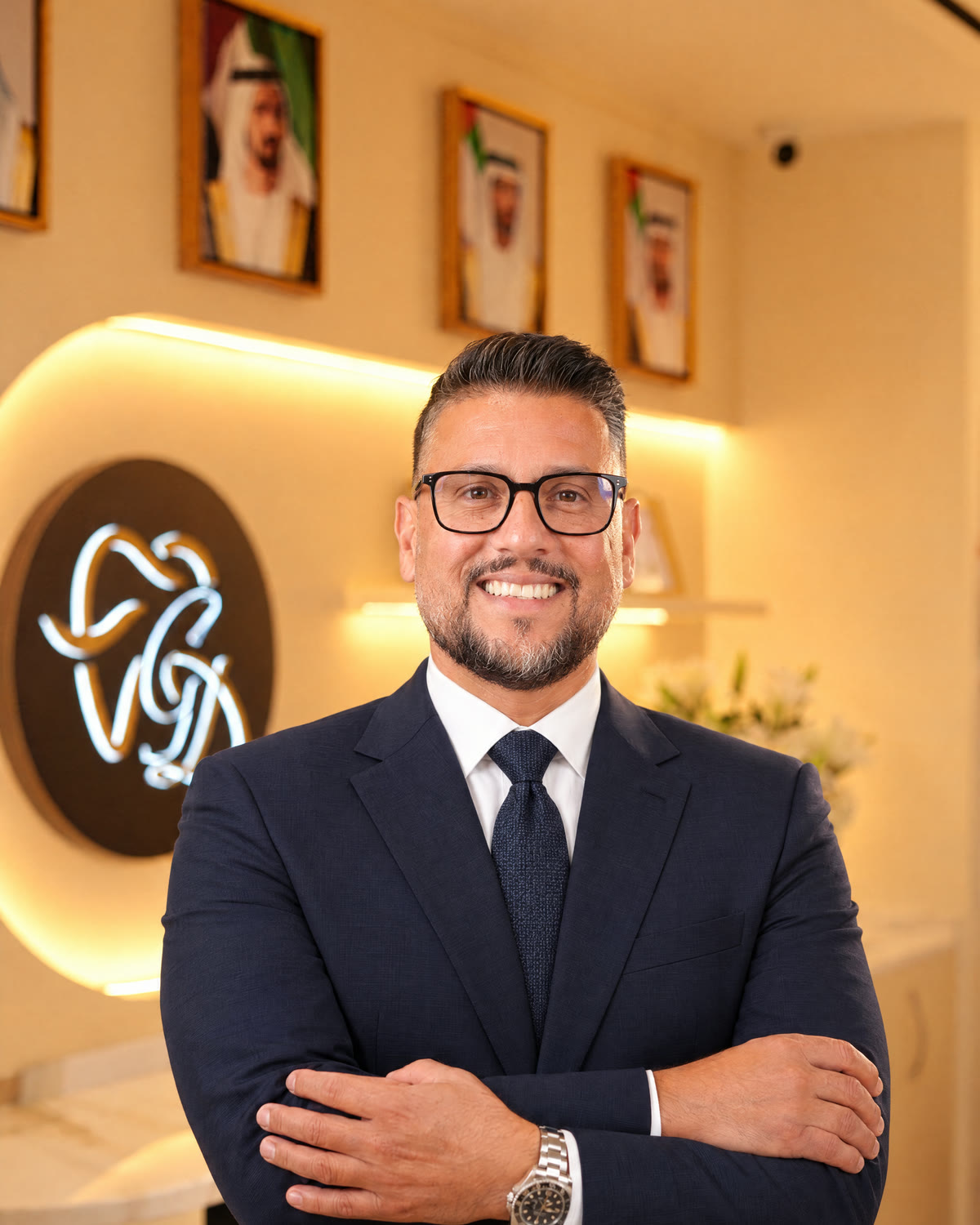
Why with Dr. Mohammad Shaker
A full arch is a prosthodontic decision first: bite, lip support, speech and cleaning. Dr. Mohammad plans the teeth, Dr. Ayse Yilmaz Bastug places the implants. Two specialists, one plan.
Dr. med. dent. · M.Sc. Prosthodontics · DHA Specialist Prosthodontist · Specialist Senior Dentistry (GER 🇩🇪)
Meet Dr. Mohammad ShakerAlso at the clinic
You are welcome
One message is enough. No forms, no call centre. You write, the clinic answers in Arabic, English or German.
Villa 21B, La Mer · Jumeirah 1 · Dubai
Sat to Thu 9:00 to 18:00 · Fri closed