Implant retained dentures
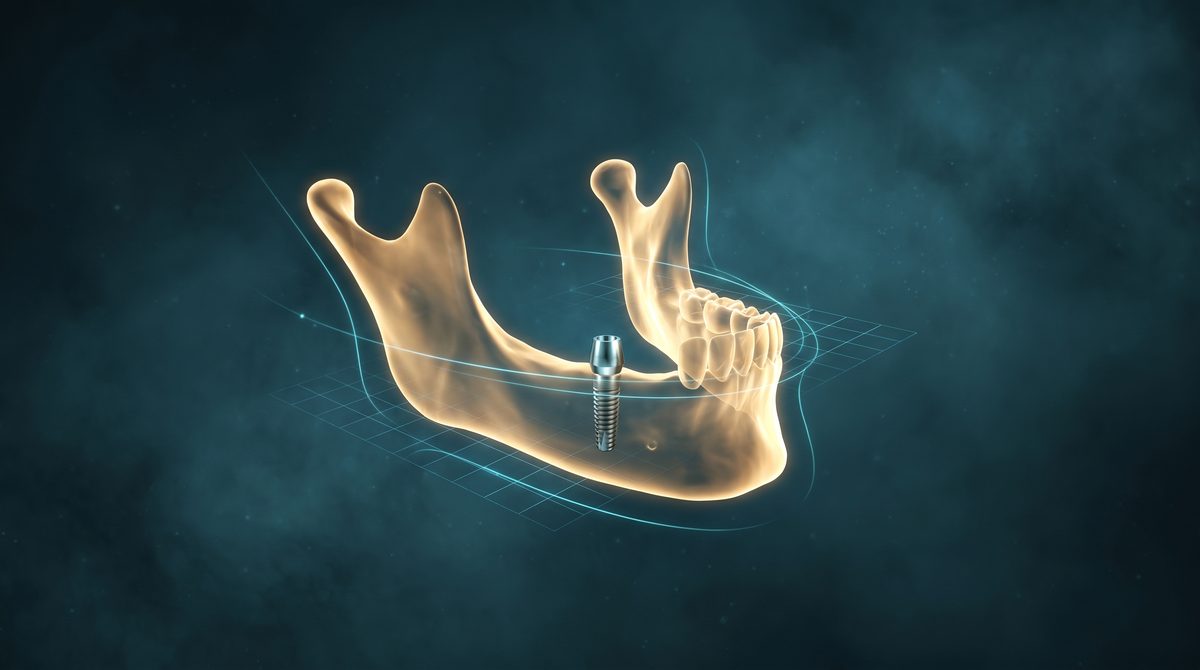
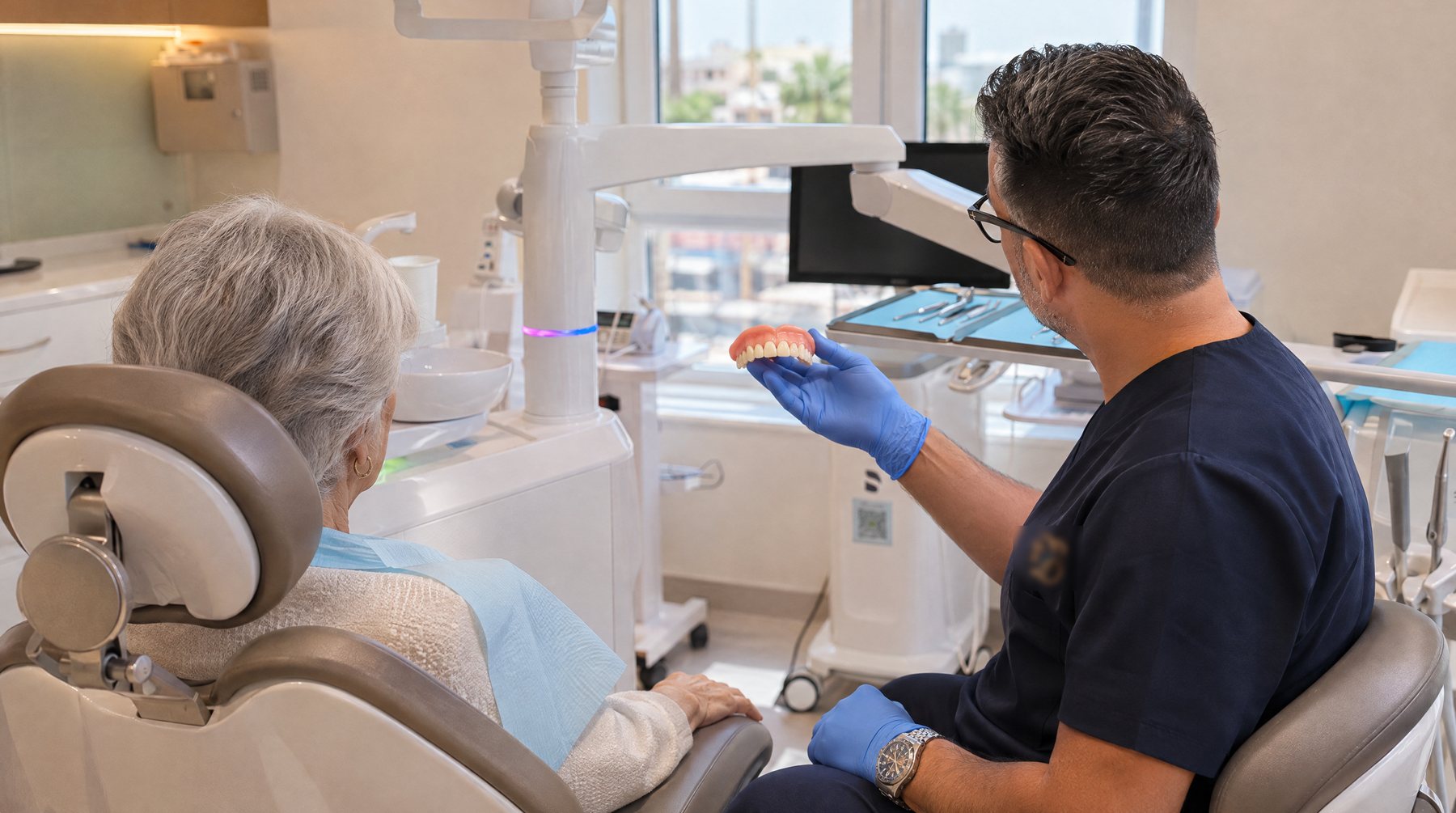
Two to four implants can hold the denture more firmly.


Senior Dentistry (GER 🇩🇪) · DGAZ
Our care takes into account the medication, general health, mobility and individual needs of older patients. Dr. Mohammad Shaker has many years of academic and practical experience in this field.
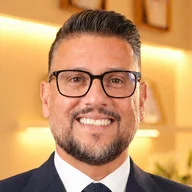 With Dr. Mohammad Shaker.
Patient guide
Senior dentistry in Dubai, also called geriatric dentistry, is dental care planned around the needs of older people: several medications, chronic illness, dentures, reduced mobility or energy, and sometimes memory problems. The goal is not perfect teeth at any cost, but teeth and dentures that let you eat, speak and smile comfortably, with treatment that fits your health and your daily life.
It is the field of Dr. Mohammad Shaker’s doctorate. In 2007 he completed his thesis on the dental care of nursing home residents in Saarland, Germany, published further research on dental care in nursing homes in 2014, and in 2012 he was certified by the German Society for Senior Dentistry (DGAZ). He is a DHA Specialist Prosthodontist and Specialist Senior Dentistry (GER 🇩🇪). Since 2009 he has trained nursing staff in oral care for older people.
At German DentAllée Clinic in Jumeirah 1, the clinic is on the ground floor with step free access, an accessible toilet and its own parking. Families are welcome in the room. This guide explains what changes in the mouth with age, how dentures can be made to hold, how treatment is planned around medication, and what we offer for patients who can no longer come to the clinic.
Is this for you?
Step by step
Medical history, medication and wishes. The family is welcome.
Everything that needs doing, in a sensible order, with costs before anything starts.
Treatment split into appointments that fit energy and mobility.
From relining a denture to implants that hold it in place.
Regular checks so small problems stay small.
That depends on what your teeth need, so a price without an examination would not be honest. After the examination you receive a written treatment plan with all costs, before anything starts. Payment and insurance
What changes the cost
Medication such as blood thinners and some conditions change how a treatment is planned. We check this with you, and with your doctor if needed, before we start.
Your next step
Or call 800 433 368 (toll free) · Sat to Thu 9:00 to 18:00 · Fri closed
Teeth can last a lifetime, and more people keep their own teeth into old age than ever before. That is good news, but it brings new challenges. Many older patients have a mouth full of crowns, bridges, fillings and implants from different decades, and each needs care.
Many common medications, for blood pressure, depression, allergies or sleep, reduce saliva. Saliva protects teeth, so a dry mouth raises the risk of decay sharply, makes dentures rub and can make swallowing and speaking harder. Sipping water, sugar free lozenges, saliva substitutes and extra fluoride help, and sometimes your doctor can adjust the medication.
As gums recede, roots are exposed. Root surfaces have no enamel and decay quickly, often at the edge of old crowns. High fluoride toothpaste and regular checks are the most effective protection.
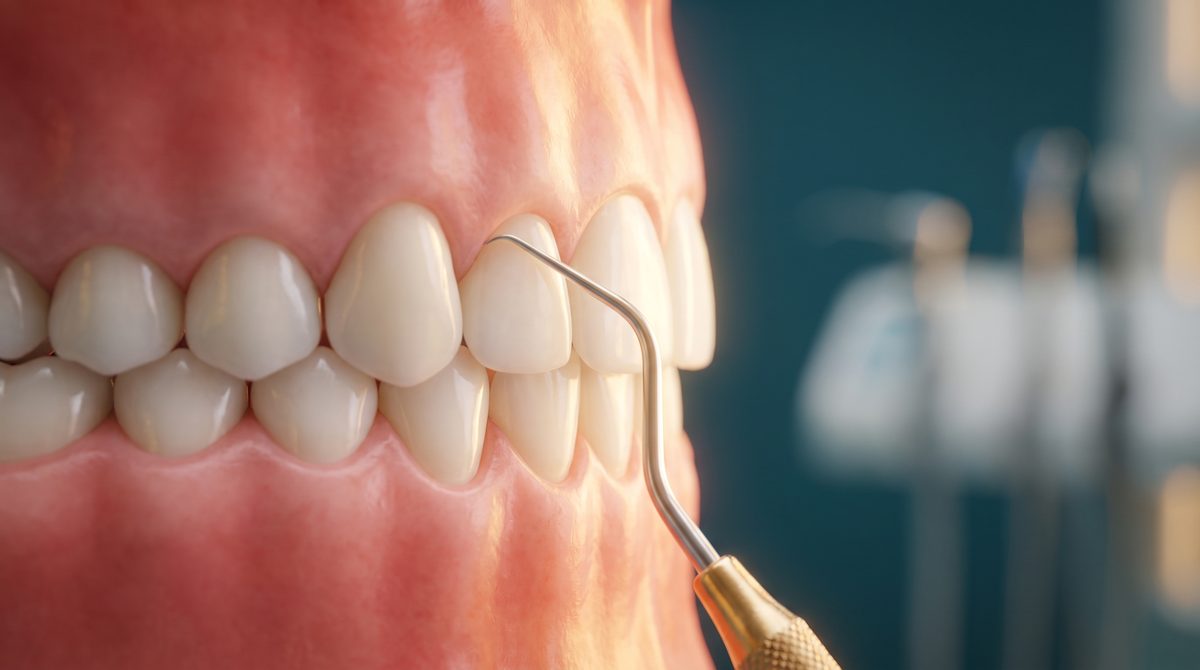
Periodontitis becomes more common with age and with diabetes. It needs an assessment, active gum treatment and then an individual maintenance plan, because routine cleaning alone is often not enough.
After teeth are lost, the jaw bone slowly shrinks. A denture that fitted well ten years ago can become loose, rub and make eating difficult. Often a reline restores the fit.
Arthritis, poorer eyesight or memory problems make cleaning harder. A simpler routine, an electric brush, thicker handles or help from family and carers can make a big difference.
A loose denture is one of the most common reasons older patients come to us. It hurts, moves when you eat or speak and can make people avoid company. An assessment can identify options to improve the fit and comfort of the denture, and it does not always mean new teeth.
If the denture is still in good condition but no longer fits, a reline adapts its base to the changed jaw. Repairs and relining are offered. Same day repairs are referred to an external provider, and availability has to be confirmed in advance.
When the teeth are worn or the bite has changed, a new full or partial denture is made. Jaw and bite are recorded, digitally where possible, and the teeth are set up and tried in your mouth before the denture is finished, so you see and feel it first.
A partial denture held by double crowns on your remaining teeth. A German classic, very stable, easy to clean, and if a tooth is later lost, the denture can often be extended.
Two to four implants can hold a denture firmly in place. Suitable attachments can improve retention and reduce movement when you eat, and the denture often covers less of the palate. How stable it is depends on the denture design and the jaw. For thin jaws, narrower mini implants can be an option. Implants are placed by our DHA specialist oral and maxillofacial surgeon, Dr. Ayse Yilmaz Bastug, who is in the clinic on Tuesdays and when needed, and the denture is made by Dr. Mohammad. More on our dentures and implants pages.
Older patients often take several medications, and many of them matter for dental treatment. That is why the medical history at the first visit is long and careful. Please bring a list of all medications, or the packets themselves, and recent reports from your doctors.
Many older patients have crowns, fillings and dentures made over many years, and several problems at once. Instead of treating one tooth at a time, Dr. Mohammad makes one complete plan: everything that needs doing, in a sensible order, with priorities and costs written down before anything starts. Sometimes the right plan is the smaller one, keeping what works and fixing what hurts.
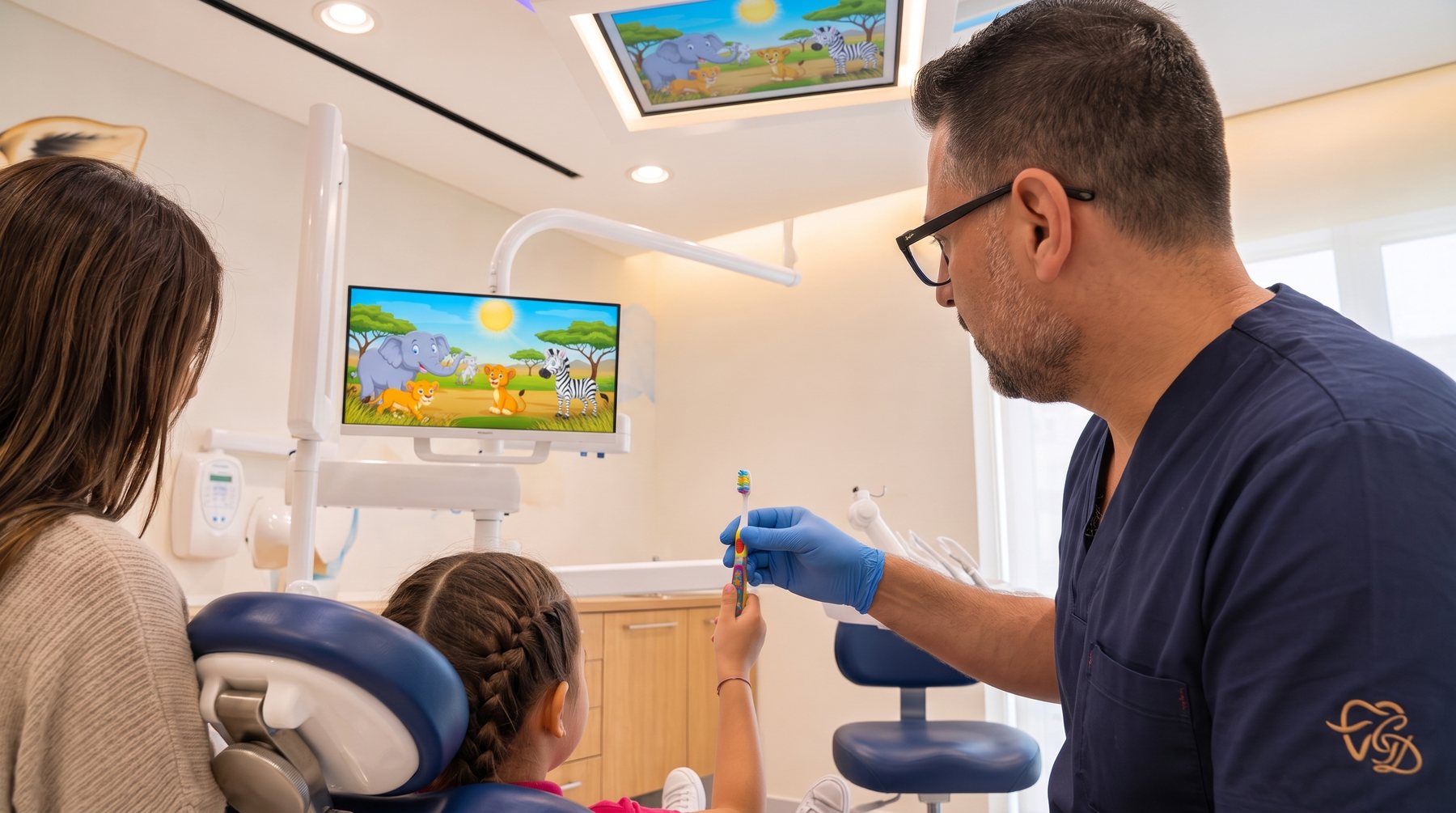
Treatment is then split into appointments that fit energy and mobility. Tell us when you book about any needs for appointment timing, positioning or rest breaks, and the visits are planned around them. A family member is welcome in the room and we encourage it, because decisions are easier when the family hears the plan too. For anxious patients, nitrous oxide and computer controlled anaesthesia with the Wand are available.
Discomfort depends on the treatment. Impressions and the fitting of a denture are usually not painful, while a new denture can cause pressure spots at first that are eased at a short visit. Implant surgery is done under local anaesthetic, and some discomfort afterwards is common. Pain relief is chosen around your medication and health.
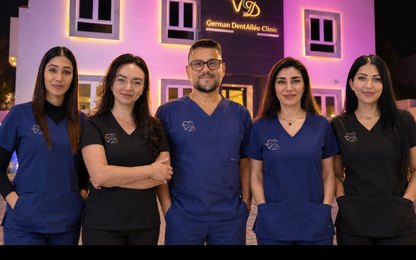
Dr. Mohammad speaks Arabic, English and German, and the team also speaks Hindi, Turkish and Albanian. Many older patients feel more at ease explaining their worries in their own language.
Real results
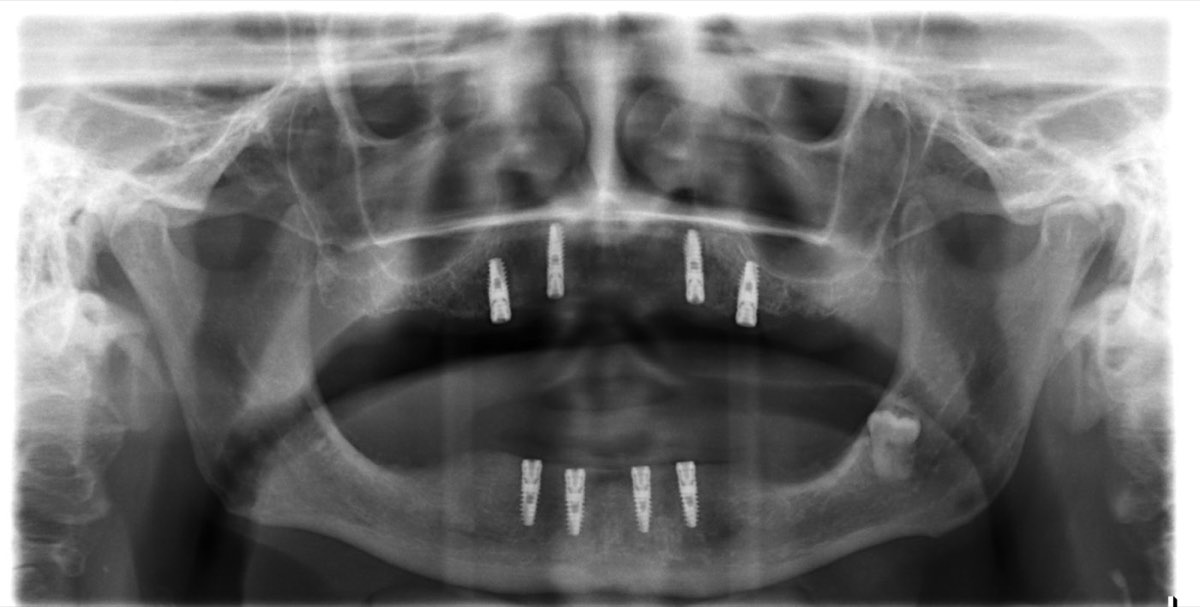
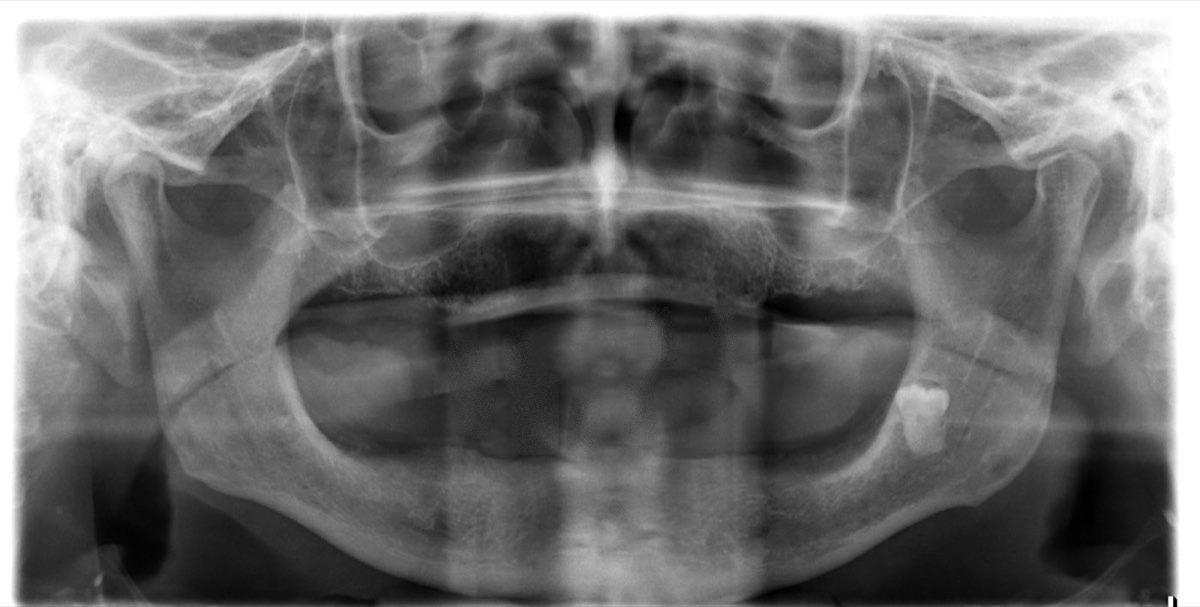
Real case · Dr. Mohammad
Treated by Dr. Mohammad in Germany. Shown with the written consent of the patient. Results can vary from one person to another.
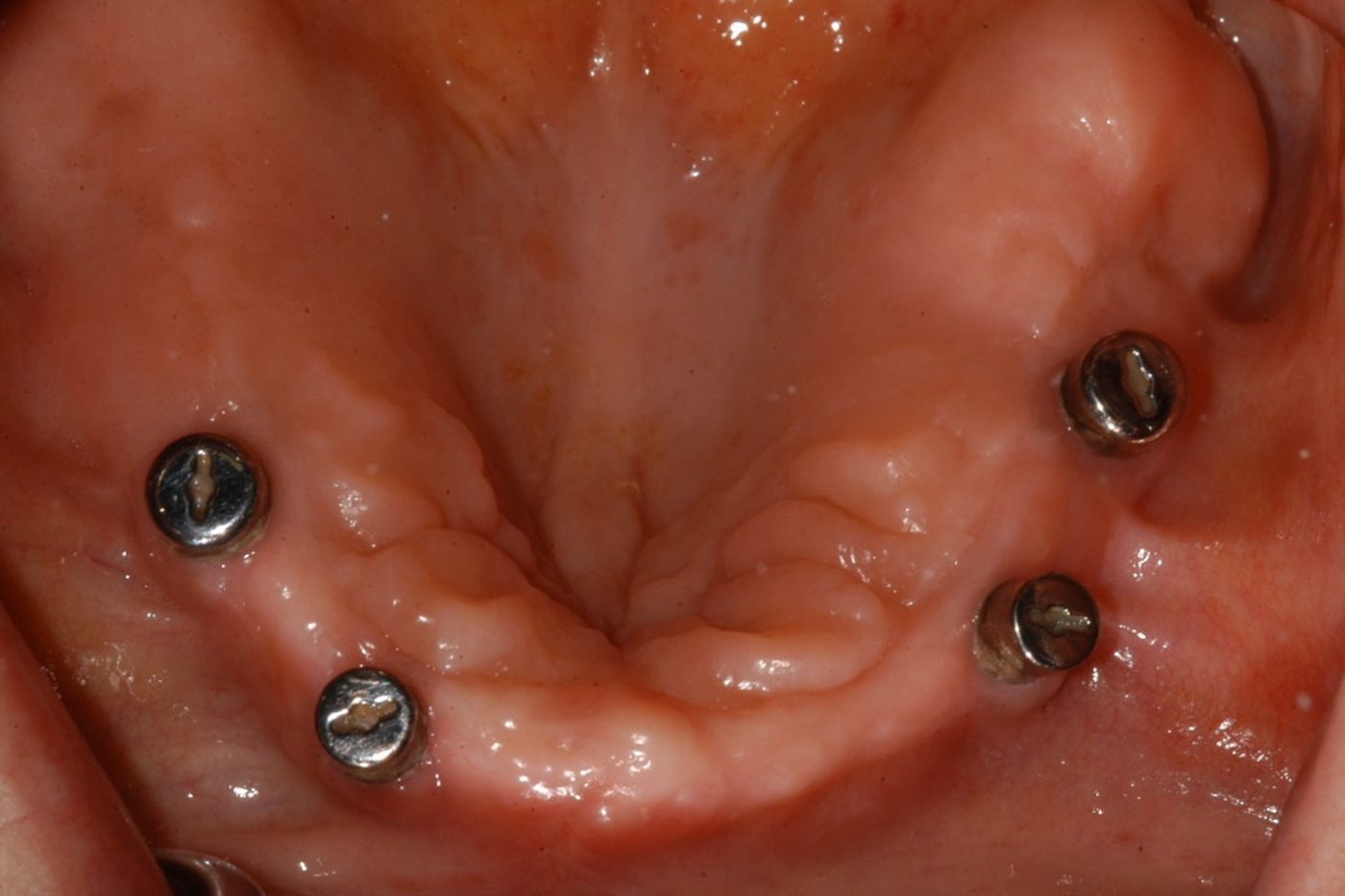
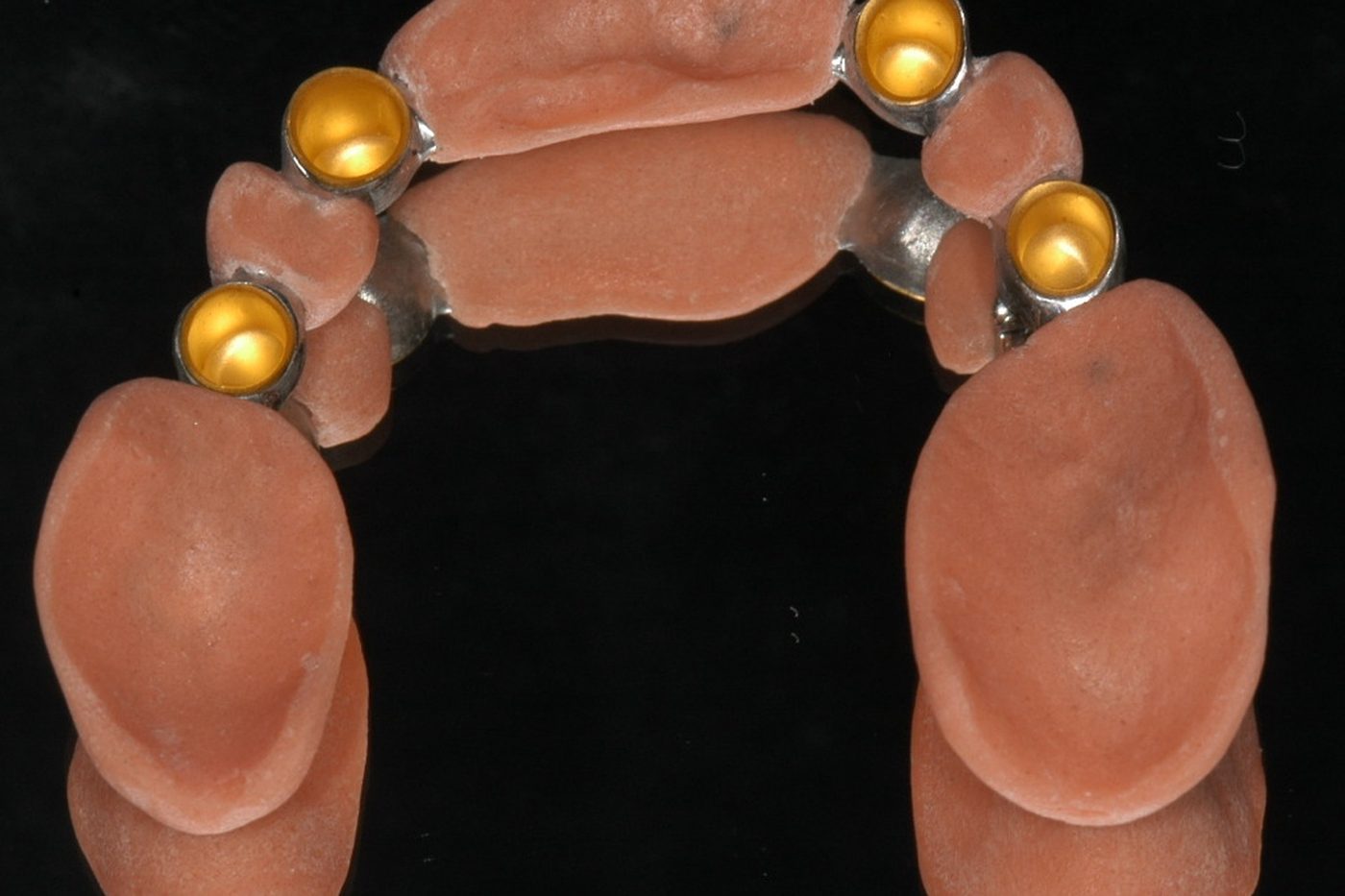
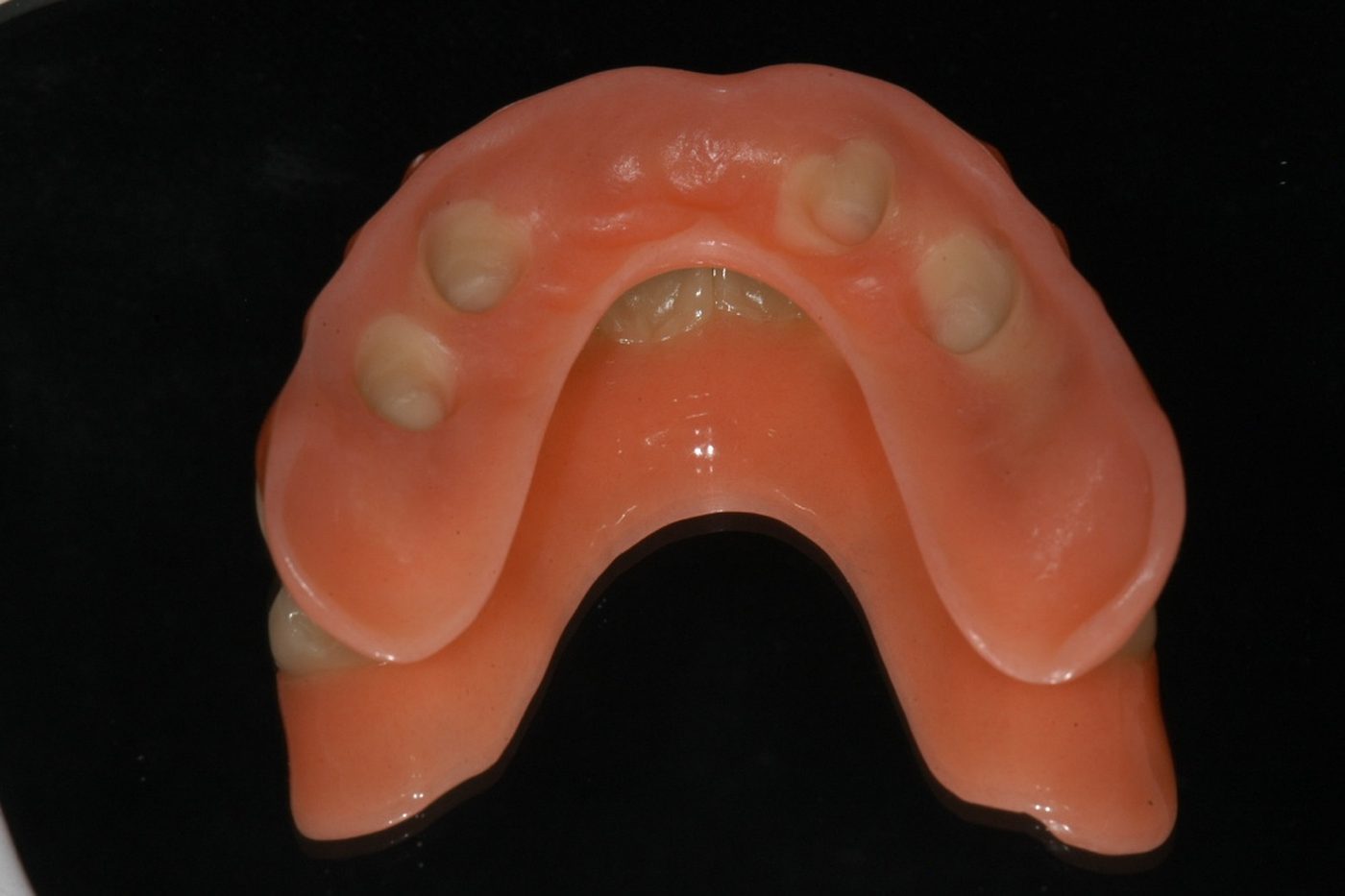
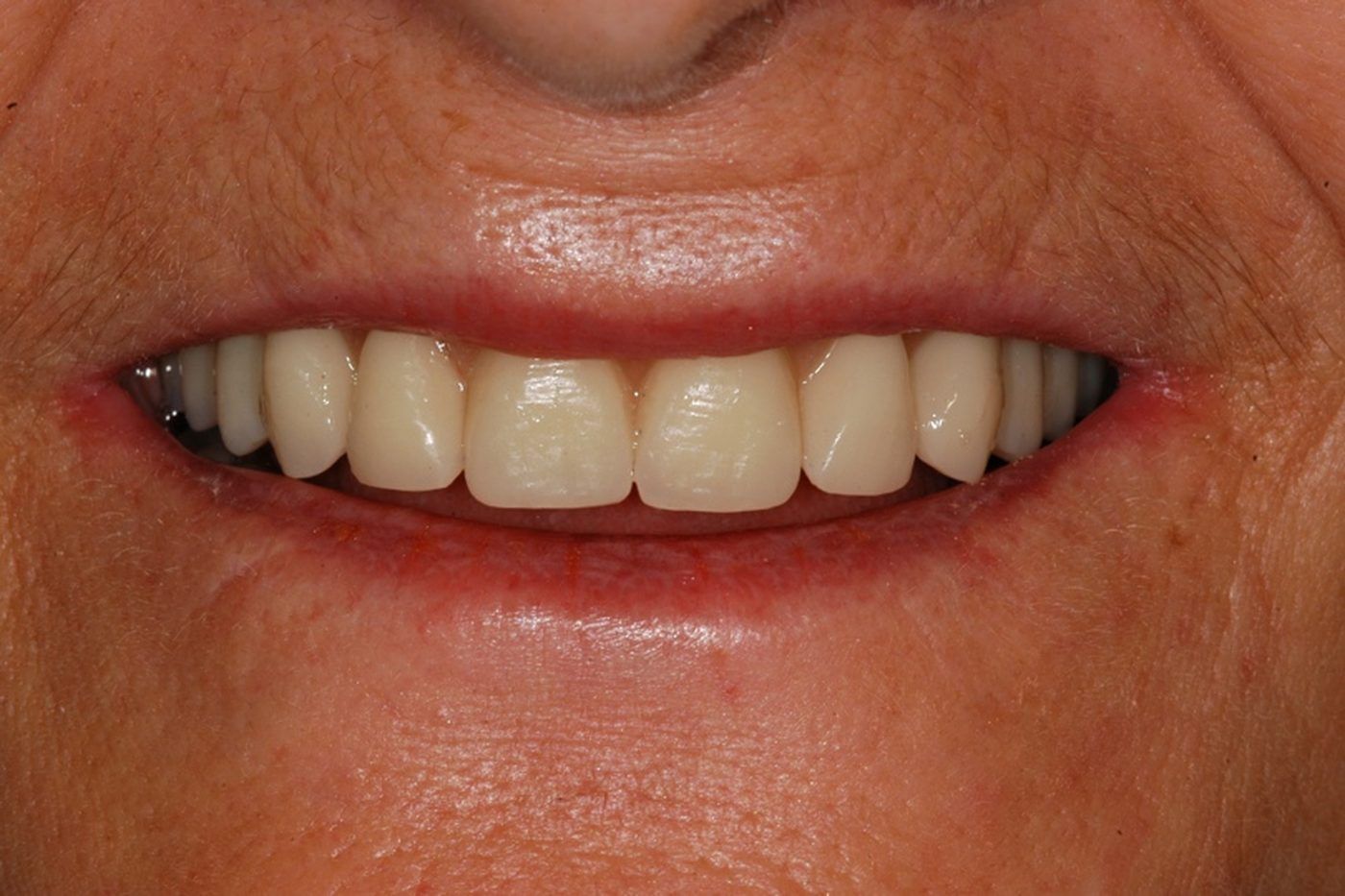
Real case · Dr. Mohammad
Treated by Dr. Mohammad in Germany. Shown with the written consent of the patient. Results can vary from one person to another.
Some patients can no longer come to a clinic. People in care homes, after a stroke or with advanced dementia often have the greatest dental needs and the least access to care. This is where Dr. Mohammad began his academic career: his doctorate examined how nursing home residents are cared for when they can no longer look after their own teeth.
We see patients in care homes, and at home only when a visit to the clinic is truly no longer possible. We do not have a mobile treatment unit, so what can be done outside the clinic is limited: mainly an assessment and advice for carers. Treatment itself is planned for the clinic with the right support.
Since 2009, Dr. Mohammad has trained nursing staff in oral care for older people. Carers and family members can learn how to clean teeth and dentures for someone else, how to spot problems early and when to call the dentist.
Good daily care keeps small problems small. It needs to be simple enough to do every day, also on a tired evening.
Brush twice a day with a soft or electric brush and a fluoride toothpaste, high fluoride if your dentist recommends it. Interdental brushes with thicker handles are easier to hold than floss.
Take dentures out after meals and rinse them. Clean them once a day with a denture brush and mild soap or a denture cleaner, not with toothpaste, which scratches. Brush your gums and tongue gently too. Unless you were told otherwise, leave dentures out at night in a clean, dry box or in water, so the gums can rest.
Clean around implants and the attachments of an implant retained denture every day. Daily home care and regular professional maintenance with our hygienist help reduce the risk of inflammation around implants.
Even with a full denture, regular checks are important, often once a year. The mouth is checked for pressure spots, changes in the gums and the fit of the denture, and the soft tissues are examined for changes.
His doctoral research focused on dental care for nursing home residents. That research and fifteen years of practice in Saarbrücken, with patients from childhood to old age, shaped how the clinic works: one doctor stays responsible for the whole plan, explains it to the patient and the family, and keeps as much natural tooth structure as possible.
As a DHA Specialist Prosthodontist with an M.Sc. in prosthodontics, he makes the dentures, crowns and bridges himself, and as Specialist Senior Dentistry (GER 🇩🇪) he plans them around the person, not only the teeth. Read more on Dr. Mohammad’s page and practical details on patient information.
Technology
Two to four implants can hold the denture more firmly.
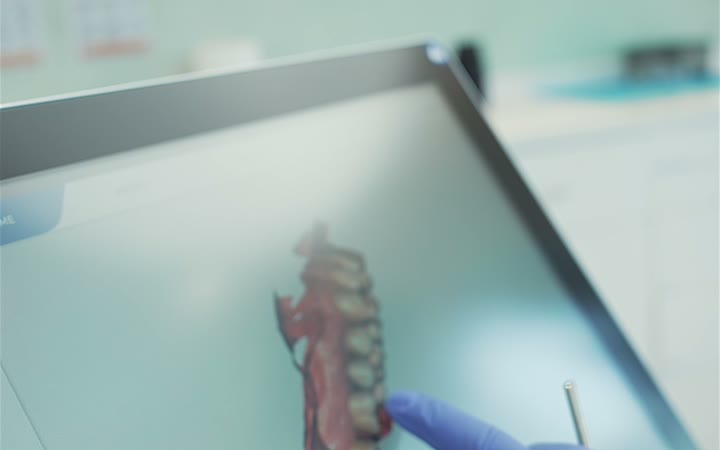
Digital records where suitable. The number of visits depends on your treatment.
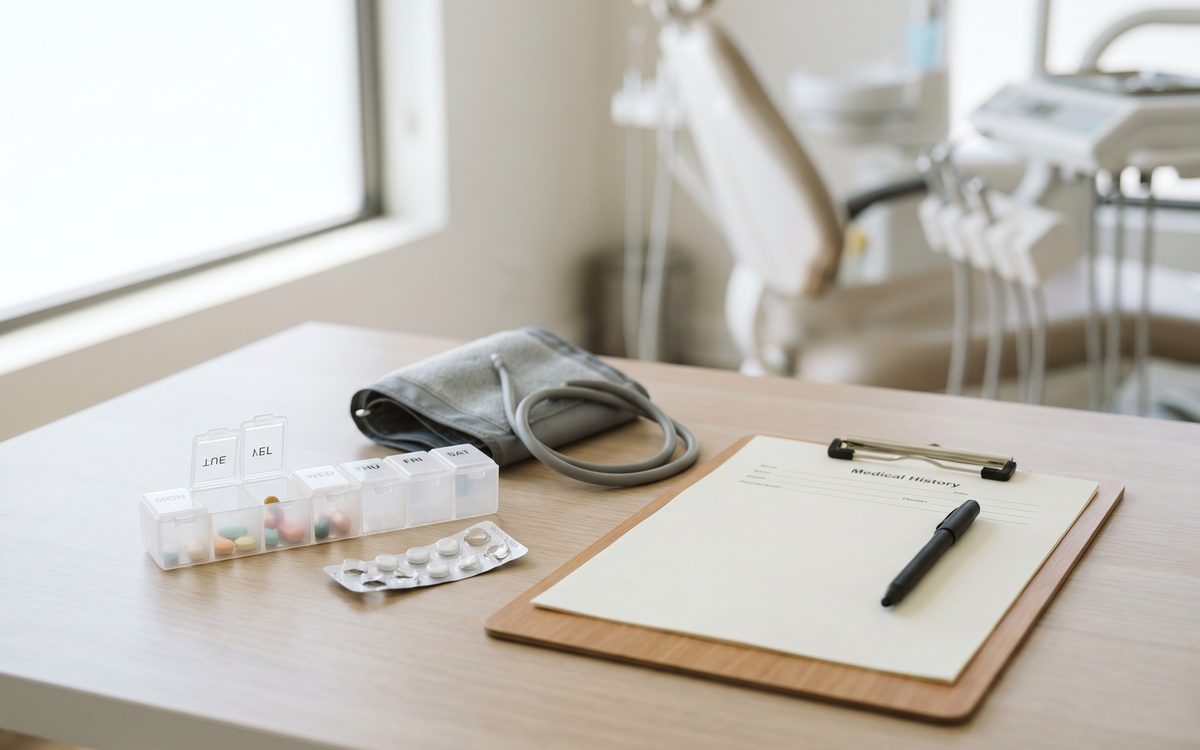
Treatment planned around blood thinners and chronic illness.
Myth or fact
MythLosing teeth is a normal part of ageing.
FactMost tooth loss is caused by decay and gum disease, which can be prevented and treated at any age.
MythWith a full denture you do not need a dentist.
FactGums and jaw keep changing, and the soft tissues need checking. How often depends on your situation, often once a year.
MythI am too old for implants.
FactAge alone is rarely the reason. Health, bone and medication decide.
MythA loose denture means a new one.
FactOften a reline already restores the fit.
More answers
Tap a question to open the answer. Anything else, ask us on WhatsApp.
Treatment planning takes account of health and medication to help reduce risks. These are the points we always check.
For a loose or uncomfortable denture there are three main ways forward. Which one fits depends on the denture, the jaw and your health.
| Reline | New denture | Implant retained denture | |
|---|---|---|---|
| When | Denture in good condition, fit has changed | Worn teeth, changed bite, broken base | Denture keeps moving despite a good fit |
| Hold | Better suction and fit | Good fit, held by suction or clasps | Attachments on 2 to 4 implants, usually more stable |
| Surgery | None | None | Implant placement under local anaesthetic |
| Time | Often one visit | A few appointments over some weeks | Several months including healing |
| Suits | Most patients | Most patients | Patients whose health and bone allow implants |
Often yes. A reline can restore the fit, and two to four implants can hold a denture more firmly.
Age alone is rarely the reason. Your health, bone and medication decide, and a 3D scan shows the bone.
Yes. Medication is reviewed before treatment, and where needed we coordinate with the family doctor.
Usually not. Never stop it on your own. The plan is made with you and, where needed, with your doctor.
Yes, and we encourage it. Decisions are easier when the family hears the plan too.
Yes, we see patients in care homes, and at home when a visit to the clinic is no longer possible.
Yes. The clinic is on the ground floor, wheelchair accessible, with an accessible toilet and its own parking.
Usually a few appointments over some weeks. The teeth are tried in before the denture is finished.
Same day repairs are referred to an external provider, and availability has to be confirmed in advance. Relining and other repairs are planned with you.
Sipping water, sugar free lozenges, saliva substitutes and extra fluoride. Sometimes your doctor can adjust the medication that causes it.
Rinse after meals, brush once a day with a denture brush and mild soap or denture cleaner, and leave them out overnight unless advised otherwise.
Dr. Mohammad speaks Arabic, English and German. In the team we also speak Hindi, Turkish and Albanian.
That depends on your policy. Before treatment, check with your insurer about exclusions, benefit limits and any preauthorisation, because reimbursement is not guaranteed. We do not bill insurers directly. You pay at the clinic and receive all documents to claim the costs. The first consultation is charged and credited towards your treatment if you go ahead.
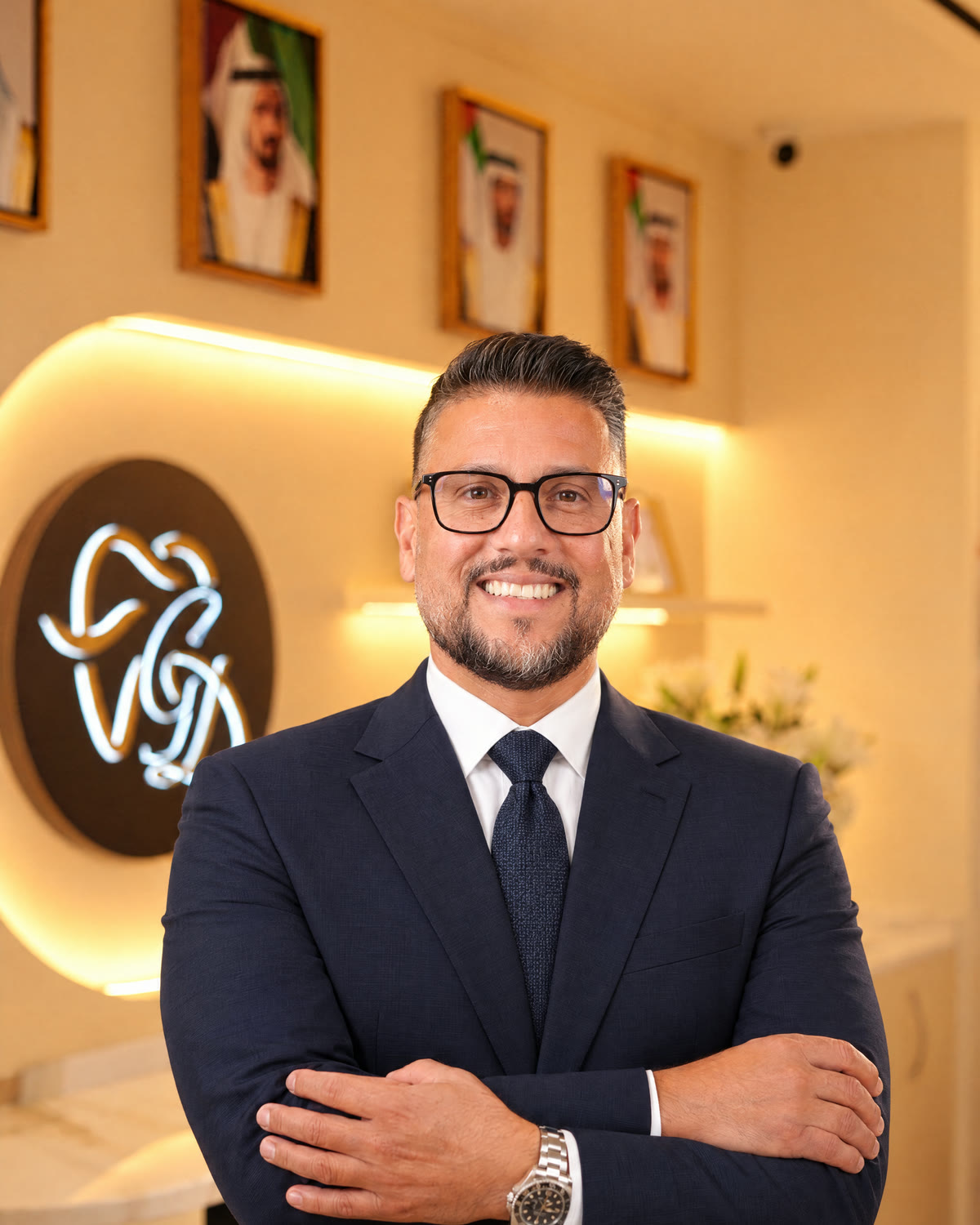
Why with Dr. Mohammad Shaker
Dr. Mohammad’s doctorate examined the dental care of nursing home residents in Saarland, and since 2009 he has trained nursing staff in oral care. Care for older patients is still at the heart of how he works.
Dr. med. dent. · M.Sc. Prosthodontics · DHA Specialist Prosthodontist · Specialist Senior Dentistry (GER 🇩🇪)
Meet Dr. Mohammad ShakerAlso at the clinic
You are welcome
One message is enough. No forms, no call centre. You write, the clinic answers in Arabic, English or German.
Villa 21B, La Mer · Jumeirah 1 · Dubai
Sat to Thu 9:00 to 18:00 · Fri closed