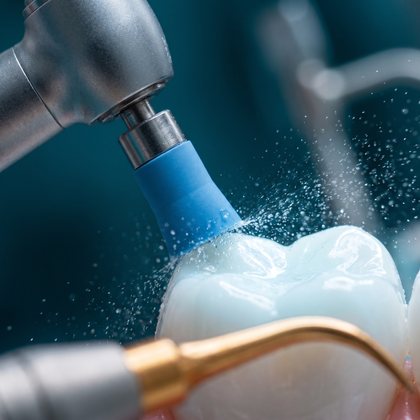
EMS Airflow
Air polishing for stains and plaque, gentle on gums.


Prophylaxis · dental hygienist
With EMS AIRFLOW and Guided Biofilm Therapy we clean teeth and gums gently and systematically. The treatment is adjusted to your own oral health.
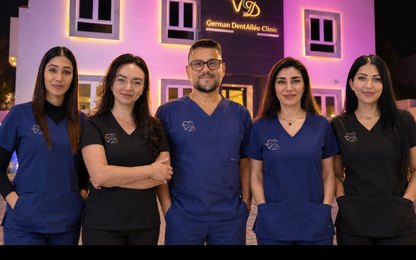
 At German DentAllée Clinic, led by Dr. Mohammad Shaker, Medical Director and DHA Specialist Prosthodontist.
Patient guide
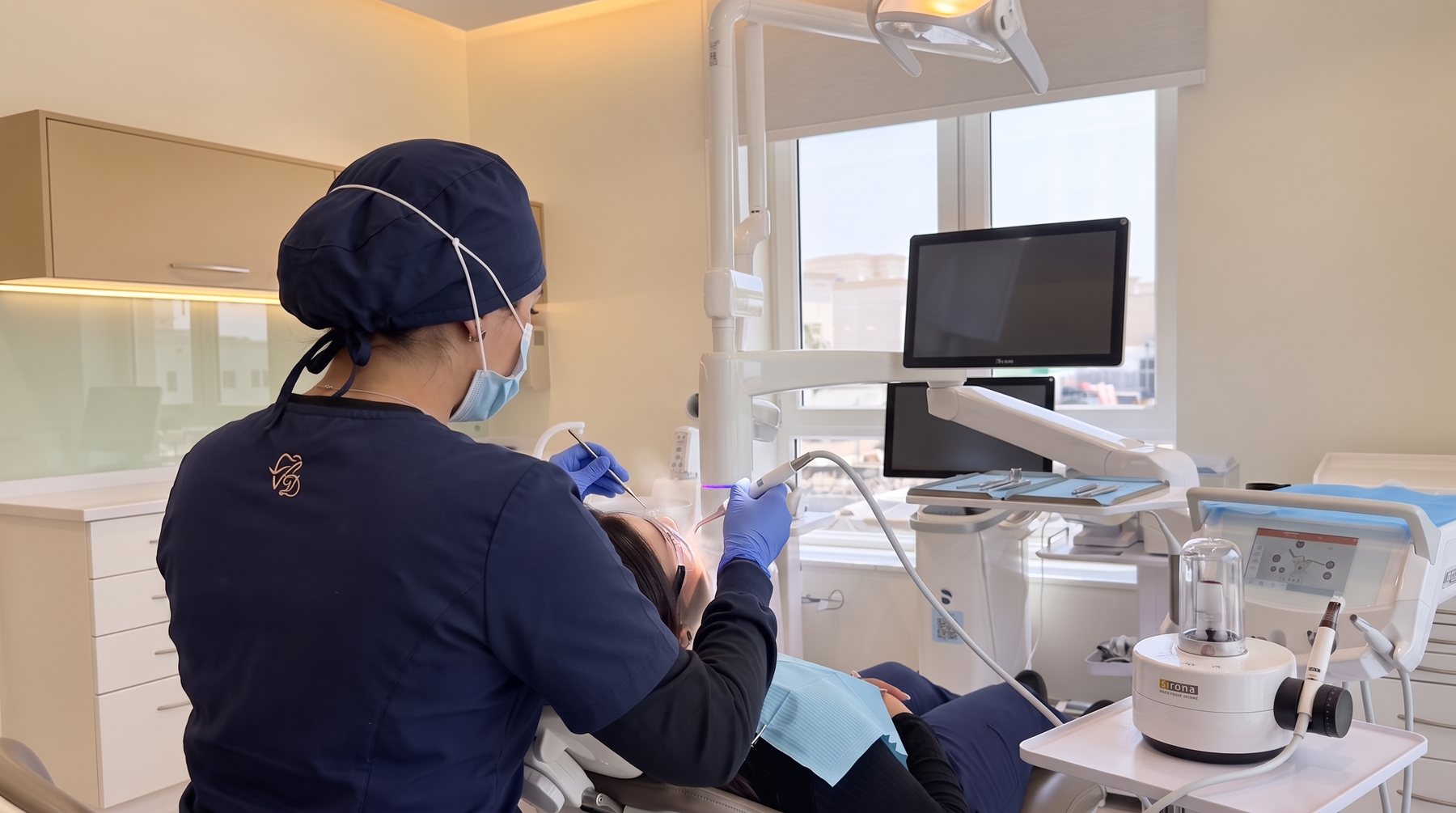
A professional teeth cleaning removes the plaque, tartar and stains that a toothbrush and floss cannot reach, and checks your gums while it does so. At German DentAllée Clinic in Jumeirah 1 it is done by our DHA licensed dental hygienist, Afra Alblooshi, with EMS Airflow air polishing and ultrasonic instruments instead of long scraping.
Plaque is a soft film of bacteria that forms on teeth every day. Where it stays for a few days it hardens into tartar, also called calculus, which sticks to the tooth like cement. Once tartar has formed, brushing no longer removes it. Tartar at and below the gum line keeps the gums irritated, and over the years that can lead to bleeding, bad breath and loss of the bone that holds your teeth.
A cleaning is not a cosmetic extra. It is a core preventive treatment in dentistry and the visit where small problems are noticed while they are still small. Coffee, tea, karak and tobacco can stain the surface of the teeth, and tartar forms when plaque that stays on the teeth hardens.
This guide explains what happens in the chair, how Airflow differs from a classic scale and polish, how often you should come, what children need and how to keep your teeth clean at home between visits.
Is this for you?
Step by step
Gums and pockets are measured and noted, so changes are visible next time.
A disclosing solution colours the plaque, so you see where it sits.
EMS Airflow removes the biofilm and stains with a fine powder, air and water.
Remaining hard deposits are removed above and just below the gum line.
Surfaces are smoothed and protected, and you get advice for your mouth and a recall interval.
That depends on what your teeth need, so a price without an examination would not be honest. After the examination you receive a written treatment plan with all costs, before anything starts. Payment and insurance
What changes the cost
Sensitive teeth or inflamed gums can feel tender during and shortly after a cleaning. A cleaning does not replace the treatment of gum disease if that is found.
Your next step
Or call 800 433 368 (toll free) · Sat to Thu 9:00 to 18:00 · Fri closed
Every cleaning follows the same calm order, so nothing is forgotten and you always know what comes next. How long it takes depends on the amount of deposits, the health of your gums and whether an examination is part of the visit. If it is your first visit, the dentist examines your teeth first, and the cleaning can follow on the same day or at a separate appointment.
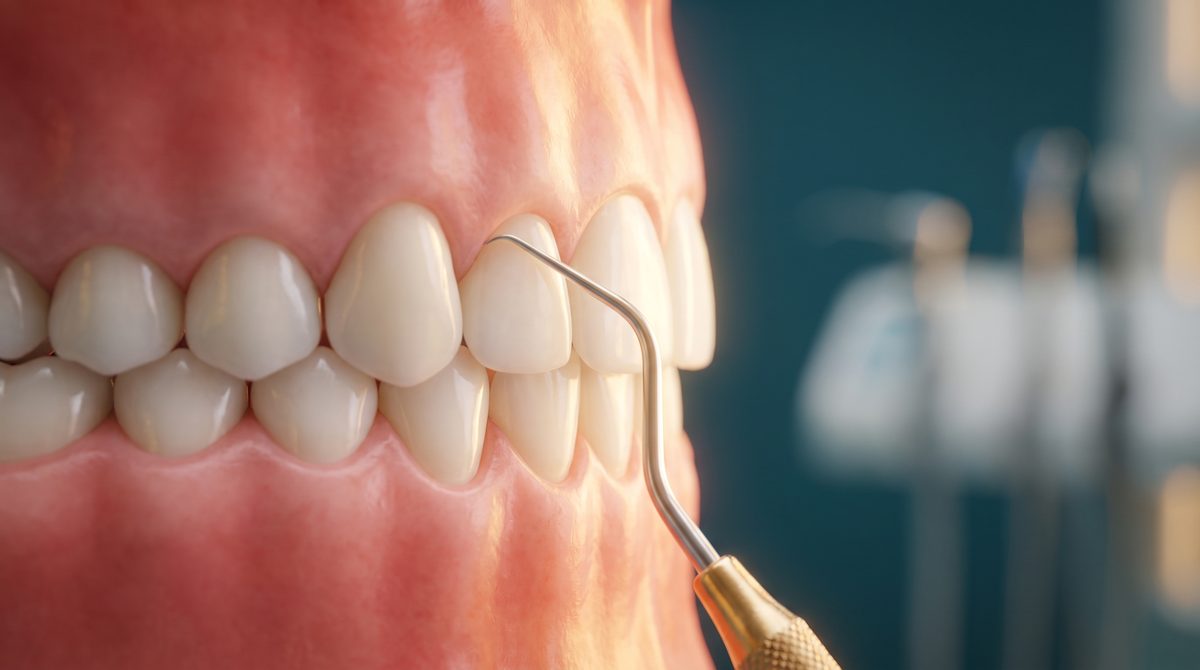
Before anything is cleaned, the gums are looked at and the pockets around the teeth are measured with a fine, blunt probe. The numbers are written down, so the next visit can show whether things are getting better or worse. Bleeding when the gums are probed is noted too, because it is a sign of gum inflammation.
A disclosing solution can colour plaque so you and the hygienist see exactly where it sits. This is part of the Guided Biofilm Therapy approach: clean what is there, not what is guessed, and show you the spots your brush misses.
A fine powder, water and air remove soft plaque and stains from teeth, fillings, crowns and implants, and from the edges of the gums. It feels like a light, warm spray. The powder and settings are chosen to suit your teeth, fillings and implants, so the cleaning stays gentle on gums and enamel.
Hard deposits that are left are removed with a thin ultrasonic tip and, where needed, fine hand instruments, above and just below the gum line. A water spray keeps the tip cool and rinses the area.
Surfaces are smoothed and protected with fluoride. Then you get practical advice for your own mouth: which brush, which interdental brush sizes, and when we would like to see you again.
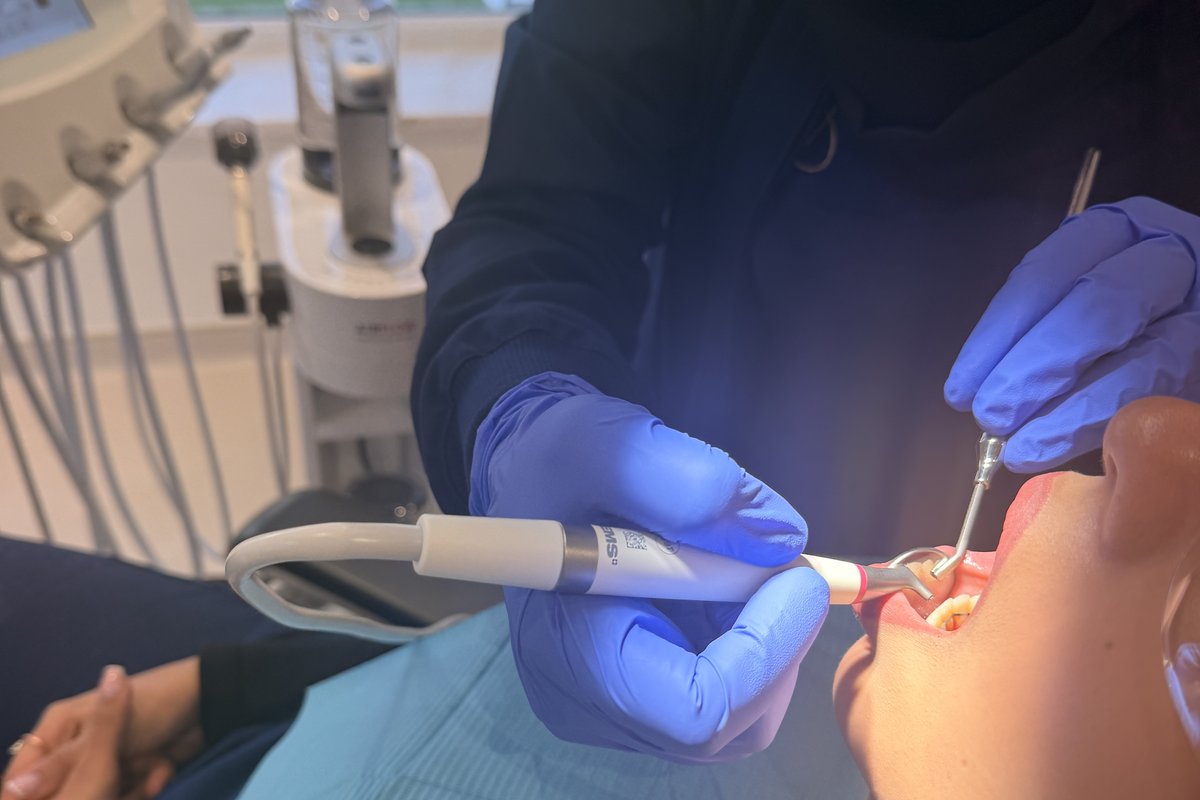
A classic "scale and polish" removes tartar with scalers and then polishes the teeth with a rubber cup and paste. It is an established method. On sensitive teeth or exposed roots, longer scaling can feel uncomfortable.
EMS Airflow works differently. A jet of fine powder, air and water reaches between teeth, around brackets, along the gum line and into shallow pockets. It removes the biofilm, the sticky layer of bacteria, rather than only the visible stain. In Guided Biofilm Therapy the order is turned around: the biofilm is made visible and removed first with air polishing, and only the hard tartar that remains is then removed with the ultrasonic tip. That usually means less scraping.
Airflow is not a different treatment from a cleaning. It is a more recent way of doing the same job. Whether your visit uses air polishing, ultrasonic scaling or both depends on what is on your teeth. Very heavy tartar still needs the ultrasonic instrument, and very deep pockets need a periodontal treatment rather than a routine cleaning.
For most adults with healthy gums, a professional cleaning every six months is a suitable interval. It is not a fixed rule. The right interval depends on how quickly tartar forms in your mouth, how well you can reach every surface at home and what your gums show at the check.
Some patients need to come more often. After treatment for gum disease, patients are often seen every three to four months, because the risk of the disease becoming active again is higher. The interval depends on how stable the gums are and on your individual risk. Implants also need regular professional care, since the tissue around an implant reacts to plaque much like gums do. Others, with very little tartar and healthy gums, may be fine with a longer interval. Your hygienist tells you what fits your mouth, and the recall date is set at the end of each visit.
A cleaning removes surface stains from coffee, tea, red drinks, saffron and smoking, so teeth often look lighter and fresher afterwards. It does not change the natural colour of the tooth itself. If you would like your teeth to be several shades whiter, that is a job for professional whitening, and a cleaning beforehand helps the whitening gel work evenly.
The same is true before veneers, crowns, aligners and implants. Clean teeth and healthy gums make the scan more precise, the shade easier to match and the gums more stable around new work. That is why a cleaning is usually the first step of a larger plan at our clinic.
Tartar can also cause bad breath. Bacteria in deposits and pockets produce smelly compounds, and the tongue holds many of them too. Part of your home plan may be a tongue cleaner. If bad breath stays after a cleaning, the gums are checked more closely, because it can be a sign of gum disease.
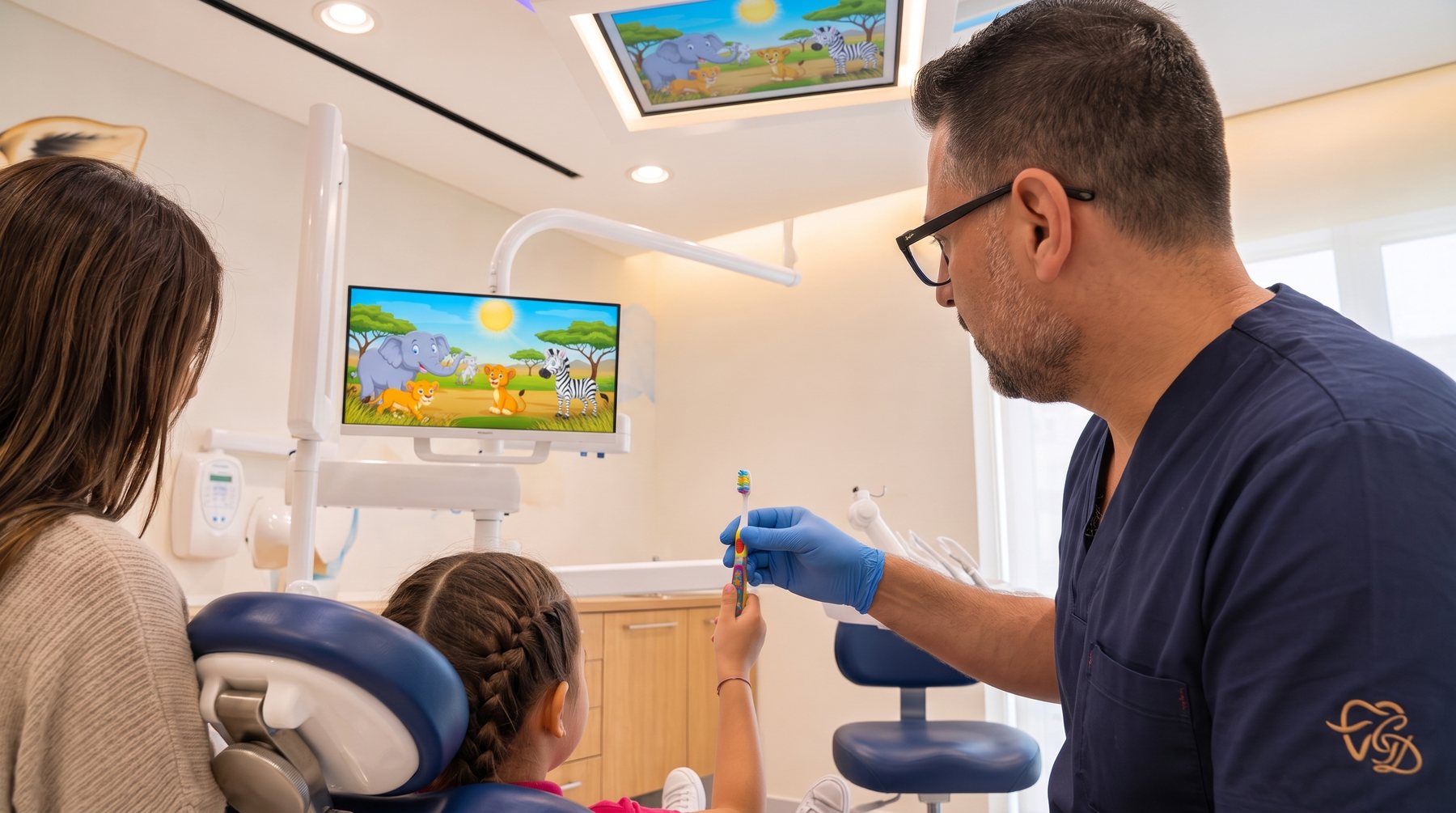
We see children from the first tooth. A child prophylaxis is shorter and gentler than an adult cleaning. Teeth are cleaned and polished, fluoride is applied when it is useful to strengthen the enamel, and the deep grooves of new molars can be sealed so food and bacteria cannot settle there. Brushing is practised together, with the parent watching, because at home the parent is the one who brushes until the child can do it well alone.
Teenagers with braces or aligners need extra attention. Brackets and wires trap plaque, and white spots can appear on the enamel around them. Air polishing reaches these areas well. If your family wants to come together, ask our reception about appointments for several family members, see our family dentistry page.
What you do every day matters more than any visit to the clinic. The professional cleaning removes the deposits, and good home care helps keep your teeth and gums healthy.
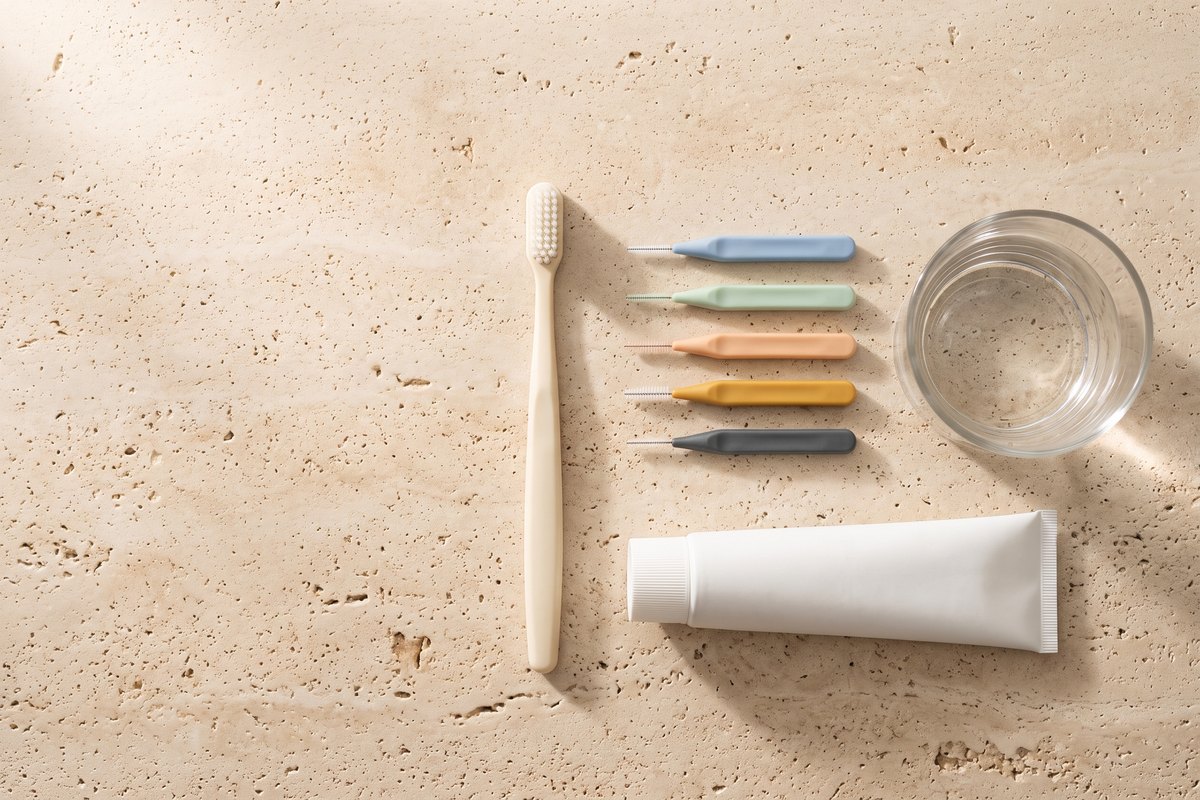
Use a soft brush or an electric toothbrush and a fluoride toothpaste, for about two minutes. Pressing hard does not clean better, it wears enamel and can push the gums back over the years.
A toothbrush does not reach between the teeth. Interdental brushes in the right size are often easier than floss. Your hygienist shows you which sizes fit which gaps.
After brushing, spit out the toothpaste but do not rinse with water, so the fluoride can keep working.
Sweet drinks through the day, including juices and sweetened coffee, feed the bacteria in plaque. Acidic drinks, even sugar free ones, can soften the enamel directly. Water between meals helps.
At German DentAllée, cleanings are done by our DHA licensed dental hygienist in Dubai, Afra Alblooshi. Her appointments are set aside for prevention, so your cleaning has its own time. Dr. Mohammad Shaker, DHA Specialist Prosthodontist, sees the findings and the gum chart, and a dental examination is part of the regular check.
Prevention was at the centre of Dr. Mohammad’s work in Germany, from his doctorate on oral care in nursing homes to training nursing staff in oral care since 2009. That approach shapes the clinic: measure, explain, clean thoroughly and keep tooth structure healthy for as long as possible. You can read more about him on Dr. Mohammad’s page.
Every instrument is cleaned in a thermodisinfector, sealed and sterilised in an autoclave, and the water in every treatment unit is treated. You can see the devices on our technology page.
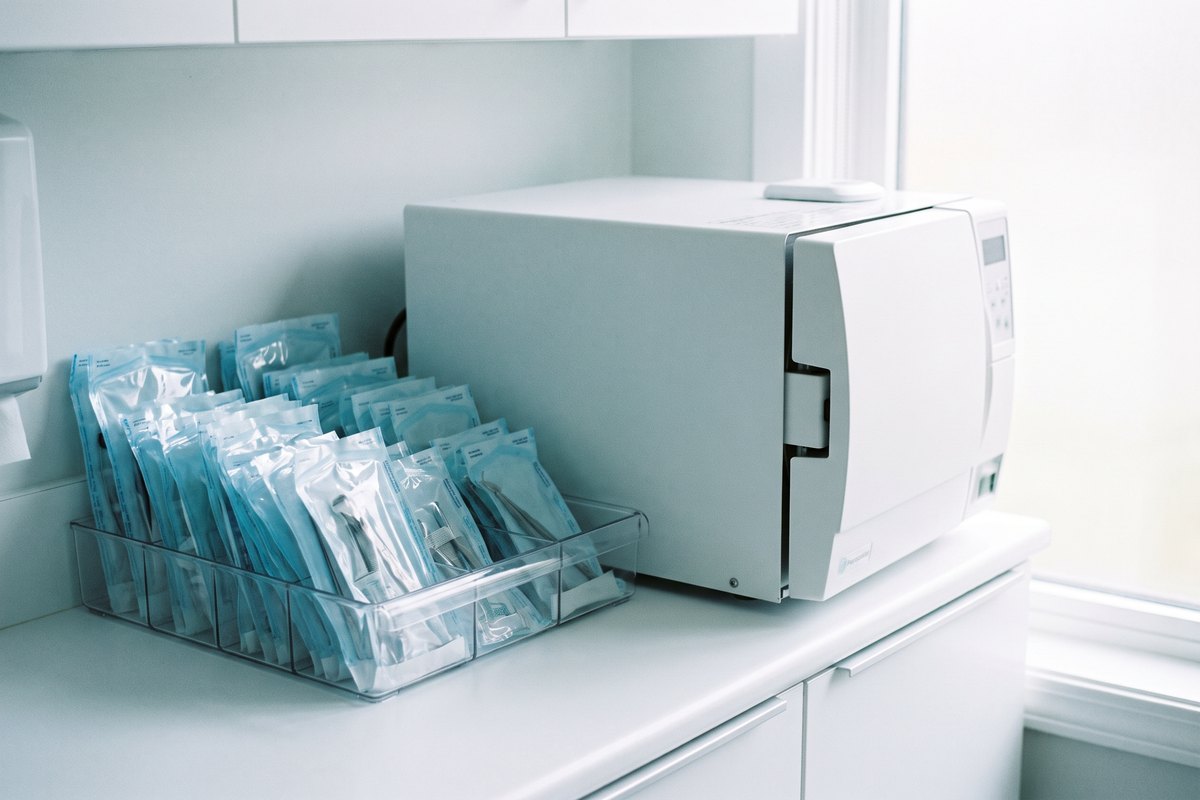
Technology
Air polishing for stains and plaque, gentle on gums.
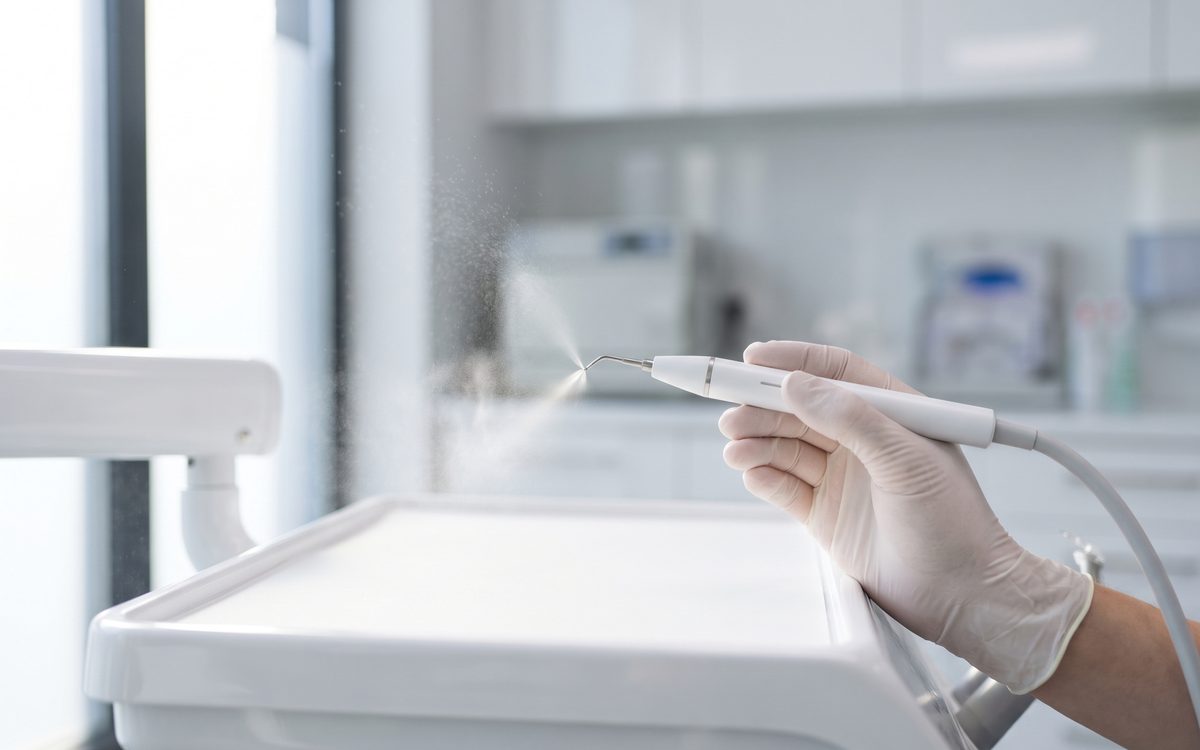
Tartar removal without heavy scraping.
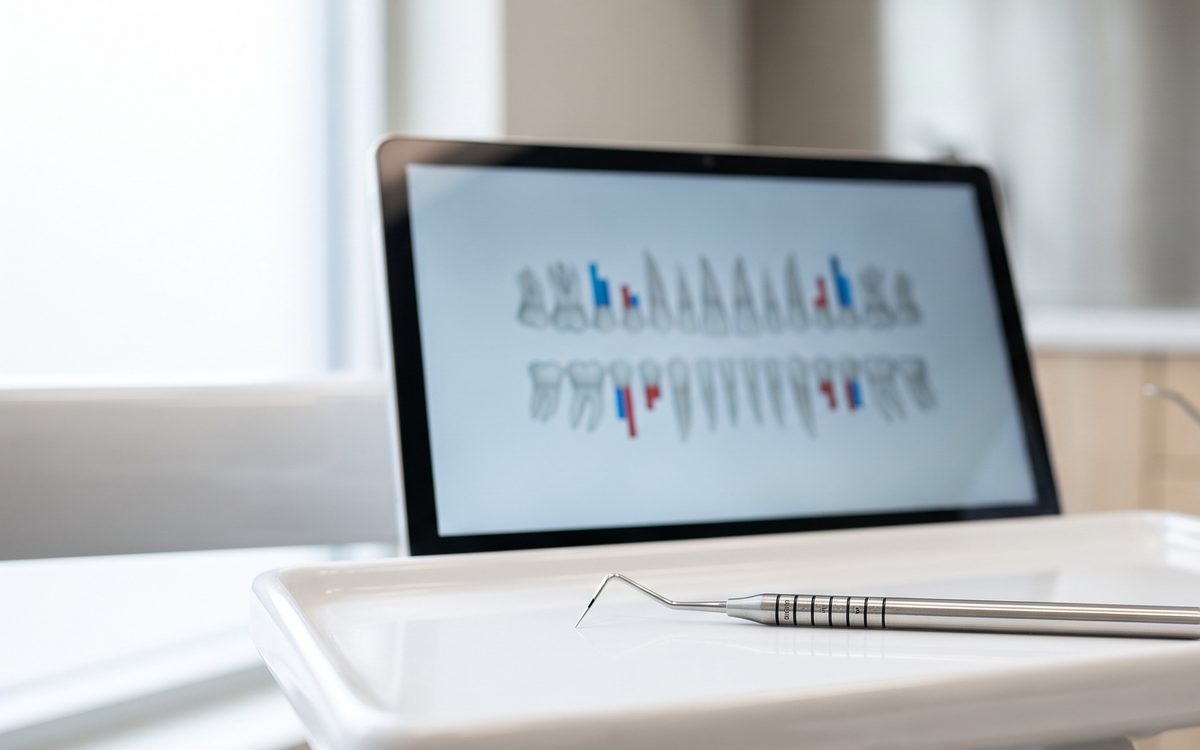
Pocket depths recorded at each visit.
Myth or fact
MythIf my gums bleed, I should brush less.
FactThe opposite. Bleeding is often a sign of inflammation from plaque. Gentle, thorough brushing and a professional cleaning usually calm it.
MythA cleaning damages the enamel.
FactProfessional instruments and air polishing are designed to remove deposits, not enamel. Brushing very hard at home does more harm.
MythI brush well, so I do not need a cleaning.
FactEven good brushers have spots they miss, and tartar cannot be brushed away once it has formed.
MythA cleaning makes teeth whiter.
FactIt removes surface stains, so teeth look fresher. The natural tooth colour only changes with whitening.
More answers
Tap a question to open the answer. Anything else, ask us on WhatsApp.
A professional cleaning is a gentle, routine treatment. A few things are good to know, so nothing comes as a surprise.
Patients often ask which cleaning they need. The gum check decides. Here is the difference in plain words.
| Routine cleaning | Airflow / GBT cleaning | Deep cleaning (gum therapy) | |
|---|---|---|---|
| For whom | Healthy gums, some tartar | Healthy gums, stains, implants, braces, sensitive teeth | Gum pockets that are too deep, bone loss |
| What is removed | Tartar and stains above and just below the gum line | Biofilm and stains first, then remaining tartar | Deposits deep in the pockets and on the root surfaces |
| Anaesthetic | Usually not needed | Usually not needed | Usually local anaesthetic |
| Visits | One | One | Often several, then a re-check |
| Follow up | Usually every 6 months | Usually every 6 months | Maintenance every 3 to 4 months |
Most adults every six months. With gum problems, implants, diabetes or if you smoke, often every three to four months. Your hygienist tells you what fits your mouth.
Air polishing is gentle and most patients find it comfortable. With sensitive teeth, tell us at the start and we adapt. A deep cleaning for gum disease is done under local anaesthetic.
That depends on the amount of deposits, the health of your gums and whether an examination is part of the visit. You are told the planned time when you book.
Airflow uses a fine powder, air and water to remove plaque and stains, and reaches between teeth and around implants and braces well. Hard tartar is still removed with an ultrasonic instrument. Many visits use both.
A cleaning method in which plaque is made visible, removed first with air polishing, and only the remaining tartar is then removed with a fine ultrasonic tip. It usually means less scraping.
It removes surface stains, so teeth often look lighter. For a whiter natural colour you need professional whitening, ideally after a cleaning.
Yes, from the first tooth. The cleaning is adapted to the child’s age, fluoride is applied when it is useful, and fissure sealing is offered for suitable back teeth once they have come through.
Yes. For implants, crowns, veneers and fillings the hygienist chooses a suitable powder and instrument, so the surfaces are cleaned gently.
Inflamed gums can bleed during cleaning. It usually improves after the cleaning and with good home care. Persistent or heavy bleeding needs to be checked, and if pockets are deep, we recommend gum therapy.
Yes, and it is often recommended, because pregnancy hormones can make gums bleed more easily. Tell us you are pregnant when you book.
Yes. Tongue, cheeks, palate and the floor of the mouth are checked for changes as part of the examination.
The teeth cleaning cost in Dubai depends on the type of cleaning, the amount of tartar and stain, and whether an examination or X-rays are needed at the same visit. After the examination you receive a written plan with all costs.
That depends on your policy. Before booking, check whether preventive cleaning is covered, how often, any annual limit and whether pre approval is needed. We do not bill insurers directly. You pay at the clinic and receive all documents to claim the costs. The insurer decides on reimbursement.
Yes. After fluoride, wait about 30 minutes. For the rest of the day, avoid strongly coloured food and drinks if you can.

Why with Dr. Mohammad Shaker
Prevention was at the centre of Dr. Mohammad’s work in Germany, from his doctorate on oral care to training nursing staff. Your cleaning is done by our DHA licensed dental hygienist, Afra Alblooshi, in an appointment set aside for prevention.
Dr. med. dent. · M.Sc. Prosthodontics · DHA Specialist Prosthodontist · Specialist Senior Dentistry (GER 🇩🇪)
Meet Dr. Mohammad ShakerAlso at the clinic
You are welcome
One message is enough. No forms, no call centre. You write, the clinic answers in Arabic, English or German.
Villa 21B, La Mer · Jumeirah 1 · Dubai
Sat to Thu 9:00 to 18:00 · Fri closed