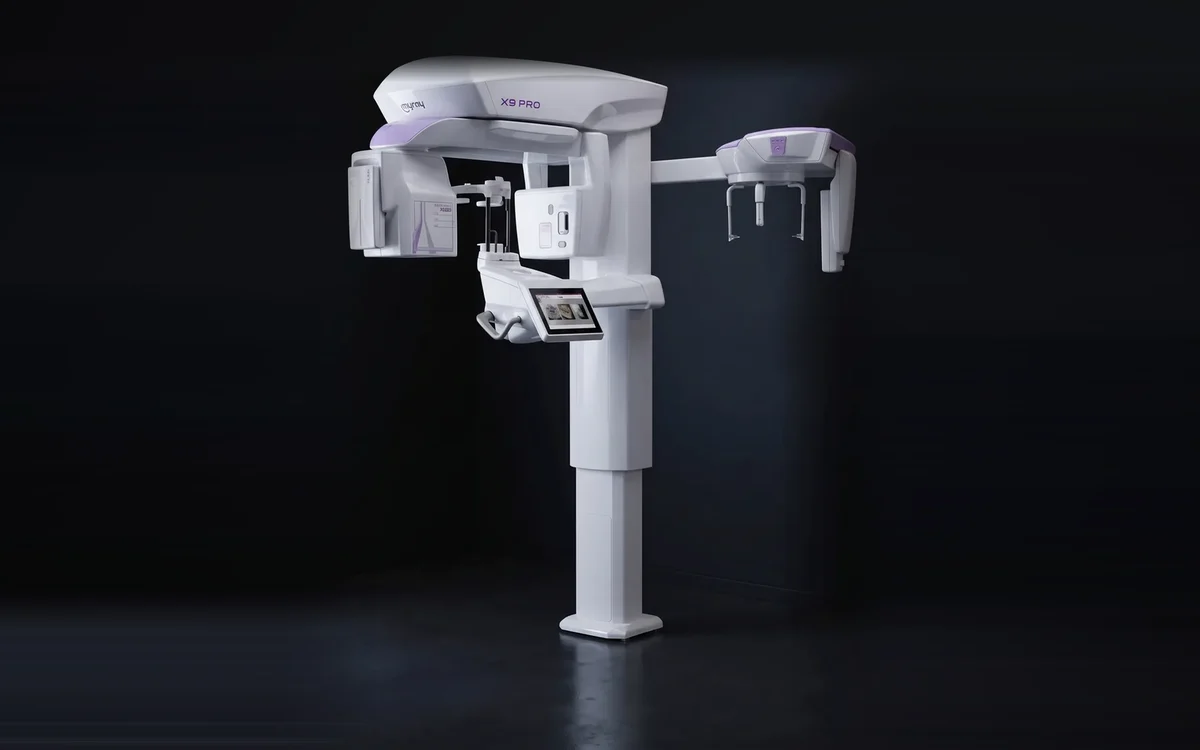
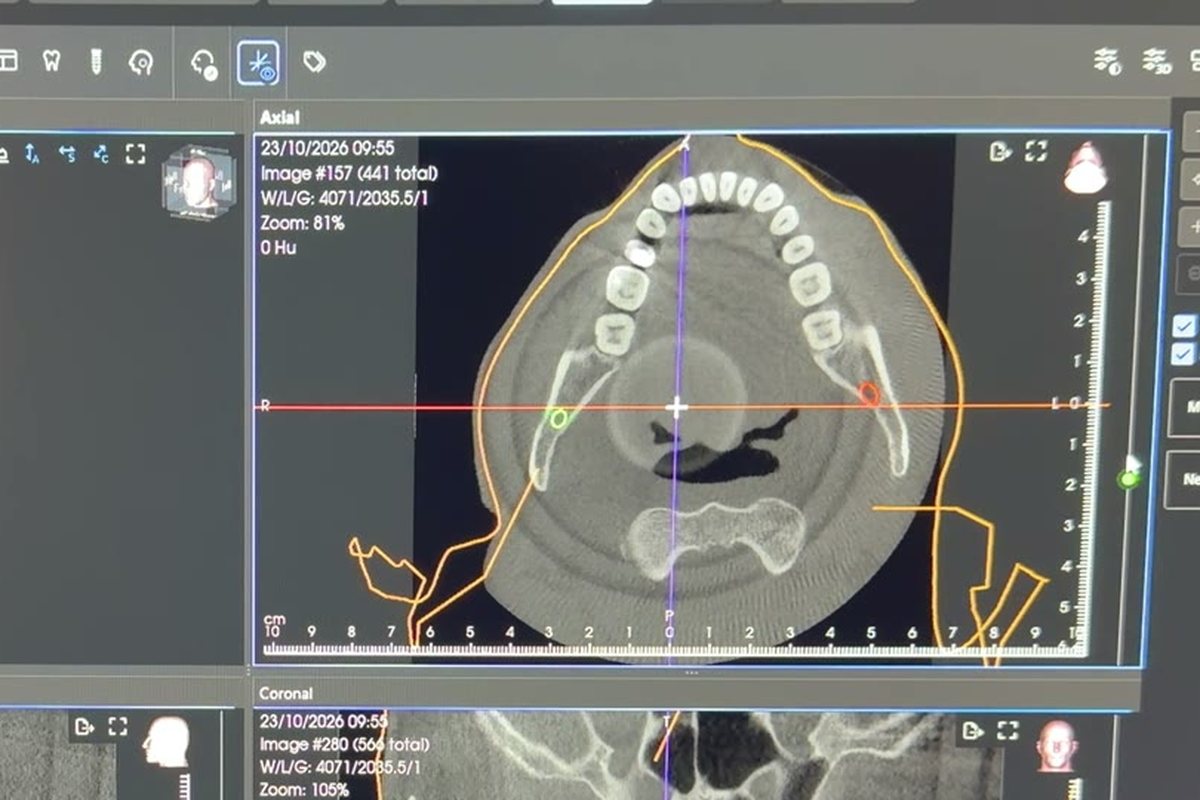
MyRay Hyperion X9 Pro
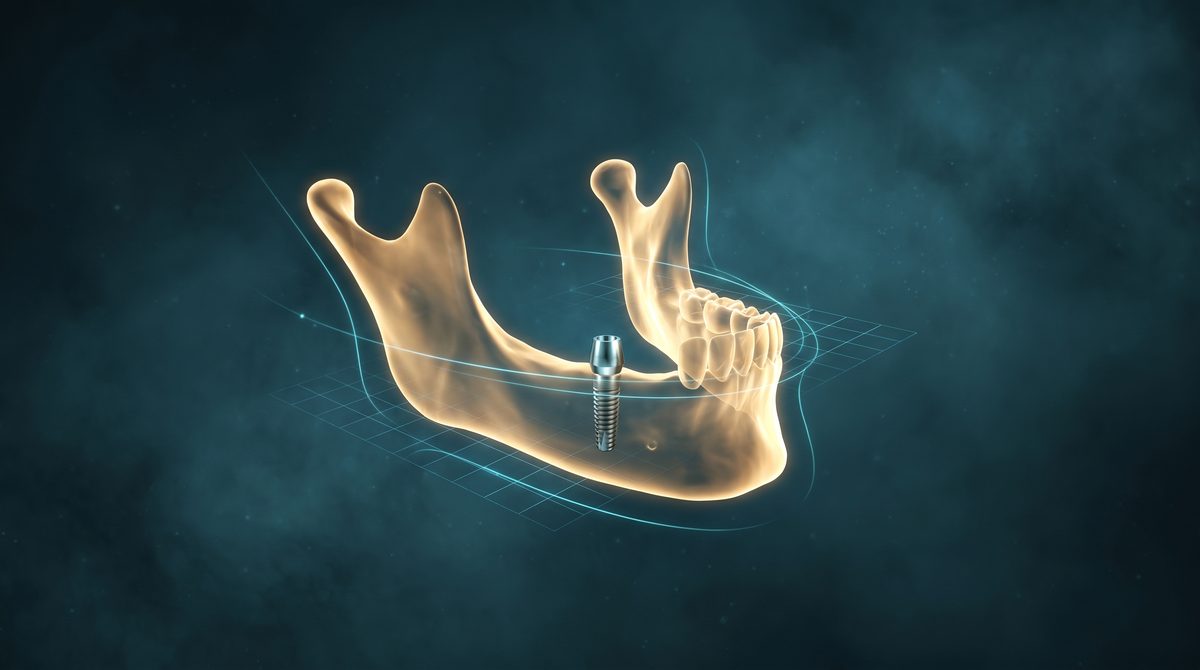
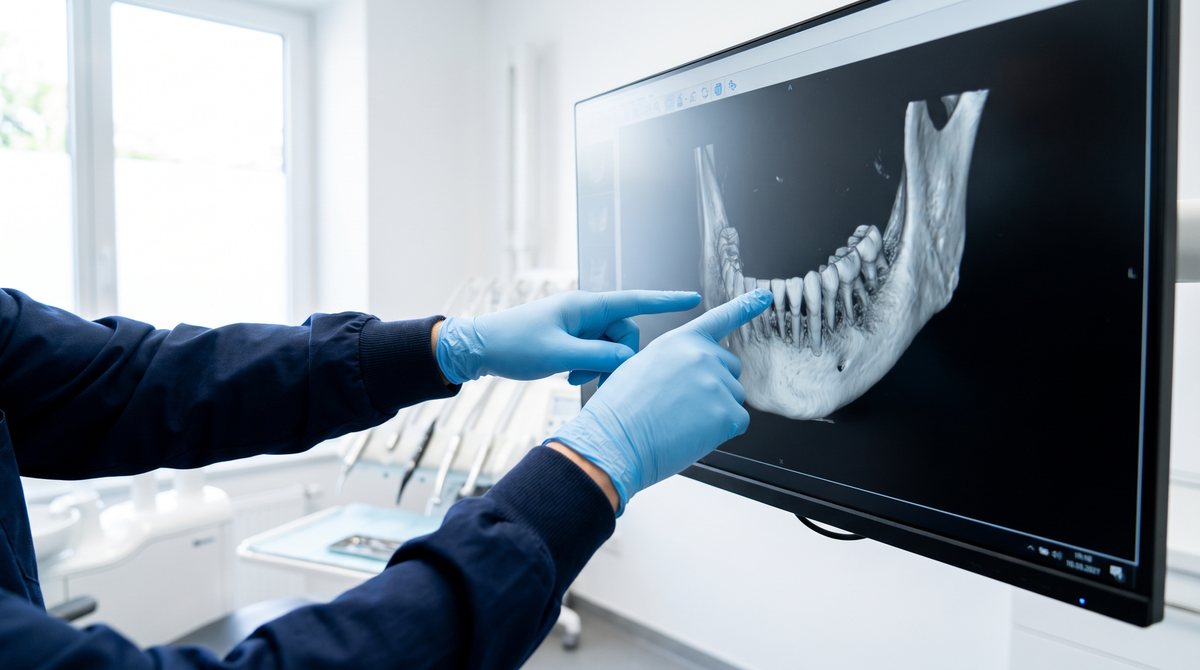
Cone beam scan of bone and sinus.
Implant surgery
If there is not enough bone, a bone graft or sinus lift can create the conditions for an implant. Whether this is necessary and sensible is decided by the examination and individual planning.
Surgery by Dr. Ayse Yilmaz Bastug, oral and maxillofacial surgeon, as part of a coordinated treatment plan with Dr. Mohammad Shaker.
Patient guide
A dental bone graft adds bone where the jaw has become too thin or too low to hold an implant. Bone substitute material, or sometimes a little of your own bone, is placed in the area and covered. Over several months new bone grows into and around it. Depending on the material, some graft particles can remain within the healed bone for many years, which is normal.
Bone loss after a missing tooth is normal. A tooth root keeps the bone around it active. Once the tooth is gone, the bone slowly shrinks, especially in the first months after an extraction. In the upper back jaw, the sinus can also expand downwards. Years later, when an implant is planned, there may simply not be enough bone left.
At German DentAllée Clinic in Jumeirah 1, bone grafting, socket preservation and sinus lifts are performed by Dr. Ayse Yilmaz Bastug, PhD, DHA specialist in oral and maxillofacial surgery with implantology privileges. The plan is made together with Dr. Mohammad Shaker, DHA Specialist Prosthodontist, because the amount of bone you need depends on the tooth that will sit on top.
This page explains the different kinds of grafts, when they are done together with the implant and when before it, what recovery feels like, how long the bone needs, and what you can do to help it heal.
Is this for you?
Step by step
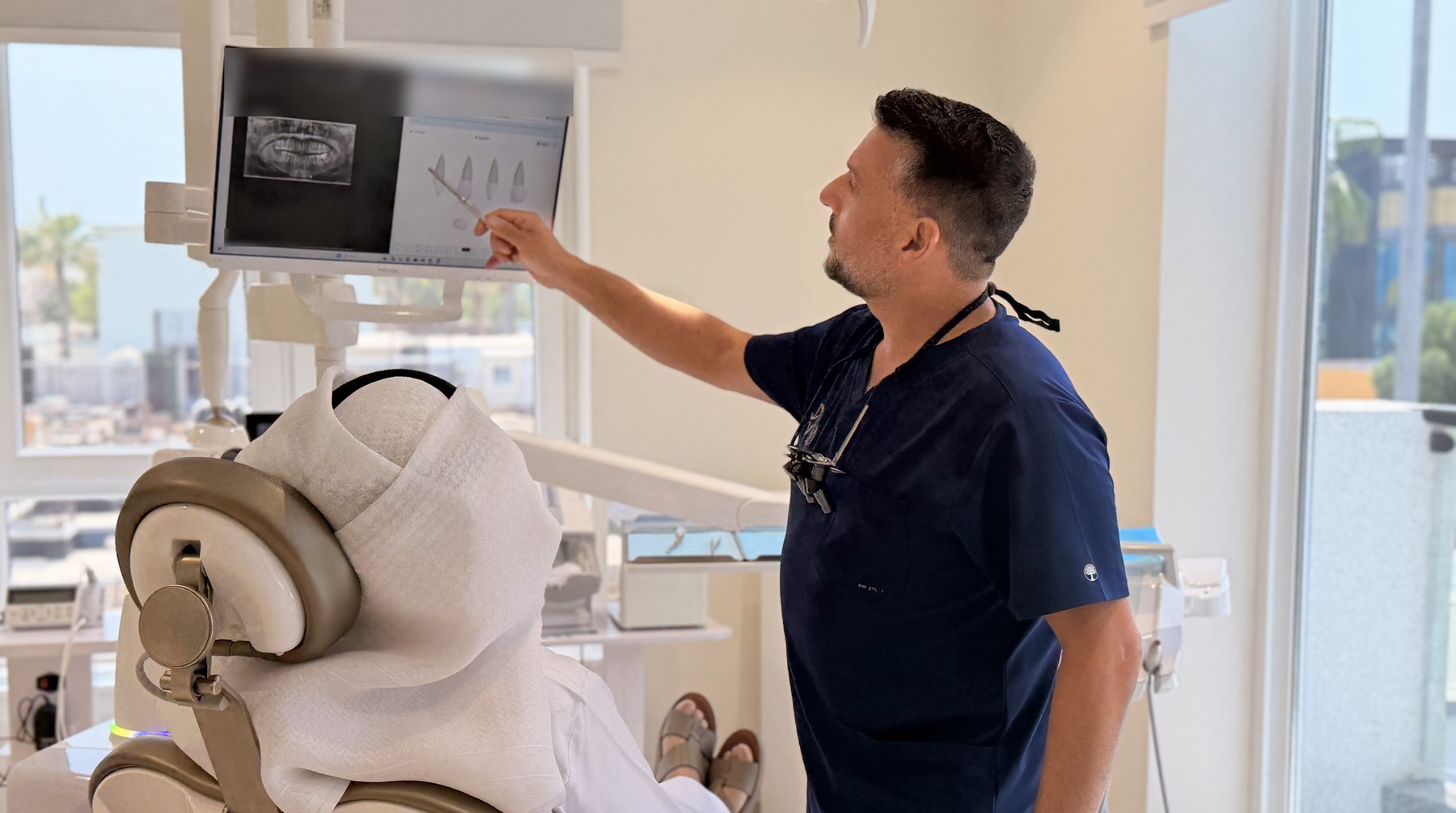
When it is medically needed, a 3D scan shows the height and width of the bone and the position of the sinus.
Whether bone is added before or together with the implant is decided on the scan.
Bone substitute or your own bone is placed and covered. In the upper jaw the sinus floor is lifted from inside or from the side.
Where needed, gum tissue is thickened with a connective tissue graft.
After healing, or in the same session, the implant is placed.
That depends on what your teeth need, so a price without an examination would not be honest. After the examination you receive a written treatment plan with all costs, before anything starts. Payment and insurance
What changes the cost
A graft adds healing time and can cause swelling, bruising or, rarely, an infection or a graft that does not take. Many patients do not need a graft at all.
Your next step
Or call 800 433 368 (toll free) · Sat to Thu 9:00 to 18:00 · Fri closed
The most common reason is a missing tooth. Without a root, the bone loses its stimulus and slowly resorbs, often most in width. Other reasons are gum disease that has destroyed bone around teeth, infections at the root tip, injuries, cysts, or a denture that has pressed on the jaw for many years.
An implant needs bone all around it to heal in and to carry chewing forces for many years. If bone is too thin, the implant surface can be exposed. If the bone is too low, the implant could reach the sinus in the upper jaw or the nerve in the lower jaw. And if bone and gum are missing in the front, the crown may look too long and the gum line uneven, even if the implant itself is stable.
That is why bone is part of the plan, not an afterthought. On our implants page you can read how the implant itself is planned and placed.
Whether you need a bone graft, and which kind, is decided after the clinical examination and imaging, including a cone beam scan (CBCT) on the MyRay Hyperion X9 Pro in the clinic when it is clinically needed. One scan takes 6.4 seconds. It shows the height and width of the bone, the position of the sinus and its floor, and the course of the nerve in the lower jaw.
On the scan the planned implant is placed virtually under the future crown. Then it becomes visible where bone is missing: on the cheek side, in height, or under the sinus. In selected cases a shorter or narrower implant, or a slightly different angle, can reduce the need for grafting, depending on the anatomy and the planned crown. In other cases more grafting is needed than expected. Either way, you see your own scan and the reasons behind the recommendation.
Dr. Mohammad completed a certificate of expertise in cone beam CT in 2008 and the Implantology curriculum (GER 🇩🇪) of the German society DGI in 2006/07. Planning bone and teeth together is how he worked for twenty years in Germany, and how the team works in Jumeirah. More on the scanner on our technology page.
Bone grafting is a family of techniques. Which one is used depends on where bone is missing and how much.
Done on the day a tooth is removed. The empty socket is filled with bone substitute and covered, so it can keep more of its shape while healing. This can help preserve bone volume for a later implant, although further grafting may still be needed. More on our tooth extraction page.
When a small amount of bone is missing on one side, the implant is placed and the gap is filled with bone substitute in the same session, covered by a membrane. This is called guided bone regeneration.
When the jaw is too narrow or too low for an implant to be stable, bone is built up first. After healing, usually several months, the implant follows.
In the upper back jaw, when there is some bone under the sinus but not quite enough. The sinus floor is gently lifted from the implant site itself, and bone substitute is placed underneath. Often the implant goes in at the same time.
When the bone under the sinus is very low. A small window is opened in the side of the jaw, the sinus membrane is lifted and the space below it is filled with bone substitute. The implant follows in the same session or after healing, depending on the remaining bone.
In most cases a proven bone substitute material is used. It acts as a framework for new bone: your own bone grows into and around it. Depending on the material, it is replaced slowly or partly remains within the new bone. The advantage is that no second surgical site is needed.
In general, graft materials fall into four groups: your own bone, processed bone from human donors, processed bone of animal origin, and synthetic materials. Each has advantages and limits, and not every material is suitable for every situation.
Sometimes your own bone is used, for example small particles collected while preparing the implant site. Own bone heals well, and in some situations it shortens the healing time. For larger defects, mixtures are common.
The graft is usually covered by a membrane, a thin layer that keeps the soft gum from growing into the bone area while it matures. You hear which material is planned for you, why, and where it comes from, before treatment. If you have religious or personal preferences about the origin of graft materials, tell us at the consultation, so we can discuss the options with you.
Bone is the foundation, but the gum around an implant decides how natural it looks and how easy it is to keep clean. Thin gum tends to recede and can let a grey shadow of the implant show through. Thicker gum may help reduce the risk of recession, although long term stability also depends on hygiene, implant position and other factors.
Where needed, the gum is thickened with a connective tissue graft, a small piece of tissue usually taken from the palate and placed under the gum at the implant site. These procedures can be done together with the implant, at the second stage, or on their own around natural teeth with gum recession. Our page on gum recession explains this for natural teeth.
For front teeth in particular, bone and soft tissue are planned together with the final crown. Dr. Mohammad defines where the gum line should end, and the surgical steps are planned to reach it.
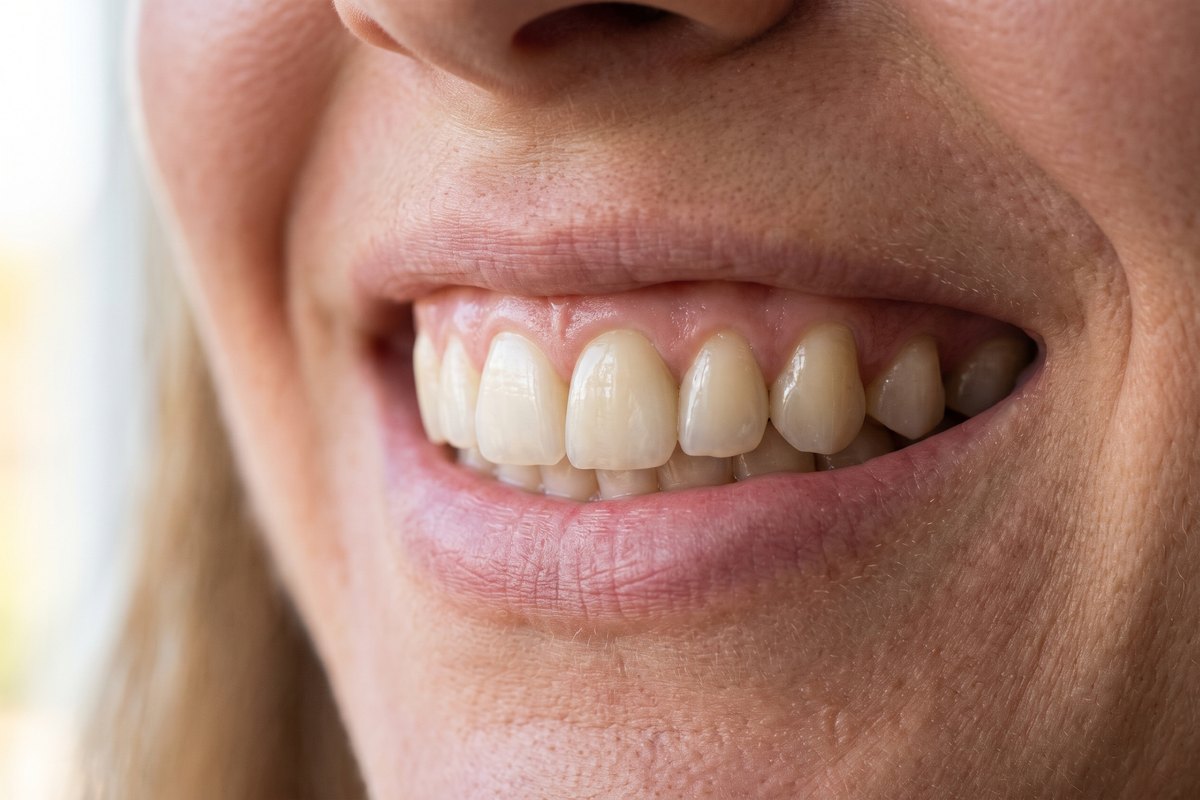
A graft is not the only way forward. Depending on your bone, your health and your wishes, these options can be discussed:
In selected cases they fit into the existing bone. Whether they are suitable depends on the bone quality, the bite and the planned crown.
A bridge on the neighbouring teeth needs no implant and no graft, but the neighbouring teeth have to be prepared for it.
A partial or full denture can replace teeth without surgery. It is less firm than a fixed solution and needs regular adjustment.
You can also decide not to replace the tooth for now. The bone may continue to shrink over time, which can make a later implant more complex.
Bone grafting and sinus lifts are done under local anaesthetic. Nitrous oxide is available if you are anxious, and the anaesthetic can be given with the Wand, which delivers it slowly and evenly. The anaesthetic reduces pain, but you may feel pressure during the procedure. If you feel discomfort, tell us and more anaesthetic can be given.
Afterwards, swelling is the most common symptom and usually peaks on the second or third day. Bruising on the cheek is possible after larger grafts or an external sinus lift. Recovery is often compared to a wisdom tooth removal: uncomfortable for a few days, then usually getting better each day. Office work is often possible again after two to three days, depending on the size of the procedure.
After a sinus lift there are a few extra rules for about two weeks, or for as long as your surgeon advises: do not blow your nose, sneeze with your mouth open and avoid straws. Discuss any planned flight with your surgeon before treatment, and fly only after she has cleared you.
A little bleeding from the nose on the first day can happen. Contact the clinic if bleeding is heavy or does not stop, or if pain, swelling or fever get worse. For heavy bleeding that cannot be controlled, or any difficulty breathing, seek emergency care straight away.
Timeline
Swelling and tenderness, highest around the second day. Cool, rest, soft food.
Check up, stitches removed. The gum closes over the graft.
Gum fully healed on the surface. Underneath, new bone starts to form in the graft.
Most grafts mature in this window, depending on size and material.
Larger grafts and external sinus lifts may need this long before the implant.
The surgeon checks the healing, with a scan or X-ray where needed, before the implant is placed.
Technology
Cone beam scan of bone and sinus.
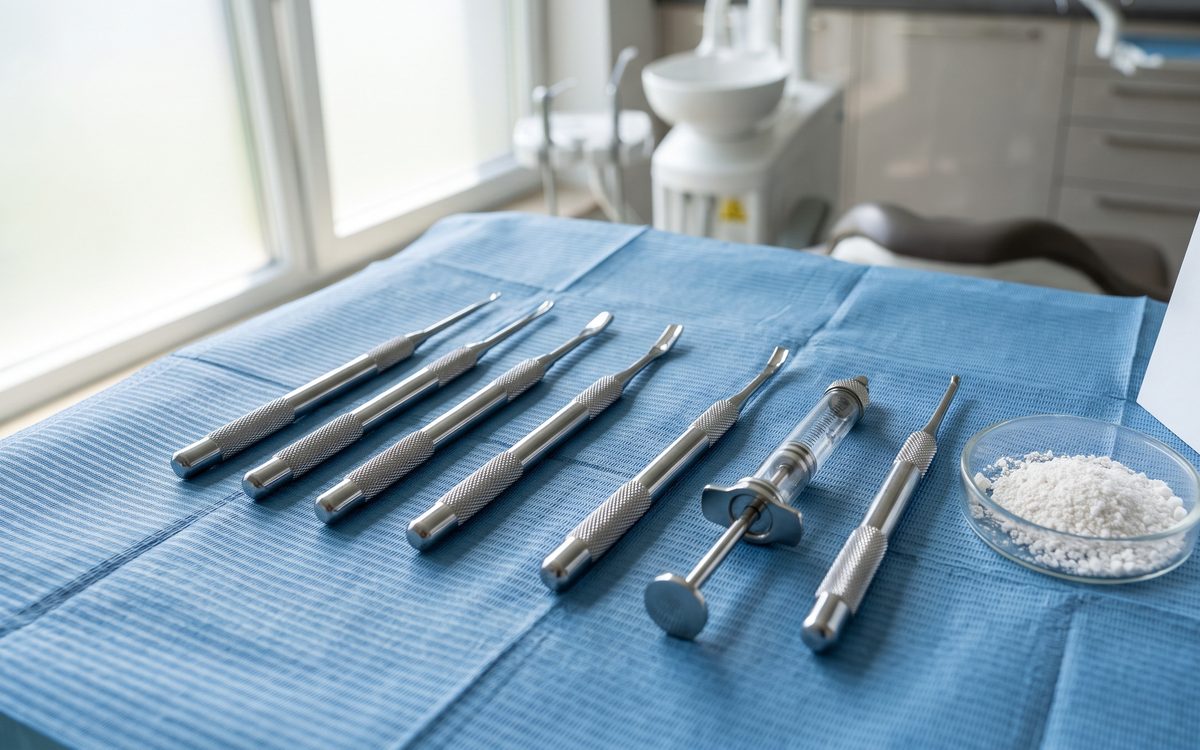
Two techniques, chosen by the bone height.
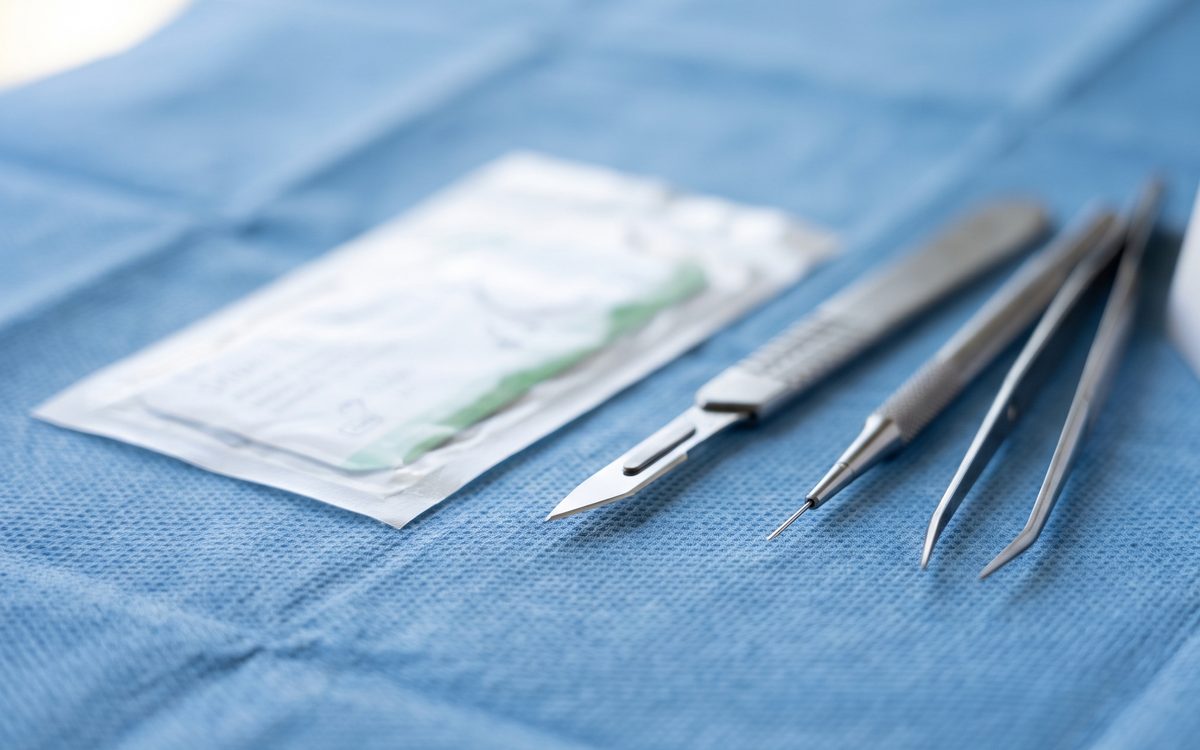
Soft tissue grafting to increase gum thickness where needed.
Myth or fact
MythIf you have no bone, implants are out of the question.
FactBone can often be rebuilt. The 3D scan shows how much is missing and what is realistic.
MythBone grafting is always a big operation.
FactMany grafts are small and done in the same session as the implant or an extraction.
MythA sinus lift goes into the nose.
FactThe procedure is done through the mouth. The sinus lining is gently lifted and graft material is placed beneath it. The nose itself is not operated on.
MythAfter a graft the implant can go in a week later.
FactNew bone needs time to form. Depending on size and type, this usually takes several months.
More answers
Tap a question to open the answer. Anything else, ask us on WhatsApp.
Bone grafting is a well established part of implant dentistry, but results can vary from person to person, and not every graft heals the same way.
A rough guide. The final decision is made after the examination and the necessary imaging.
| Socket preservation | Graft with implant | Graft before implant | Sinus lift | |
|---|---|---|---|---|
| Typical situation | Tooth is being removed now | Small defect next to the implant | Jaw too narrow or too low | Upper back jaw, sinus too low |
| Timing | Same day as extraction | Same session as implant | Several months before implant | Same session or before implant |
| Extra healing time | Several months before the implant | Usually little extra | Several months | Several months |
| Recovery | Like an extraction | Like an implant | Somewhat more swelling | Swelling, nose rules for about two weeks |
Only if the 3D scan shows that there is not enough bone for a stable implant and a natural looking crown. Many implants are placed without grafting.
Local anaesthetic is used to reduce pain. You may feel pressure, and if you feel discomfort, tell us and more anaesthetic can be given. Afterwards there is usually swelling and soreness for a few days, often managed with normal painkillers.
It is done under local anaesthetic. Afterwards there can be swelling for a few days, similar to a wisdom tooth removal.
Usually several months before an implant can be placed, often three to six, longer for large grafts and some sinus lifts. Before the implant, the surgeon checks the healing, with a scan or X-ray where needed.
It happens in stages. First the graft heals, then the implant needs time to heal into the bone, and only then is the final crown made. When graft and implant are placed together, these stages overlap. You receive a timeline for your own case with the treatment plan.
Office work is often possible again after two to three days, depending on the size of the procedure. Physical work and sport usually need a little longer. You get a recommendation for your case.
Often yes, when there is enough bone to hold it firmly. The scan shows this in advance.
Usually from a proven bone substitute material, sometimes from your own bone. You hear the options and the origin of the material before treatment.
Socket preservation can slow down bone loss and help preserve bone volume for a later implant. Further grafting may still be needed.
An internal lift raises the sinus floor through the implant site when some bone is left. An external lift opens a small window at the side of the jaw when bone is very low. The surgeon decides on the basis of the examination and the scan.
Pressure changes can stress the healing sinus. Ask us before booking a flight in the first two weeks after the procedure.
It depends on the type and size of the graft and the materials. You receive a written plan with all costs after the 3D scan. We do not quote prices without an examination. The first consultation is charged and credited to your treatment if you go ahead.
That depends on your policy. Before treatment, ask your insurer whether bone grafting is covered and whether prior approval is needed. We do not bill insurers directly, but you receive all documents to claim from your insurer.
Dr. Ayse Yilmaz Bastug, DHA specialist in oral and maxillofacial surgery. She is in the clinic every Tuesday and whenever a case needs her.
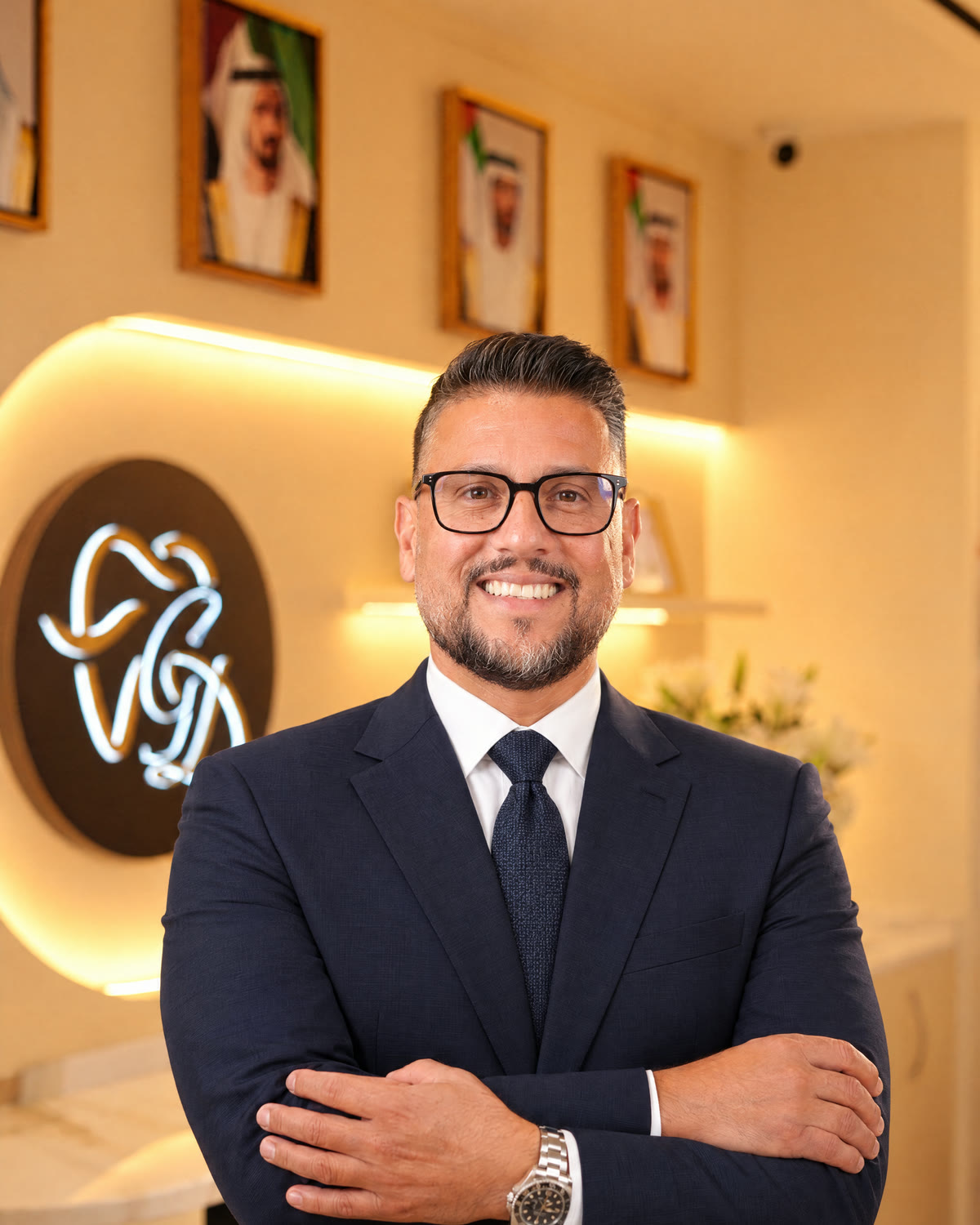
Why with Dr. Mohammad Shaker
Bone support is one of the factors in how long an implant lasts, alongside gum health, hygiene, smoking, bite forces and regular maintenance. At German DentAllée bone and soft tissue are planned together with the final tooth, by the surgeon and the prosthodontist working as one team.
Dr. med. dent. · M.Sc. Prosthodontics · DHA Specialist Prosthodontist · Specialist Senior Dentistry (GER 🇩🇪)
Meet Dr. Mohammad ShakerAlso at the clinic
You are welcome
One message is enough. No forms, no call centre. You write, the clinic answers in Arabic, English or German.
Villa 21B, La Mer · Jumeirah 1 · Dubai
Sat to Thu 9:00 to 18:00 · Fri closed