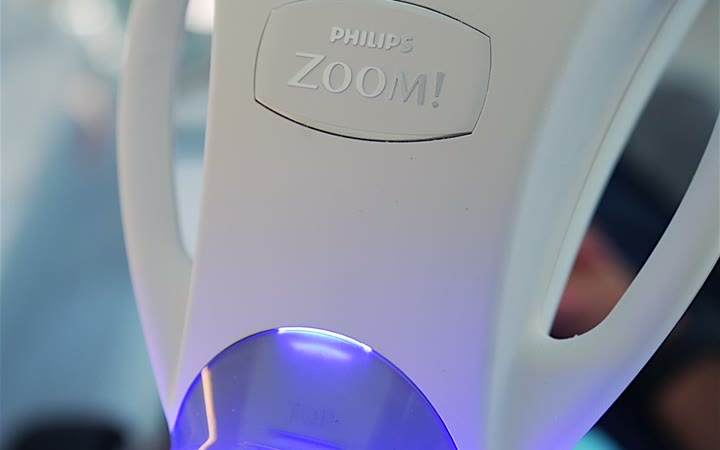
Philips Zoom
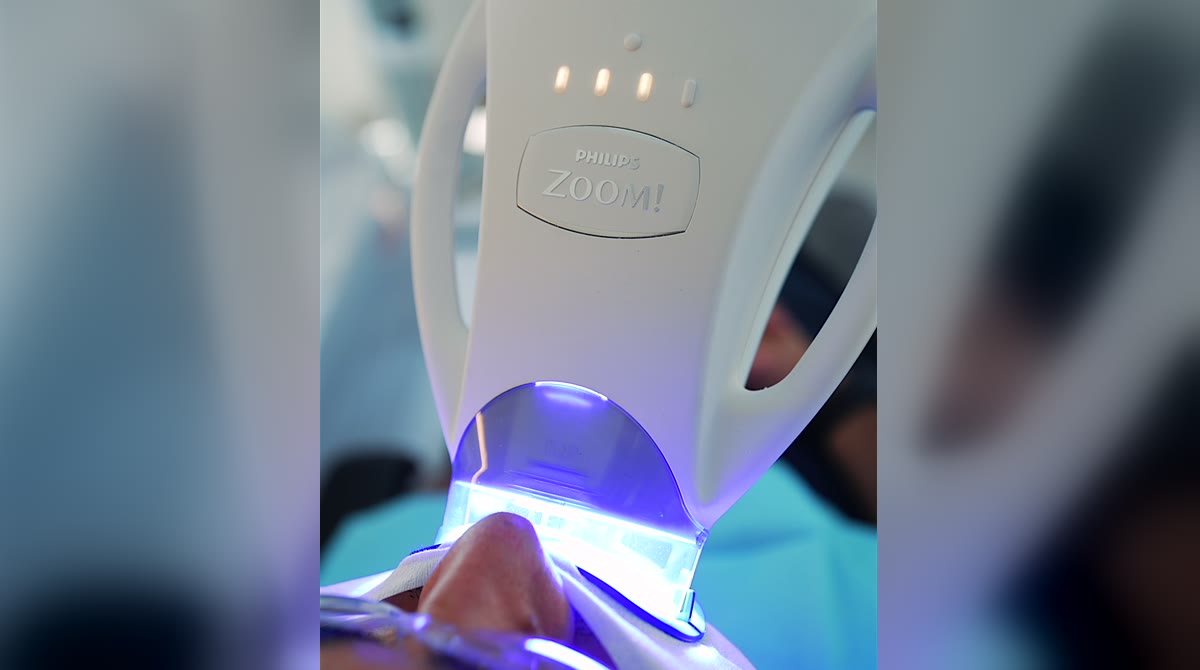
In clinic whitening lamp with activated gel.


Philips Zoom · in clinic and at home
We offer professional teeth whitening with Philips Zoom in our clinic. After an examination we advise you which method is suitable for your teeth.
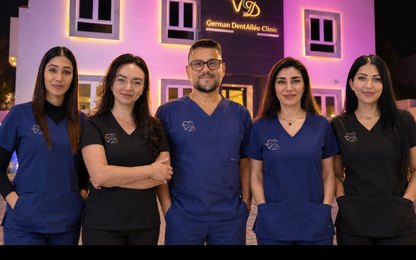
 At German DentAllée Clinic, led by Dr. Mohammad Shaker, Medical Director and DHA Specialist Prosthodontist.
Patient guide
Professional teeth whitening lightens the natural colour of your teeth with a peroxide gel that is applied and controlled by the dental team. It works inside the enamel and dentine, so it changes the colour of the tooth itself, not just the surface stains that a cleaning removes.
At German DentAllée in Jumeirah 1 we offer three ways to whiten: Philips Zoom in the clinic in one visit, custom trays to whiten at home, and internal whitening for a single tooth that has darkened from inside. The two methods can be combined where clinically appropriate, with a session in the clinic to start and trays to refresh the result at home.
Whitening is cosmetic, but it is done on living teeth. Before any gel is applied, the teeth and gums are checked, fillings and crowns at the front are noted, and you hear honestly whether whitening alone will reach the shade you have in mind. Sometimes the answer is yes, sometimes a cleaning is enough, and sometimes another treatment is the better way.
Is this for you?
Step by step
Whitening only works on healthy, clean teeth. Gums and fillings are checked first, ideally after a cleaning.
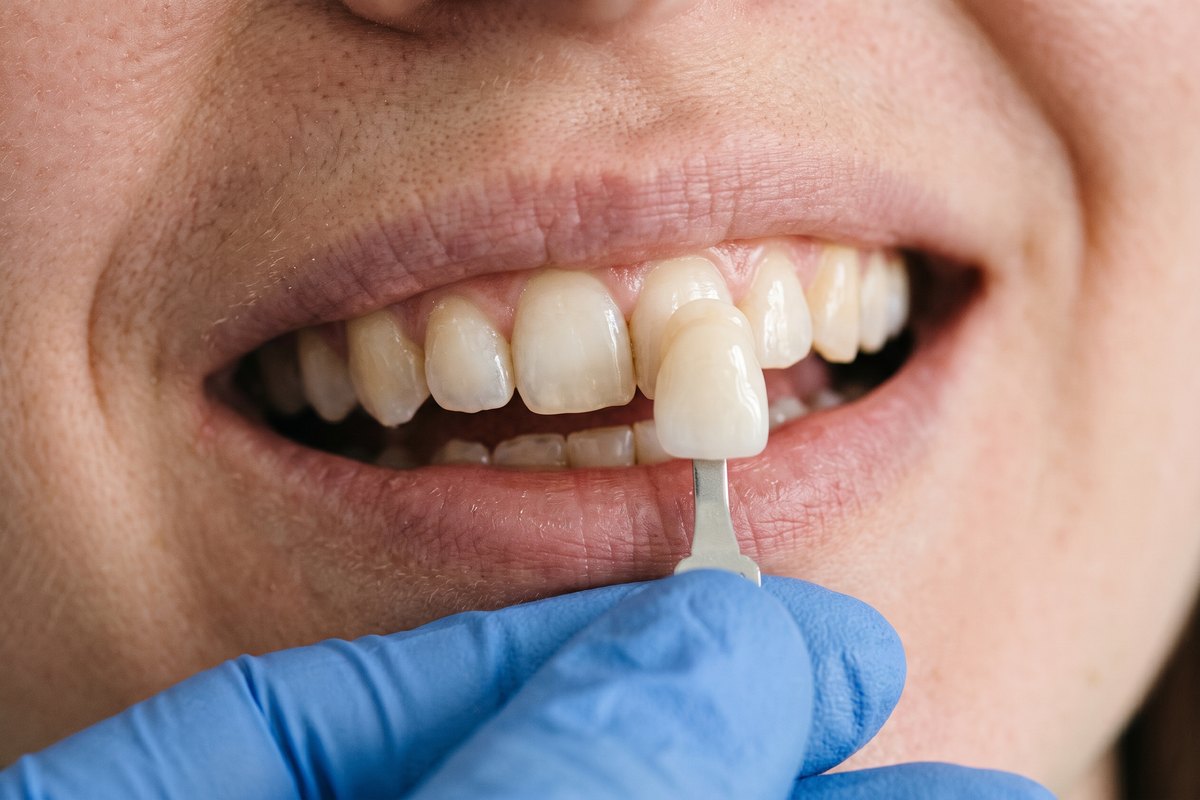
Your starting shade is recorded with the VITA shade guide, so the result can be measured.
Lips and gums are covered and protected.
The whitening gel is applied and activated by the Philips Zoom lamp in several short rounds.
Trays and gel for at home keep the result. You get clear advice on what to avoid in the first days.
That depends on what your teeth need, so a price without an examination would not be honest. After the examination you receive a written treatment plan with all costs, before anything starts. Payment and insurance
What changes the cost
Whitening can make teeth sensitive for a few days and can irritate the gums. Crowns, veneers and fillings do not lighten, and results differ from person to person.
Your next step
Or call 800 433 368 (toll free) · Sat to Thu 9:00 to 18:00 · Fri closed
The colour you see is a mix of the enamel on the outside and the dentine beneath it. Enamel is partly translucent, dentine is naturally more yellow. Over the years enamel becomes thinner and takes up colour, and dentine becomes darker. That is why most people’s teeth slowly turn more yellow with age, even with good care.
Stains from outside come from coffee, tea, red drinks, saffron, spices, smoking and shisha. Many of them sit on the surface and come off with a professional cleaning. Others penetrate deeper into the enamel, and those are what whitening gel reaches.
Some discolouration comes from inside and responds differently: a tooth that darkened after an accident or a root canal, grey bands from certain antibiotics taken in childhood, or white and brown spots from fluorosis or early decay. These need a careful diagnosis first, because the right treatment may be internal whitening, resin infiltration, microabrasion, bonding or a veneer rather than standard whitening.
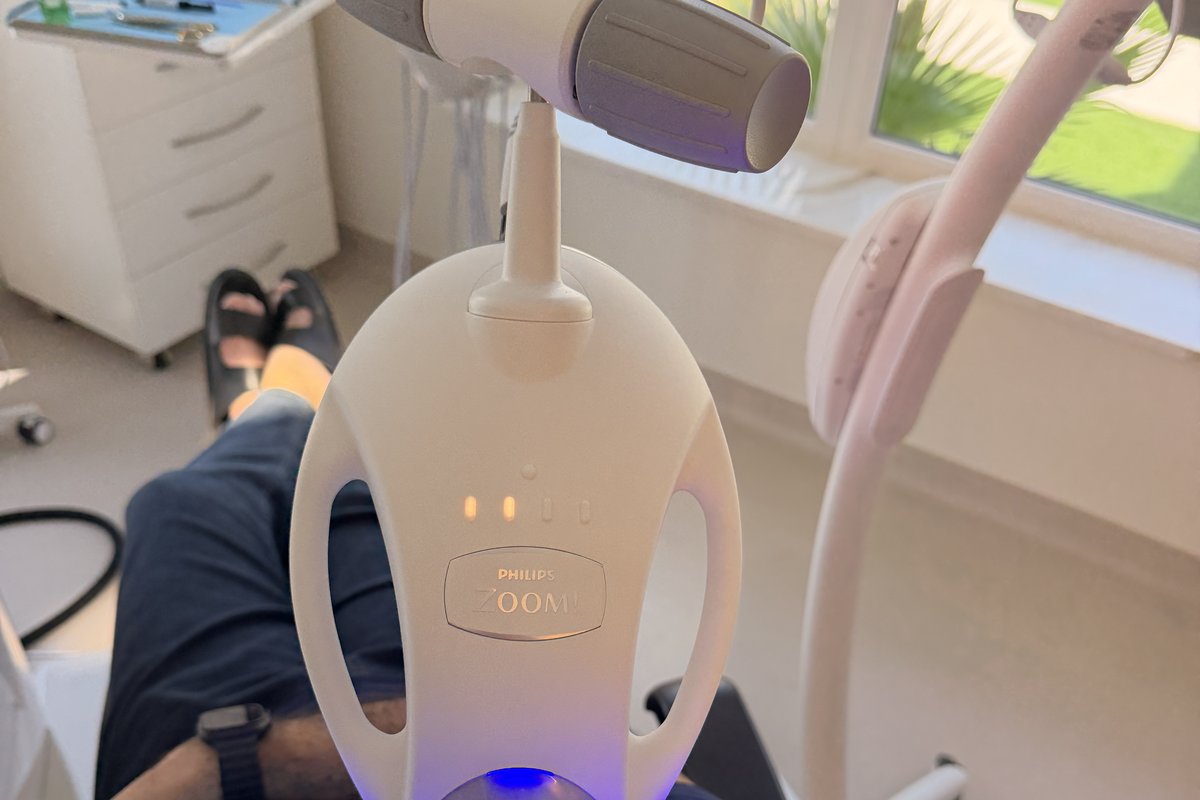
In clinic whitening is an option for patients who prefer treatment during a supervised appointment. With Philips Zoom, a whitening gel is applied to the teeth and activated by the Zoom lamp in several short rounds within one appointment. How long it takes is explained when you book, including the check and the protection of the gums.
Before the session your starting shade is recorded with the VITA shade guide, so the change can be compared. Lips, cheeks and gums are protected with a barrier, which reduces contact of the gel with the soft tissue. Between rounds the gel is removed and fresh gel applied, and the team checks how your teeth feel. If they become sensitive, the session can be shortened or adjusted.
At the end the new shade is measured again and you receive aftercare advice and, if you chose them, home trays to keep the result.
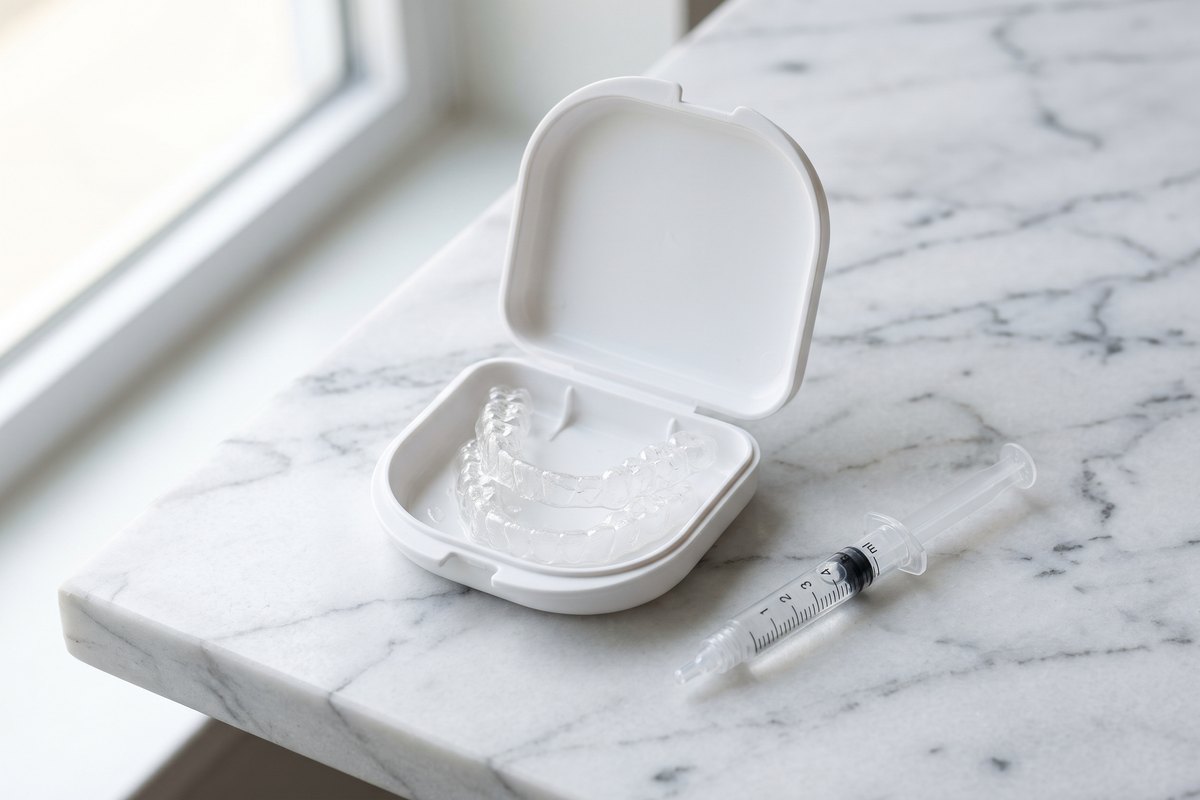
Home whitening uses thin trays made from a digital scan of your teeth, so they fit closely and help keep the gel on the teeth and away from the gums. You wear them with a lower concentration gel for a set time each day or night, usually over one to two weeks, or for a few days when you want to refresh an earlier result.
Home whitening takes longer than a session in the clinic, and sensitivity is often easier to control, because you can pause for a day if needed. It suits patients who prefer a gradual change or who want to keep their shade after Zoom.
Whitening products sold online or in shops are different. Strips that do not fit, gels of unknown concentration and “charcoal” powders can irritate the gums or wear the enamel, and they cannot be adjusted to your teeth. If you want to whiten at home, it is worth doing it with trays and gel from your dentist.
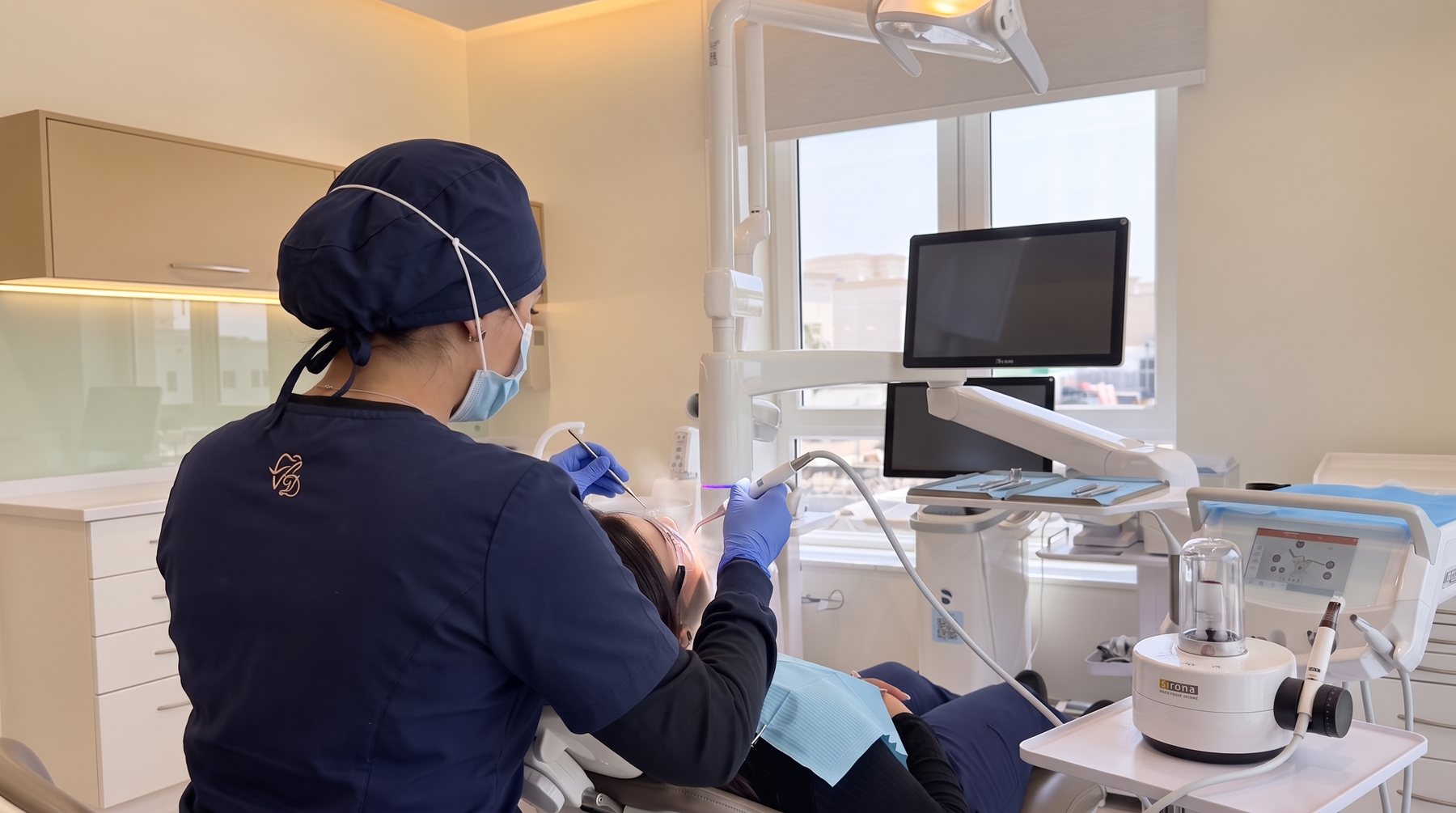
Filmed in the clinic
A real session, filmed at German DentAllée.
A single front tooth that turns grey or brown after an accident or a root canal changes colour from the inside. External whitening may not be enough for such a tooth, so internal whitening may be considered after an assessment. A protective seal is first placed over the root canal filling at the neck of the tooth. Then the whitening material is placed inside the tooth, through a small opening at the back, and sealed in. The material is changed over a few visits to bring the shade closer to the neighbouring teeth. An exact match cannot be promised. Finally the opening is closed with a tooth coloured filling.
Internal whitening is possible when the tooth has a sound root canal filling and the root is healthy. That is checked with an X-ray first. If the root canal filling does not seal well or there are signs of infection, it is treated before whitening, see root canal treatment. Internal whitening keeps your own tooth and often avoids a crown or veneer, and if the shade later fades a little, it can usually be repeated. A rare but important risk is resorption at the neck of the root, particularly after an accident, so the tooth is followed up with check ups and X-rays.
A dark tooth is not always a dead tooth. Sometimes a tooth darkens after an accident while the nerve is still alive, or the colour comes from an old filling or a crack. That is why the cause is found first, with a test of the nerve and an X-ray, before any whitening is planned. If the tooth also needs a new shape, internal whitening can be combined with bonding or a veneer.
Whitening changes the colour of natural tooth structure. Composite fillings, ceramic crowns and veneers keep their colour. If you have visible fillings or crowns at the front, they may look darker next to your newly whitened teeth. We plan this with you before whitening, and where needed the fillings are replaced about two weeks after the final shade, when the colour has settled and the bond to the tooth is reliable again.
White spots behave the other way round. Whitening can make them look brighter for a while, so they often stand out more. After a diagnosis, superficial white spots can sometimes be improved without drilling, with resin infiltration (Icon) or enamel microabrasion, which removes a very thin surface layer of enamel. Complete removal cannot be promised. Small chips and uneven edges can be corrected with composite bonding once the shade is set.
If you are thinking about veneers, whitening usually comes first. When your natural teeth are lighter, the veneers can be matched to the new shade and sometimes fewer teeth need veneers at all. That is why whitening is often the first step of a smile makeover.
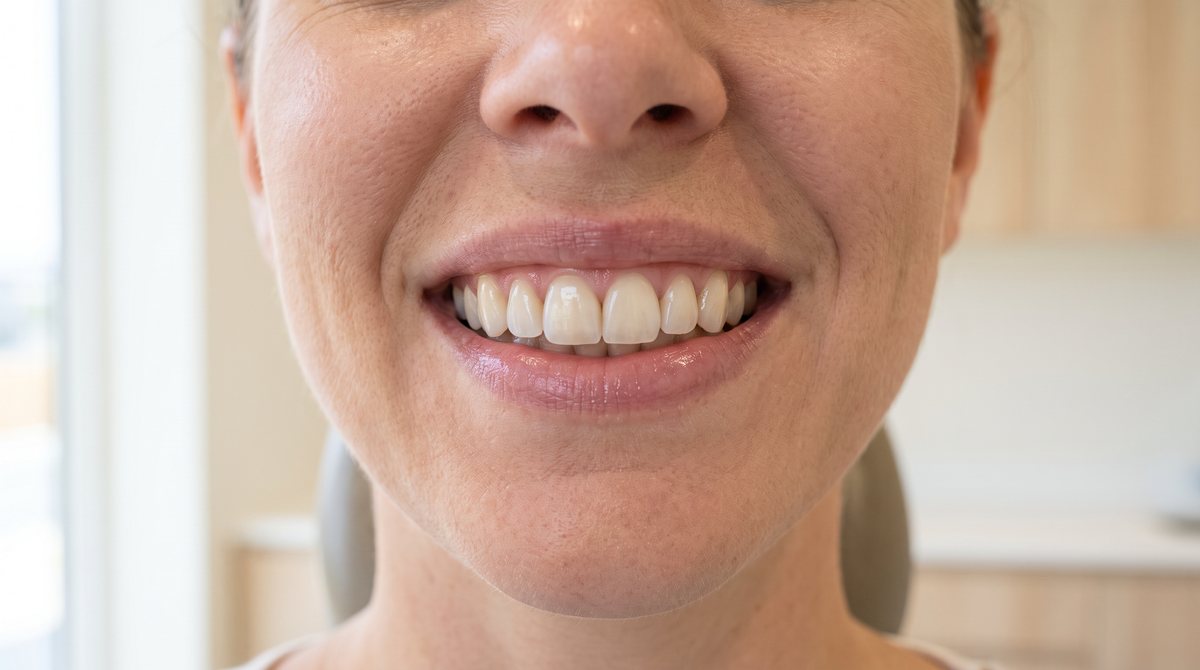
Whitening suits adults with healthy teeth and gums whose teeth have turned yellow or brownish over time. It works well before a wedding, an important event or photographs, and as a first step before other cosmetic treatment.
Some situations need treatment first or a different plan. Untreated cavities, cracked teeth and fillings that no longer seal let the gel reach the inside of the tooth and cause pain, so they are treated first. Inflamed gums are calmed first, ideally with a professional cleaning with our hygienist Afra Alblooshi. Exposed tooth necks and strong existing sensitivity need a gentle protocol, and sometimes home trays instead of a clinic session.
Whitening is usually postponed during pregnancy and breastfeeding, as a precaution. For teenagers, we look at it individually, because young teeth have larger pulps and are more often sensitive. And whitening does not suit every expectation: teeth have a natural range of shades, and a result that looks like porcelain is not realistic for every tooth. You hear honestly what is likely for yours.
Timeline
Check up with Dr. Mohammad, ideally with a professional cleaning. Cavities, cracks and gums are checked, the starting shade is recorded.
Protection of lips and gums, several short rounds of gel and light, shade measured again at the end.
Mild sensitivity can occur and usually settles within a day or two. You follow the advice for your products, and avoiding smoking helps the result.
The shade settles. If you have home trays, you continue or top up as instructed.
If front fillings need replacing to match, this is the right time.
Refresh with your trays when needed. Regular cleanings keep surface stains away.
Technology
In clinic whitening lamp with activated gel.
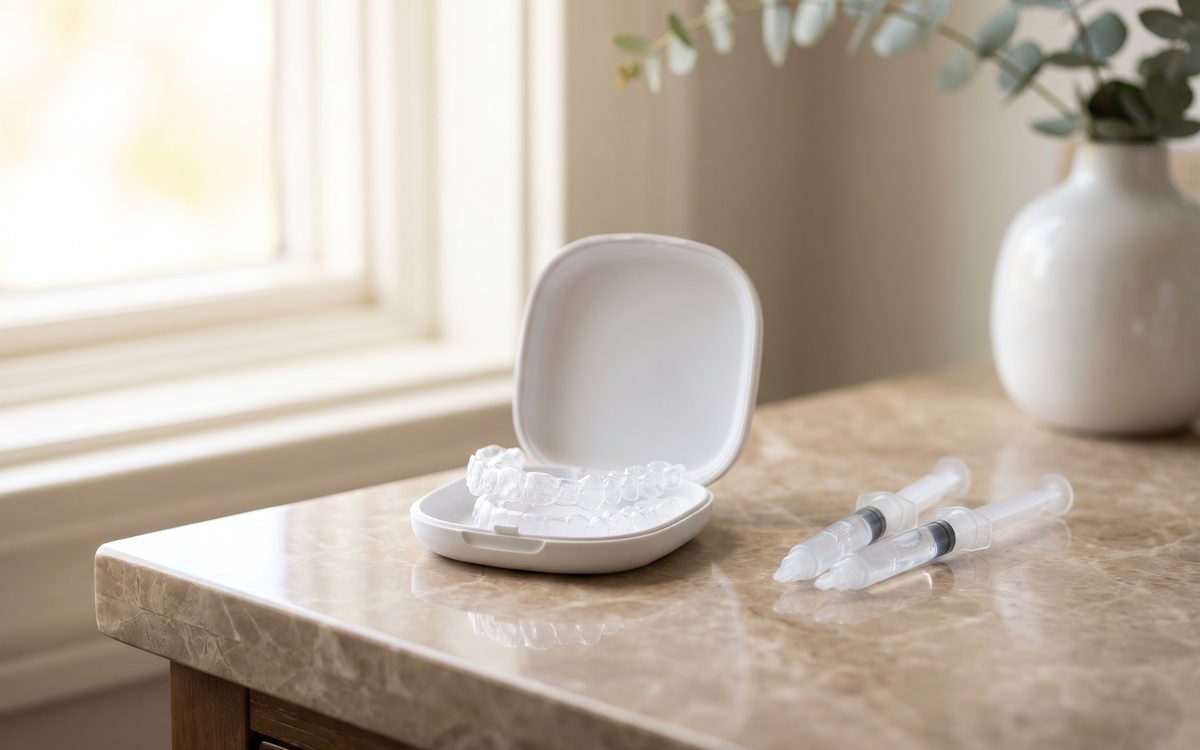
Trays made from a digital scan, gel for at home.
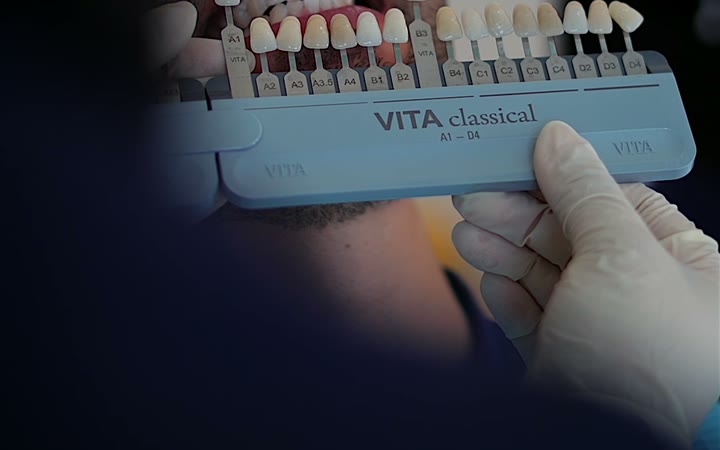
Shade measured before and after.
Myth or fact
MythWhitening damages the enamel.
FactDentist supervised whitening is generally considered safe when suitable products are used as directed. Temporary sensitivity and gum irritation can occur.
MythCharcoal toothpaste whitens teeth.
FactIt mostly scrubs the surface and can wear enamel over time. It does not change the colour inside the tooth.
MythCrowns and fillings whiten too.
FactThey do not. Ceramic and composite keep their colour, which is why we plan them before whitening.
MythThe result lasts forever.
FactWhitening lasts a long time, but diet, smoking and age slowly bring colour back. Trays let you refresh it.
More answers
Tap a question to open the answer. Anything else, ask us on WhatsApp.
Dentist supervised whitening is generally considered safe when suitable products are used as directed. Side effects are usually mild and temporary. Sensitivity can occur even when the gel is applied correctly, because the peroxide passes through the enamel into the tooth. Gum irritation comes from gel that touches the gums.
Each method lightens the teeth with peroxide. They differ in speed, comfort and control.
| Philips Zoom in clinic | Home trays | Zoom plus trays | |
|---|---|---|---|
| Time to result | One visit | Usually one to two weeks | One visit, then top ups at home |
| Supervision | By the dental team throughout | You at home, after instruction | Both |
| Sensitivity | Possible for a day or two | Often milder, you can pause | Possible, manageable |
| Evenness | Depends on the starting colour and fillings | Depends on the starting colour and fillings | Depends on the starting colour and fillings |
| Keeping the result | Fades slowly with diet | Easy to refresh | Easy to refresh |
| Suited to | An event, a clear first step | Gradual change, sensitive teeth | A strong start and long term care |
It depends on the method and whether a cleaning or other treatment comes first. After the check up you receive a written plan with all costs before anything starts. The first consultation is charged and credited towards your treatment if you go ahead.
Dentist supervised whitening is generally considered safe when suitable products are used as directed. Temporary sensitivity and gum irritation can occur.
Temporary sensitivity, including short, sharp twinges, can occur during or after the session. We adjust the rounds or the products if you feel discomfort.
That depends on your starting shade and the cause of the colour. Yellowish teeth usually respond well, grey tones less. We measure the shade before and after, and tell you what is realistic before we start.
It varies from person to person, usually from several months to a few years. Coffee, tea, smoking and age slowly bring colour back. At your check ups the shade can be compared again, and home trays let you top it up when needed.
You are told the time when you book. It includes the check, the protection of the gums and several short rounds of gel and light.
Usually you can eat normally. Studies have not shown that a strict white diet improves the result. Avoiding smoking and limiting coffee, tea and red drinks helps the shade last. You receive advice that fits your products.
No. Ceramic and composite keep their colour. If you have visible fillings or crowns in front, we plan that with you before whitening.
Often yes. A tooth that darkened after a root canal can be whitened from the inside, after an X-ray and an assessment.
Some superficial white spots can be improved with resin infiltration (Icon) or microabrasion after a diagnosis. Microabrasion removes a very thin layer of enamel. Complete removal cannot be promised, and whitening alone often makes white spots stand out more.
We recommend waiting, as a precaution. A professional cleaning is a good alternative in the meantime.
Whitening is cosmetic, and whether any part is reimbursed depends on your policy. Please check with your insurer beforehand. We do not bill insurers directly. You pay at the clinic and receive the documents to submit a claim.
Usually yes. Veneers are matched to the shade of your natural teeth, so whitening first means a lighter base and sometimes fewer veneers.

Why with Dr. Mohammad Shaker
Whitening is cosmetic, but it is still done on living teeth. He checks first whether your teeth and gums are ready, and tells you honestly when whitening will not reach the shade you want.
Dr. med. dent. · M.Sc. Prosthodontics · DHA Specialist Prosthodontist · Specialist Senior Dentistry (GER 🇩🇪)
Meet Dr. Mohammad ShakerAlso at the clinic
You are welcome
One message is enough. No forms, no call centre. You write, the clinic answers in Arabic, English or German.
Villa 21B, La Mer · Jumeirah 1 · Dubai
Sat to Thu 9:00 to 18:00 · Fri closed