SureSmile
Clear aligner system by Dentsply Sirona.


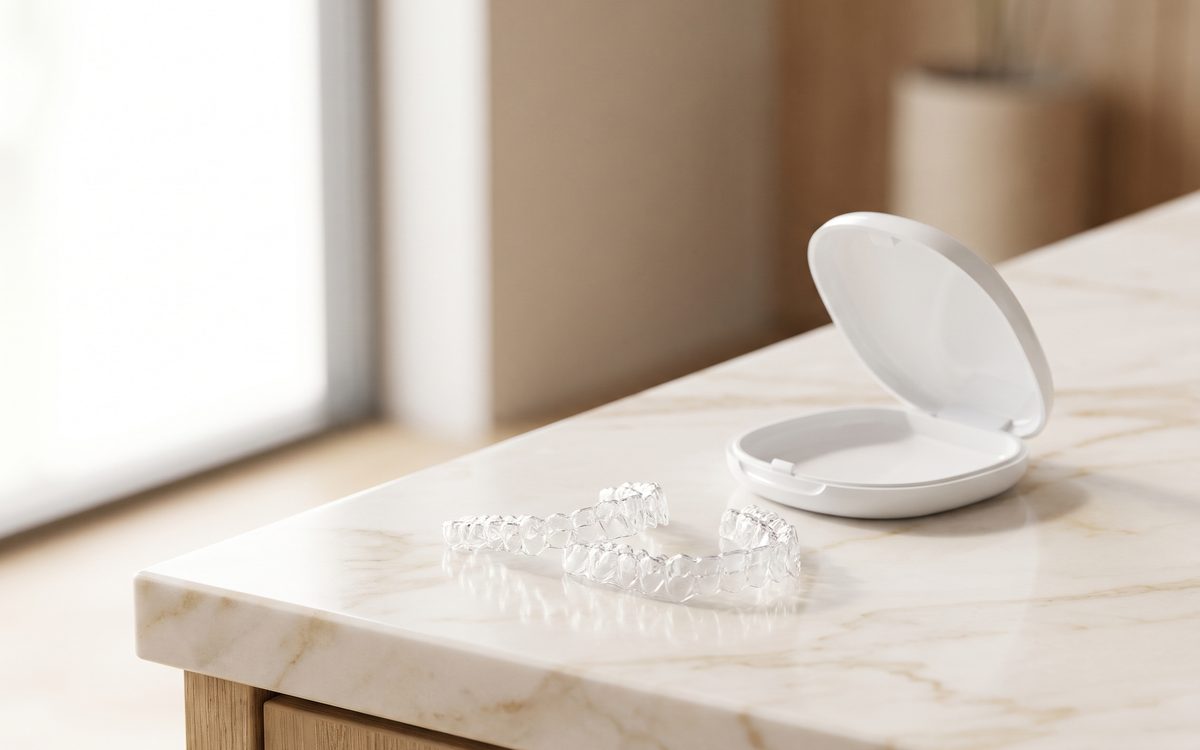
SureSmile aligners
Transparent SureSmile aligners can help to improve tooth alignment discreetly in suitable cases. The basis is an examination, digital planning and an individual treatment plan.
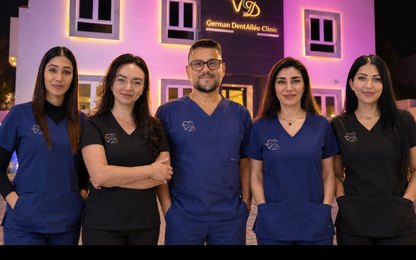
With the dental team at German DentAllée Clinic in Jumeirah, Dubai.
Patient guide
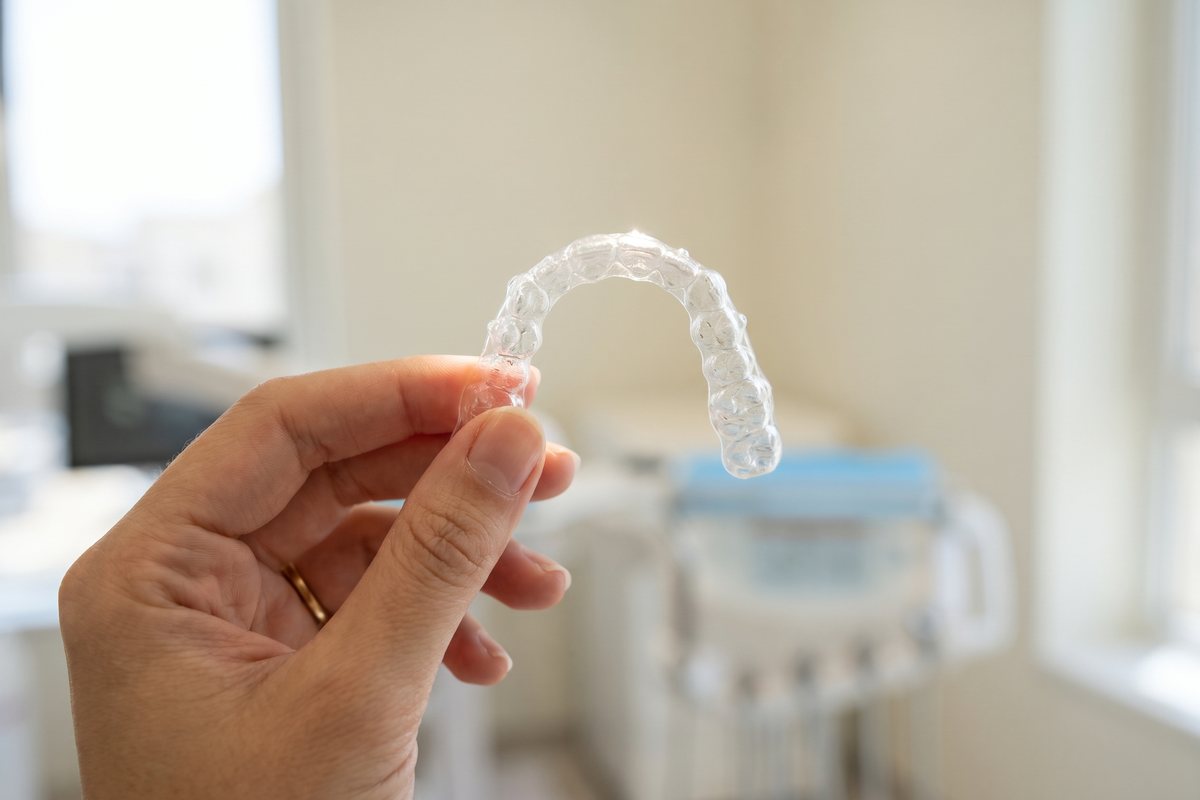
Clear aligners are thin, transparent trays that move your teeth step by step into a planned position. Each set of trays is slightly different from the one before, and as you change from one to the next, the teeth follow the plan in small, controlled steps.
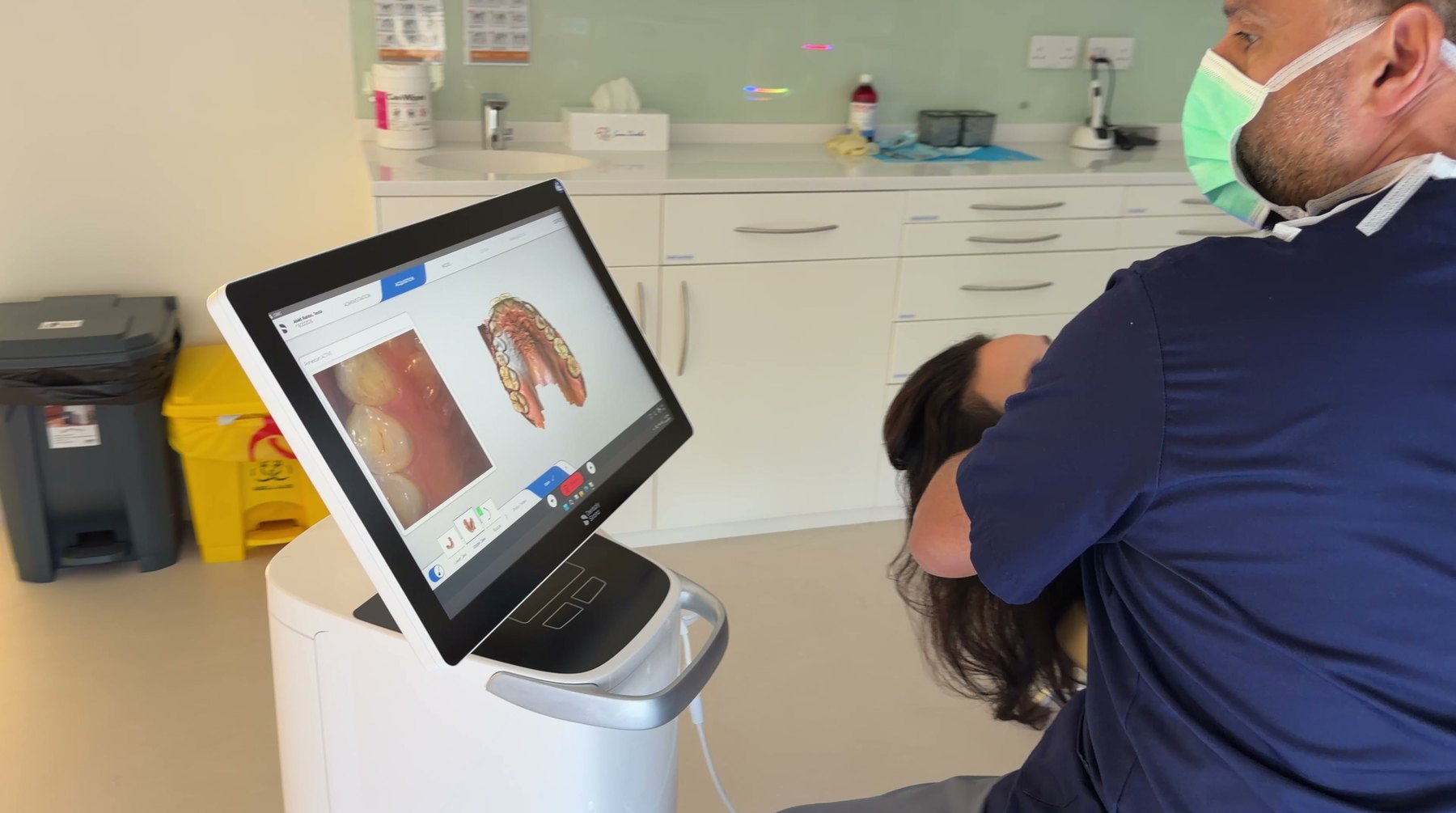
At German DentAllée in Jumeirah 1 we use SureSmile aligners by Dentsply Sirona, the company behind the Primescan scanner and the CEREC system in the clinic. Your teeth are scanned digitally, the movement of every tooth is planned on screen, and you see a simulation of the planned result before you decide to start. The actual result can differ.
Aligners are removable. You take them out to eat, to drink anything but water, and to brush. For the rest of the day and night you wear them, around 22 hours. Most people around you will not notice them, which is why many adults in Dubai choose aligners over fixed braces.
Is this for you?
Step by step
Your teeth are scanned with the Primescan. No paste.
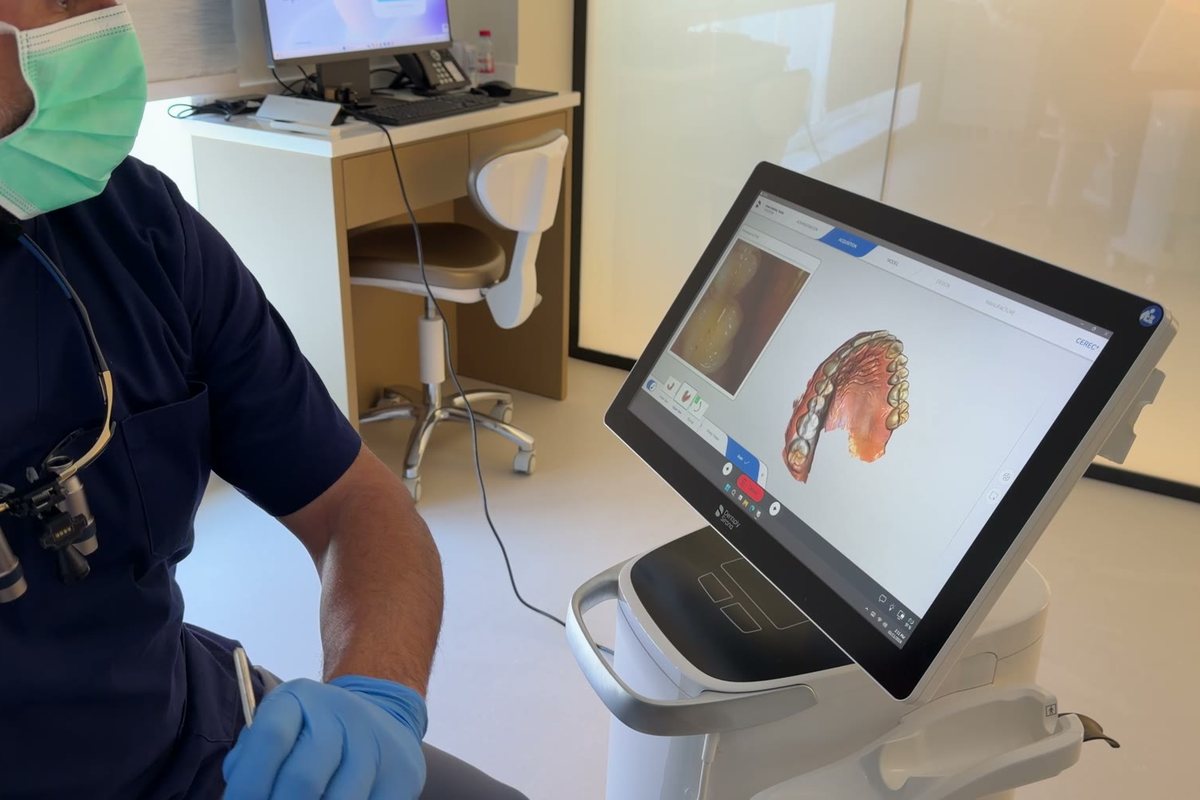
The movement of every tooth is planned on screen. You see a simulation before you start.
You receive a series of clear trays and change them on a set schedule.
Short check ups show whether the teeth follow the plan.
A retainer keeps the new position.
That depends on what your teeth need, so a price without an examination would not be honest. After the examination you receive a written treatment plan with all costs, before anything starts. Payment and insurance
What changes the cost
Aligners only work when they are worn as advised, and teeth can move back without a retainer. Not every bite problem can be treated with aligners.
Your next step
Or call 800 433 368 (toll free) · Sat to Thu 9:00 to 18:00 · Fri closed
Clear aligners work well for many of the reasons adults and older teenagers want straighter teeth. Typical cases are crowded or overlapping front teeth, small to moderate gaps, front teeth that have turned or tipped, and teeth that moved again years after braces because the retainer was no longer worn.
Aligners can also improve some bite problems, for example a mild overbite or a crossbite of single teeth. More complex movements, such as large differences between the upper and lower jaw, very severe crowding or teeth that need to be pulled down from the bone, are harder with aligners and may need fixed braces or a combination with other treatment. Fixed braces and further orthodontic treatment are coming soon at German DentAllée. Today we offer SureSmile aligners, and if your case needs something else, we tell you so.
Aligners can also be a useful step before cosmetic work. When the front teeth stand in the right place, veneers usually need less preparation, which keeps more of your own tooth. Sometimes alignment followed by whitening or a little composite bonding already gives the smile you were thinking of, without veneers.
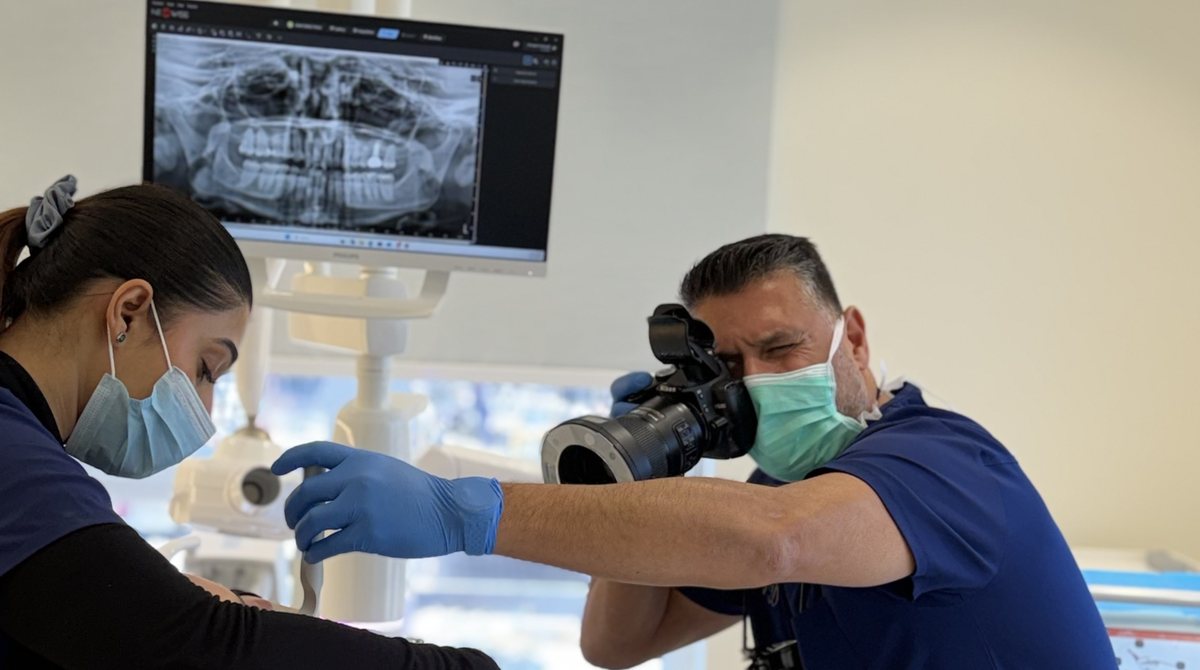
Every aligner treatment starts with records. The dentist examines your teeth, gums and jaw joints, and an X-ray shows the roots and bone. Where useful, a panoramic or cephalometric image is taken on the MyRay Hyperion X9 Pro in the clinic. Your teeth are scanned with the Primescan in a few minutes, without impression paste.
From the scan, the movement of every tooth is planned in software. You see a simulation of how your teeth move, stage by stage, and what the final position could look like. The actual result can differ from the simulation. The plan also shows how many aligners are needed, whether small attachments are required, and whether a little space needs to be created between teeth.
This is the moment for questions. If you want to know how long it takes, whether the bite will change, or whether the result will suit a later veneer, the plan answers it on screen. Nothing is ordered until you have seen it and agreed. The goal of a good plan is not the most dramatic change but teeth that look right and stay healthy in the bone.
Small, tooth coloured bumps of composite that are bonded to selected teeth. They give the aligner something to hold on to, so that rotations and more precise movements are possible. They are smooth, match the colour of your teeth and are polished off at the end. Their number depends on the movements needed, not on the quality of the treatment.
When teeth are crowded, they need room to move. Sometimes a fraction of a millimetre of enamel is polished from the contact points between teeth, called interproximal enamel reduction. It is planned on the scan and stays within the enamel, but enamel that is removed does not grow back. It is only done when needed and after you have agreed. In other cases the arch is widened slightly.
Each aligner moves the teeth a little. The bone around the root slowly rebuilds as the tooth moves. That is why wearing time matters so much: the teeth move when the trays are in, and they drift back a little when they are out.
Teeth do not always follow the plan exactly. Towards the end, a new scan is taken and a few additional aligners can be made to fine tune the result. This is a normal part of aligner treatment and is discussed in your plan.
In the first days of each new aligner your teeth feel pressure, sometimes a little tenderness when you bite. That is a sign the teeth are moving, and it usually settles within one or two days. Speech can feel slightly different for the first days, and most people adapt quickly. Work, sport and daily routines usually continue as normal.
You take the aligners out to eat and to drink anything other than water. Coffee, tea, juices and sweet drinks with the trays in can stain them and trap sugar against the teeth, which raises the risk of decay. After eating, brush or at least rinse before putting them back in. Many patients find this helps them snack less.
Aligners are changed on a set schedule, often every one to two weeks, depending on the plan. Short check ups at the clinic show whether the teeth follow the plan and that attachments are intact. If you travel often, discuss your travel plans with your dentist before starting, so the check ups can be arranged around them.
For prayer, meetings, photos or a special dinner, you can take them out. What matters is the total wearing time across the day. Wearing them far less than 22 hours a day makes treatment take longer and the result less predictable.
When the last aligner is finished, the teeth are in their new position, but the bone and fibres around them need time to settle. Without a retainer, teeth tend to drift back towards where they were, sometimes slowly over years. Not wearing the retainer as advised can allow the teeth to move again.
After aligners you receive a retainer. This can be a clear removable retainer that looks like an aligner and is worn at night, a thin wire bonded behind the front teeth, or both. Which one suits you depends on how much the teeth moved and how your bite works. In the first months the retainer is often worn more, later usually at night. Retention is usually long term, often for many years or for life, with a schedule made for you, daily cleaning of the retainer and regular checks.
A retainer is part of the treatment, not an extra. We plan it from the start and check it at your regular visits. If a retainer is lost or cracks, tell us early, because a new one can be made from a scan before the teeth have moved.
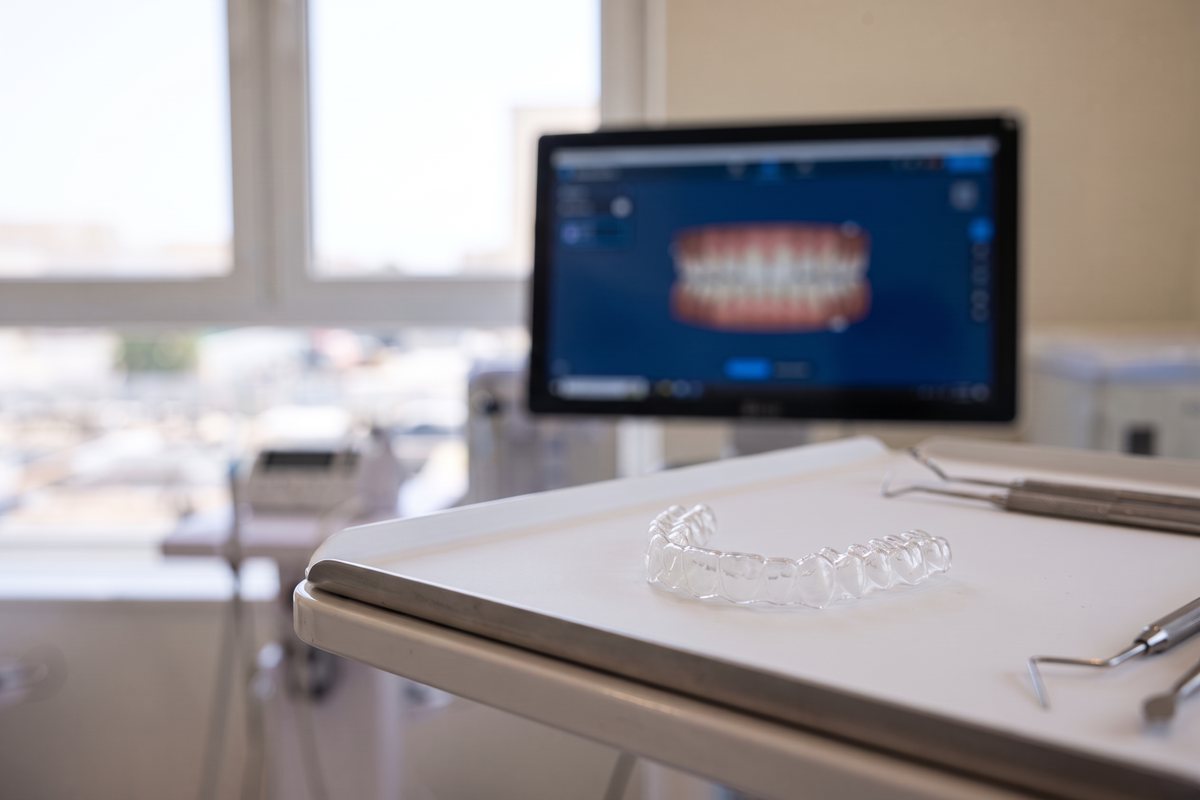
SureSmile is a clear aligner system made by Dentsply Sirona. It works step by step: a digital plan, a series of clear trays, attachments where needed, refinements and a retainer at the end.
For you as a patient, the factors that matter most are the quality of the diagnosis, how carefully the plan is checked, how well you wear the trays and how closely the treatment is followed. Aligners are a medical treatment that moves teeth in bone and should be supervised by a dentist who examines you in person.
Before deciding whether aligners suit you, an in person examination of teeth, gums, roots, bone and bite is needed. That is why every aligner case at German DentAllée starts with an examination and, where needed, a professional cleaning or gum treatment first.
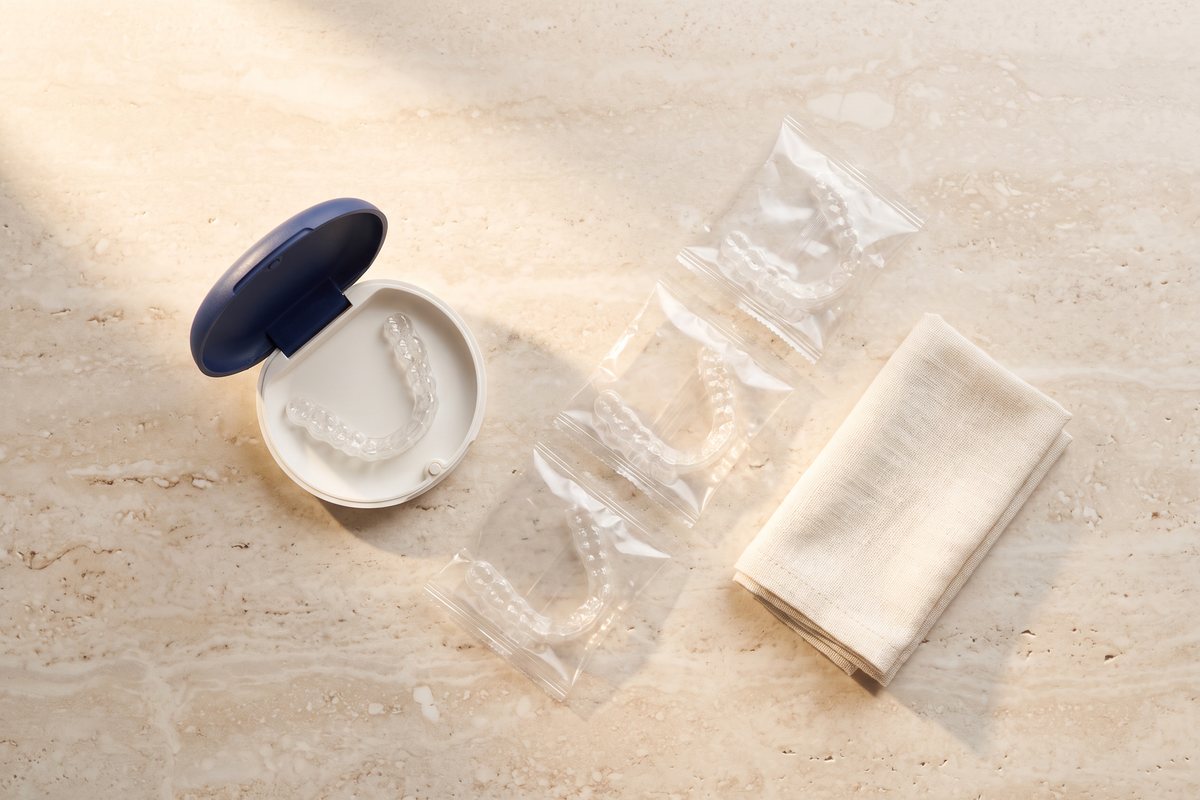
Timeline
Examination, X-rays where needed, Primescan scan and photos. You hear whether aligners suit your case.
The digital plan is prepared. You see a simulation of the planned movement, and receive a written plan with all costs. The actual result can differ.
Attachments are bonded where needed and you receive your first aligners and instructions.
You change to the next aligner. Pressure for a day or two is normal.
Short check ups at the clinic, or as agreed when you travel.
A new scan, refinements if needed.
Attachments removed, teeth polished, retainer fitted. Whitening can be considered after an assessment, and the change in shade varies.
Technology
Clear aligner system by Dentsply Sirona.
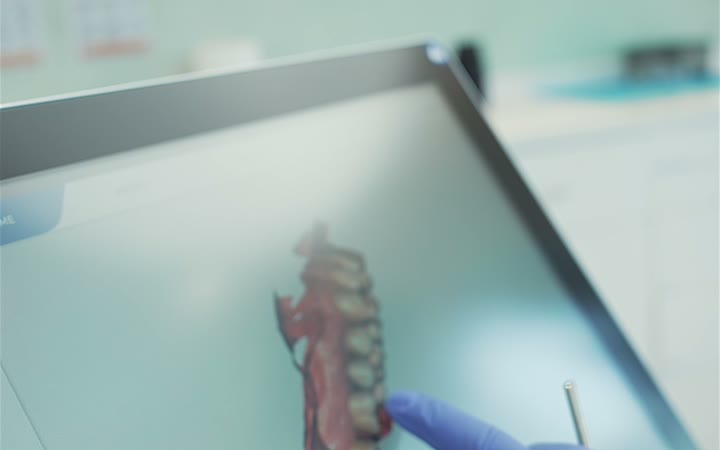
Digital scan instead of an impression.
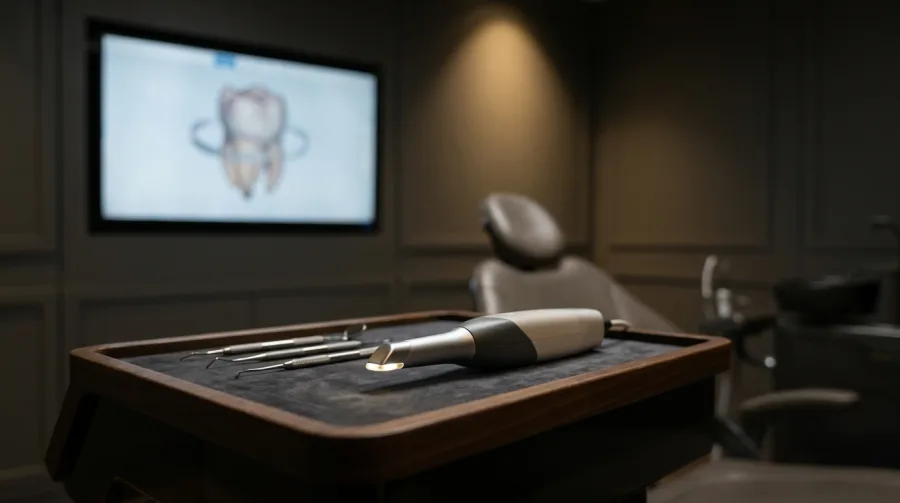
Tooth movement simulated before treatment.
Myth or fact
MythAligners are for small cosmetic corrections only.
FactThey can handle many moderate cases too, including some bite problems. Whether they suit yours is decided on the scan and X-rays.
MythAdults are too old to straighten their teeth.
FactTeeth can be moved at any age if gums and bone are healthy. Many aligner patients are adults.
MythAfter aligners, the teeth stay straight by themselves.
FactTeeth tend to move throughout life. A retainer keeps the new position.
MythOnline aligners are the same thing, just cheaper.
FactAn in person examination of teeth, gums, roots and bite is needed before deciding whether aligners are suitable.
More answers
Tap a question to open the answer. Anything else, ask us on WhatsApp.
Aligner treatment is well established. Complications can still occur even when the trays are worn as advised, so they are discussed before you start.
Both move teeth reliably in suitable cases. They differ in how they look, how you live with them and which cases they handle.
| Clear aligners | Fixed braces | |
|---|---|---|
| Visibility | Nearly invisible | Visible brackets and wires |
| Removable | Yes, for eating and brushing | No |
| Eating | No restrictions with trays out | Hard and sticky food avoided |
| Cleaning | Normal brushing and flossing | More effort around brackets |
| Depends on you | Wearing around 22 hours a day | Less, the braces stay in |
| Complex bite problems | Possible in many, not all cases | Suited to a wider range |
| At German DentAllée | SureSmile aligners today | Coming soon |
It depends on the complexity of your case and the number of aligners. After the consultation and scan you receive a written plan with all costs before anything starts.
Depending on the case, a few months to over a year. It can take longer with more complex movements, if the trays are worn less, if a tray is lost or if refinements are needed. Your plan shows the expected time. The retainer phase follows and is long term.
Around 22 hours. You take them out to eat, drink anything but water, and brush.
Most patients feel pressure for a day or two with each new aligner. It is a sign the teeth are moving and usually settles quickly.
A specialist orthodontist joins our team soon, see orthodontics. Today we offer SureSmile aligners.
They are clear and thin, and most people will not notice them. Attachments are tooth coloured.
No, you take them out to eat and put them back after brushing or rinsing. That means there are no food restrictions.
Yes. Without a retainer teeth tend to move back. Retention is part of your SureSmile treatment, and the type of retainer is discussed in your plan.
Age is rarely the issue. Healthy gums and bone are. That is checked at the first examination.
Yes, in suitable cases. We look at the growth of the jaw and how reliably the trays will be worn.
Crowns and veneers usually allow aligners. Implants do not move, so the plan works around them. This is checked on the scan.
Usually yes. Discuss your travel plans with us before starting, so check ups and aligner changes can be planned around them.
That depends on your policy, and orthodontic cover varies a lot. We do not bill insurers directly: you pay at the clinic and receive the documents for your claim. Payment by cash, card, transfer, Tabby or Tamara. The first consultation is charged and credited towards your treatment.
Also at the clinic
You are welcome
One message is enough. No forms, no call centre. You write, the clinic answers in Arabic, English or German.
Villa 21B, La Mer · Jumeirah 1 · Dubai
Sat to Thu 9:00 to 18:00 · Fri closed