Composite
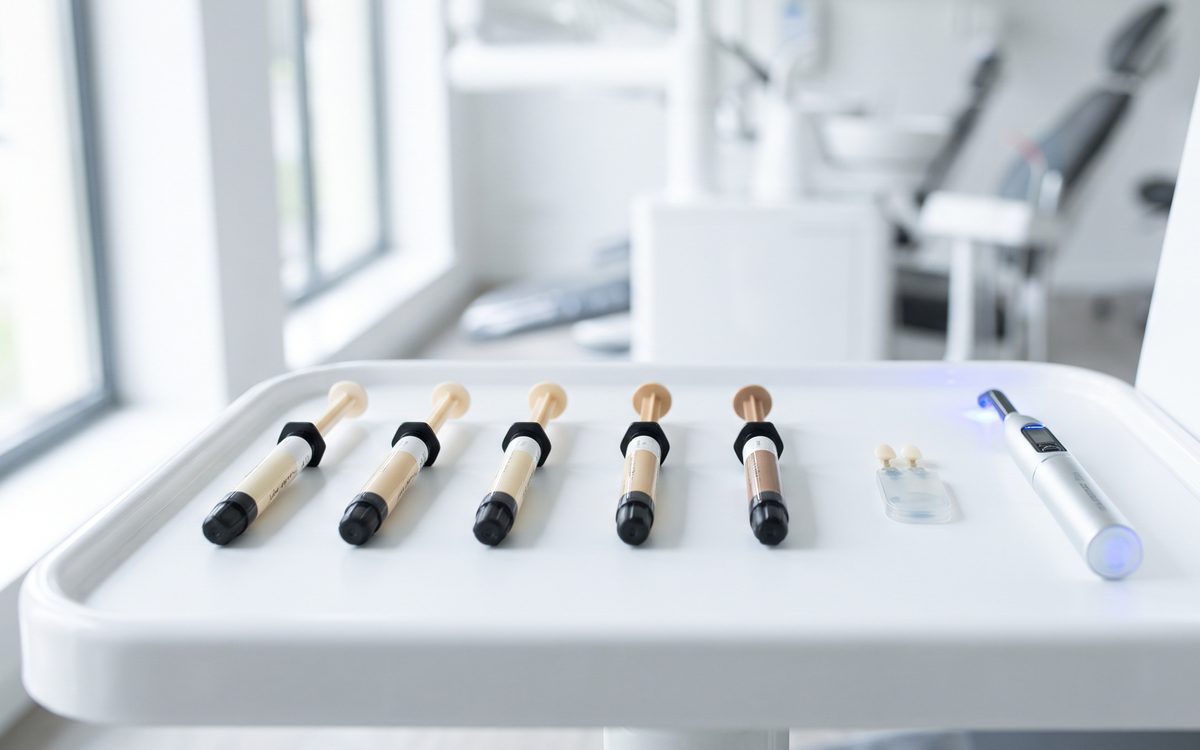
Tooth coloured resin, layered in shades and translucencies.


Aesthetic dentistry · composite
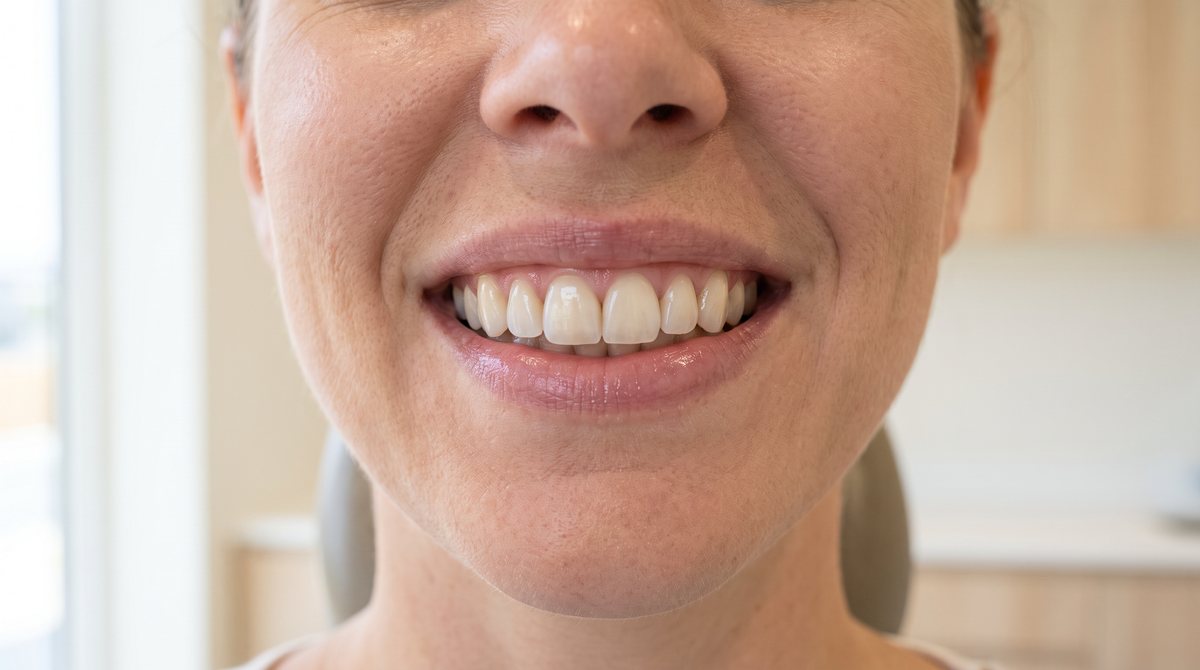
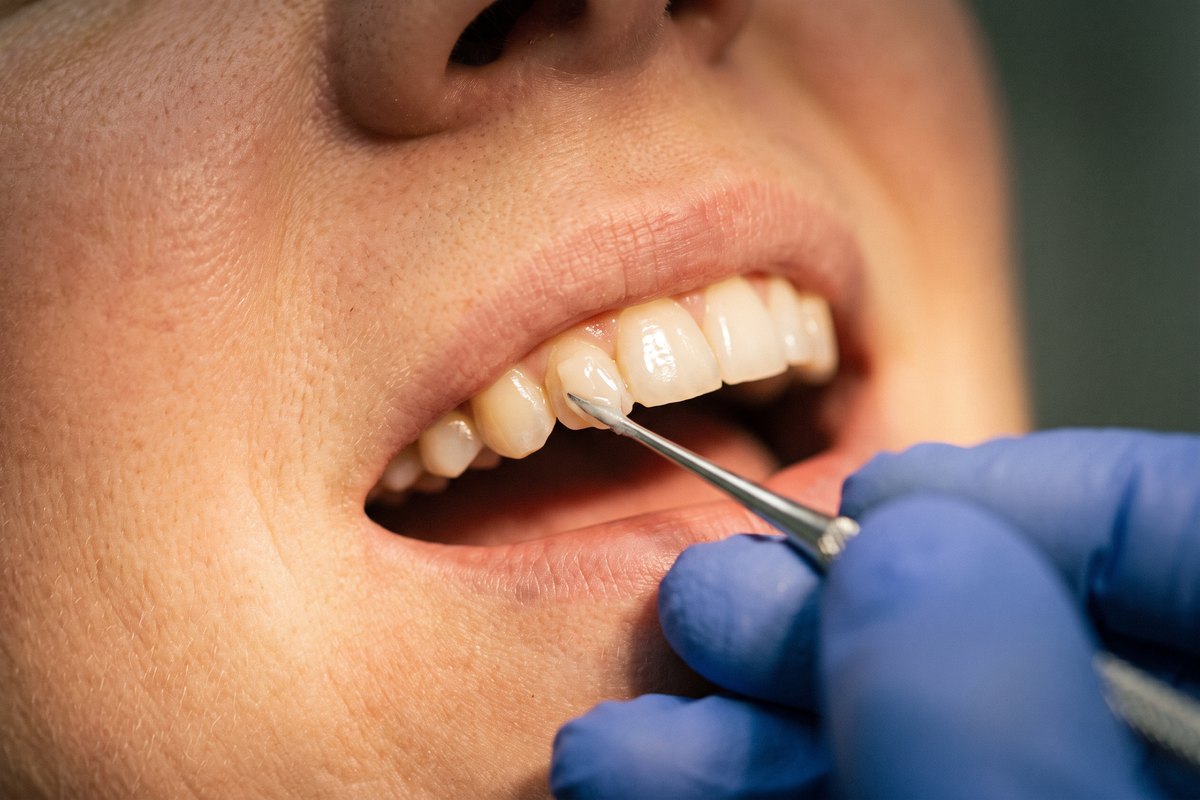
Small chipped edges, limited gaps and differences in shape can be corrected with tooth coloured composite in suitable cases, often with little or no preparation of the tooth.
 With Dr. Mohammad Shaker.
Patient guide
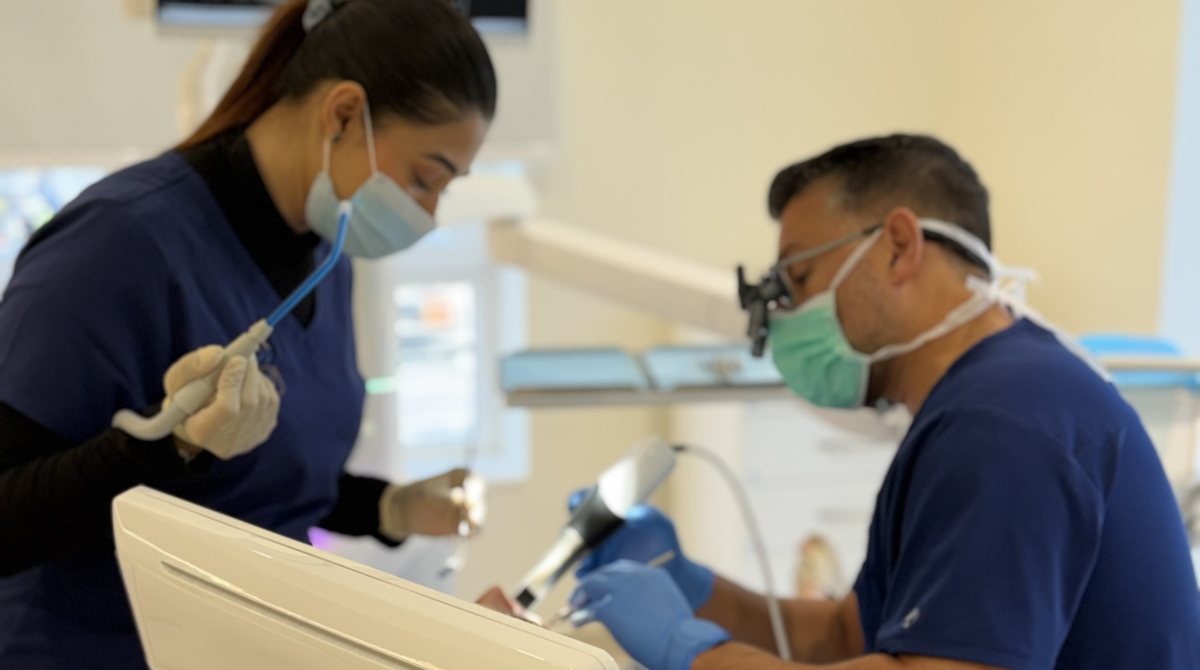
Composite bonding is a cosmetic treatment in which tooth coloured composite resin is applied directly to your teeth, shaped by hand and hardened with light. It repairs chips, closes small gaps and adjusts the length or shape of teeth in one visit, usually without removing healthy tooth structure.
Because the composite is built up on the tooth rather than made in a laboratory, there is no impression, no temporary and no waiting. The shape is created in the chair, while you watch in the mirror, and adjusted until it looks right. If you want to change something later, more composite can be added.
At German DentAllée in Jumeirah 1, bonding is done by Dr. Mohammad Shaker, DHA Specialist Prosthodontist. It is a conservative way to refine a smile, and we often suggest it before veneers, when a small change is all that is needed.
Is this for you?
Step by step
Dr. Mohammad looks at the tooth, the bite and your smile, and tells you whether bonding is the right choice or whether something else would last longer.
The colour is chosen with the VITA shade guide and matched to your teeth before anything is done.
The surface is cleaned and lightly roughened. Healthy enamel is usually left as it is.
Composite is built up in thin layers of different shades and translucency, then hardened with light.
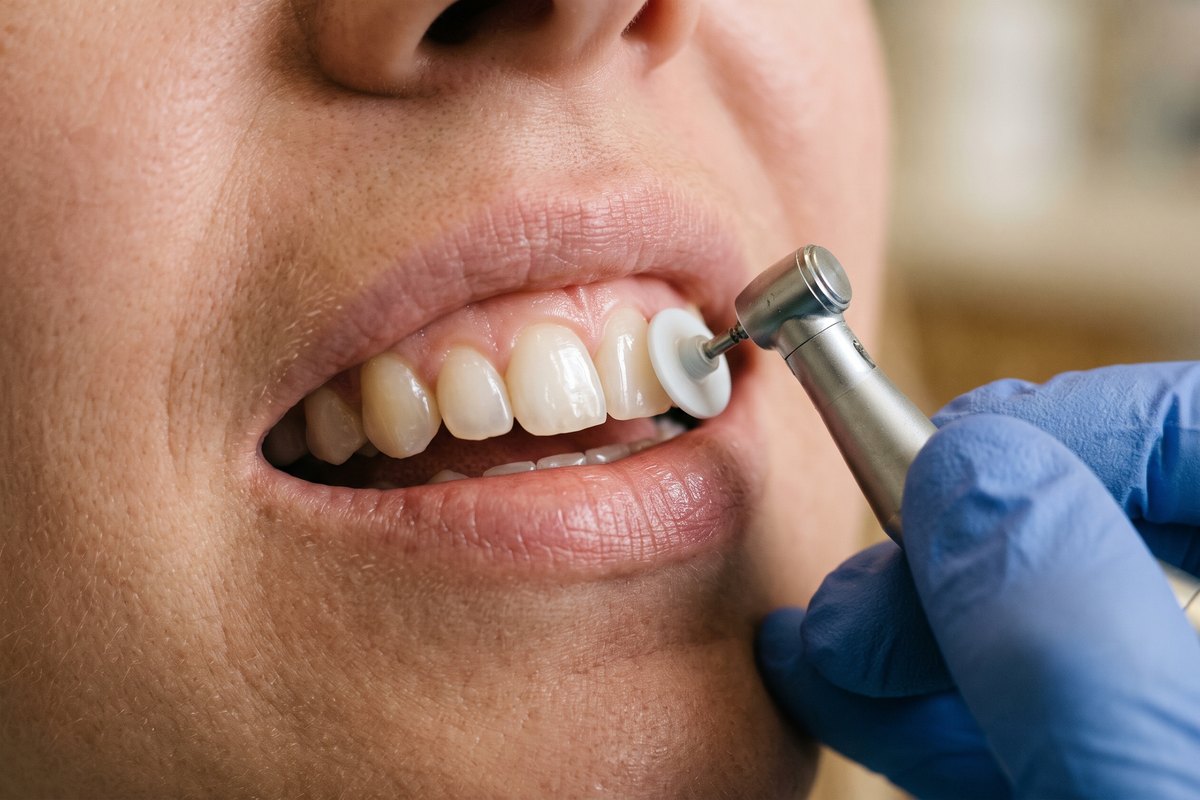
The shape is refined, the bite checked and the surface polished to a natural shine.
That depends on what your teeth need, so a price without an examination would not be honest. After the examination you receive a written treatment plan with all costs, before anything starts. Payment and insurance
What changes the cost
Composite can stain or chip over time and may need polishing or repair. It is not suited to every case, which the examination shows.
Your next step
Or call 800 433 368 (toll free) · Sat to Thu 9:00 to 18:00 · Fri closed
Bonding is versatile. It suits small and medium changes to front teeth and some changes to side teeth, where the tooth itself is healthy and the bite is stable.
A chipped edge from a fall, a hard bite or years of wear is rebuilt in composite so the tooth looks whole again. If you still have the broken piece, keep it moist in milk or water and bring it with you: in some cases the original fragment can be bonded back onto the tooth.
Small gaps between the front teeth, including a gap in the middle, can be closed by adding composite to the sides of the teeth. Larger gaps may need clear aligners first, so the teeth do not end up looking too wide.
Thin layers of composite on the biting edges even out teeth of different length, soften worn or uneven edges and make the smile line calmer.
A small or narrow tooth, for example a peg shaped side tooth, can be built up to match its neighbours.
Bonding is meant for chips, edges, small gaps and small changes of shape. We do not cover whole front surfaces with composite: when several teeth need a new colour or shape, Dr. Mohammad plans ceramic veneers instead.
White or brownish spots on the front teeth are common. They can come from early decay around braces, from fluorosis during childhood or from developmental changes in the enamel. Whitening often makes them stand out more.
Many white spots can be treated without drilling. With resin infiltration (Icon), the porous enamel of the spot is conditioned with a mild acid and filled with a very fluid resin. This can make the spot less visible, depending on its depth and cause. With enamel microabrasion, a very thin surface layer of stained enamel is removed with a controlled acidic abrasive paste.
Which method suits depends on how deep the spot is and what caused it. Shallow spots often respond well to microabrasion or infiltration, sometimes combined. Deeper or larger spots may need a thin layer of composite on top. Neither method removes every spot completely, and you hear what is realistic before we start.
Treatment of white spots is often combined with other steps. If the whole smile is to be lighter, whitening usually comes first and the spots are treated afterwards, when the final shade is set. If the spots came from braces, they are a good reason to look closely at cleaning habits, so that new spots do not form. Our hygienist Afra Alblooshi can show you what works for your teeth.
Most bonding is done in one appointment. How long it takes depends on the number of teeth, and you are told when the appointment is booked. Anaesthetic is usually not needed, because healthy enamel is not drilled. If a tooth is sensitive or a small cavity has to be removed first, a local anaesthetic is given.
First the teeth are cleaned and the shade is chosen in daylight with the VITA shade guide. Natural teeth are not one colour. They are slightly darker near the gum, more translucent at the edge, sometimes with fine white or bluish effects. Good bonding copies this by layering several shades of composite, rather than covering the tooth with one flat colour.
The enamel is gently roughened and a bonding agent applied, so the composite holds firmly. Then the composite is applied layer by layer, shaped with fine instruments and hardened with a blue light. Finally the shape is refined, the bite checked in every jaw movement, and the surface polished in several steps to a natural shine.
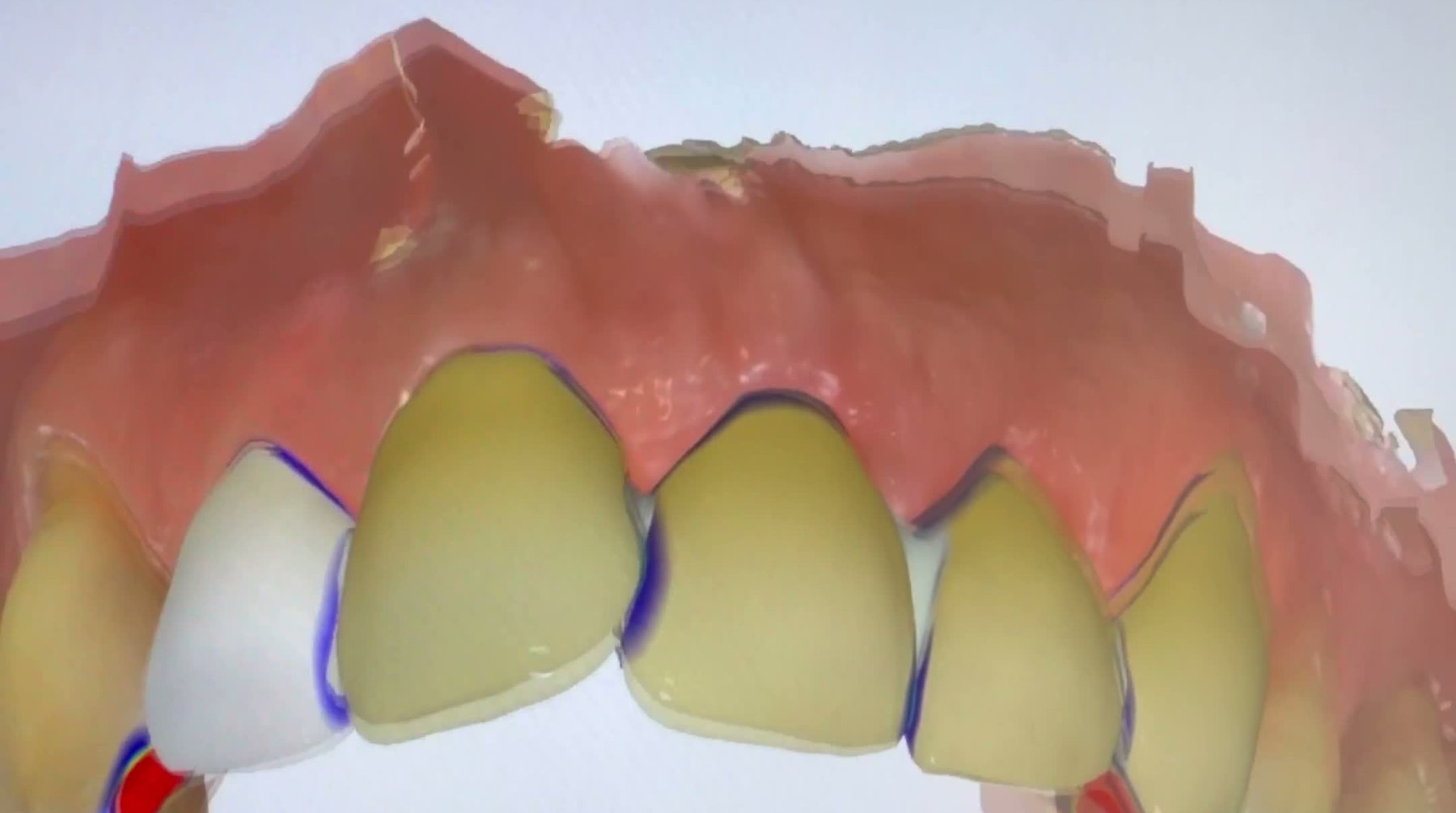
For larger cases, for example bonding on six or more teeth, a digital design or a wax model can be made first, often as part of a smile makeover. Then a template transfers the planned shape to your teeth and you can see the result as a trial before the final bonding.
Bonding is very well suited to small changes and conservative work, but composite is softer than ceramic. It wears, takes up stains and loses its polish faster, especially in patients who drink a lot of coffee or tea, smoke or grind their teeth. A large edge build up on a front tooth that takes a lot of biting force is more likely to chip than a small repair.
When the change is larger, when the colour of several teeth needs to change a lot, or when you want a result that keeps its shine for many years, porcelain veneers are often the more durable choice. When a tooth is broken down or heavily filled, a ceramic crown protects it better, for example a same-day crown with CEREC.
Many patients start with bonding and are happy with it for years. Others use it as a reversible first step: they try the new shape in composite before deciding on veneers. Both are good uses. Dr. Mohammad will tell you honestly which option suits your teeth, your bite and your expectations.
With good care, composite bonding often lasts around five to seven years before it needs polishing, repair or renewal, sometimes considerably longer. Small repairs on the front surface tend to last longer than thin edge bonding on teeth that take a lot of biting force. Results can vary from person to person.
What shortens the life of bonding: grinding and clenching, biting hard objects such as ice or nut shells, using the teeth to open packaging, frequent coffee, tea, red drinks and smoking. What lengthens it: regular professional cleaning and polishing, a night guard if you grind, and early repair of small chips.
One of the strengths of composite is that it can be repaired. A small chip can usually be smoothed or rebuilt by adding new composite to the existing bonding, without removing it. If the surface has become dull or stained, it can often be repolished. This makes bonding a flexible, easily maintained option.
Bonding suits patients with healthy teeth and gums who want a small to moderate change, who prefer to keep their enamel, and who are happy to have the bonding polished and maintained over the years. It is also often used for younger adults, for whom veneers are not yet the right step.
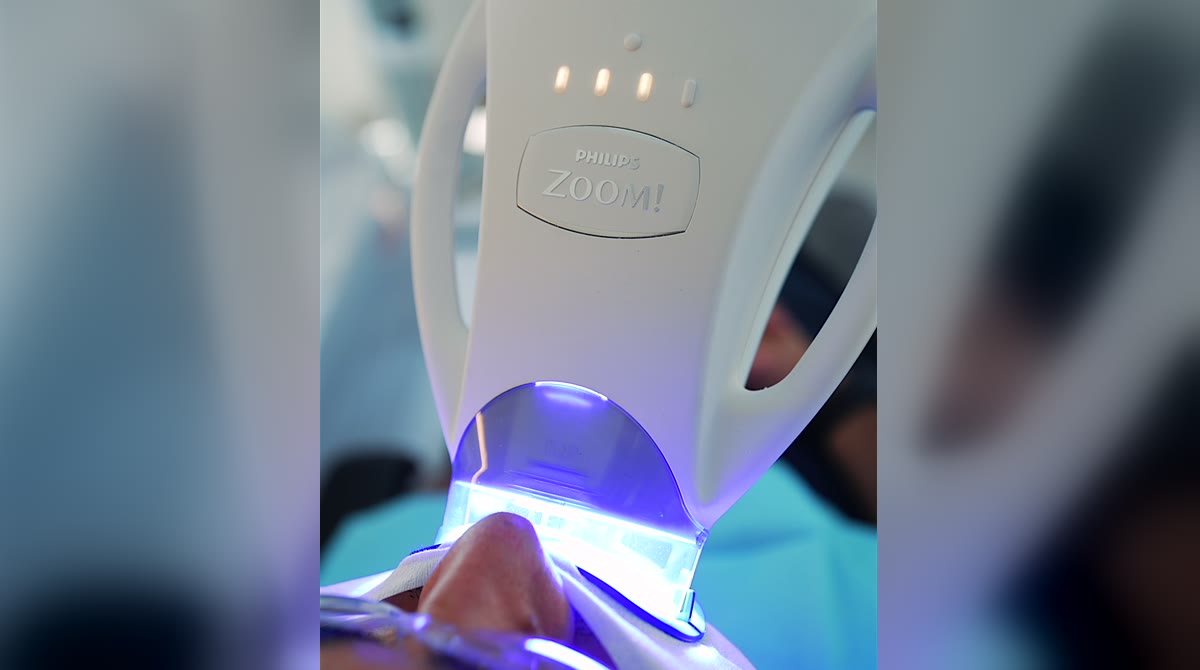
Some things are treated first. Decay and leaking fillings are repaired, inflamed gums calmed with a professional cleaning, and if you would like your teeth lighter, whitening comes before bonding. Composite does not whiten, so its shade is matched to your teeth after whitening has settled, usually about two weeks later.
If you grind your teeth heavily, bonding is still possible, but the bite needs attention and a night guard is recommended, see jaw and grinding treatment.
Bonding is also a gentle choice when you are not yet sure what you want. Because enamel is usually kept, the shape can be tried, lived with and adjusted, and later replaced by veneers if you decide you would like a longer lasting ceramic result. Very large changes, heavy discolouration of many teeth or teeth that are broken down are better planned with ceramic from the start.
Timeline
Consultation, check of teeth and gums. Whitening first if you want lighter teeth.
Shade chosen, composite layered and polished. Usually one appointment.
Composite is most open to stains. Avoid coffee, tea, red drinks and smoking where you can.
A short check of shape, bite and polish if needed.
Professional cleaning and polishing keep the surface smooth.
Repolish, repair or renew as needed.
Technology
Tooth coloured resin, layered in shades and translucencies.
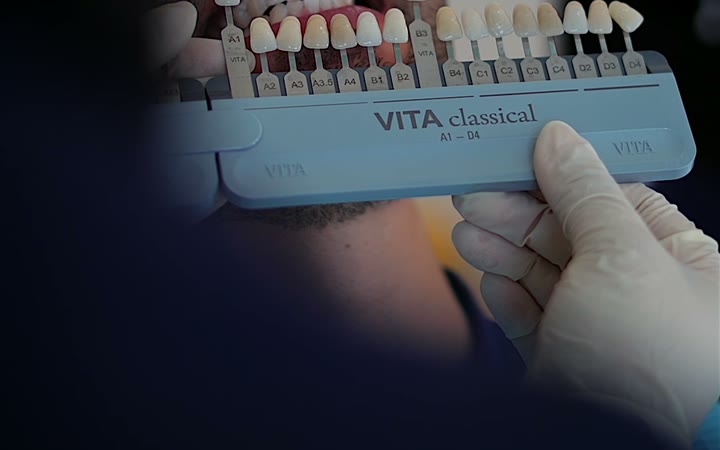
The shade matched to your teeth before bonding.
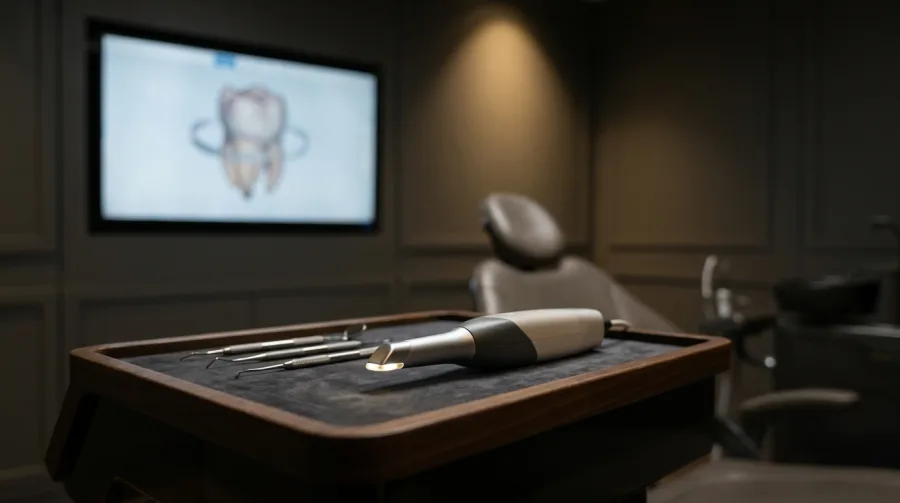
For larger cases, the shape is planned on screen first.
Myth or fact
MythBonding is a cheap version of veneers.
FactIt is a different treatment with its own strengths: one visit, little or no drilling and easy repair.
MythBonding always looks fake.
FactLayered in several shades and polished well, it can look very natural. A flat single shade is what looks artificial.
MythBonding damages the teeth.
FactIn most cases no healthy enamel is drilled, and the bonding can be removed or renewed later.
MythBonding can be whitened later.
FactComposite does not whiten. If you want lighter teeth, whitening comes first.
More answers
Tap a question to open the answer. Anything else, ask us on WhatsApp.
Composite bonding is a gentle, well established treatment. Its limits are mostly about durability rather than health risks.
Both change the shape and colour of front teeth. They differ in how they are made, how they age and how much they ask of your tooth.
| Composite bonding | Porcelain veneers | |
|---|---|---|
| Made | Directly on the tooth, by hand | In the laboratory, then bonded |
| Visits | Usually one | Usually two to three |
| Tooth preparation | Usually none | None to a thin layer of enamel |
| Reversible | Largely, in most cases | Not after preparation |
| Stain resistance | Can stain and lose shine | High |
| Typical lifespan | Often five to seven years before renewal | Often ten years and longer |
| Repair | Easy, composite is added | Limited |
| Suited to | Chips, small gaps, edges, trying a new shape | Larger changes of shape and colour |
It depends on the number of teeth and the size of the change. After the consultation you receive a written plan with all costs before anything starts.
Usually not. In most cases no healthy tooth is drilled, so anaesthetic is often not needed. If it is, a local anaesthetic is given.
Often around five to seven years before it needs polishing, repair or renewal, sometimes longer. Grinding and stains shorten it, good care lengthens it.
Largely, in most cases, because healthy enamel is usually left as it is. The composite can be removed or renewed later.
Small gaps, yes, often in one visit. For larger gaps we check proportions first. Sometimes aligners before bonding give a more natural result.
Often yes, with composite bonding in one visit. The shape and shade are built up directly on the tooth.
Yes, bring it with you, kept moist in milk or water. In some cases the original fragment can be bonded back onto the tooth.
Composite can take up colour over the years, especially with coffee, tea and smoking. Regular polishing keeps it fresh.
Bonding suits smaller changes and keeps your enamel. Veneers suit larger changes and keep their colour longer. Dr. Mohammad will show you both options for your teeth.
Often yes, with resin infiltration (Icon) or enamel microabrasion. Deeper spots may need a thin layer of composite.
Whitening does not change the colour of composite. If you want lighter teeth, whiten first and bond about two weeks later.
It depends on your policy and on whether the bonding repairs a damaged tooth or is cosmetic. We do not bill insurance companies directly: you pay at the clinic and receive all documents to claim the costs. Payment by cash, card, transfer, Tabby or Tamara.
That depends on how many teeth are treated. You are told the time when the appointment is booked, and many cases are finished in one visit.

Why with Dr. Mohammad Shaker
Dr. Mohammad’s rule for every new patient: tooth structure is precious, and we keep as much of it as we can. In suitable cases, bonding can change a smile while keeping healthy tooth structure, and a prosthodontist knows where it works and where a stronger material is the better plan.
Dr. med. dent. · M.Sc. Prosthodontics · DHA Specialist Prosthodontist · Specialist Senior Dentistry (GER 🇩🇪)
Meet Dr. Mohammad ShakerAlso at the clinic
You are welcome
One message is enough. No forms, no call centre. You write, the clinic answers in Arabic, English or German.
Villa 21B, La Mer · Jumeirah 1 · Dubai
Sat to Thu 9:00 to 18:00 · Fri closed