Periodontal chart
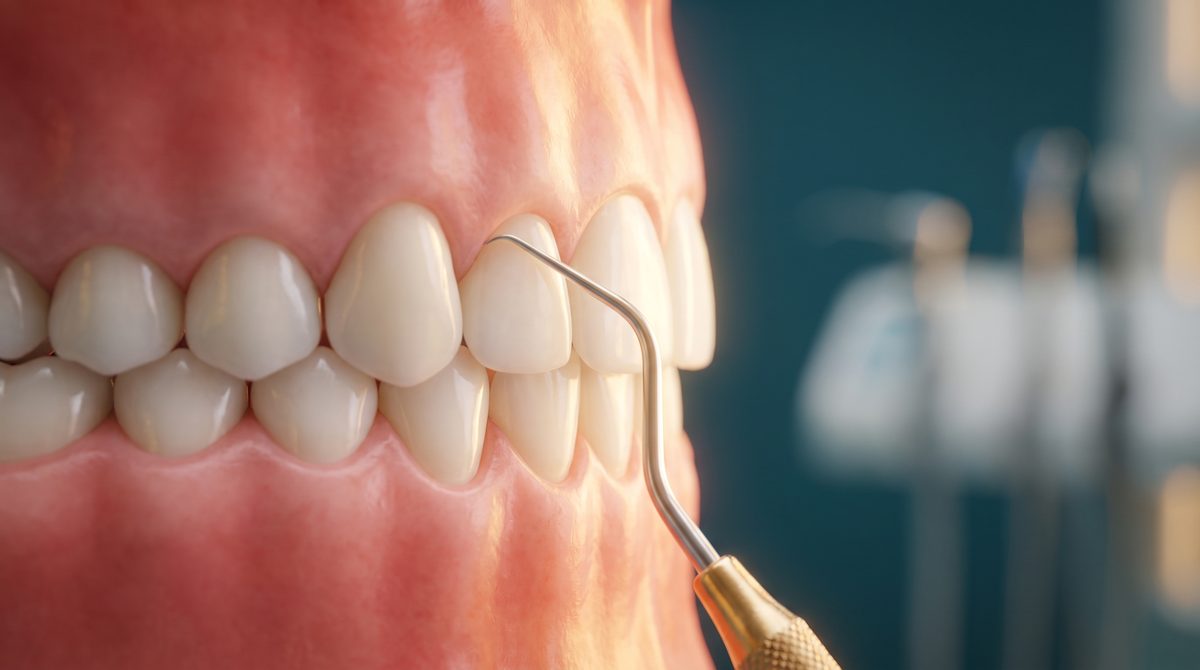
Recession, pocket depths and bleeding recorded tooth by tooth.


Periodontology · receding gums
Exposed tooth necks and receding gums should be examined carefully. We assess possible causes and discuss suitable ways to protect your teeth and gums.
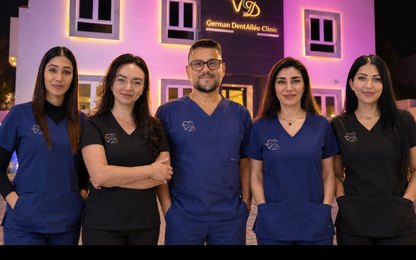
 With Dr. Mohammad Shaker.
Patient guide
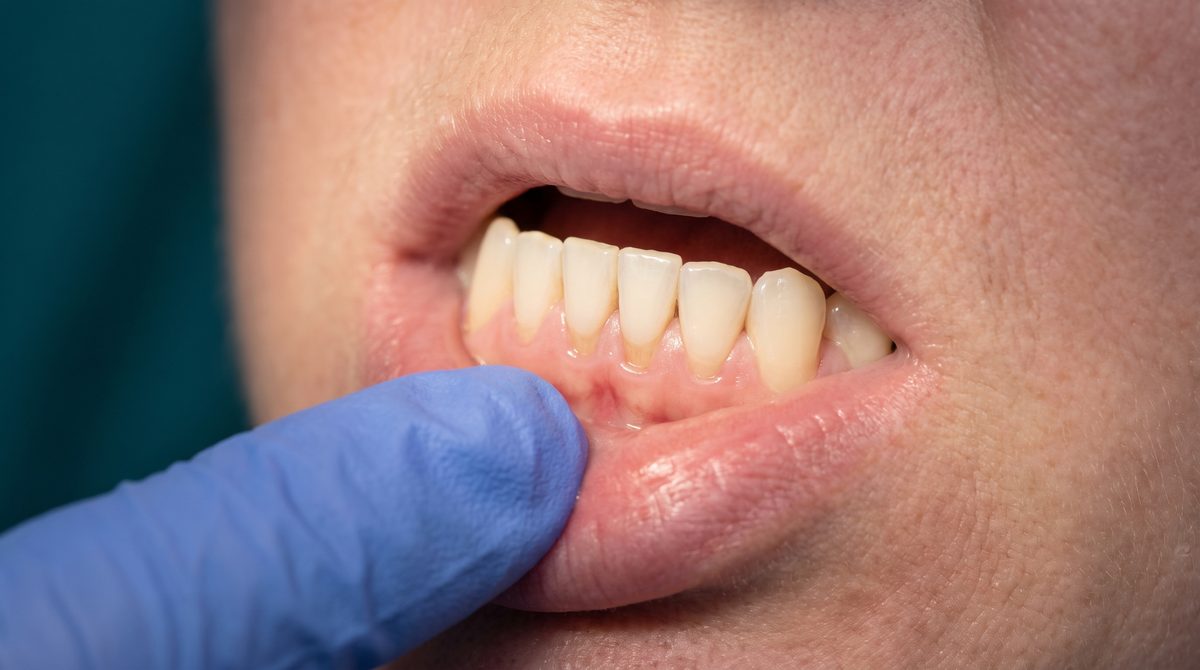
Gum recession means that the gum line has moved back and part of the tooth root is exposed. Receding gums do not grow back by themselves, but treatment can often slow further recession or keep it stable, sensitive roots can be protected, and in suitable cases the exposed root can be covered again with a gum graft.
The root of a tooth is not covered by enamel like the crown. It is softer and has fine channels that lead to the nerve. That is why exposed roots often feel sensitive to cold, sweet or air, why they wear down more easily when you brush hard, and why decay can start there more easily than on enamel.
Recession is very common. A small amount appears in many adults over the years and is not always a problem. It matters when it keeps progressing, when it causes sensitivity or decay, when the gum is so thin that it cannot protect the tooth any more, or when it changes how your smile looks. This guide explains why gums recede, how the cause is found, which treatments exist and what healing after a gum graft looks like.
Is this for you?
Step by step
Every recession is measured and photographed, and the gums are charted, so changes are visible over time.
Brushing habits, gum disease, tooth position, thin gums and the bite are checked.
Gentle brushing technique and gum treatment if needed, to reduce the risk of further recession.
Sensitive roots are desensitised, and notches can be covered with a tooth coloured filling.
A gum graft can cover exposed roots and thicken thin gums.
That depends on what your teeth need, so a price without an examination would not be honest. After the examination you receive a written treatment plan with all costs, before anything starts. Payment and insurance
What changes the cost
Gum that has receded rarely grows back by itself, and exposed root surfaces may remain sensitive. If surgery is needed, we explain the options and who would carry it out.
Your next step
Or call 800 433 368 (toll free) · Sat to Thu 9:00 to 18:00 · Fri closed
Gum recession almost always has more than one cause. Finding them is the most important part of treatment, because a graft placed without changing the cause can recede again.
Scrubbing with a hard brush, especially side to side, can wear down thin gums and the root surface over years. It is one of the most common causes in people who care a lot about their teeth.
Periodontitis destroys the bone and fibres that hold the gum in place. As the inflammation heals, the gum line often settles lower. This recession usually affects several teeth.
Some people are born with thin gums and thin bone over the roots, especially on the lower front teeth and the canines. Teeth that stand forward in the arch, or that were moved outward during orthodontic treatment, have less bone and gum covering them.
Grinding can wear and damage teeth. It is not an established cause of gum recession, but it is checked as part of the examination. A night guard may be recommended to protect the teeth, see jaw and grinding.
Smoking, a tight lip or tongue attachment (frenum) pulling on the gum, tongue or lip piercings, fillings or crowns with edges below the gum line, and age all play a role.
Every receding area is measured: how far the gum has moved back, how wide the exposed root is, how much firm gum is left around the tooth and how thick it is. The whole mouth is charted for gum disease, because inflamed gums are treated before any recession is corrected. X-rays show the bone level between the teeth, which strongly influences how much root coverage a graft can achieve.
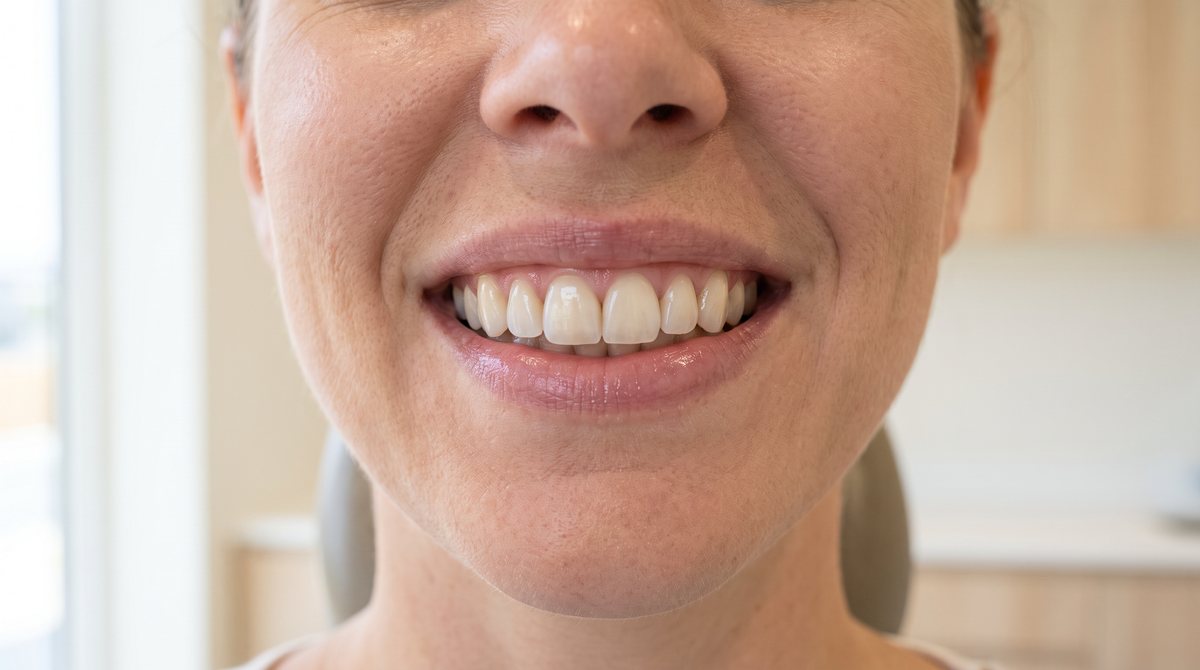
Photos with our intraoral camera make the gum line visible on screen. You see what we see, and the next visit can compare the same view. The examination also looks at your brushing technique, your bite, signs of grinding and the position of the teeth. At the end you know which areas are stable and can simply be watched, which need protection, and where a graft would make sense.
Not every recession needs surgery. A small, stable recession without sensitivity is often simply left alone and checked at your regular cleaning. Honest advice includes saying when nothing needs to be done.
Many patients need no surgery at all. The first goals are to control the cause, reduce the risk of further recession and make the tooth comfortable again.
Once the cause is controlled, the recession is measured again at each check. If it stays stable and comfortable, that can be the end of treatment.
When recession keeps progressing, when sensitivity does not settle, when the gum is too thin to protect the tooth, or when the gum line spoils the look of your smile, a gum graft can be the right step. A graft adds gum tissue to the area, thickens it and, depending on the situation, covers part or all of the exposed root.
The most common technique for covering exposed roots. A thin piece of connective tissue is taken from under the surface of the palate, and the palate is usually closed with stitches, depending on the harvesting method. It is placed over the exposed root under the patient’s own gum, which is moved or tunnelled to cover it. Because the graft lies under your gum, the result usually blends in well with the surrounding tissue.
A thin layer of firm gum is taken from the surface of the palate and placed where the gum is too thin or missing, often on the lower front teeth. Its main aim is to create a band of firm, protective gum that can help reduce the risk of further recession. It covers roots less predictably and can look slightly paler than the surrounding gum, so it is chosen for function more than looks.
That depends mainly on the bone and gum between the teeth. Where it is intact, full coverage is often possible. Where bone between the teeth has been lost, partial coverage is more realistic. You hear the expected result for your teeth before you decide, and results can vary from person to person.
Gum surgery is not only about covering roots. Sometimes the opposite is needed. Crown lengthening removes a little gum, and if needed some bone, to expose more tooth. It is used when a tooth is broken or decayed below the gum line and a crown or filling needs a healthy edge to sit on, and sometimes to correct a gummy smile or an uneven gum line before veneers or crowns.
A gingivectomy trims overgrown gum tissue, for example after braces or with some medications. A frenectomy releases a lip or tongue attachment that pulls on the gum and keeps a recession open.
For a prosthodontist, the gum line is the frame of every crown and veneer. If the gums are not stable before new work is made, the edges can show later. That is why gum problems are treated first in every larger plan at our clinic, from single crowns to a smile makeover.
A graft is a repair, not a vaccination. The same habits that caused the recession can cause it again, which is why prevention is part of every plan.
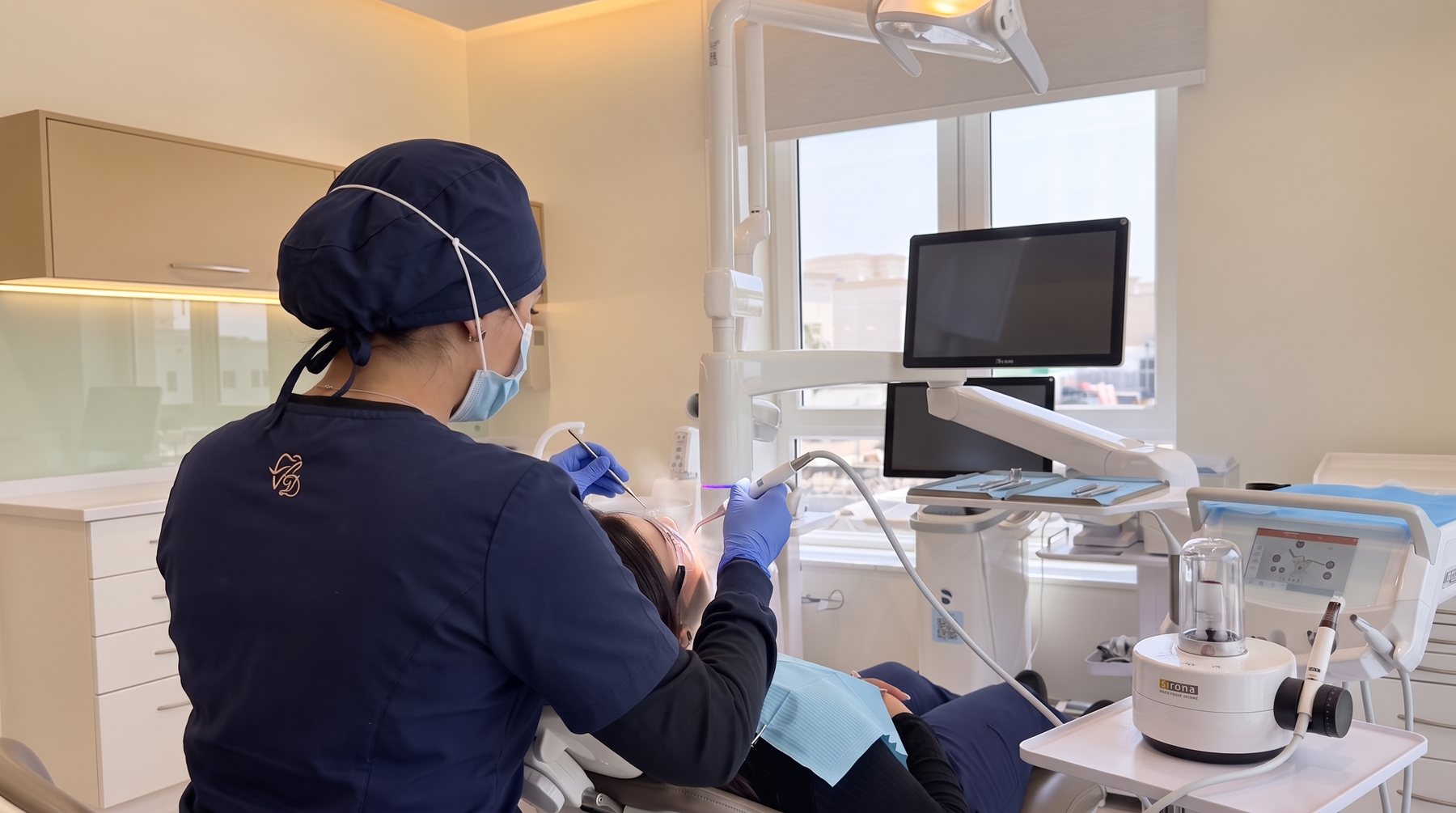
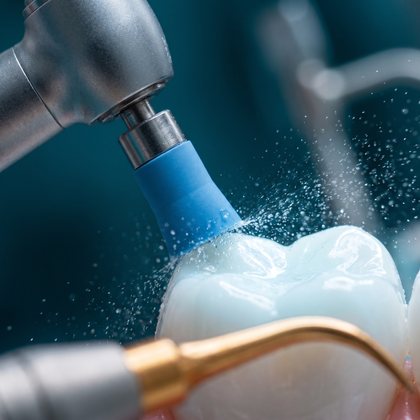
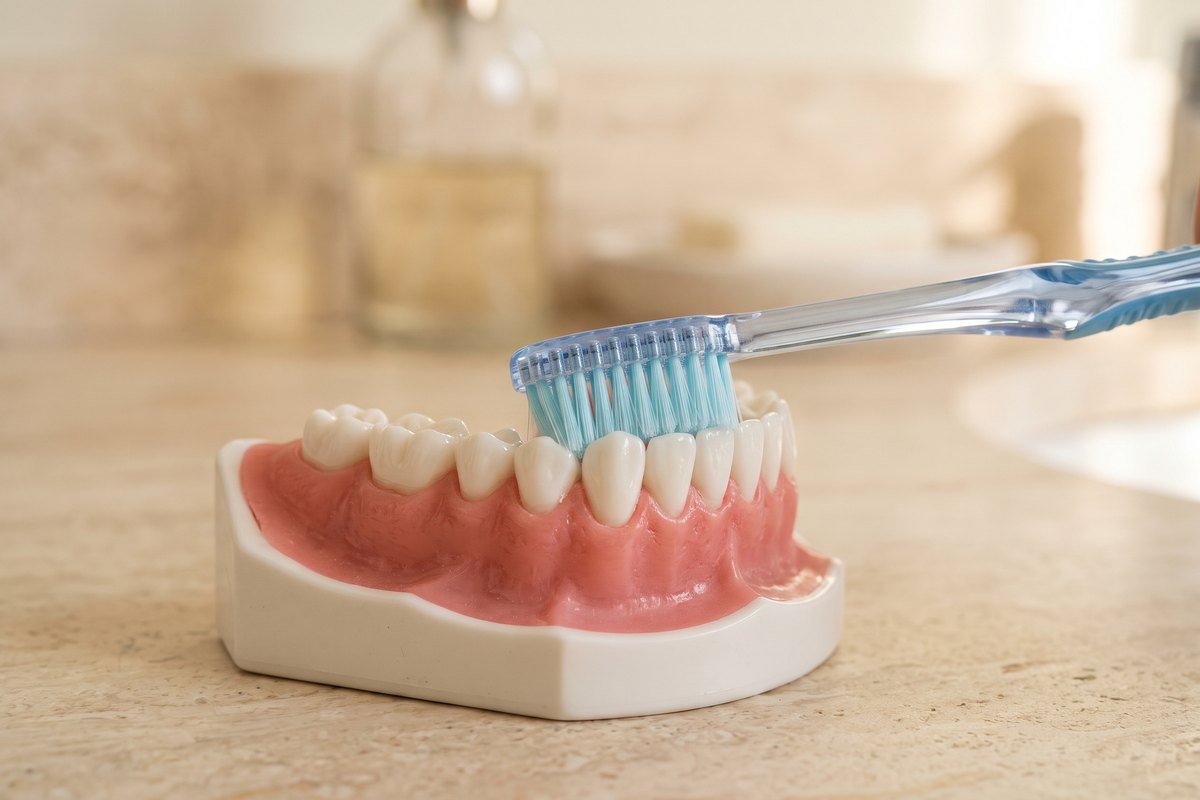
Brush with a soft brush and light pressure, or let an electric brush do the work. Angle the bristles towards the gum and use small movements instead of scrubbing. Clean between your teeth with interdental brushes in the size you were shown. If a night guard was recommended for grinding, wear it as advised. Come to your regular professional cleanings, where the gum line is checked and measured each time. Our DHA licensed dental hygienist, Afra Alblooshi, uses gentle air polishing with EMS Airflow. After a graft has healed, the cleaning method and powder are chosen for the site. More on our cleaning page.
If you are planning orthodontic treatment or clear aligners and your gums are thin, mention it. The gums can be assessed before teeth are moved, and in some cases strengthened first.
Timeline
Some swelling and tenderness, at the graft and at the palate. Cold compresses, soft cool food and the pain relief we recommend help.
Discomfort usually eases. Do not brush the graft area, rinse as advised. A protective palate plate can make eating easier.
Healing is reviewed, and stitches are checked or removed. How the area looks at this stage varies with the technique and from patient to patient.
Gentle brushing of the area is reintroduced step by step, with a very soft brush.
The graft matures and the gum line settles. The final result is judged now, not earlier.
Technology
Recession, pocket depths and bleeding recorded tooth by tooth.
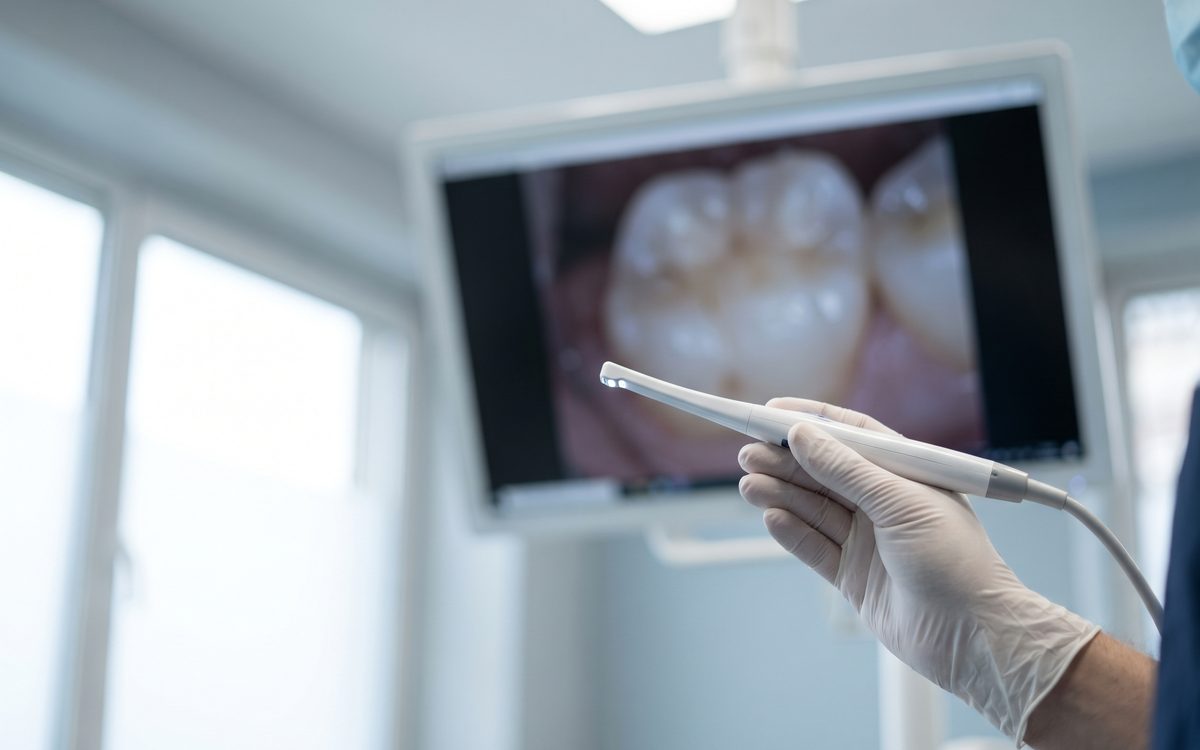
Close photos of the gum line, so you see what we see and changes can be compared.
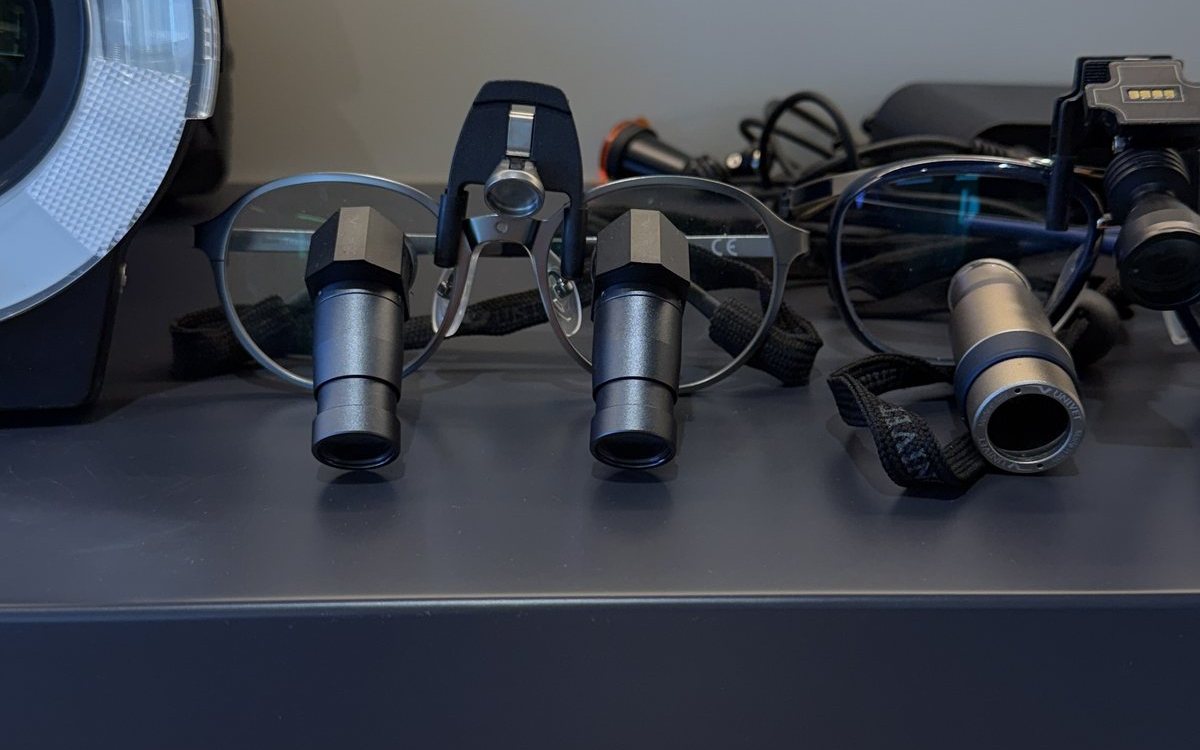
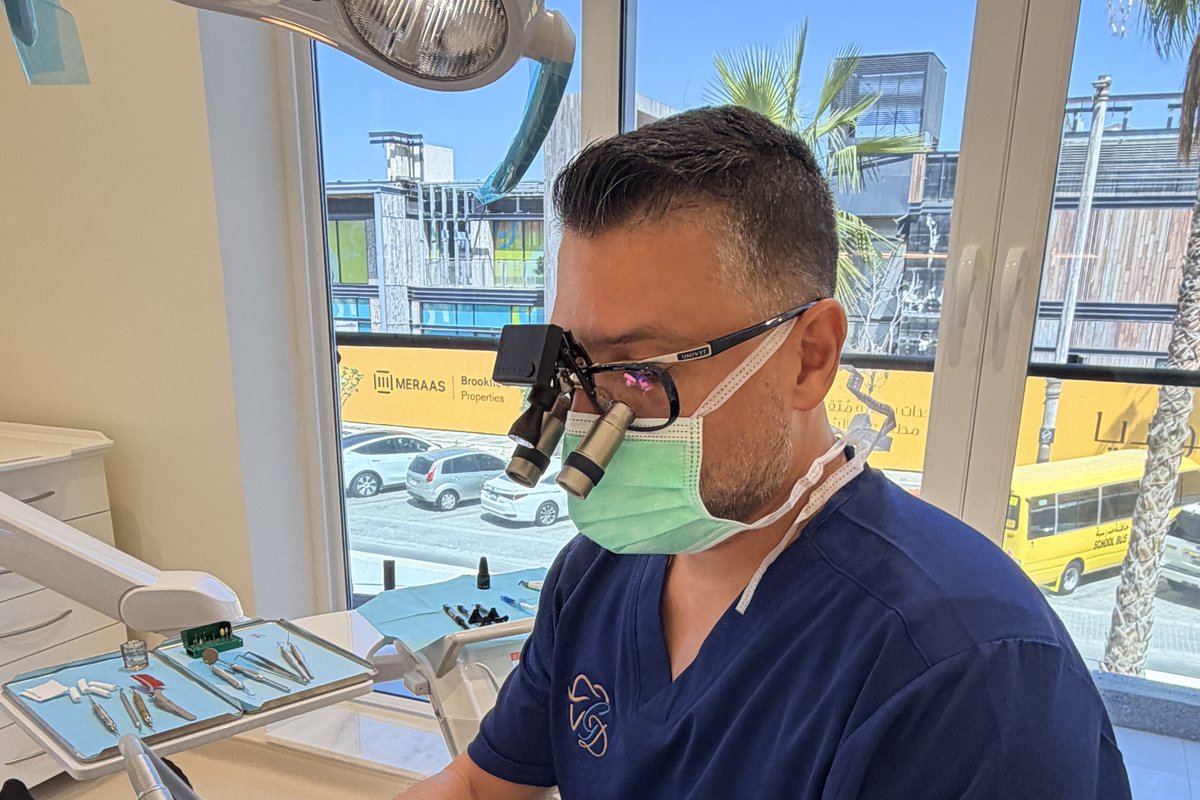
Fine work at the gum line with good vision.
Myth or fact
MythReceding gums grow back with the right toothpaste.
FactLost gum does not regrow by itself. Toothpaste can reduce sensitivity but cannot restore the gum line. Suitable cases may benefit from root coverage surgery, with or without a graft.
MythRecession only happens to people who do not brush.
FactVery often the opposite: brushing too hard is one of the most common causes.
MythEvery receding gum needs surgery.
FactMany small, stable recessions only need the cause controlled and regular checks.
MythSensitivity at the gum line means a cavity.
FactIt is often an exposed root. A check shows whether it is sensitivity, wear or decay.
More answers
Tap a question to open the answer. Anything else, ask us on WhatsApp.
Gum grafts are well established procedures, but they are surgery, and you should know the possible downsides before you decide.
The choice depends on the cause, the depth of the recession and the thickness of your gums. This overview shows the main options side by side.
| Desensitising and filling | Connective tissue graft | Free gingival graft | |
|---|---|---|---|
| Main aim | Comfort and protection of the root | Cover the root and thicken the gum | Create firm gum and reduce the risk of further recession |
| Covers the root? | No, it seals and protects it | Often, depending on bone between teeth | Less predictably |
| Look | Tooth coloured | Blends in with your own gum | Can look slightly paler |
| Second site | None | Palate, usually closed with stitches | Palate, open surface that heals over some weeks |
| Healing | None needed | Surface usually 1 to 2 weeks, maturing over months | Surface usually 1 to 2 weeks, palate a little longer |
Not by themselves. Treatment aims to reduce the risk of further recession, and in suitable cases a gum graft can cover the exposed root again.
Most often brushing too hard, gum disease, thin gums or tooth position, and smoking. Usually several factors together.
A small, stable recession is often harmless. It matters when it progresses, causes sensitivity or decay, or when the gum becomes too thin to protect the tooth.
Local anaesthetic is used to reduce pain. Tell us if you feel discomfort, so the anaesthesia can be adjusted. Afterwards the area and the palate can be sore or tender for a few days.
The surface usually heals in one to two weeks. The graft keeps maturing for several months, and the final result is judged after about three to six months.
Usually an assessment first, then any gum treatment that is needed, then the graft appointment, and follow up checks at about one to two weeks and again after a few months. Your written plan shows the visits for your case.
Usually from your own palate. The area heals over the following weeks.
A connective tissue graft is placed under your gum and is mainly used to cover roots. A free gingival graft is placed on the surface and is mainly used to create firm, protective gum.
Yes, often. Gentle brushing, gum treatment, desensitising, fluoride and tooth coloured fillings over notches help many patients.
Exposed roots have fine channels that lead to the nerve. Cold, sweet or air can trigger a short, sharp pain.
Moving teeth outwards in thin gums can contribute. If your gums are thin, they are assessed before treatment starts.
A small gum procedure that exposes more tooth, for example when a tooth is broken below the gum line and a crown needs a healthy edge, or to even out the gum line.
That depends on your policy. Insurers may assess medically necessary gum treatment and root coverage for cosmetic reasons differently. Before treatment, check your benefits and whether pre approval is needed. We do not bill insurers directly. You receive all documents to claim the costs, and any reimbursement depends on your policy.

Why with Dr. Mohammad Shaker
Dr. Mohammad completed a curriculum in periodontology (GER 🇩🇪) in 2014/15 and, as a DHA Specialist Prosthodontist, sees every day how much a stable gum line matters for crowns, veneers and implants. The cause is treated before the symptom.
Dr. med. dent. · M.Sc. Prosthodontics · DHA Specialist Prosthodontist · Specialist Senior Dentistry (GER 🇩🇪)
Meet Dr. Mohammad ShakerAlso at the clinic
You are welcome
One message is enough. No forms, no call centre. You write, the clinic answers in Arabic, English or German.
Villa 21B, La Mer · Jumeirah 1 · Dubai
Sat to Thu 9:00 to 18:00 · Fri closed