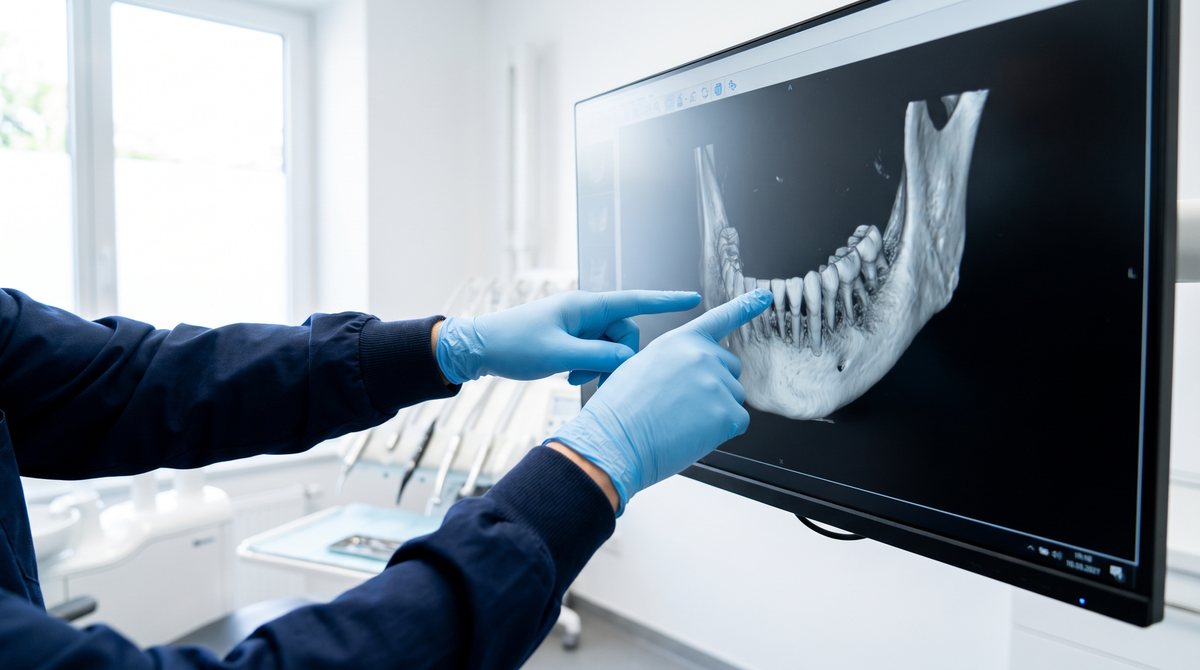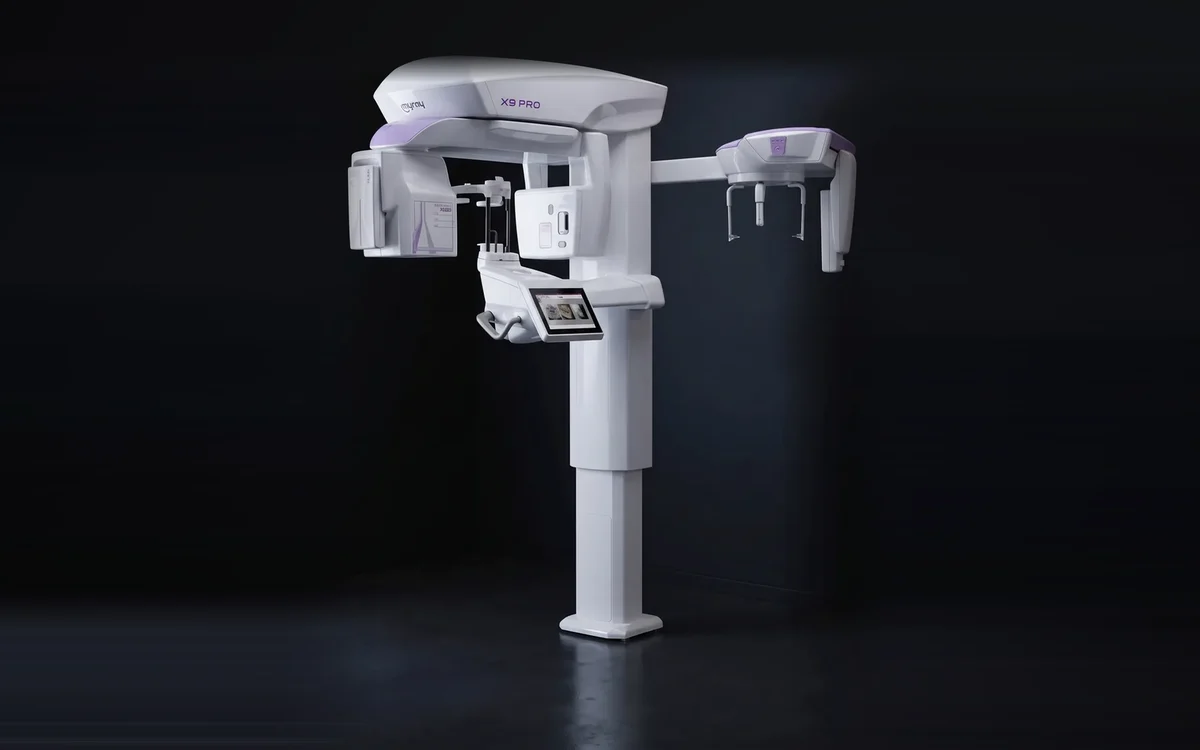
MyRay Hyperion X9 Pro
3D view of root and nerve before surgery.

Oral surgery
Not every wisdom tooth has to be removed. We examine your situation and discuss whether watching it or removing it surgically makes more sense.
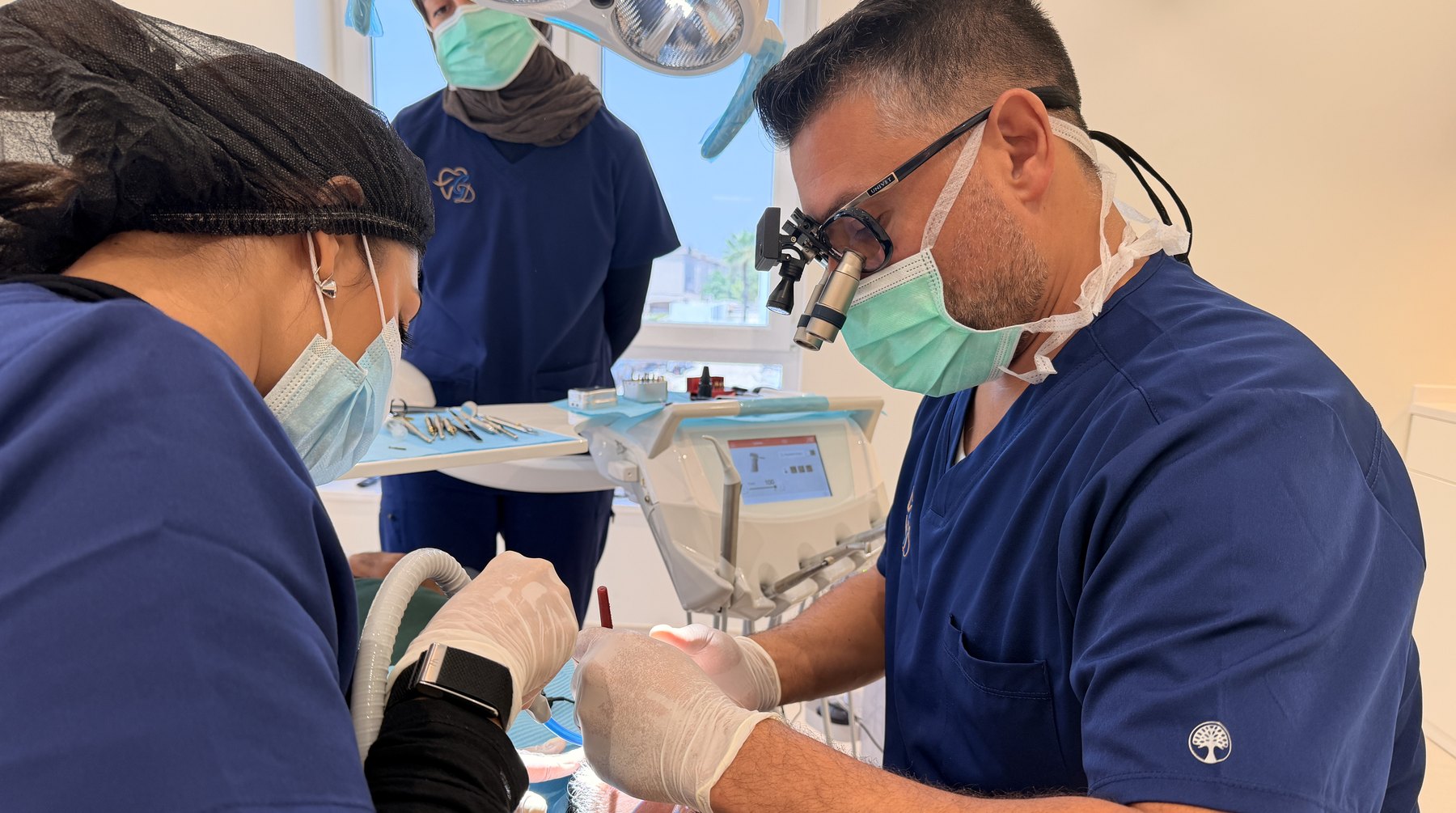
Surgery by Dr. Ayse Yilmaz Bastug, oral and maxillofacial surgeon, as part of a coordinated treatment plan with Dr. Mohammad Shaker.
Patient guide
No. Wisdom teeth that have come through fully, sit in a good position and can be cleaned can stay for life. They are removed when they cause problems, such as repeated infections, pain, decay that cannot be treated, a cyst, or damage to the neighbouring molar.
Wisdom teeth are the third molars, usually the last teeth to appear, often between the late teens and the mid twenties. In many people the jaw does not have enough space for them. They stay under the gum or bone, come through only partly, or grow at an angle against the tooth in front. These are called impacted wisdom teeth.
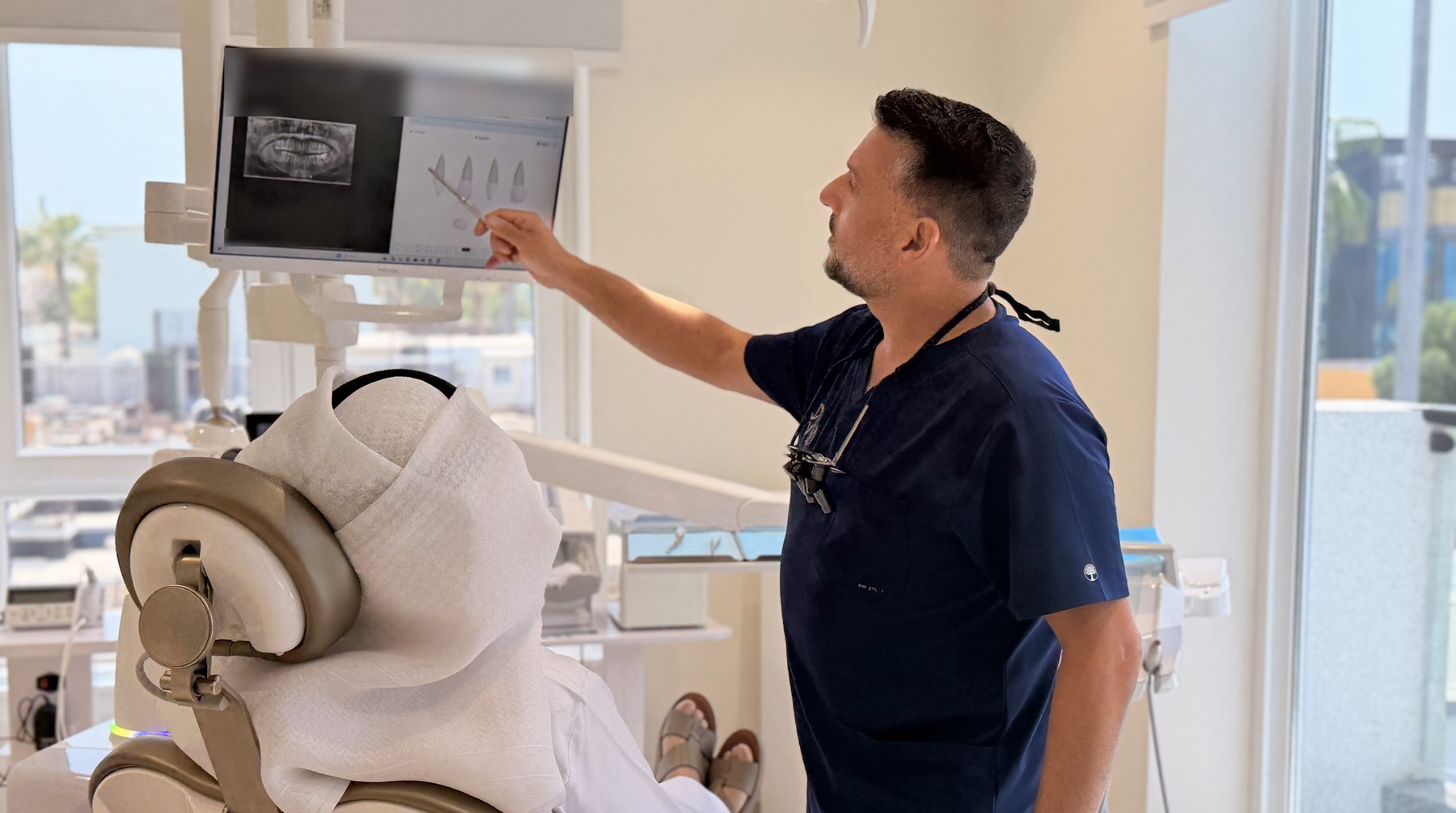
At German DentAllée Clinic in Jumeirah 1, wisdom teeth are assessed on an X-ray and, when the roots may be close to the nerve and more detail is needed, on a 3D scan. The surgery is performed by Dr. Ayse Yilmaz Bastug, PhD, DHA specialist in oral and maxillofacial surgery. She is in the clinic every Tuesday and whenever a case needs her.
Below you find when removal makes sense and when it does not, how the procedure works, how recovery feels day by day, how to avoid a dry socket, and the questions patients in Dubai ask us most.
Is this for you?
Step by step
An X-ray of the area, and a cone beam scan only when the root may be close to the nerve and a 3D view is likely to change the plan.
You hear what will be done, how long it takes and how the days after will feel.
Local anaesthetic, computer controlled with the Wand if you wish. Nitrous oxide helps if you are anxious.
The tooth is removed as gently as possible. Where the root is very close to the nerve, a coronectomy can reduce the risk to the nerve in selected cases.
Clear written advice, a check up and a direct line to the clinic if anything worries you.
That depends on what your teeth need, so a price without an examination would not be honest. After the examination you receive a written treatment plan with all costs, before anything starts. Payment and insurance
What changes the cost
Removal can cause swelling, limited mouth opening or a dry socket, and when roots lie close to a nerve there is a risk of numbness. The position of the roots shows how likely this is for you.
Your next step
Or call 800 433 368 (toll free) · Sat to Thu 9:00 to 18:00 · Fri closed
The decision is made for each tooth on its own. Some patients need one wisdom tooth removed, others all four, and many keep theirs. These are the most common reasons for removal.
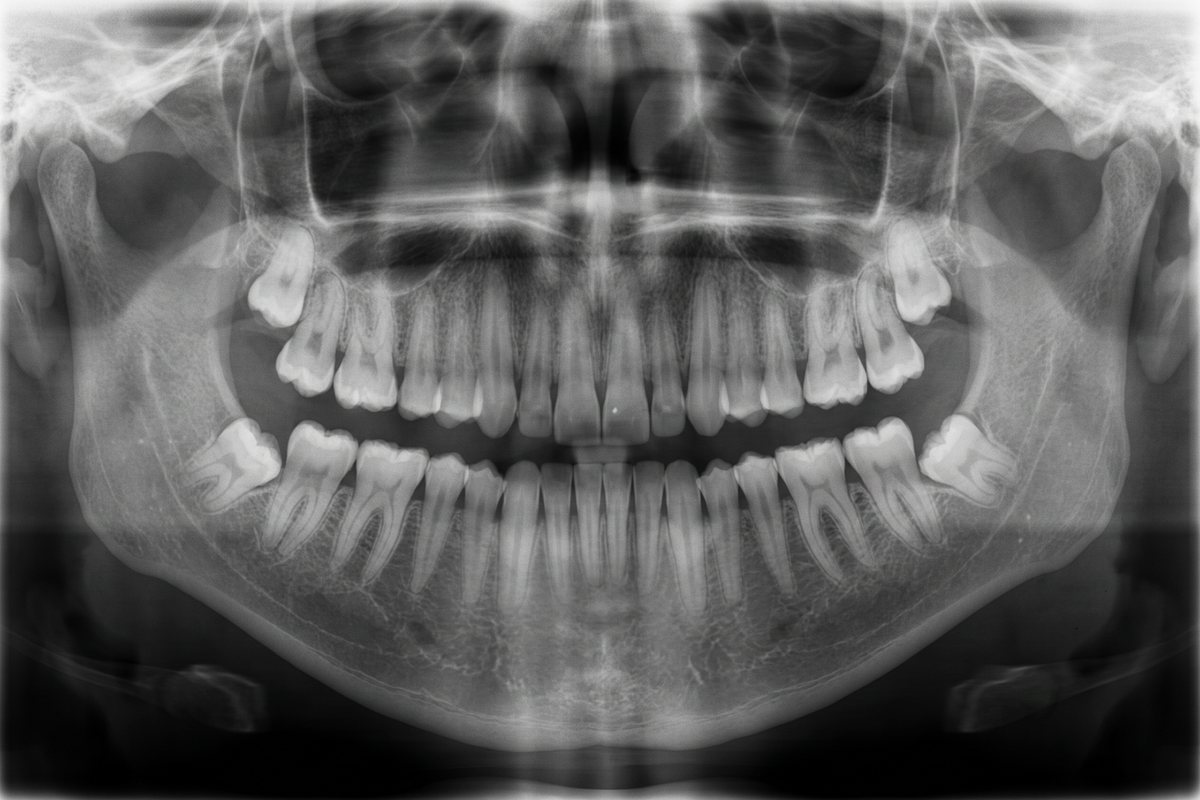
Removing a healthy tooth is still surgery. If a wisdom tooth has come through fully, bites against a partner tooth, can be cleaned with a toothbrush and shows no problems on the X-ray, there is usually no reason to remove it.
Wisdom teeth that are fully covered by bone, cause no symptoms and show no changes on the X-ray are often observed instead of removed, especially in older patients, where removal is more demanding. They are checked on X-rays at sensible intervals.
Some patients ask whether wisdom teeth cause crowding of the front teeth. This idea is common, but research does not support it as a main cause. It is not a reason on its own to remove healthy wisdom teeth. If crowding bothers you, our clear aligners page explains a direct way to treat it.
The assessment usually starts with an X-ray, often a panoramic X-ray. If you already have a recent suitable X-ray, please bring it, as it may be enough. A panoramic X-ray shows the position of all four wisdom teeth, their roots, the angle at which they lie and the relation to the neighbouring teeth.
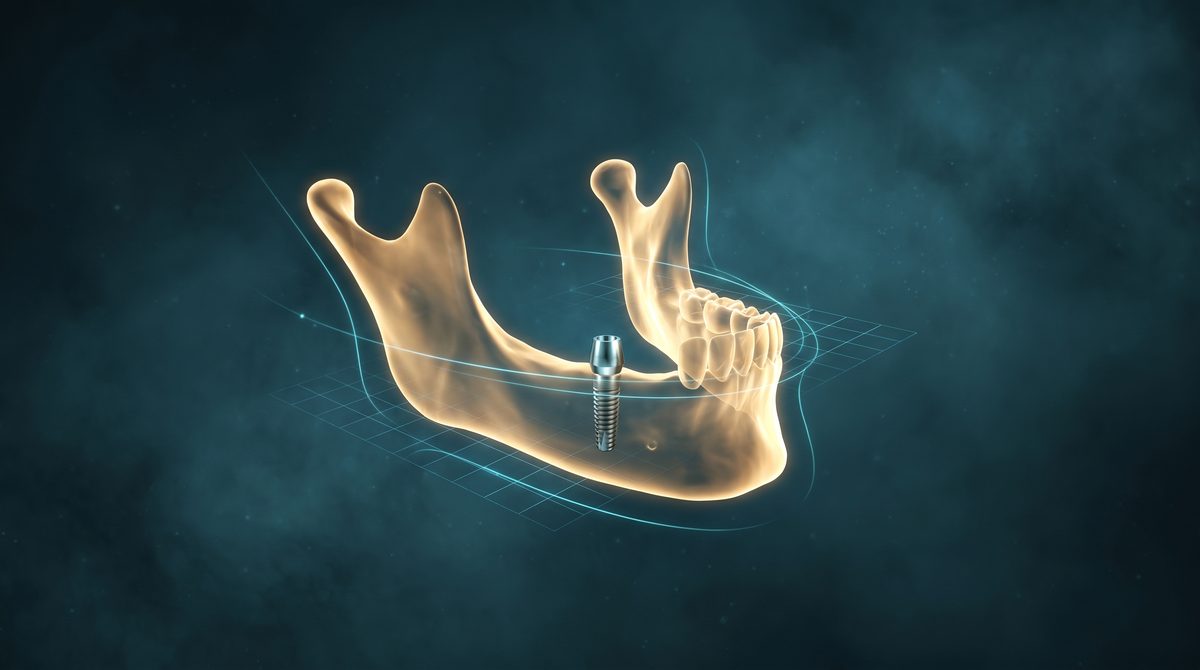
In the lower jaw there is an important nerve that runs below the roots of the molars. It supplies feeling to the lower lip and chin. When the X-ray suggests that a root is close to this nerve and a 3D view is likely to change the plan, a cone beam scan (CBCT) can be taken on the MyRay Hyperion X9 Pro in the clinic. One scan takes 6.4 seconds and shows in 3D how close the root really is, and on which side the nerve runs.
This changes the plan. If the root and nerve are clearly apart, the tooth can be removed normally. If they touch, the surgeon may choose a different technique or a coronectomy, explained below. You see the images and the reasons for the recommendation at the consultation. More about imaging on our technology page.
The removal is done under local anaesthetic. The anaesthetic is given time to take effect before anything else happens. If you are anxious, nitrous oxide helps you relax while staying awake, and the anaesthetic can be given with the Wand, a computer controlled system that releases it slowly and evenly. More on our sedation page.
A wisdom tooth that has come through can often be removed like a normal tooth. An impacted tooth needs a small surgical procedure: the gum is opened, a little bone may be removed, and the tooth is often divided into pieces so it can be taken out gently through a smaller opening instead of with force. The area is cleaned and usually closed with a few stitches.
Local anaesthetic is used to control pain. You may feel pressure and sometimes vibration. If you feel pain, tell the surgeon straight away so the anaesthesia can be checked and more can be given. The time in the chair depends on the position of the tooth and ranges from a short appointment for an erupted tooth to longer for a deeply impacted one. The appointment also includes time for the anaesthetic to work and for your aftercare advice, so it is longer than the removal itself. You hear the expected time at the planning visit.
Tell us about all medicines you take, especially blood thinners, and about allergies, pregnancy and any medical conditions. Do not stop a prescribed medicine without advice from the doctor who prescribed it. You receive individual instructions about eating beforehand, whether someone should accompany you, and when you can drive again.
Often all teeth on one side, or all four, can be removed in one appointment, depending on their position and your wishes. Some patients prefer one side at a time so they can still chew on the other. This is decided together at the examination.
If the 3D scan shows that the roots of a lower wisdom tooth lie directly on or around the nerve, removing the whole tooth carries a higher risk of numbness in the lip and chin. In selected cases like this, a coronectomy can reduce the risk of injury to this nerve. It does not remove every risk to the feeling in the lip, chin or tongue.
In a coronectomy, only the crown of the tooth is removed, and the roots are left in the bone where they are. A partly erupted crown can create a niche where plaque and food collect, which can lead to inflammation or decay in the neighbouring tooth. Without the crown, the gum and bone usually heal over the roots, and in many cases the roots cause no symptoms. Sometimes they move slightly away from the nerve over time. If they ever need to come out later, this can carry less risk to the nerve, but a second surgery is sometimes needed. Follow up checks with X-rays are part of the treatment.
A coronectomy is not suitable for every tooth, for example if the roots are infected. You hear honestly which option fits your situation, and why.
Recovery after a simple removal is often quick. After the surgical removal of an impacted tooth, swelling and discomfort are normal and part of healing. Swelling usually peaks around the second or third day and then goes down. Light activities are often possible again after two to four days. Full recovery takes longer: some discomfort can last up to about two weeks, especially after a difficult surgical removal, and the area keeps healing for several weeks after that.
Opening the mouth can feel stiff for some days. Bruising on the cheek is possible and fades on its own. Stitches are removed at a check up, or dissolve by themselves if dissolving stitches were used.
You receive clear written aftercare instructions and a direct line to the clinic. If something worries you, you call or send a message, and you are seen. For patients in pain we try to find an appointment the same day, also on our emergency dentist service. If you have difficulty breathing or swallowing, or swelling that spreads quickly, go to a hospital emergency department straight away.
Timeline
Bite on the gauze to stop bleeding. Numbness wears off. Take the pain relief recommended for you, as prescribed or as on the label.
Swelling increases, usually highest around the second or third day. Cool the cheek, soft and lukewarm food, rest.
Swelling starts to go down. Work or study is often possible again, although some discomfort can last up to about two weeks.
Check up and stitches removed if needed. Normal food returns step by step.
The gum closes over the socket. Avoid hard food on that side.
New bone forms gradually in the socket. Depending on the extraction, this remodelling can continue for several months.
Technology
3D view of root and nerve before surgery.
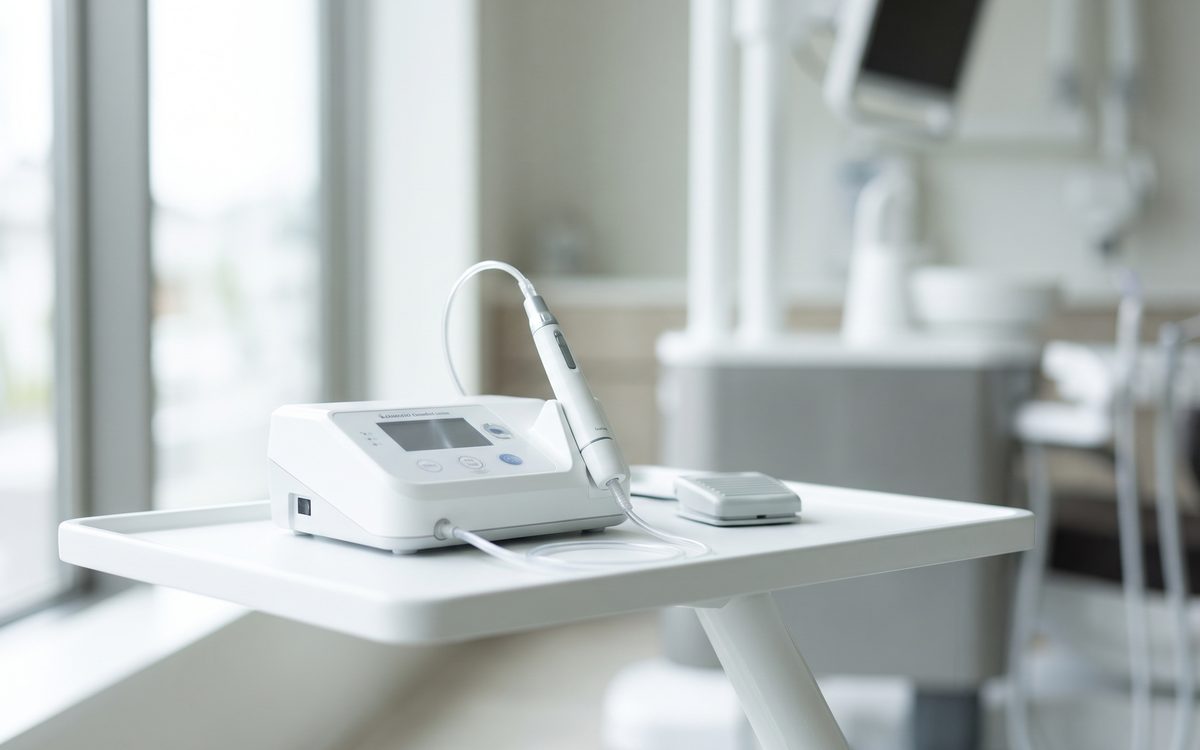
Computer controlled anaesthesia, gentle and precise.
Myth or fact
MythEveryone has to have their wisdom teeth removed.
FactNo. Healthy, fully erupted wisdom teeth that can be cleaned can stay.
MythWisdom teeth push the front teeth crooked.
FactThis is a common belief, but research does not support it as a main cause of crowding.
MythThe older you are, the easier the removal.
FactUsually the opposite: roots become longer and bone denser with age. If a tooth needs to come out, earlier is often easier.
MythAntibiotics alone solve a wisdom tooth infection.
FactAntibiotics are not needed for every wisdom tooth infection. Often local cleaning of the area is the main treatment, and antibiotics are added when clinically needed. Both calm the problem for a while, but if the cause remains, the infection often returns.
More answers
Tap a question to open the answer. Anything else, ask us on WhatsApp.
Wisdom tooth removal is one of the most common procedures in oral surgery, and serious complications are uncommon. Results can vary from person to person. These are the risks we explain before every surgery.
Three ways to deal with a wisdom tooth. Which one fits depends on the position, the nerve and your symptoms.
| Full removal | Coronectomy | Monitoring | |
|---|---|---|---|
| When | Tooth causes problems and the nerve is not too close | Tooth causes problems and roots lie on the nerve | Tooth causes no problems |
| What happens | Whole tooth removed | Crown removed, roots stay | X-ray checks at intervals |
| Risk to the nerve | Low when the nerve is at a distance | Can be lower than full removal in selected close cases | None from surgery |
| Possible later step | Usually none, a review or treatment if complications occur | Follow up X-rays, rarely removal of roots that move up | Removal if problems develop |
No. Healthy, fully erupted wisdom teeth that can be cleaned can stay. We remove them when they cause problems or put neighbouring teeth at risk.
Local anaesthetic is used to control pain. You may feel pressure, and if you feel pain, tell the surgeon straight away so the anaesthesia can be checked. Afterwards there is soreness and swelling for a few days, usually managed with painkillers.
Light activities are often possible again after two to four days. Swelling usually peaks around the second or third day, and some discomfort can last up to about two weeks, especially after a difficult surgical removal.
Often yes, depending on the position and your wishes. This is decided at the examination.
Only the crown of the tooth is removed and the roots stay, when they lie directly on the nerve. In selected cases it can lower the risk of numbness. Follow up X-rays are part of the treatment.
Do not smoke, do not use straws, do not rinse or spit forcefully in the first days, and follow the aftercare sheet. If pain gets stronger after day three, contact us.
Soft, lukewarm food for the first days: yoghurt, soup that is not hot, eggs, mashed potatoes, rice. Avoid seeds, nuts and crunchy food for about a week.
It depends on the number of teeth, their position and whether a surgical removal or a 3D scan is needed. You receive the costs in writing before treatment. The first consultation is charged and credited to your treatment if you go ahead.
Coverage depends on your policy. Before treatment, check the benefits, exclusions and any prior approval requirements with your insurer. We do not bill insurers directly. You receive all documents to claim from your insurer.
We try to. Urgent cases get priority, and we try to see patients in pain the same day. Send us a WhatsApp or call the clinic.
Not always. A wisdom tooth that has fully come through can often be removed like any other tooth. Impacted teeth, or roots close to the nerve, are planned with more care. At German DentAllée these are treated by our oral and maxillofacial surgeon, Dr. Ayse Yilmaz Bastug.
Yes. Our oral and maxillofacial surgeon, Dr. Ayse Yilmaz Bastug, is female, and female patients can be treated by a female doctor on request.
Usually after a few days to a week, depending on the surgery. Avoid heavy exercise while the swelling is still increasing.

Why with Dr. Mohammad Shaker
Oral surgery at German DentAllée is done by Dr. Ayse Yilmaz Bastug, PhD, DHA specialist in oral and maxillofacial surgery. She is in the clinic every Tuesday and whenever a case needs her.
Dr. med. dent. · M.Sc. Prosthodontics · DHA Specialist Prosthodontist · Specialist Senior Dentistry (GER 🇩🇪)
Meet Dr. Mohammad ShakerAlso at the clinic
You are welcome
One message is enough. No forms, no call centre. You write, the clinic answers in Arabic, English or German.
Villa 21B, La Mer · Jumeirah 1 · Dubai
Sat to Thu 9:00 to 18:00 · Fri closed