Nitrous oxide
Calming gas with a quick start and quick end.


Relaxed treatment
For dental anxiety, selected methods such as nitrous oxide and computer controlled local anaesthesia can help to make treatment more comfortable. Whether they are suitable is decided after a medical check.
 At German DentAllée Clinic, led by Dr. Mohammad Shaker, Medical Director and DHA Specialist Prosthodontist.
Patient guide
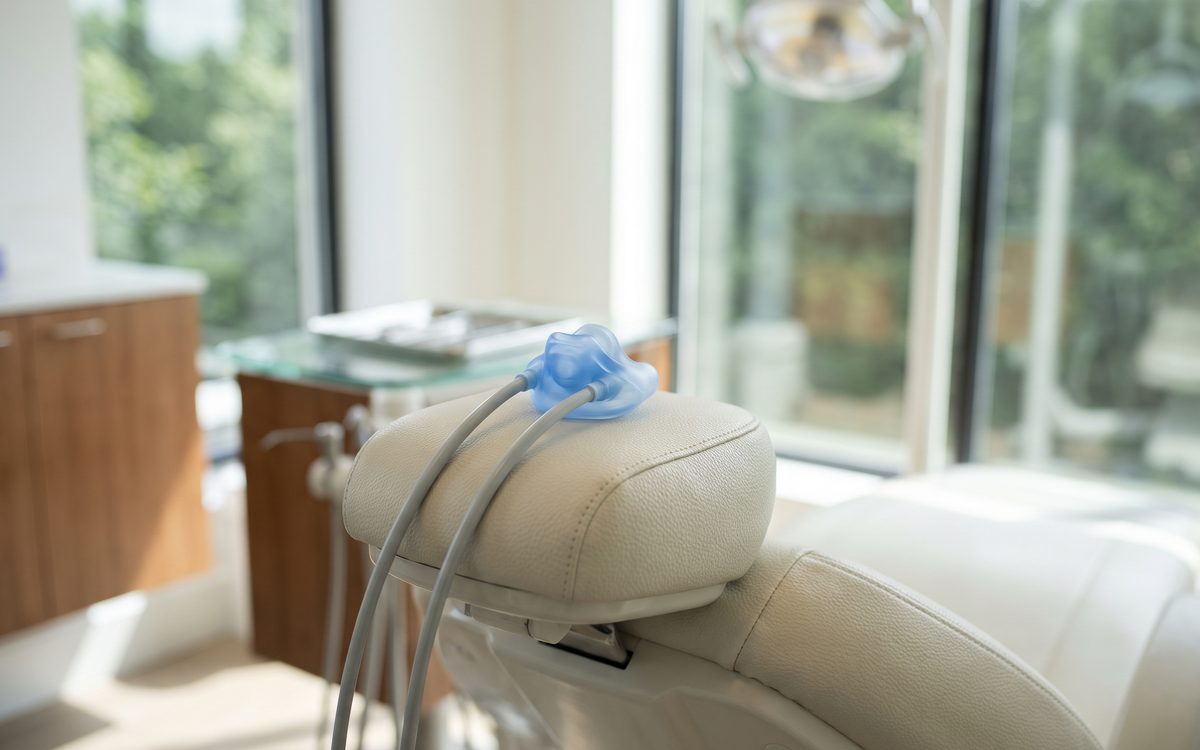
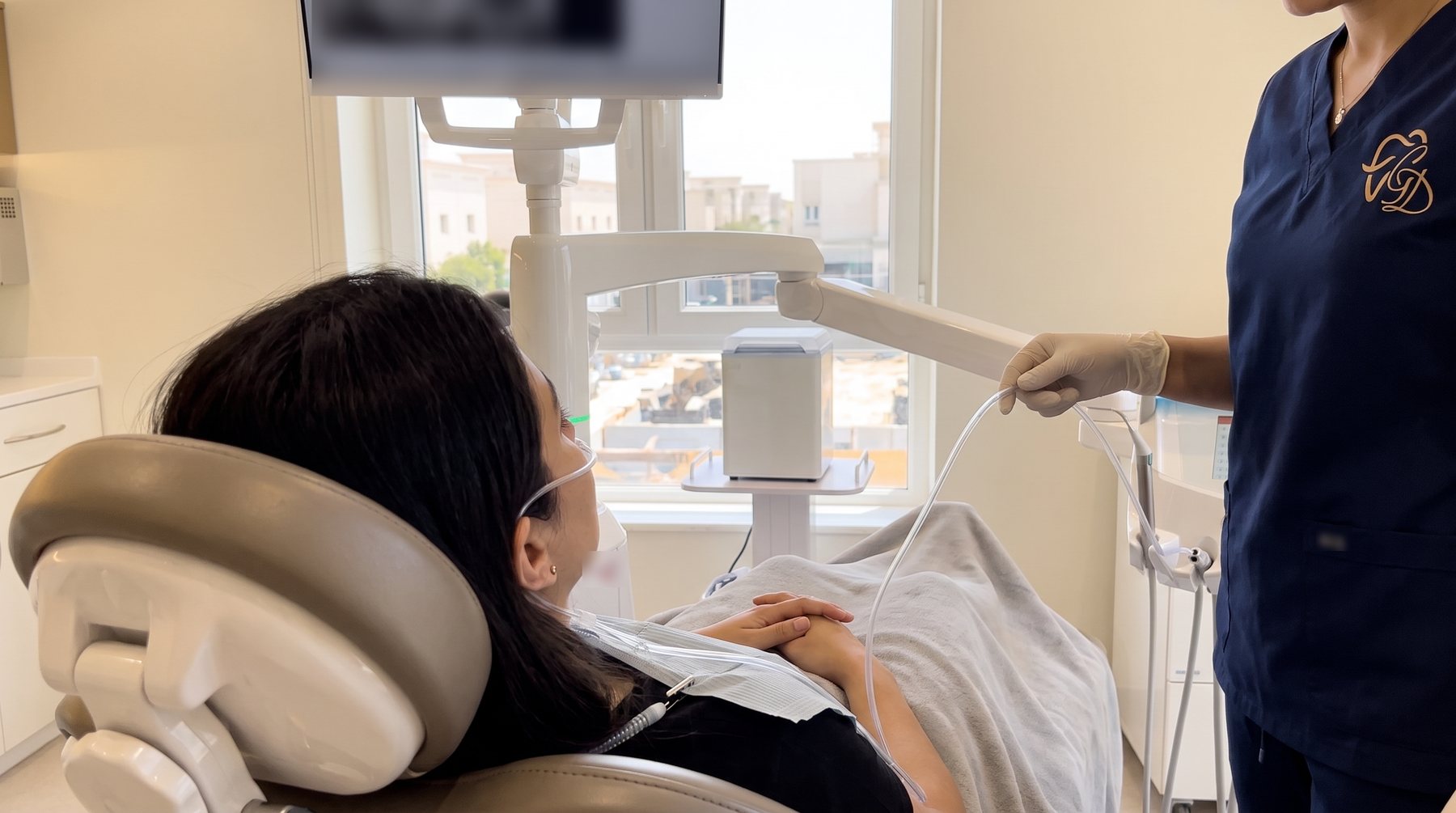
Nitrous oxide sedation is a light form of sedation in which you stay awake and able to communicate. You breathe a mixture of nitrous oxide and oxygen through a small mask over your nose, and within a few minutes many people feel calmer, warm and less bothered by what is happening. Responses vary from person to person. You can talk and you can stop the treatment at any time.
Nitrous oxide is often called laughing gas, although most people do not laugh. They describe a pleasant, slightly heavy relaxation in which time passes more quickly. When the gas is switched off and you breathe pure oxygen for a few minutes, the effect usually fades quickly.
At German DentAllée in Jumeirah 1 we combine nitrous oxide with gentle, computer controlled local anaesthesia using the Wand, and with something just as important: time. Anxiety about the dentist is common and nothing to be embarrassed about. The first step is always a conversation, not an instrument.
Is this for you?
Step by step
You tell us what makes you anxious. We explain every step before it happens.
You breathe a mix of nitrous oxide and oxygen through a small nose mask, which may help you feel calmer. Responses vary from person to person.
Where numbing is needed, the Wand delivers the local anaesthetic slowly and evenly, which can reduce discomfort for some patients.
You stay awake and can communicate at any time. A hand signal is enough to stop.
After a few minutes of oxygen, we check your recovery before you leave.
That depends on what your teeth need, so a price without an examination would not be honest. After the examination you receive a written treatment plan with all costs, before anything starts. Payment and insurance
What changes the cost
Nitrous oxide is not suitable for everyone, for example in early pregnancy or with some lung conditions, and it can cause brief nausea. Treatment can feel more comfortable, but we cannot promise that it is free of any sensation.
Your next step
Or call 800 433 368 (toll free) · Sat to Thu 9:00 to 18:00 · Fri closed
Many adults avoid the dentist for years. Some had a painful experience as a child, some feel a loss of control when lying back in the chair, some fear the needle, the sound of the drill, the smell, or simply being told off. Others have a strong gag reflex that makes even a check up difficult.
Avoiding the dentist often makes the next visit feel even harder. An examination can identify problems and help you understand your treatment options. The aim is to break that circle gently, so that treatment becomes possible and, over time, ordinary.
Tell us about your anxiety when you book, so we can discuss suitable appointment arrangements. If you prefer, a first visit can be limited to a conversation and an examination. You can sit upright, talk about what worries you and agree on a stop signal. A raised hand is enough, and we stop. Nothing is done before you are ready, and you hear each step before it happens.
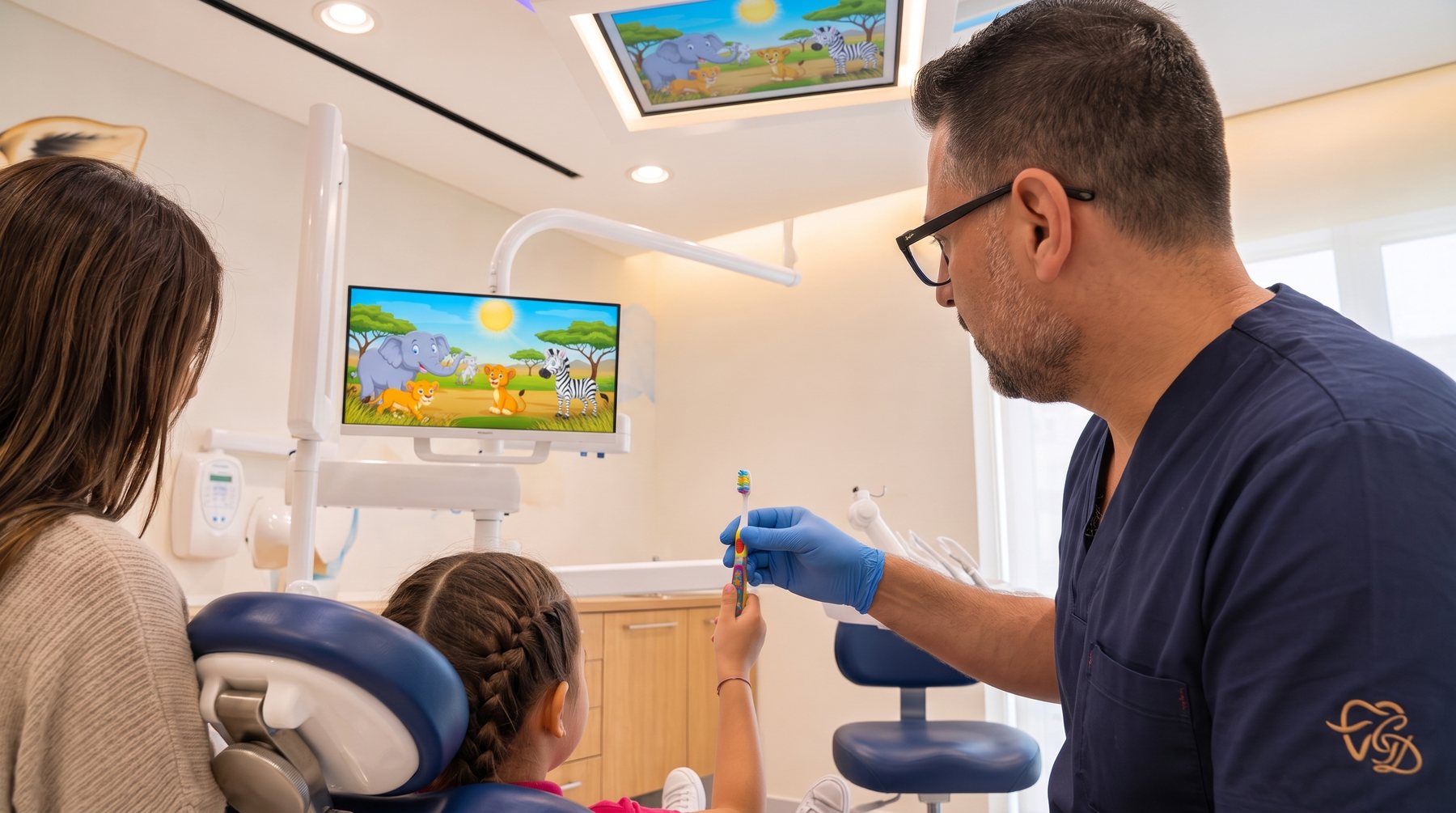
Practical details can help too: female patients can be treated by a female doctor on request, there is a separate waiting area for women, and the team speaks Arabic, English, German, Hindi, Turkish and Albanian. You can bring someone with you. And if you like, there is Netflix on the ceiling to watch while you lie in the chair.
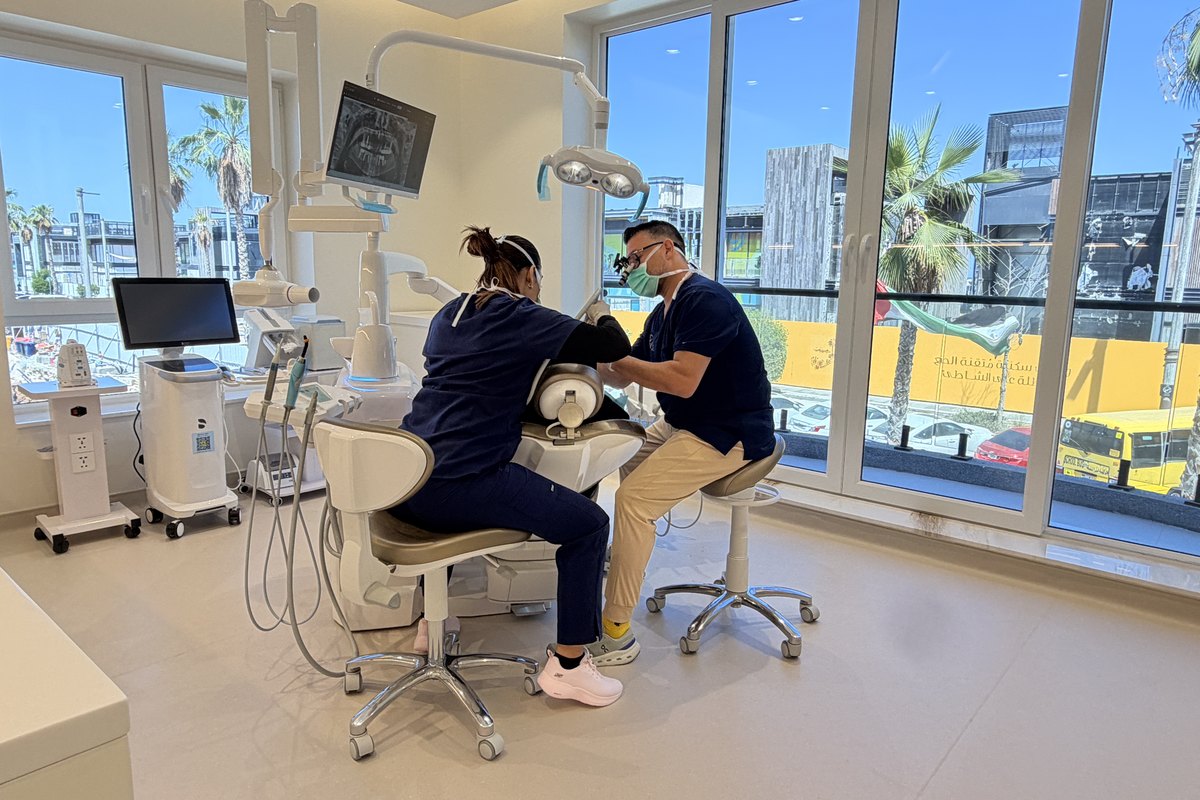
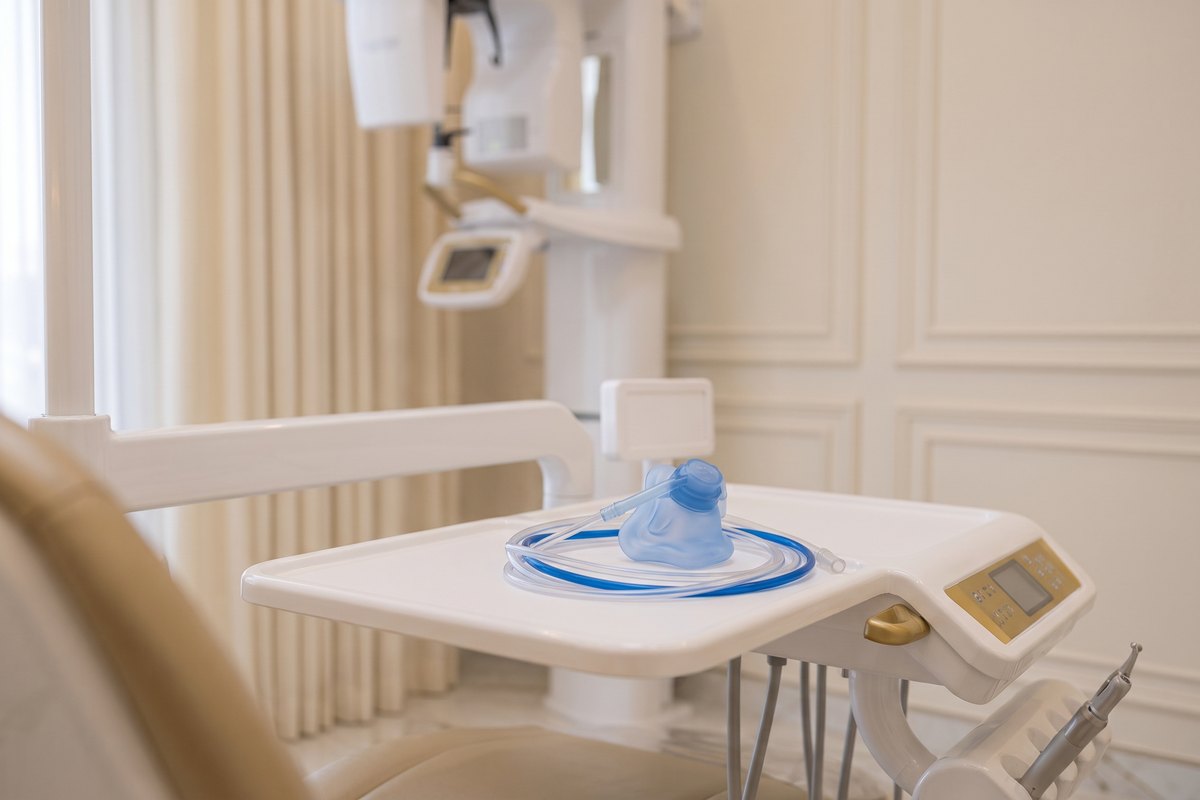
Before the first use, we go through your medical history and medication, because nitrous oxide is not suitable for everyone. Then a small, soft mask is placed over your nose. You breathe normally through the nose, first pure oxygen, then a mix of oxygen and nitrous oxide that is increased slowly until you feel relaxed.
Many people notice tingling in the hands or feet, a warm feeling and a sense of distance from the treatment. You remain aware of what is going on and can answer questions. The level is adjusted to how you feel, and you always receive plenty of oxygen with it.
Nitrous oxide calms, it does not numb the tooth. For treatment that would otherwise be uncomfortable, local anaesthetic is still given, but with nitrous oxide many anxious patients find the injection easier, and with the Wand it is delivered slowly and evenly.
At the end, the nitrous oxide is switched off and you breathe oxygen for a few minutes. The effect wears off quickly. We check your recovery before you leave, and most adults can return to normal activities the same day.
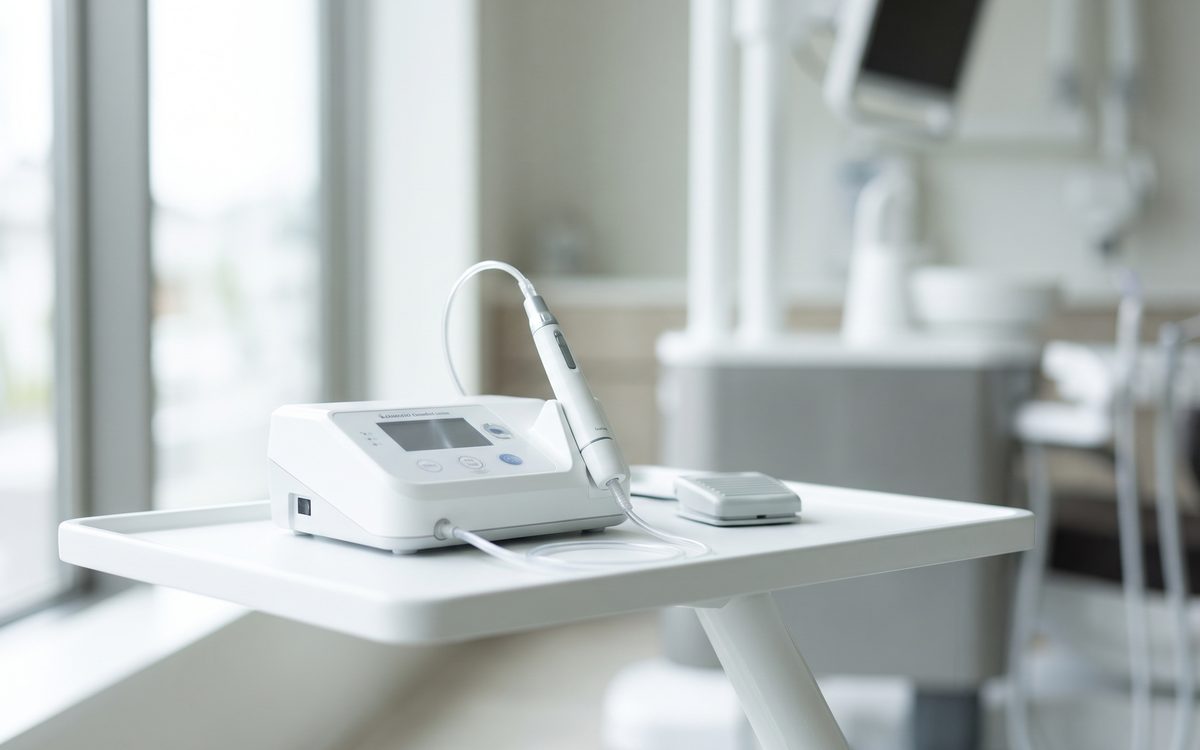
Much of the discomfort of a dental injection does not come from the needle itself but from the anaesthetic being pushed in too quickly. The Wand is a computer controlled anaesthesia system that controls the flow of the local anaesthetic, so it is delivered slowly and evenly. This can reduce discomfort for some patients.
The handpiece looks like a pen rather than a classic syringe, which many anxious patients find less threatening. Before the injection, a numbing gel can be applied to the gum. For single teeth, the Wand often allows anaesthesia close to the tooth, so that lips and tongue are less numb afterwards.
The Wand is also used for children and for patients who come in pain, for example as a same day emergency. Where a larger area needs anaesthesia, for example in the lower jaw, a classic block anaesthesia is used, also given slowly.
If you have had an injection that did not work well in the past, tell us. Inflamed teeth can be harder to numb, and sometimes more time, a different technique or a second dose is needed. We test that the tooth is numb before we start, and we stop if you feel anything sharp.
Children often take their cue from adults. A calm first visit, where the chair moves up and down, the light goes on and off and nothing else happens, can shape how they feel about the dentist for years. Parents can stay in the room. You can read more about our approach on the page for family and children’s dentistry.
When treatment is needed and a child is anxious, nitrous oxide is a well established method in children’s dentistry. The child stays awake and can talk, and recovers quickly afterwards. We explain the mask as a “space pilot” or “astronaut” nose, let the child hold it first and never force it.
Nitrous oxide works well when the child accepts the mask and breathes through the nose. Very young children or children who cannot yet cooperate with a mask may need a different approach, for example shorter visits or a step by step plan. We never force a treatment on a child.
For children, prevention is the gentlest treatment of all. Regular check ups, cleaning, fluoride and fissure sealing can help prevent many problems that would otherwise need a drill. And when treatment is needed early, it is usually small and quick, which helps a child stay relaxed for the next visit.
Filmed in the clinic
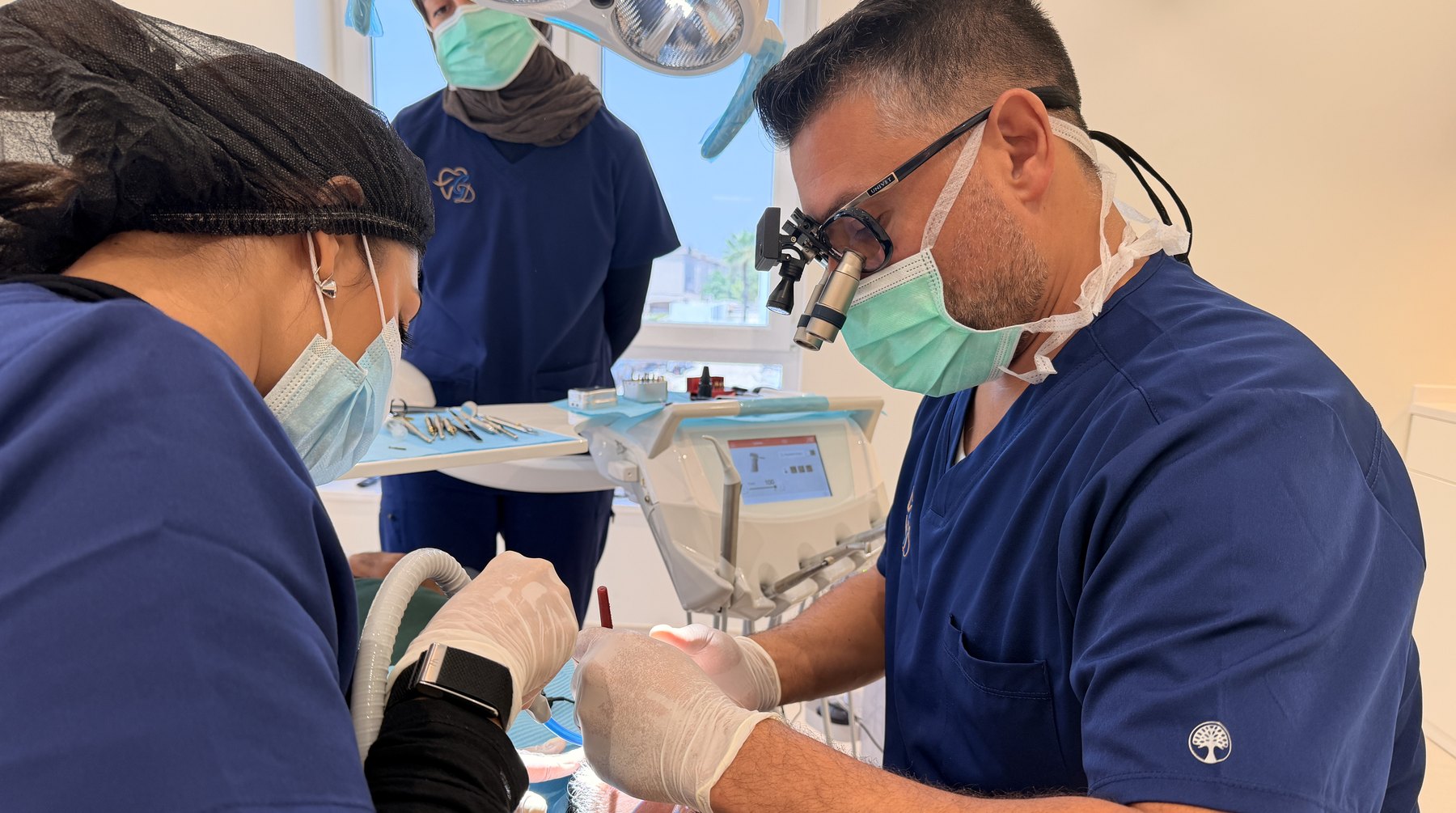
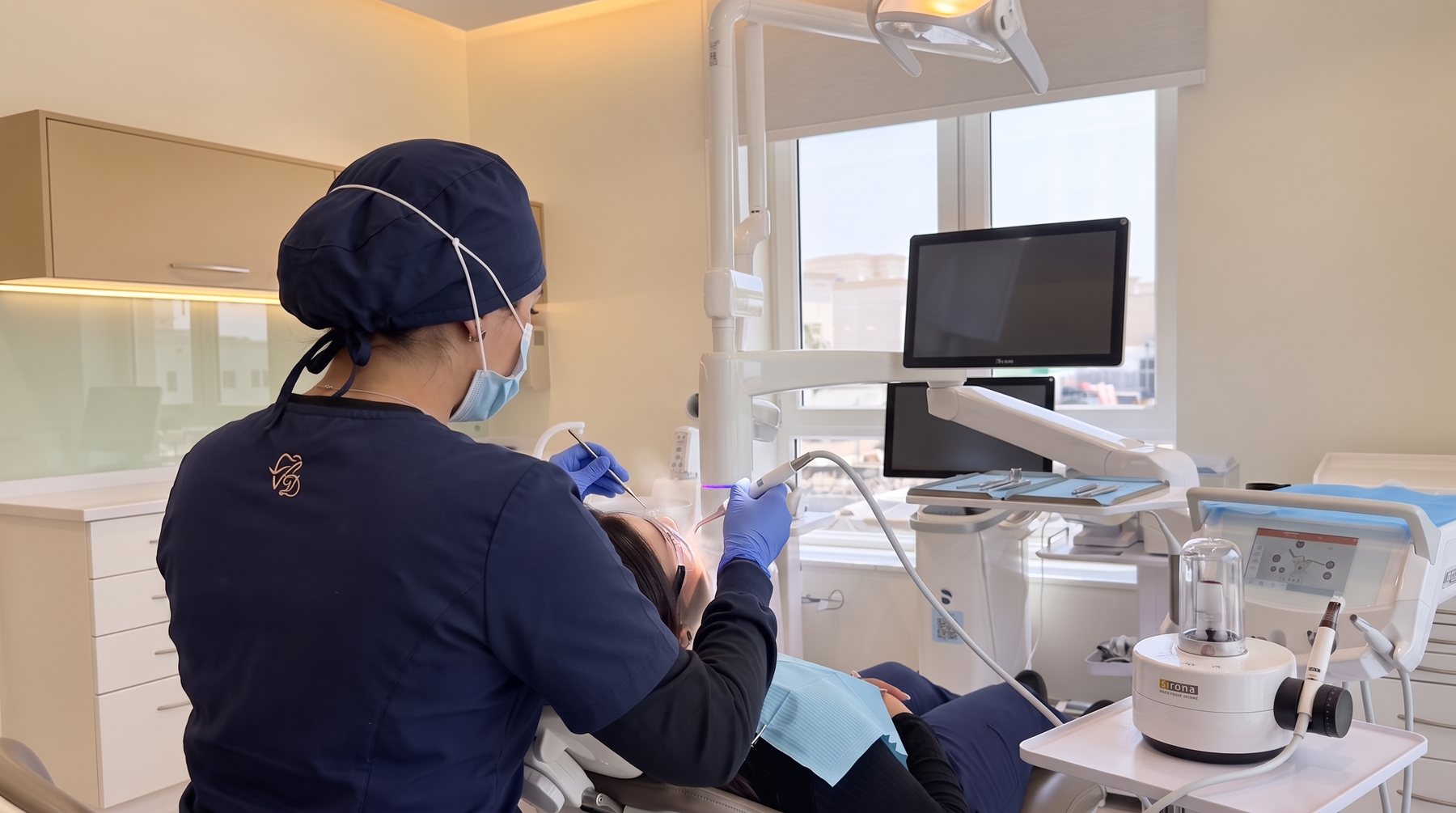
A calm visit at German DentAllée.
Nitrous oxide suits adults and children with mild to moderate dental anxiety, patients with a strong gag reflex, people who find long appointments tiring, and patients who need several treatments and would like them to feel easier.
It is not suitable for everyone. It is usually avoided in the first months of pregnancy, and planned treatment in pregnancy is discussed individually. A blocked nose or a heavy cold makes it ineffective, because the gas is breathed through the nose. Severe lung disease such as advanced COPD, a known vitamin B12 deficiency, a gas bubble in the eye after recent retinal surgery, recent ear or sinus surgery and some medications can make nitrous oxide unsuitable and need a medical assessment first, often with a different approach. Patients recovering from alcohol or substance dependence should tell us, so we can plan without it.
German DentAllée offers nitrous oxide and local anaesthesia. Sedative tablets, intravenous sedation and general anaesthesia are not part of our treatment. For severe dental phobia, psychological support such as cognitive behavioural therapy can help. If nitrous oxide is not enough, or your situation needs deeper sedation, for example for very extensive surgery in one session, we will tell you openly and explain that an appropriately equipped provider can assess you.
Nitrous oxide can be used for most treatments that are done under local anaesthetic in the chair. Common examples are fillings, professional cleanings for patients with very sensitive teeth or a gag reflex, root canal treatment, extractions and minor oral surgery, and longer treatments such as several crowns in one visit.
For anxious patients who have not been to the dentist for a long time, we often plan in stages. The first visit is an examination and X-rays, sometimes with nitrous oxide. Then the most urgent treatment, then the rest in appointments that fit your energy. Anxiety often eases gradually over several visits, and some patients later no longer need nitrous oxide.
For surgery such as wisdom teeth or implants, performed by our oral and maxillofacial surgeon Dr. Ayse Yilmaz Bastug, nitrous oxide is available in the same way. The plan and the comfort options are agreed with you in advance.
A strong gag reflex is one of the most common reasons why adults find dental visits difficult, and it is not something you can simply control by willpower. It is often stronger when you are anxious, when the back of the tongue or palate is touched, or when you lie flat.
Several things can help. Digital scans with the Primescan replace the impression tray with paste, which many patients with a gag reflex find easier. The chair can be kept more upright, short breaks can be agreed, and instruments are placed so that the back of the mouth is touched as little as possible. Breathing calmly through the nose is easier with nitrous oxide, which can also reduce the reflex.
For X-rays, the options are chosen individually, for example a digital sensor placed with care or, where suitable, a panoramic image outside the mouth on the MyRay Hyperion X9 Pro, so nothing has to be held in the back of the mouth. Tell us at booking, and we plan the visit around it.
A visit with nitrous oxide includes the medical check, the slow start of the gas, the treatment itself and a few minutes of recovery on oxygen. The expected length of your visit is given in your individual treatment plan.
The clinic does not bill insurers directly. You pay at the clinic and receive all documents to claim from your insurer. Please check with your insurer beforehand whether sedation is covered and whether pre approval is needed. Payment is possible in cash, by card, by bank transfer or in instalments with Tabby or Tamara. The consultation is charged and credited towards your treatment. Details are on our patient information page.
Timeline
Tell us you are anxious, so we can discuss suitable appointment arrangements and note your wishes.
Have a light meal one to two hours before, not a heavy one. Bring a list of your medication.
Conversation, medical history, stop signal agreed. The nose mask is placed with pure oxygen.
Nitrous oxide is added slowly until you feel relaxed.
Local anaesthetic with the Wand if needed, then the treatment. You can talk and stop at any time.
A few minutes of pure oxygen. We check your recovery before you leave.
Technology
Calming gas with a quick start and quick end.
Computer controlled local anaesthesia.
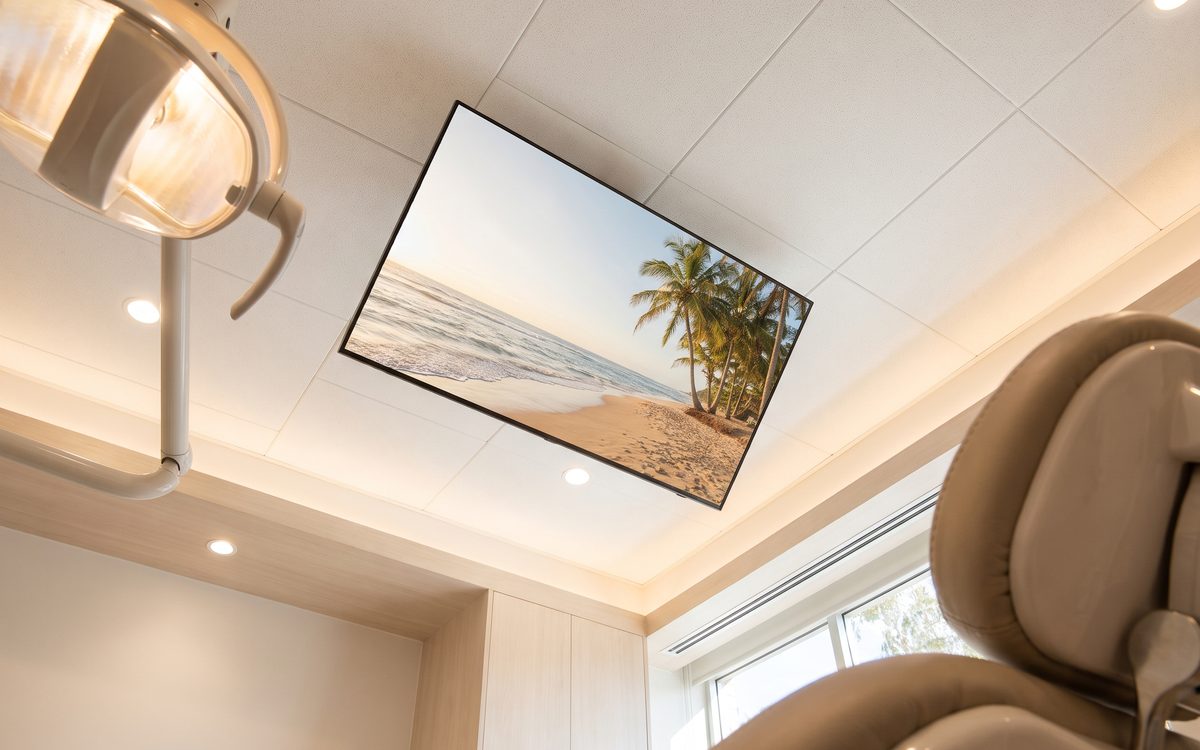
Something to watch while you lie in the chair.
Myth or fact
MythWith laughing gas you are asleep.
FactNo. You stay awake, usually feel calm and relaxed, and can talk to us during the treatment.
MythNitrous oxide replaces the injection.
FactIt calms you but does not numb the tooth. For many treatments local anaesthetic is still needed, given gently with the Wand.
MythYou cannot drive for the rest of the day.
FactThe effect usually wears off within minutes on oxygen. Many adults can drive after full recovery and our check, depending on the treatment and any other medication.
MythAnxious patients are difficult patients.
FactAnxiety is common. Planning more time is a normal part of good dentistry.
More answers
Tap a question to open the answer. Anything else, ask us on WhatsApp.
Nitrous oxide with oxygen has been used in dentistry for many decades and is well established. Side effects are uncommon and usually mild.
Different tools for different needs. They are often combined.
| Local anaesthetic with the Wand | Nitrous oxide | Planning in stages | |
|---|---|---|---|
| What it does | Numbs the tooth and gum | Can calm and relax you | Breaks treatment into smaller steps |
| Awake? | Yes | Yes, relaxed | Yes |
| Starts working | Within minutes | Within minutes | From the first visit |
| After treatment | Numbness for some hours | Usually wears off within minutes on oxygen | Nothing to wear off |
| Driving afterwards | Yes | Often possible after full recovery and our check | Yes |
| Suited to | Every treatment that needs numbing | Anxiety, gag reflex, long visits | Patients who have avoided the dentist for a long time |
No. You stay awake, usually feel calm and relaxed, and can talk to us during the treatment.
Often yes, once you have fully recovered and we have checked you. It also depends on the treatment and any other medication. Arrange a lift if we advise it or if you are unsure.
No. We offer nitrous oxide and local anaesthesia. Sedative tablets, intravenous sedation and general anaesthesia are not part of our treatment.
Nitrous oxide is a well established method for anxious children when a medical check shows it is suitable. The child stays awake and usually recovers quickly.
For treatments that need numbing, yes. With nitrous oxide and the Wand, many anxious patients find it easier.
Many people feel calm, warm and slightly heavy, sometimes with tingling in the hands or feet. Time seems to pass more quickly.
Usually within a few minutes, and responses vary. It usually wears off quickly when you breathe pure oxygen at the end.
Yes, a light meal one to two hours before. Avoid a heavy meal, as it can make you feel sick.
It is usually avoided, especially early in pregnancy. Planned treatment during pregnancy is discussed individually with you.
Often yes. Nitrous oxide, digital scans instead of impression trays and short steps make treatment easier for many patients with a gag reflex.
It is planned together with the treatment and listed in your written plan with all costs before anything starts. The consultation is charged and credited towards your treatment.
That depends on your policy, so please check with your insurer and ask whether pre approval is needed. We do not bill insurers directly, but you receive all documents to claim.
With a calm first visit. We examine, explain and plan, and if you prefer, the first visit can be without treatment. Then we go step by step.
Yes. A family member or friend is welcome, and parents can stay with their children.

Why with Dr. Mohammad Shaker
Patience is part of the treatment. Dr. Mohammad spent his career with patients who need more time, from children to people in care homes. Nobody is rushed and nothing is done before you are ready.
Dr. med. dent. · M.Sc. Prosthodontics · DHA Specialist Prosthodontist · Specialist Senior Dentistry (GER 🇩🇪)
Meet Dr. Mohammad ShakerAlso at the clinic
You are welcome
One message is enough. No forms, no call centre. You write, the clinic answers in Arabic, English or German.
Villa 21B, La Mer · Jumeirah 1 · Dubai
Sat to Thu 9:00 to 18:00 · Fri closed