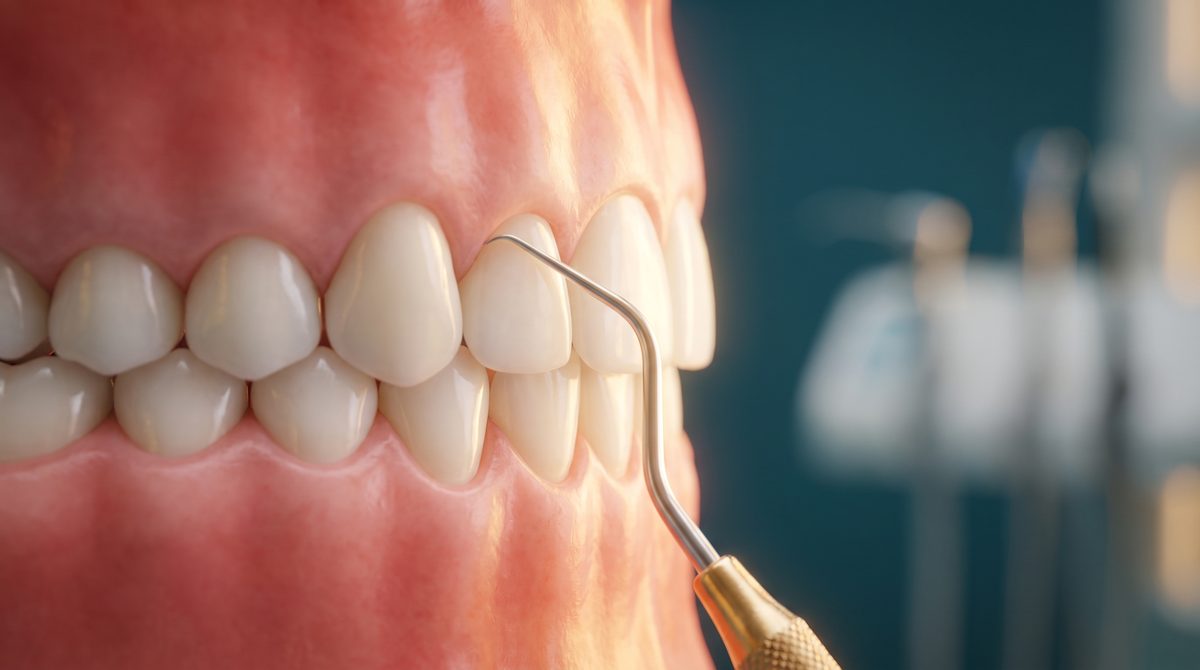
Periodontal chart
Pocket depths and bleeding recorded at six points per tooth.


Periodontology
Healthy gums are the basis of every successful dental treatment. We examine the gums and gum pockets and offer suitable non surgical treatment with structured aftercare.
 With Dr. Mohammad Shaker.
Patient guide
Gum disease is an inflammation of the tissues that hold your teeth, caused by bacteria in plaque and tartar along and below the gum line. It is treated by measuring the gums, cleaning the pockets deeply under local anaesthetic, and then aiming to keep them stable with regular maintenance. Many cases can be treated without surgery.
It starts as gingivitis: red, swollen gums that bleed when you brush. At this stage it can usually be reversed with a professional cleaning and better home care. If the inflammation stays, it can move deeper and become periodontitis. Then the gum detaches from the tooth, pockets form, and the bone around the root slowly breaks down. Lost bone does not simply grow back, which is why the timing of treatment matters so much.
Periodontitis rarely hurts until late. Many people first notice it as bleeding while brushing, bad breath, gums that seem to pull back or a tooth that feels slightly loose. If any of this sounds familiar, a gum check is the right first step. This guide explains how gum disease is diagnosed, what treatment involves, what you can expect afterwards and how to keep the result.
Is this for you?
Step by step
Every tooth is measured at six points. You see the numbers.
Scaling and root planing remove bacteria and deposits from the pockets under local anaesthetic.
Where needed, antibacterial medication is placed directly into deep pockets.
After a few weeks the pockets are measured again.
Regular visits with the hygienist help keep the gums stable.
That depends on what your teeth need, so a price without an examination would not be honest. After the examination you receive a written treatment plan with all costs, before anything starts. Payment and insurance
What changes the cost
After a deep cleaning the gums can be tender and teeth can feel more sensitive, and the gums may shrink a little as they heal. Without regular aftercare gum disease can return.
Your next step
Or call 800 433 368 (toll free) · Sat to Thu 9:00 to 18:00 · Fri closed
Healthy gums are firm, range from pink to naturally pigmented brown, and do not usually bleed during gentle brushing or flossing. Bleeding is not normal, even if it happens to many people. It is the body reacting to bacteria. Other signs often appear slowly, so patients get used to them without noticing.
Smoking, including shisha, is one of the strongest risk factors, and it can hide bleeding, so the disease is noticed later. Diabetes, stress, some medications, pregnancy and a family history of early tooth loss also raise the risk. Diabetes and gum disease affect each other: poorly controlled blood sugar makes gums worse, and treated gums can help blood sugar control.
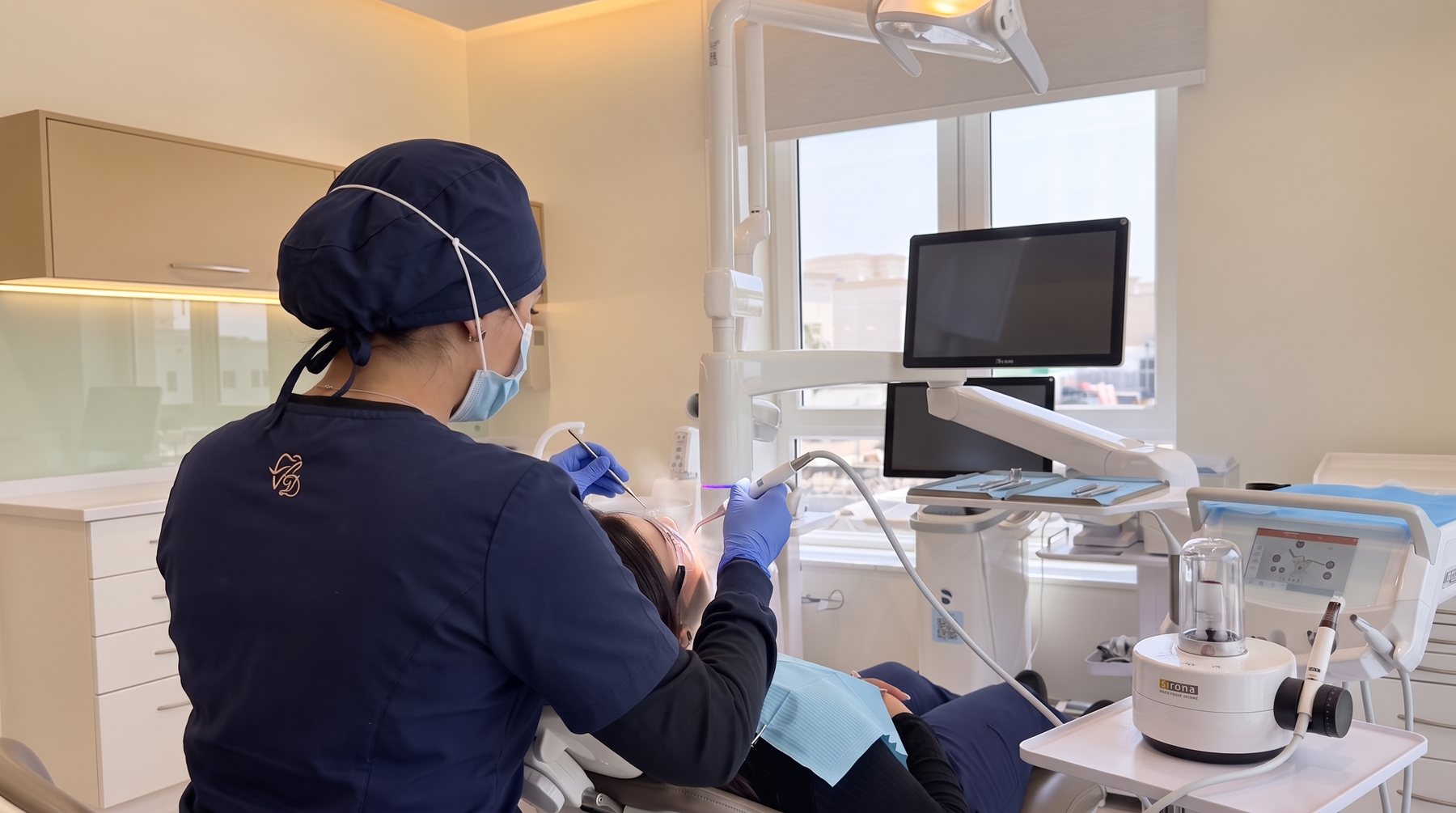
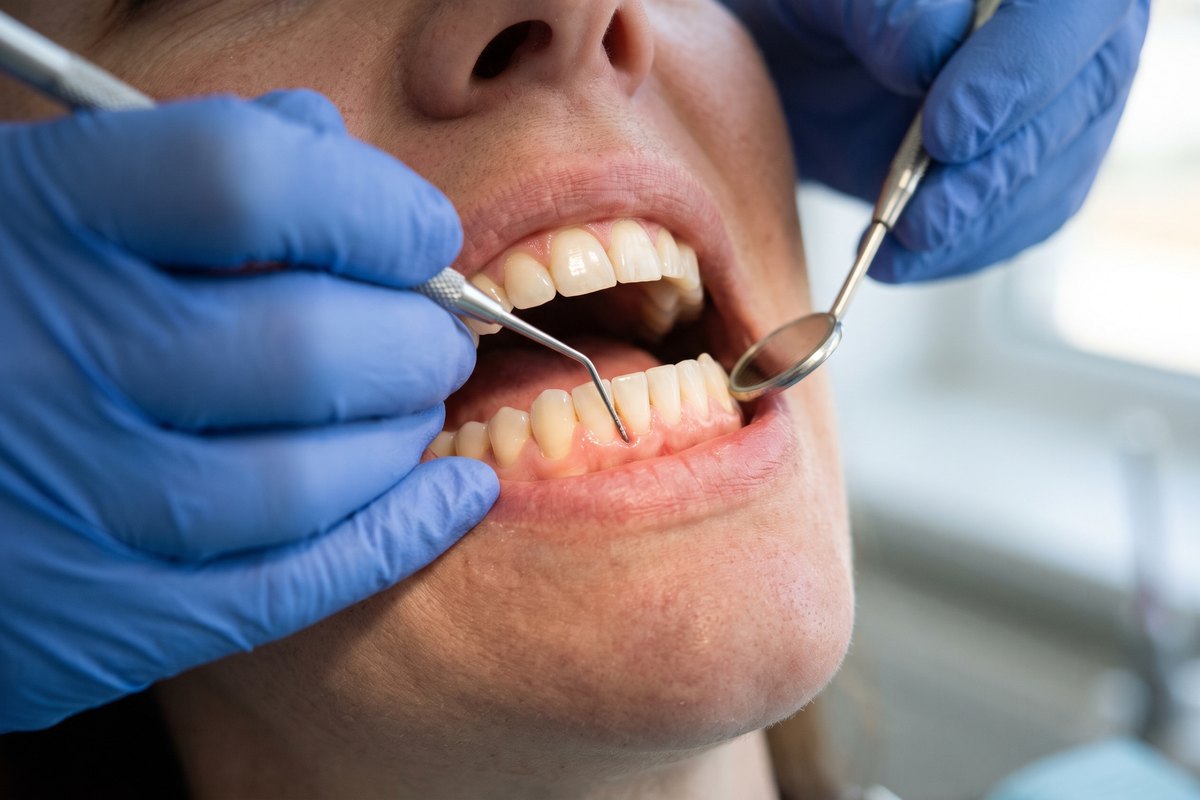
Gum treatment without measurements is guesswork. Before anything is treated, a full periodontal chart is made. Every tooth is measured at six points with a fine, blunt probe. The depth of each pocket, bleeding, loose teeth and areas where the gum has receded are recorded. You see the numbers, and you see them again at the re-check, so progress is visible.
Healthy pockets are usually around 1 to 3 millimetres deep. Deeper pockets are harder to clean at home and can hold bacteria that the toothbrush never reaches. X-rays show the level of the bone. Depending on the situation, small periapical X-rays, a panoramic X-ray or, in complex cases, a 3D scan on our MyRay Hyperion X9 Pro are used. With all findings together, the dentist can classify how far the disease has progressed and how quickly it is moving, which shapes the plan.
The examination also assesses fillings or crowns with edges that trap plaque, the position of the teeth and problems with the bite, because these can affect the treatment plan. Treating them is part of the plan, not an afterthought.
The core of gum therapy is a deep cleaning, called scaling and root planing. Under local anaesthetic, deposits and bacteria are removed from the pockets and from the root surfaces with fine ultrasonic tips and hand instruments. The root surface is left clean and smooth, so the gum can heal and tighten against the tooth again.
This is usually done one quarter of the mouth at a time, or in two longer sessions, depending on how many teeth are affected and what you prefer. You are told beforehand how long each session takes. Most patients can go back to work the same day and eat once the numbness has worn off. Before the deep cleaning, a thorough professional cleaning with our hygienist removes the plaque above the gums and gives you a home care routine, because the result depends on what happens at home every day.
In single deep pockets that respond slowly, an antibacterial medication can be placed directly into the pocket. Antibiotic tablets are not a standard part of gum treatment and are only considered for specific forms of the disease.
After some weeks, once the gums have healed, every pocket is measured again. Pockets often become shallower and bleeding falls clearly. Where pockets stay deep, the next step is discussed with you.
Surgery is not the first step, and many patients do not need it. It is discussed when single pockets stay deep after a careful non surgical treatment and good home care, because remaining deep pockets can be difficult to maintain and may need further treatment, depending on bleeding, depth and other findings.
Possible procedures include a flap operation, where the gum is gently opened so the root can be cleaned under direct view, and regenerative procedures, where bone grafts or guided tissue regeneration can help rebuild some bone in suitable defects. Gum reshaping such as a gingivectomy or crown lengthening and gum grafts are used for specific situations. Whether any of this makes sense for you is decided on the re-check numbers and X-rays, and you hear the reasons, the alternatives and the expected healing before anything is planned.
For a pocket that stays deep, the options usually are a repeat non surgical cleaning of that site, surgery where it is indicated, or removal of a tooth with a poor outlook. Loose teeth can in selected cases be splinted to their neighbours for more stability.
Healing after gum surgery depends on the procedure. Discomfort, slight bleeding, swelling and some gum recession can occur. You receive personal information about the procedure and give your consent before any surgery.
Not every tooth can be saved. When a tooth has lost too much bone, keeping it can put the neighbouring teeth and future options at risk. Then we talk honestly about removing it and about replacements, from a bridge to an implant once the gums are stable.
Gum inflammation is not limited to the mouth. Research links periodontitis with diabetes, heart and blood vessel disease and complications in pregnancy. Treating your gums does not replace your doctor, but it is part of looking after your whole body. If you have diabetes, we may ask about your latest HbA1c result, because blood sugar and gum healing are closely connected.
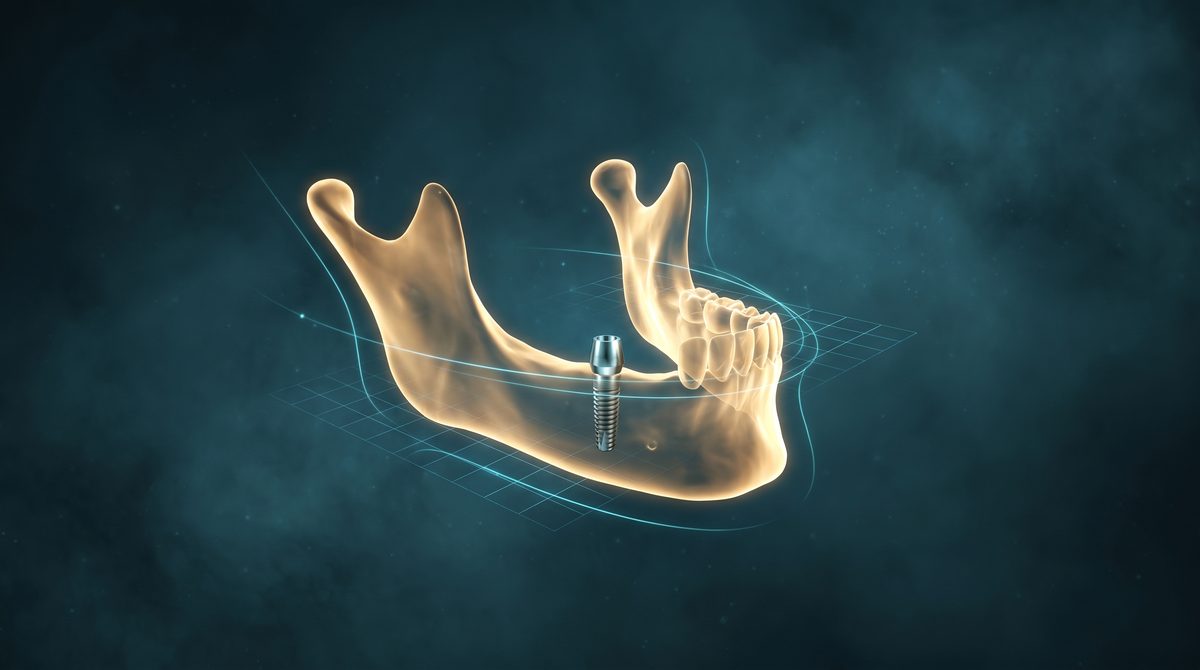
Implants are affected too. The tissue around an implant can become inflamed in the same way, called peri-implant mucositis and, when bone is lost, peri-implantitis. Patients with a history of periodontitis have a higher risk. That is why gums should be stable before implants are placed, and why implants need regular professional care afterwards, like natural teeth.
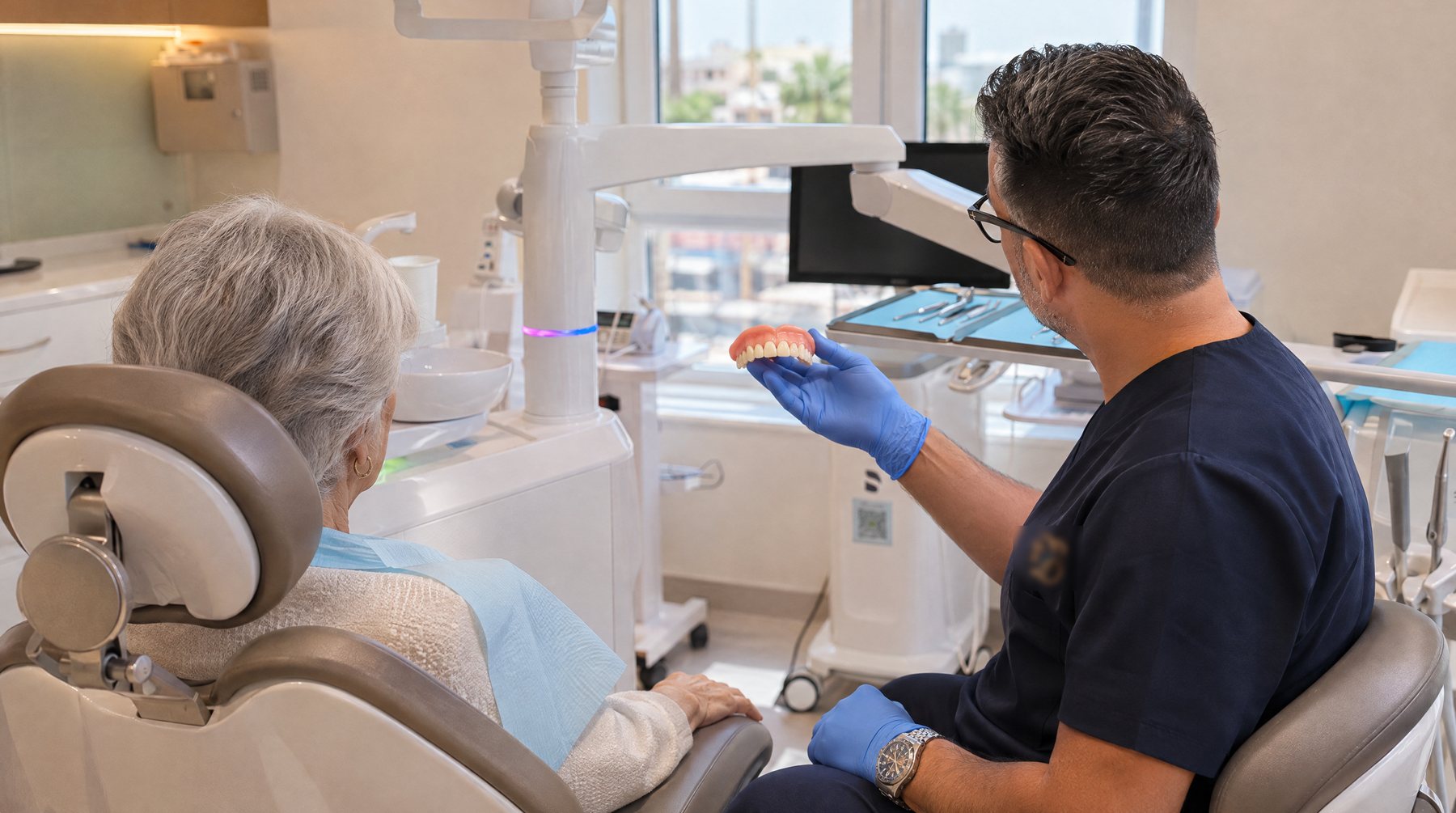
For older patients with many medications, a dry mouth or limited dexterity, gum care often needs a simpler, practical routine. Dr. Mohammad pays particular attention to this field, see our page on senior dentistry.
Treatment aims to control periodontitis and keep it stable, but the response varies and the tendency stays. Without regular care, bacteria can return to the pockets and the disease can become active again. Supportive periodontal therapy, the maintenance phase, is therefore not optional. It is what decides the long term result.
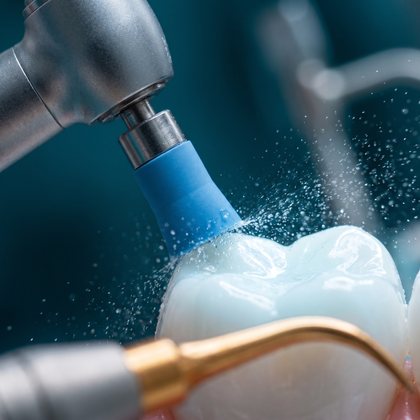
Patients often come every three to four months at first. At each visit the gums are measured at the key points, the pockets are cleaned with air polishing and ultrasonic tips, and your home routine is checked and adjusted. When the gums stay stable for a long time, the interval can often be extended. Maintenance visits are done by our DHA licensed dental hygienist, Afra Alblooshi, with EMS Airflow and Guided Biofilm Therapy, and the findings are reviewed with the dentist. More about routine care on our professional cleaning page.
Dr. Mohammad Shaker, DHA Specialist Prosthodontist, completed a curriculum in periodontology (GER 🇩🇪) in 2014/15 and lists gum care among his favourite work. In Germany, where he practised for fifteen years in his own practice, gum treatment follows a clear sequence: chart, cleaning, re-check, maintenance, all documented. That is how it is done in Jumeirah too.
As a prosthodontist he also sees what happens later: healthy supporting tissues help the long term outlook of crowns, bridges and implants, although other factors affect how long they last too. That is why the gums are treated first. You can read about his training on Dr. Mohammad’s page.
Timeline
Examination, full gum chart and X-rays where needed. You get the findings and a written plan with all costs.
Professional cleaning with the hygienist and a personal home care routine.
Deep cleaning under local anaesthetic, by quadrant or in two longer sessions.
Re-check: every pocket is measured again and compared with the first chart.
Maintenance every 3 to 4 months at first. Surgery only discussed if single pockets stay deep.
Technology
Pocket depths and bleeding recorded at six points per tooth.
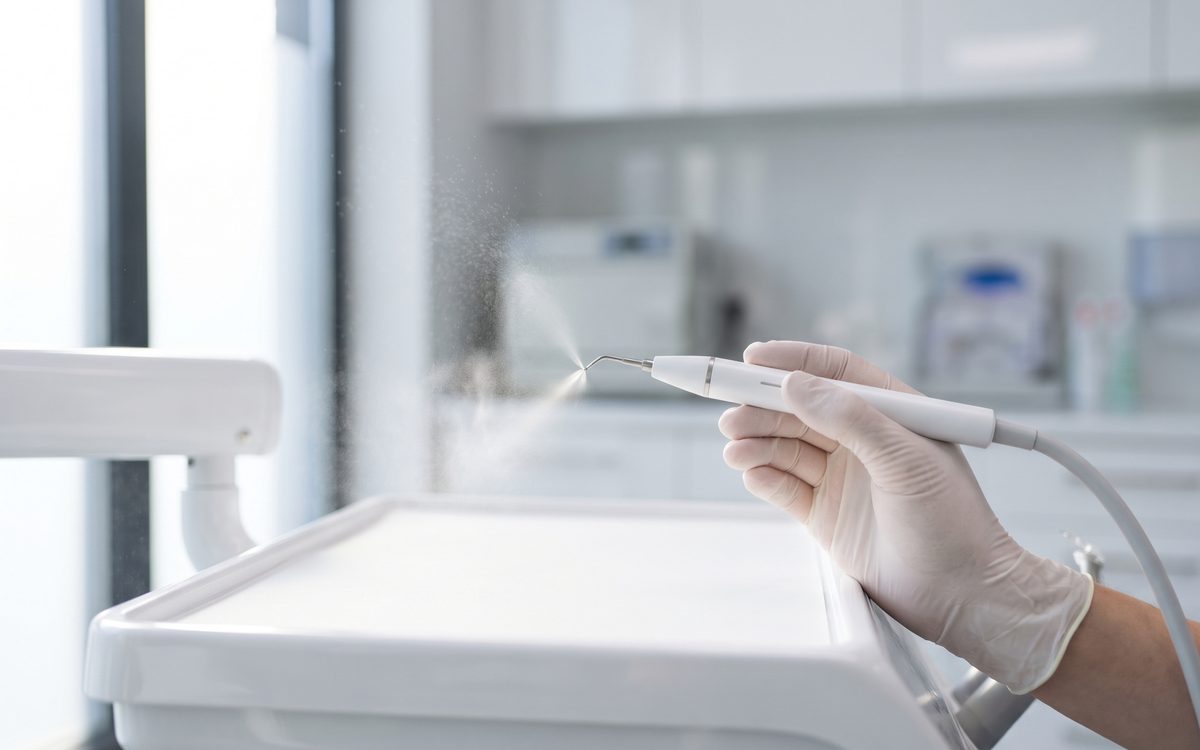
Gentle cleaning of root surfaces.
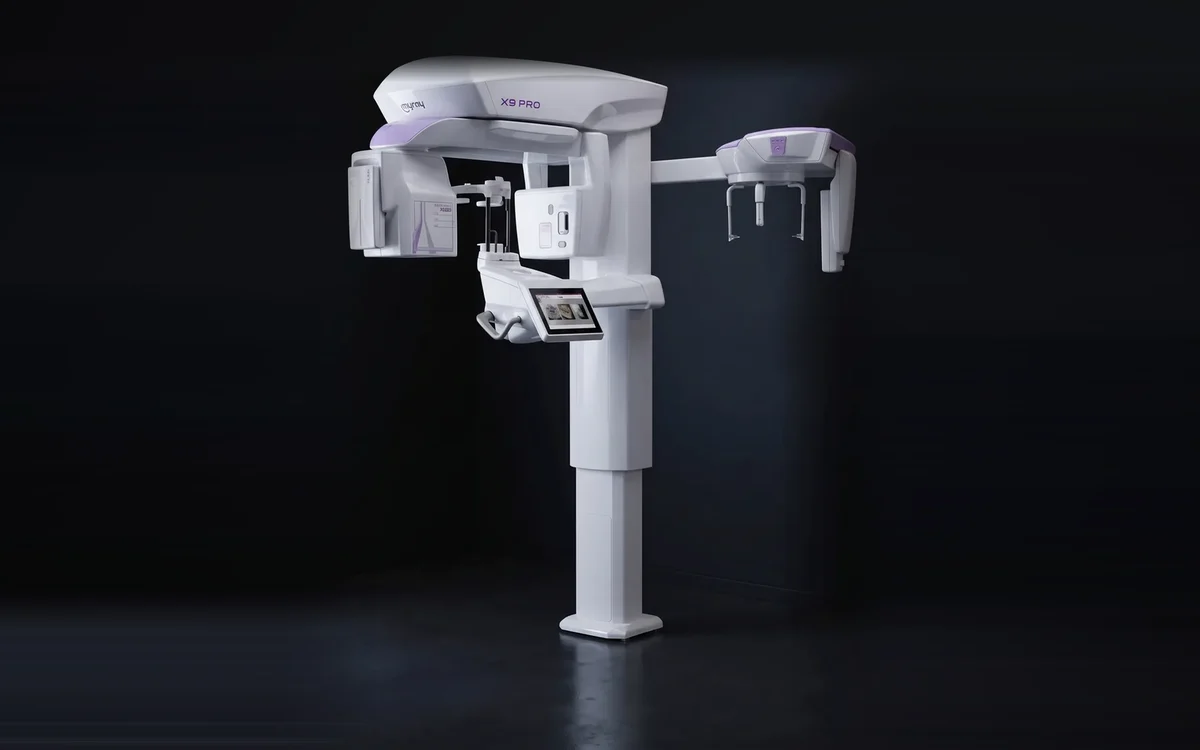
Bone level checked where needed.
Myth or fact
MythBleeding gums are normal.
FactThey are common, but not normal. Bleeding is a sign of inflammation.
MythGum disease only affects older people.
FactIt can start in your twenties or thirties, especially with smoking, diabetes or a family history.
MythIf it does not hurt, it is not serious.
FactPeriodontitis usually progresses without pain until teeth become loose.
MythA mouthwash will fix it.
FactA mouthwash can support, but it cannot reach deposits in the pockets. They have to be cleaned out mechanically.
More answers
Tap a question to open the answer. Anything else, ask us on WhatsApp.
Gum therapy is well established and the risks are low, but results can vary from person to person. These are the points we talk about before you start.
Both start with plaque, but they are not the same. The difference decides the treatment.
| Gingivitis | Periodontitis | |
|---|---|---|
| What is affected | The gum only | Gum, fibres and the bone around the root |
| Typical signs | Bleeding, redness, swelling | Bleeding, pockets, receding gums, loose teeth, bad breath |
| Bone loss | No | Yes, visible on X-rays |
| Reversible? | Usually yes | It can often be controlled, lost bone does not simply return |
| Treatment | Professional cleaning and better home care | Deep cleaning, re-check, sometimes surgery, then maintenance |
| Follow up | Regular cleanings | Maintenance every 3 to 4 months at first |
Treatment aims to control periodontitis and keep it stable. The response varies and ongoing care is needed. Lost bone does not simply grow back, which is why early treatment matters.
It is done under local anaesthetic. Afterwards the gums may feel tender for a few days.
Many cases can be treated without surgery. Surgery is only discussed if pockets stay deep after treatment.
Usually because of inflammation caused by plaque along the gum line. A gum check shows whether it is gingivitis or periodontitis.
The active phase usually takes a few weeks, followed by a re-check after six to twelve weeks. After that, maintenance continues regularly.
Sometimes, once the inflammation has calmed, teeth become firmer. How much depends on how much bone is left.
Lost gum does not grow back by itself. In suitable cases, a gum graft may cover exposed roots once the disease is stable.
Periodontitis is linked to diabetes and heart disease. Treating it is part of looking after your whole body.
The bacteria can be passed on through saliva, but whether disease develops depends on your own risk factors and oral hygiene.
Yes, once the gums are treated and stable. Implants in an inflamed mouth have a higher risk of problems.
Often every three to four months at first. If the gums stay stable, the interval can often be extended.
Yes. Necessary gum treatment, local anaesthetic and X-rays that are clinically needed can be provided throughout pregnancy, and care should not be delayed only to reach the second trimester. Tell us you are pregnant, so the plan is adjusted.
That depends on your policy, its exclusions and limits, and whether pre approval is needed, so please check your cover before treatment. We do not bill insurers directly. You receive all documents to claim the costs. The first consultation is charged and credited towards your treatment if you go ahead.

Why with Dr. Mohammad Shaker
Dr. Mohammad completed a curriculum in periodontology (GER 🇩🇪) in 2014/15 and practised for fifteen years in Germany, where gum treatment is planned, documented and followed up. That is how it is done here too.
Dr. med. dent. · M.Sc. Prosthodontics · DHA Specialist Prosthodontist · Specialist Senior Dentistry (GER 🇩🇪)
Meet Dr. Mohammad ShakerAlso at the clinic
You are welcome
One message is enough. No forms, no call centre. You write, the clinic answers in Arabic, English or German.
Villa 21B, La Mer · Jumeirah 1 · Dubai
Sat to Thu 9:00 to 18:00 · Fri closed