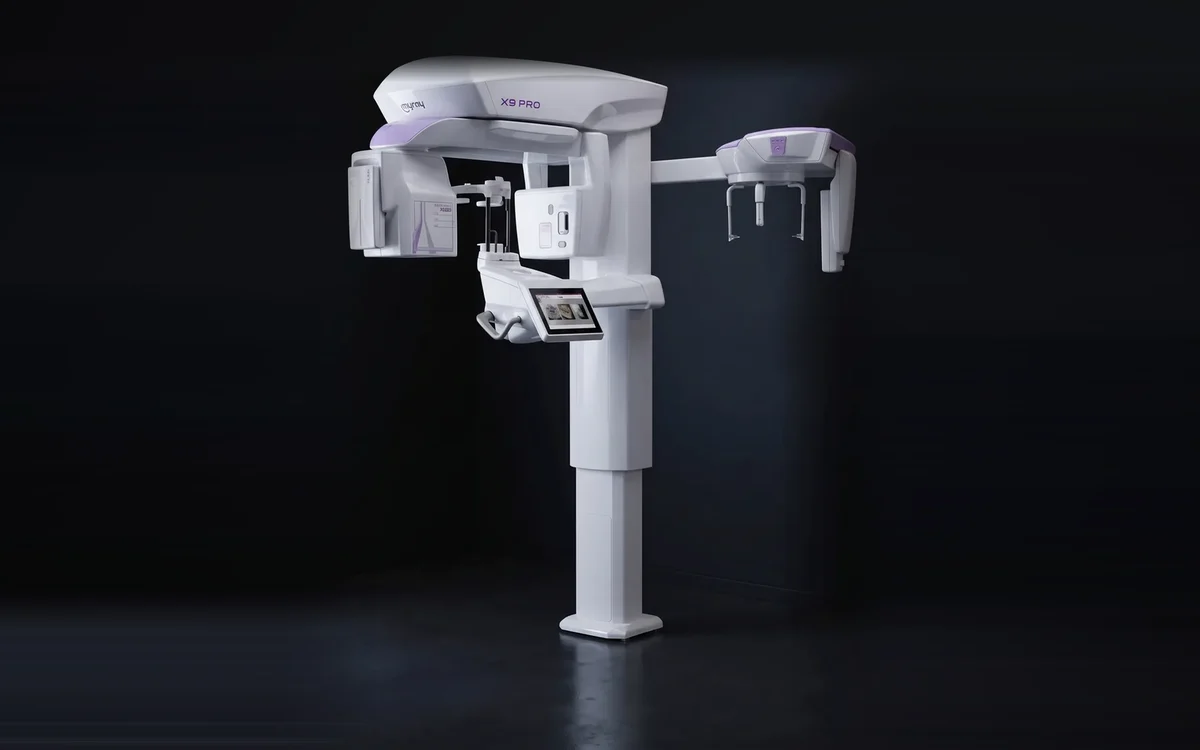
MyRay Hyperion X9 Pro
Panoramic, cephalometric and cone beam imaging and a 3D facial scan without X-rays, in one device.


Implantology · two specialists
Missing teeth can be replaced with implants and natural looking crowns. We plan the treatment around your bone, gums and bite. The implant is placed by our qualified surgeon, and Dr. Mohammad Shaker makes the crown on top.
Implant surgery by Dr. Ayse Yilmaz Bastug, oral and maxillofacial surgeon. Prosthodontic planning and restorations by Dr. Mohammad Shaker, DHA Specialist Prosthodontist.
Patient guide
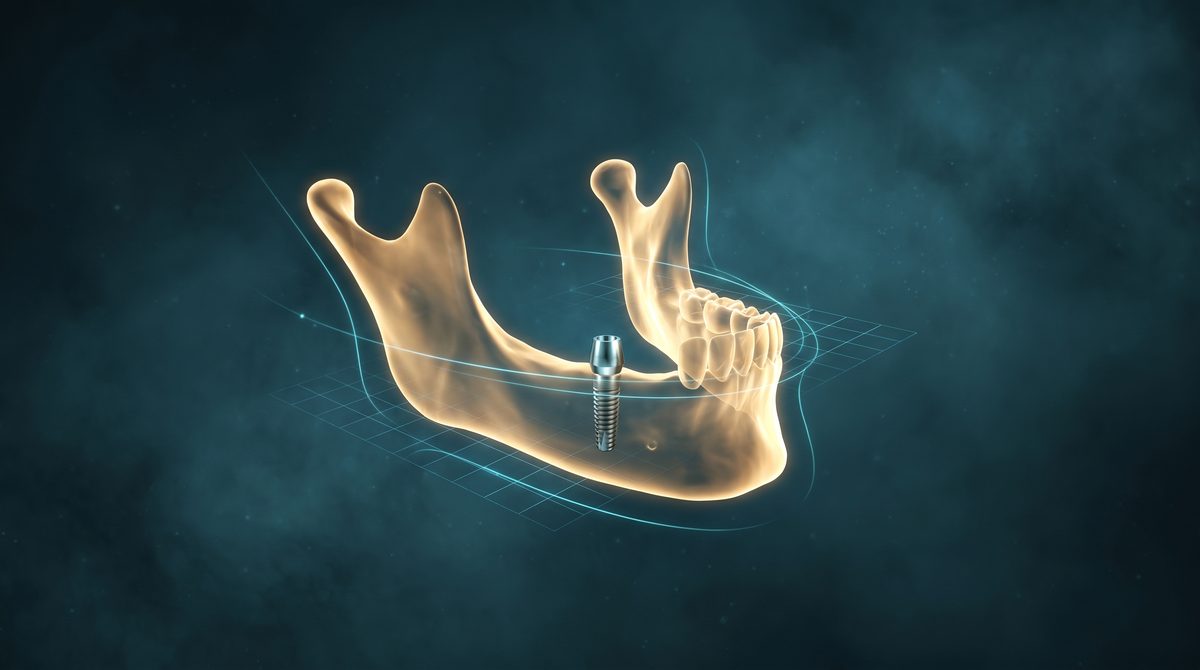
A dental implant is a small titanium screw that takes the place of a lost tooth root. It heals into the jaw bone, and a crown, a bridge or a denture is then fixed on top of it, so you can bite, chew and smile on it like on a natural tooth.
The implant itself is only one part of the result. What you see and chew with is the crown on top, and that crown has to fit your bite, your gums and your face. This is why, at German DentAllée Clinic in Jumeirah 1, the new tooth is planned first and the implant second.
Two people share the work. Dr. Ayse Yilmaz Bastug, PhD, DHA specialist in oral and maxillofacial surgery with implantology privileges, places the implant. Dr. Mohammad Shaker, DHA Specialist Prosthodontist, who completed the Implantology curriculum (GER 🇩🇪) of the German society DGI in 2006/07, plans the restoration and makes the final crown. One plan, one table, one team that stays responsible for your tooth.
On this page you find how implant treatment works step by step, how long it usually takes, who is suitable, what affects the cost, how to look after an implant, and honest answers to the questions patients in Dubai ask us most.
Is this for you?
Step by step
Teeth, gums and bone are examined. When it is medically needed, a 3D scan shows bone height, width and the nerve, and the implant is planned on screen first.
Where it helps, a guide is made from the plan. It helps transfer the planned position to surgery.
Our oral and maxillofacial surgeon places the implant under local anaesthetic, which is used to control pain. Tell the clinician if you feel any discomfort. Bone can be added in the same session if needed.
The implant grows into the bone, usually over several months. In selected cases the crown can be fitted earlier.
Dr. Mohammad scans the implant digitally and fits the final crown. Several missing teeth can be replaced by a bridge on implants.
That depends on what your teeth need, so a price without an examination would not be honest. After the examination you receive a written treatment plan with all costs, before anything starts. Payment and insurance
What changes the cost
Like any surgery, implant placement can cause swelling and discomfort for a few days, and in rare cases infection or an implant that does not heal in. Your personal risks are explained before you decide.
Your next step
Or call 800 433 368 (toll free) · Sat to Thu 9:00 to 18:00 · Fri closed
Most adults who have lost one or more teeth can be considered for an implant. Age on its own is rarely the reason against it. What decides is your general health, your medication, the amount and quality of your bone, the health of your gums and how well you can clean the area later.
An implant is often a good choice when a single tooth is missing between healthy neighbours, because the neighbouring teeth do not have to be ground down for a bridge. It can also replace several teeth with a bridge on implants, or hold a full denture so it is more stable and better retained.
Smoking slows healing and raises the risk of problems around the implant, so we talk openly about stopping or cutting down. Active gum disease has to be treated, and uncontrolled diabetes brought under control, before an implant is placed. Some bone medications (for example bisphosphonates) and radiotherapy of the jaw are assessed individually, because they can change the plan and the timing. Bring a list of your medication to the first visit.
If gums are inflamed, they are treated first in our gum therapy programme. If bone is missing, it can often be rebuilt beforehand. And if an implant is not the right answer for you, you hear that clearly, together with the alternatives: a bridge, a partial denture or keeping the gap under observation.
When it is medically needed, a cone beam scan (CBCT) is taken on the MyRay Hyperion X9 Pro in the clinic. It shows the height and width of your bone, the position of the nerve in the lower jaw and the sinus in the upper jaw, and the shape of the neighbouring roots.
On this scan the implant is placed virtually first. The length, the diameter and the angle are chosen so that the implant sits safely in the bone and at the same time supports a crown in the right position. Dr. Mohammad, who also holds a certificate of expertise in cone beam CT from 2008, looks at the scan from the side of the future tooth: where will it bite, how will it be cleaned, how will the gum look around it.
Where it helps, a surgical guide is made from the plan. This small template sits on your teeth during surgery and helps transfer the planned position to surgery. It is not needed in every case, and it is explained to you when it is used.
The scan is also the honest moment of the treatment. If there is not enough bone, if the sinus is low or the nerve is close, you see it on screen and we discuss what it means before anything is touched. You can read more about the imaging on our technology page.
An implant can carry different kinds of teeth. Which one is right depends on how many teeth are missing, the bone and what you expect from the result.
One implant, one ceramic crown. The crown is attached to the implant with an abutment, a connecting piece that can be a stock part or custom made for your gum line. The crown is designed from a digital scan with the Primescan instead of an impression tray.
When several teeth in a row are missing, two or more implants can carry a fixed bridge. You do not need one implant for every missing tooth.
Two to four implants can hold a full denture so it clicks into place, which can improve its retention and stability when you eat or speak. You can still take it out to clean it. More on this on our dentures page.
When all teeth in a jaw are missing or failing, a full fixed bridge can be attached to four or more implants. This is described in detail on our All-on-4 page.
Thinner implants that can stabilise a lower denture in selected cases where bone is narrow. They are not a replacement for standard implants in every situation, and the plan tells you when they make sense.
Real results
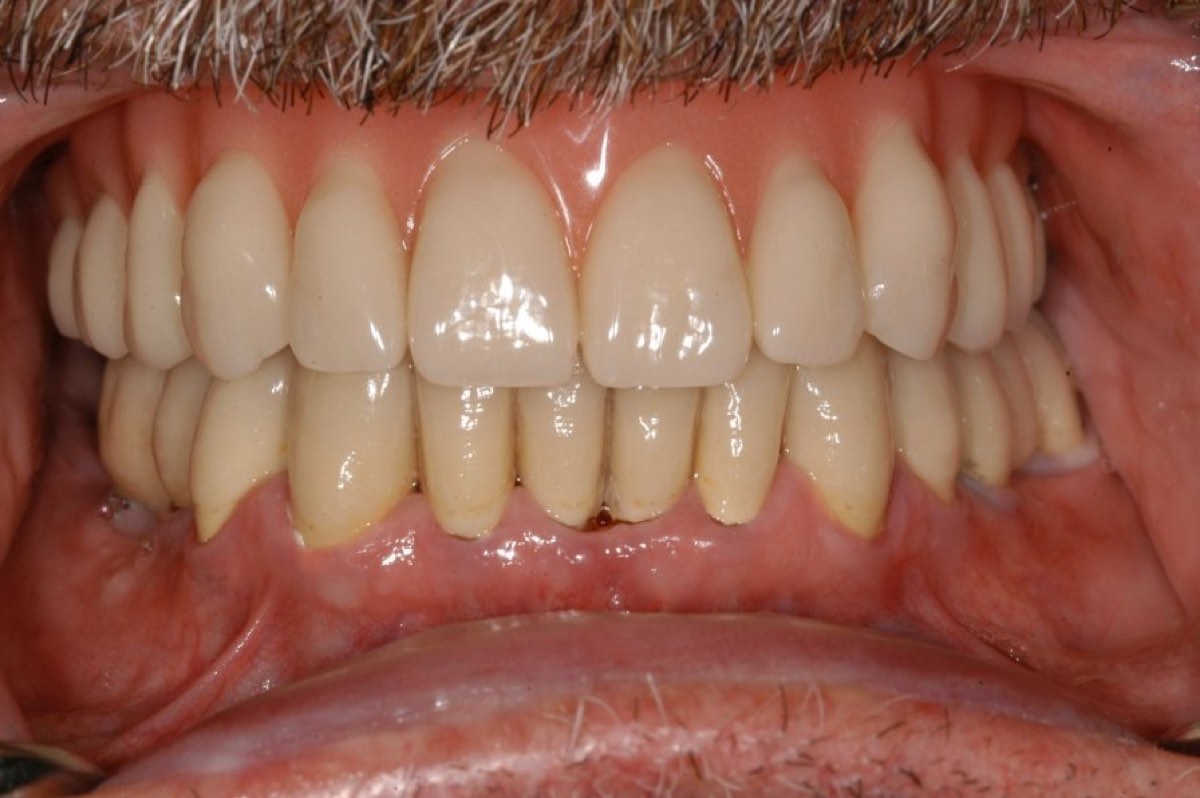
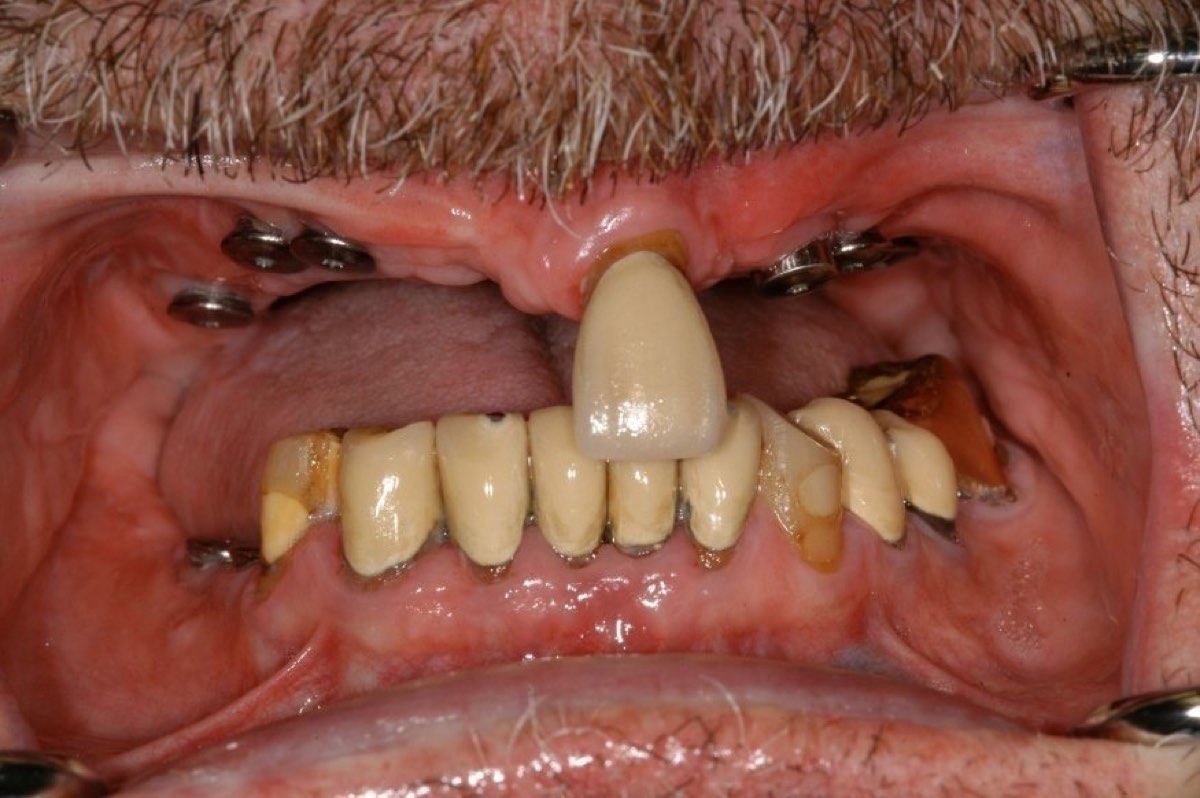
Real case · Dr. Mohammad
Treated by Dr. Mohammad in Germany. Shown with the written consent of the patient. Results can vary from one person to another.
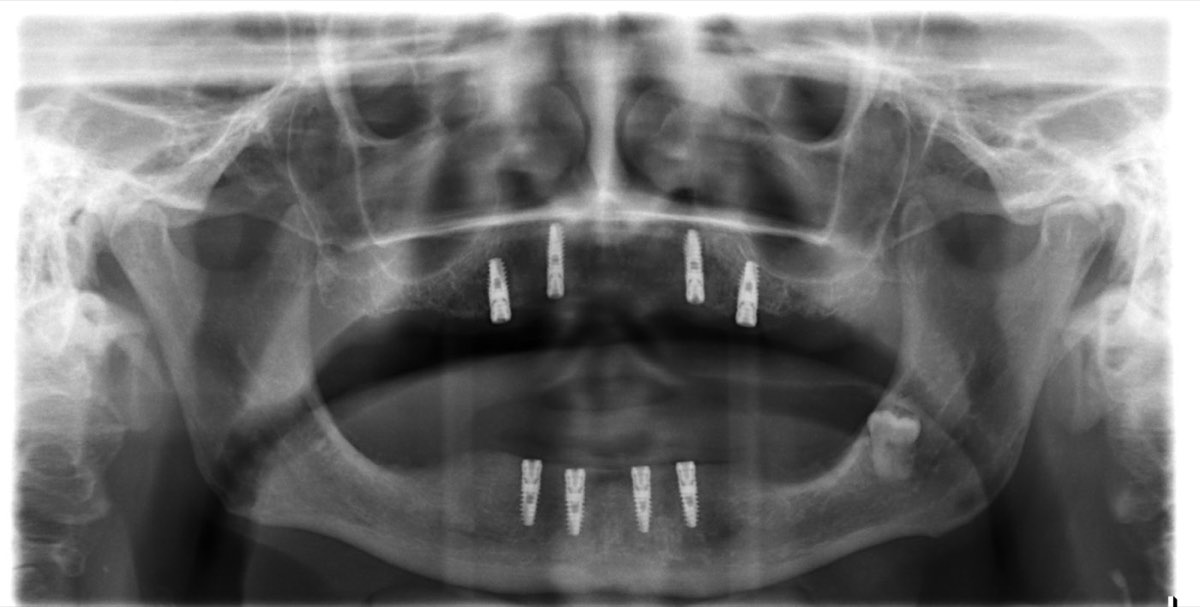
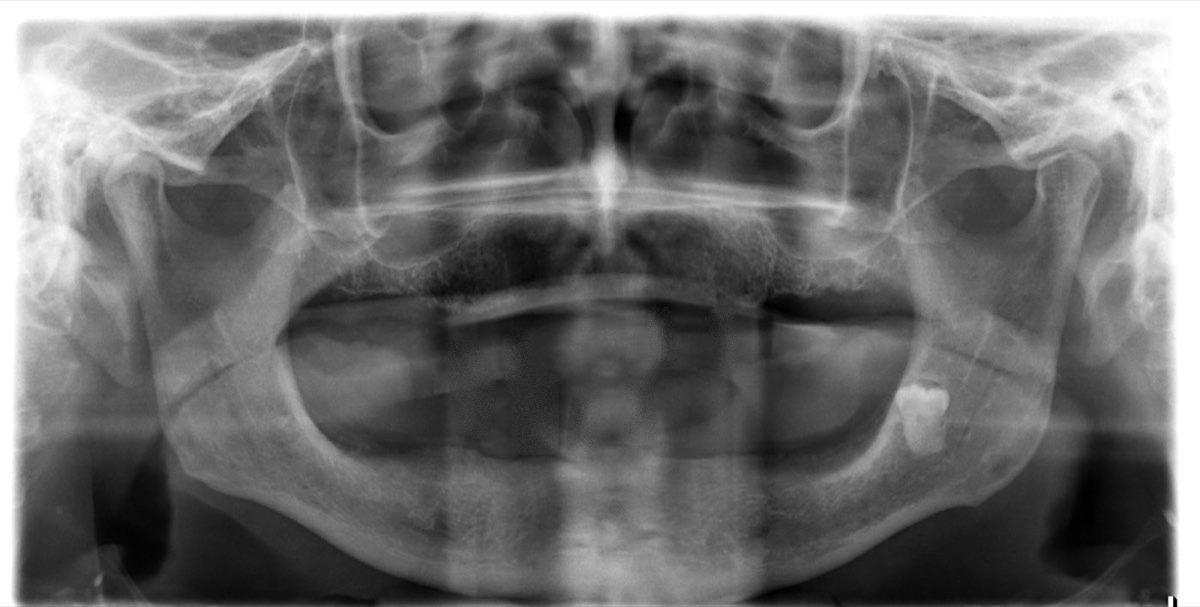
Real case · Dr. Mohammad
Treated by Dr. Mohammad in Germany. Shown with the written consent of the patient. Results can vary from one person to another.
Most implant treatments follow the same path, even if the timing differs from person to person.
First comes the examination: medical history, a check of teeth and gums, and a 3D scan when it is clinically needed. Then you receive a written treatment plan with every step, the time frame and all costs, before anything starts. The surgery is booked once you have decided.
The implant is placed by Dr. Ayse under local anaesthetic. For anxious patients nitrous oxide is available, and the anaesthetic can be given with the Wand, a computer controlled system that delivers it slowly and evenly. A single implant usually takes around an hour in the chair. The local anaesthetic is used to control pain, and you can tell the clinician at any time if you feel discomfort. Bone can be added in the same session if the plan shows it is needed.
Then the implant needs time to heal into the bone. This is called osseointegration and usually takes several months, depending on the bone and the position. In selected cases with good bone, the crown can be fitted earlier. During this time you are not left with a gap in the smile: a temporary solution is planned for front teeth.
After healing, the implant is checked, sometimes uncovered in a short second step, and scanned digitally. Dr. Mohammad designs and fits the final crown, checks the bite and shows you how to clean around it.
Often the implant story starts with a tooth that cannot be saved: a broken root, a tooth with a failed root canal or a tooth loosened by gum disease. In this case there are three options for timing, and the scan helps decide.
An immediate implant is placed in the same session as the extraction, when the bone around the socket is intact and there is no acute infection. An early implant is placed a few weeks later, once the gum has closed. A delayed implant is placed after several months, often after the socket was filled with bone substitute to keep its shape. This is called socket preservation and is explained on our tooth extraction page and our bone grafting page.
Which timing suits you is not a question of speed alone. A quick implant in a weak socket is not a good trade. You get a recommendation with the reasons behind it.
The clinic works with Astra Tech EV and OmniTaper, implant systems by Dentsply Sirona with long clinical track records.
The implant itself is made of titanium, a material the body accepts well and that has been used in dentistry for decades. The crown on top is made of ceramic and is matched to your neighbouring teeth with the VITA shade guide in daylight. Depending on the case, the crown is made in the clinic or by our partner laboratory Deutsche Technik DL in JLT, Dubai.
A prosthodontist also checks what many people never think about: how strong your bite is, whether you grind your teeth at night, and how the load is shared between the implant and your natural teeth. If you grind, a night guard protects the implant crown, as described on our jaw and TMJ page.
Timeline
Examination, a 3D scan when clinically needed, and discussion. You leave with a written plan, a time frame and all costs.
Implant placed under local anaesthetic, usually around an hour for one implant. You go home the same day.
Some swelling and tenderness are normal and usually peak on the second day. Cool the cheek, take the painkillers you were given, eat soft food.
Check up and, if used, removal of stitches. Most patients are back to normal routine within a few days.
The implant heals into the bone. Shorter in good bone in the lower jaw, longer in the upper jaw or after bone grafting.
Digital scan, try in and fitting of the final crown. Bite checked and adjusted.
Professional cleaning and implant check with our hygienist, X-ray where needed.
Technology
Panoramic, cephalometric and cone beam imaging and a 3D facial scan without X-rays, in one device.
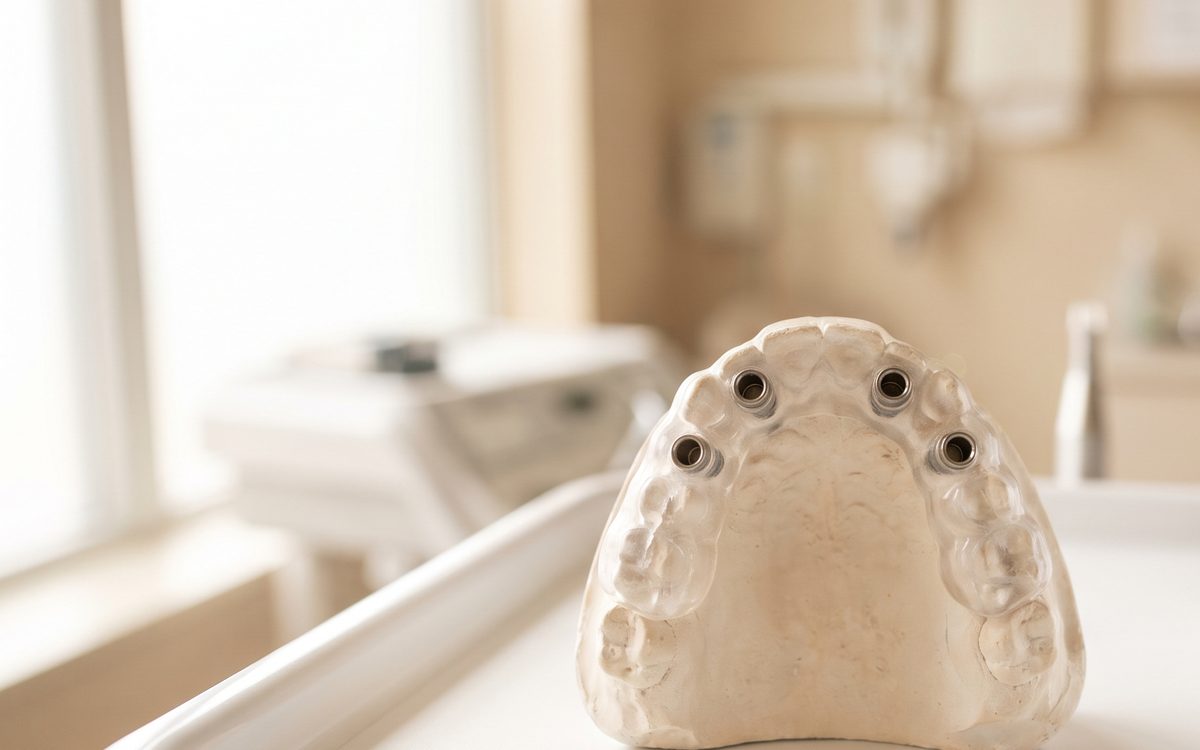
A surgical guide transfers the digital plan to the mouth.
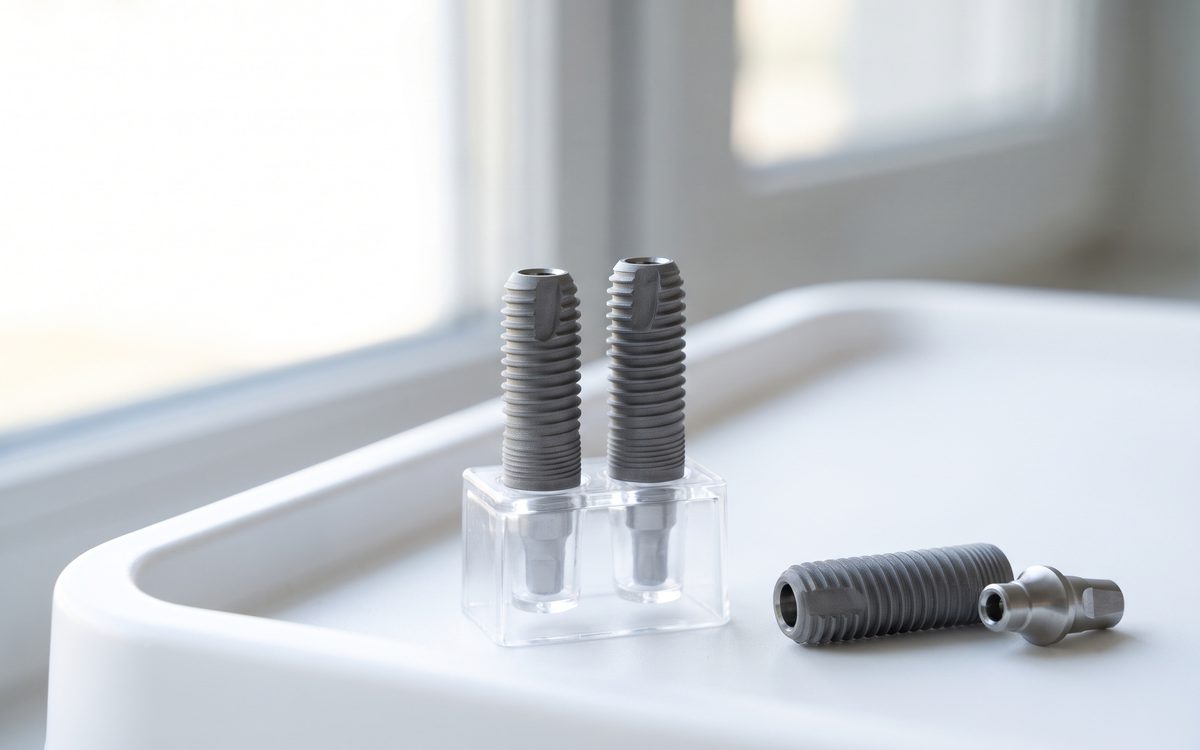
Implant systems by Dentsply Sirona with long clinical track records.
Myth or fact
MythImplants are only for young people.
FactAge alone is rarely the reason against an implant. General health, medication and bone matter far more, and many older patients do very well with implants.
MythAn implant is rejected by the body like an organ.
FactTitanium does not cause a rejection reaction in that sense. When an implant fails to heal, the reasons are usually infection, overload, smoking or poor bone quality.
MythOnce the implant is in, it needs no care.
FactAn implant cannot decay, but the gum and bone around it can become inflamed. It needs the same daily cleaning and regular checks as natural teeth.
MythWithout enough bone, an implant is impossible.
FactBone can often be rebuilt with bone grafting or a sinus lift, sometimes in the same session as the implant.
More answers
Tap a question to open the answer. Anything else, ask us on WhatsApp.
Implant surgery is a routine procedure, but it is still surgery. Results can vary from person to person, and you should know the possible complications before you decide.
Three common ways to replace a missing tooth. None is right for everyone. This overview helps you prepare questions for your consultation.
| Implant | Bridge | Partial denture | |
|---|---|---|---|
| Neighbouring teeth | Not touched | Usually ground down for crowns | Clasps or attachments on neighbouring teeth |
| Jaw bone | Loaded like a natural root, which helps keep the bone | Bone under the gap slowly shrinks | Bone under the denture slowly shrinks |
| Fixed or removable | Fixed | Fixed | Removable, taken out to clean |
| Surgery | Yes, a small procedure under local anaesthetic | No | No |
| Time to final result | Usually a few months | Usually a few weeks | Usually a few weeks |
| Cleaning | Like a natural tooth plus interdental brushes | Special floss under the bridge | Denture and remaining teeth cleaned separately |
| Suitable when | Enough bone or bone can be rebuilt, good general health | Neighbouring teeth already need crowns | Several gaps, surgery not wanted or not possible |
The surgery is done under local anaesthetic, which is used to control pain. Tell the clinician if you feel any discomfort during the procedure. Afterwards most patients describe soreness similar to a tooth extraction for a few days, which is managed with normal painkillers.
The final crown usually follows several months of healing after the surgery. In selected cases with good bone, the crown can be fitted earlier. If bone grafting is needed first, the whole treatment takes longer. You receive a time plan with your treatment plan.
It depends on the number of implants, the type of crown and whether extra steps like bone grafting are needed. We do not publish prices without an examination. After the examination and any imaging that is medically needed you receive a written plan with all costs before anything starts. The first consultation is charged and credited to your treatment if you go ahead.
That depends on your policy. Before treatment, ask your insurer whether implants, bone grafting and crowns are covered, which exclusions and limits apply and whether pre-authorisation is needed. We do not bill insurers directly. You pay at the clinic and receive all documents to claim the costs from your insurer. Whether the costs are reimbursed is decided by your insurer. Payment is possible by cash, card, bank transfer, or in instalments with Tabby or Tamara.
Age alone is rarely the reason against an implant. General health, medication and bone are. That is what the examination and, when needed, the 3D scan are for.
Bone can often be rebuilt, in the same session or before. The scan shows how much is there and which technique fits.
Sometimes, when the bone around the socket is intact and there is no acute infection. In other cases a few weeks or months of healing first gives a more stable result. Where the implant is stable enough, a fixed temporary tooth on the same day can also be possible. The scan helps decide.
For visible front teeth a temporary solution is planned, so you do not walk around with a gap. For back teeth, many patients choose to wait without a temporary. Your plan says what to expect.
Our oral and maxillofacial surgeon, Dr. Ayse Yilmaz Bastug. She is in the clinic every Tuesday and whenever a case needs her. Dr. Mohammad plans the treatment and makes the crown.
Astra Tech EV and OmniTaper by Dentsply Sirona, systems with long clinical track records.
With good daily care, regular professional cleaning and no smoking, implants can last for many years. Like natural teeth, they need looking after, and results vary from person to person.
Yes. Titanium dental implants are not a problem for airport security, and they are generally compatible with MRI. Tell the radiology team that you have implants.
Implant treatment needs several appointments: examination, surgery, a check up and later the crown, with healing time in between. We plan the dates with you in advance so that return visits can be coordinated with your stay. When you can travel or go back to work depends on the procedure and on how you heal, and is discussed with you after the surgery.
Yes. Send us your plan, X-rays or scan on WhatsApp, or book a consultation, and we tell you honestly what we think.
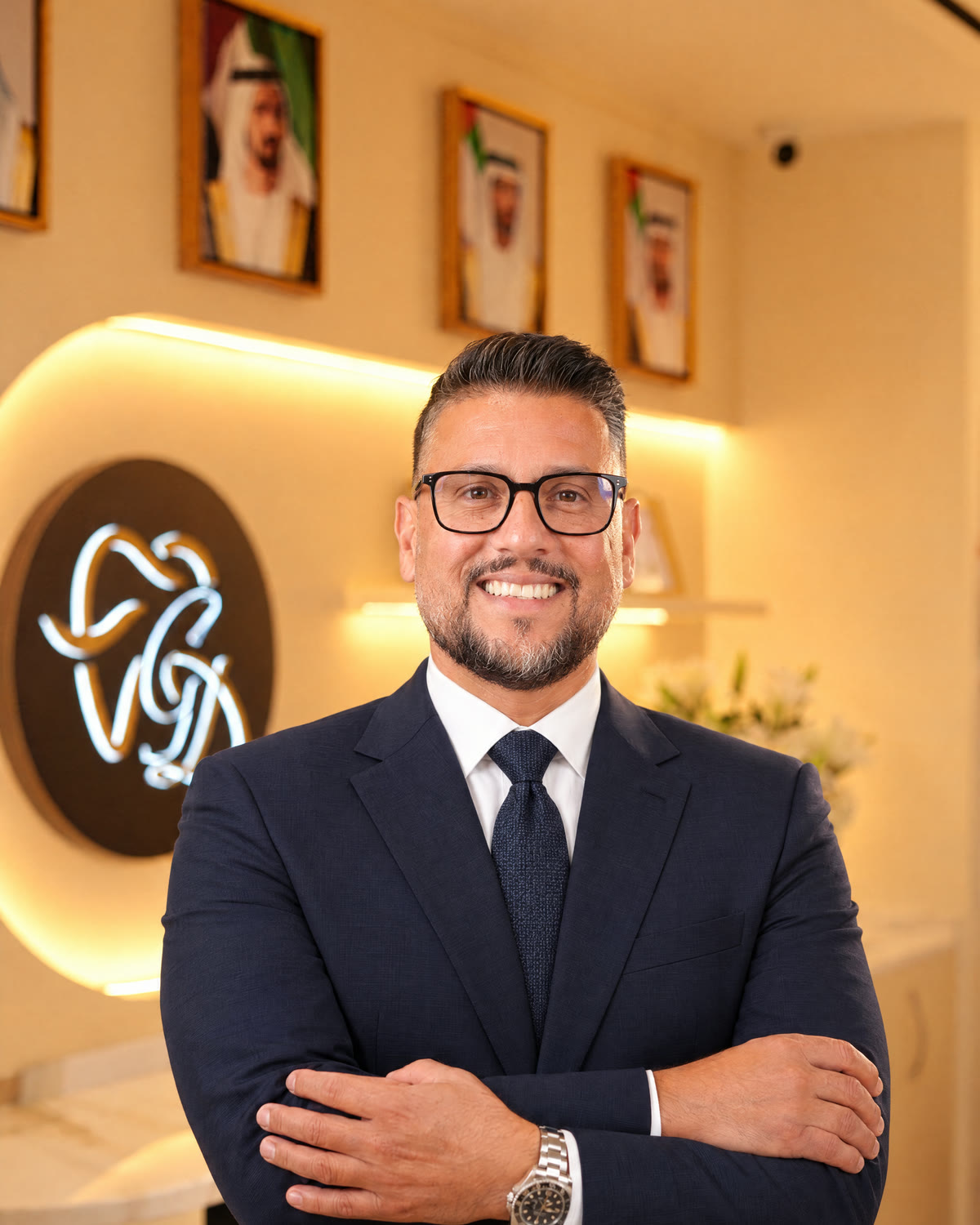
Why with Dr. Mohammad Shaker
Two specialists, one plan. Dr. Ayse Yilmaz Bastug, DHA licensed specialist in oral and maxillofacial surgery with implantology privileges, places the implant. Dr. Mohammad, specialist prosthodontist with the implantology curriculum (GER 🇩🇪) of the German society DGI, plans the crown first and the implant second, because the tooth you will chew with is what matters.
Dr. med. dent. · M.Sc. Prosthodontics · DHA Specialist Prosthodontist · Specialist Senior Dentistry (GER 🇩🇪)
Meet Dr. Mohammad ShakerAlso at the clinic
You are welcome
One message is enough. No forms, no call centre. You write, the clinic answers in Arabic, English or German.
Villa 21B, La Mer · Jumeirah 1 · Dubai
Sat to Thu 9:00 to 18:00 · Fri closed