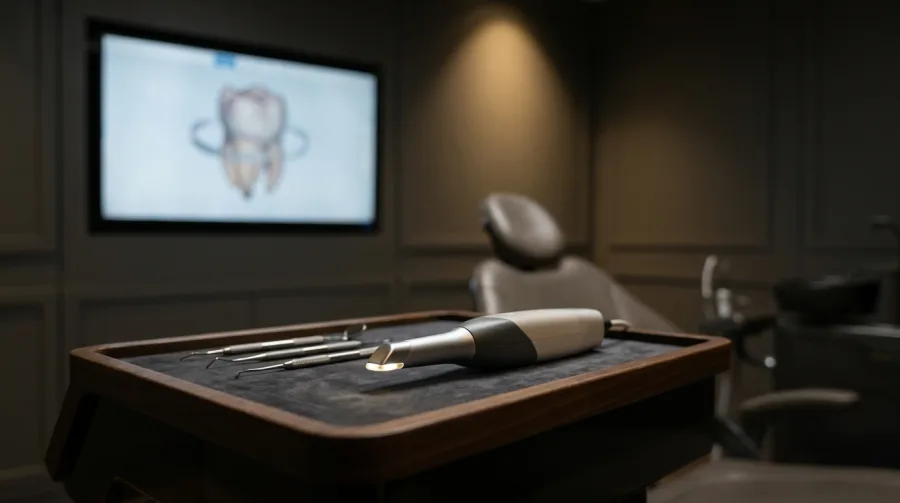
Digital Smile Design
Digital scan and simulation of the new smile.


Aesthetic dentistry
With individually planned ceramic veneers we can improve the shape, colour and proportions of the front teeth. We prefer solutions that keep as much natural tooth structure as possible.
 With Dr. Mohammad Shaker.
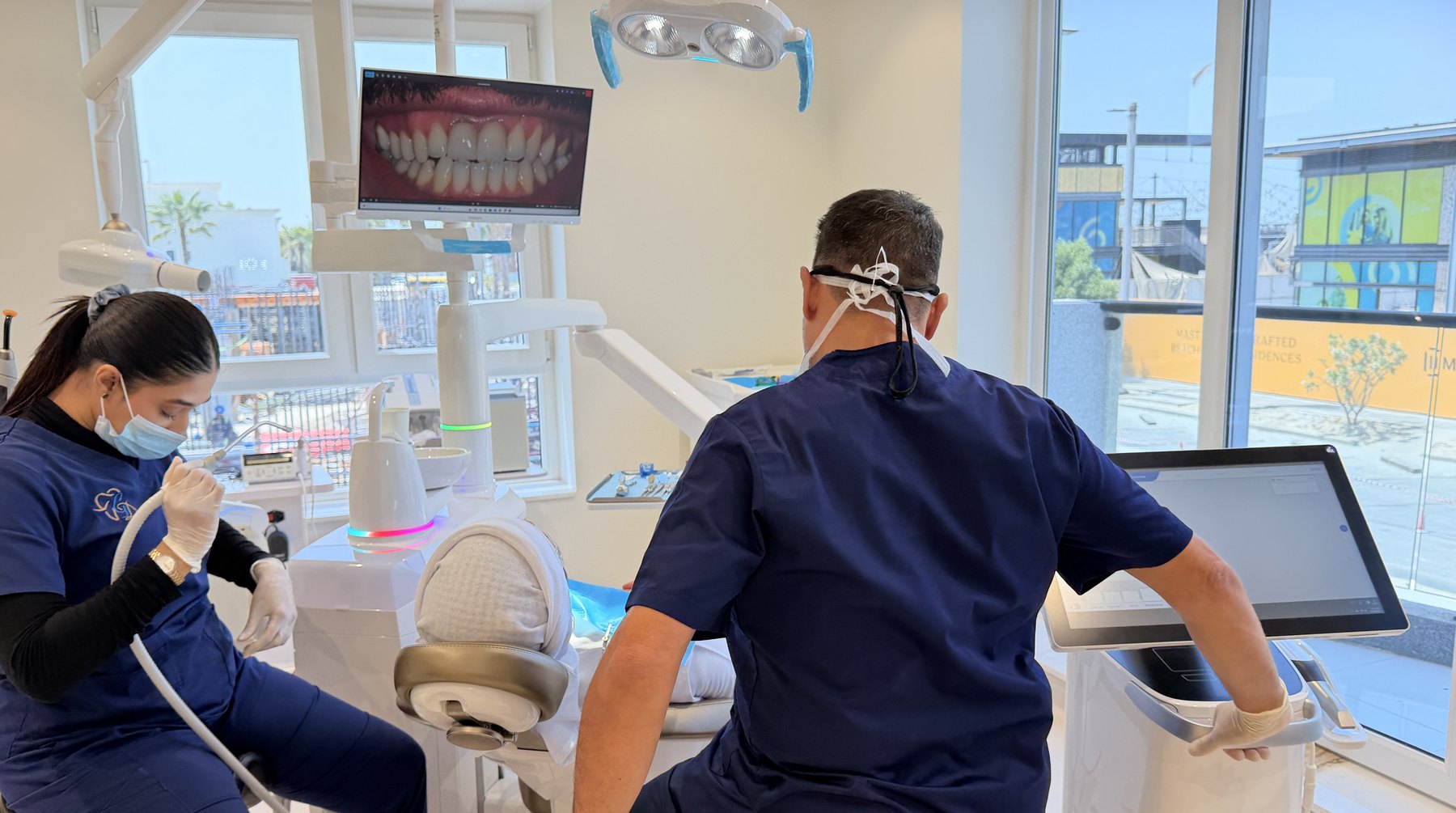
Patient guide
A veneer is a thin shell of ceramic, usually between a few tenths of a millimetre and just under one millimetre thick, that is bonded to the front surface of a tooth. It changes the shape, length and colour of the tooth while the tooth underneath stays your own.
Veneers are a cosmetic treatment for the teeth you show when you smile and speak. They can soften dark or uneven colour that whitening cannot reach, close small gaps, lengthen worn edges and bring a row of different looking teeth into one calm line. They do not straighten a crooked bite, and they do not replace a tooth that is missing.
At German DentAllée in Jumeirah 1, veneers are planned by Dr. Mohammad Shaker, DHA Specialist Prosthodontist. Prosthodontics is the field that deals with the shape, fit and bite of everything that is bonded to a tooth, which is why the planning starts with your face, your lips and your bite, and the shade comes later. You see the proposed smile on screen and then as a trial in your own mouth before a single tooth is touched.
Many patients ask us about a Hollywood smile in Dubai. That phrase has no fixed clinical meaning. For some it means ten bright veneers, for others two refined front teeth. We will show you what suits your face, and we will also tell you when a smaller treatment is enough.
Is this for you?
Step by step
Face, lips and teeth are photographed and scanned. You say what bothers you.
The new smile is designed on screen in proportion to your face.
A temporary mock up is placed over your teeth so you see and feel the shape in your own mouth.
Only as much enamel as needed is removed. Sometimes none.
The veneers are made in our partner dental laboratory, tried in, checked in daylight and bonded.
That depends on what your teeth need, so a price without an examination would not be honest. After the examination you receive a written treatment plan with all costs, before anything starts. Payment and insurance
What changes the cost
Most veneers need a thin layer of enamel to be removed, which cannot be undone. Veneers can chip, and their colour can be checked but not guaranteed in advance.
Your next step
Or call 800 433 368 (toll free) · Sat to Thu 9:00 to 18:00 · Fri closed
The material decides how a veneer looks in daylight, how it ages and how much of your tooth is needed to hold it. We work with ceramic for veneers made in the laboratory, and with composite for direct work in the chair. You hear which one fits your teeth and why.
Layered by hand by a dental technician in thin sheets of ceramic. It has a lively translucency close to natural enamel and suits patients who want a very natural front tooth, often with little or no preparation. It is delicate before bonding and strong once it is bonded to enamel.
A glass ceramic that is pressed or milled and then finished by hand. It is stronger than feldspathic porcelain, which helps for longer edges, darker teeth that need more masking, or patients with a heavier bite. When people ask for e.max veneers in Dubai, this is the material they mean. Both ceramics resist stains from coffee and tea far better than composite.
Tooth coloured resin built up over the whole front surface. They lose their polish sooner and pick up stains over the years, and we do not offer them as veneers. For chips, small gaps and edges, see composite bonding.
Veneers work well when the teeth are healthy, the gums are calm and the bite is stable. They are a good choice for front teeth that are discoloured from inside, for example after old fillings, tetracycline staining or fluorosis, for teeth that are chipped or worn at the edges, for small gaps and for teeth of very different sizes.
They are not the right first step for every smile. Crooked teeth are often better aligned first with clear aligners, because a veneer placed on a tooth that stands too far forward needs much more preparation. Yellow teeth with healthy enamel often only need professional whitening. Gum disease and decay must be treated before veneers are placed, because healthy gums and sound teeth are the basis for a lasting result.
Grinding or clenching can make veneers unsuitable, so the bite has to be assessed carefully first. Where veneers are still possible, a night guard becomes part of the plan, although it lowers the risk of fracture rather than removing it. Teeth that are heavily filled or broken may be better served by a crown. Dr. Mohammad will explain these alternatives at the consultation, before you decide anything.
The planning step is explained in full in our Digital Smile Design guide.
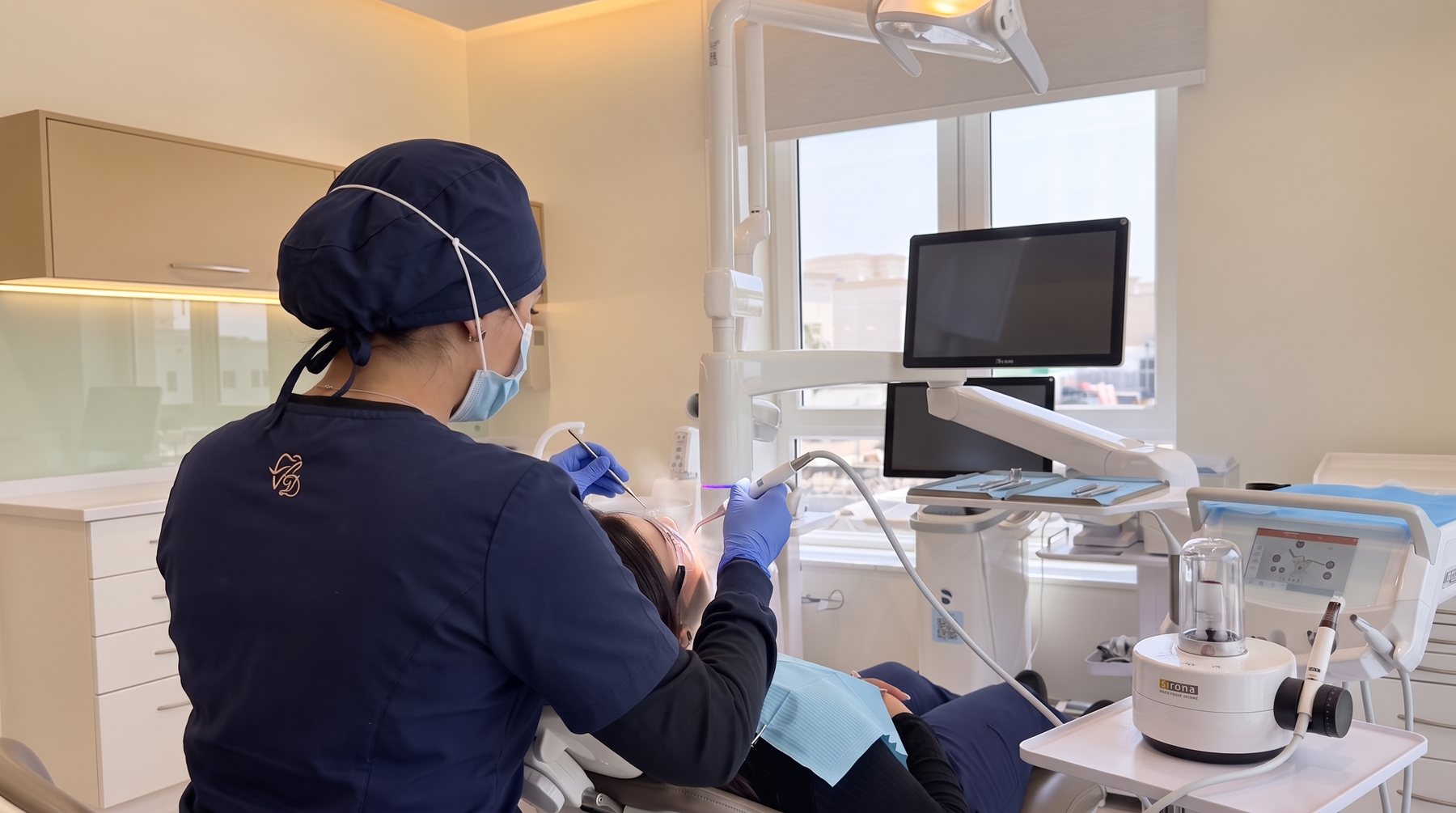
Every veneer case starts with records: photographs of your face and teeth, a short video of you speaking and smiling, a digital scan with the Primescan instead of an impression tray, and where useful a facial scan in 3D without X-rays. On these records the new smile is designed with Digital Smile Design, in proportion to your face, your lip line and the midline of your face.
The design is then transferred into a trial smile, often called a mock up. A tooth coloured material is placed over your existing teeth with a template, without drilling. You can look at it in the mirror and in daylight, speak with it, show it to your family and take photographs. This is the moment to say what you would like longer, shorter, softer or brighter.
The trial smile also answers the most important question honestly: how much of your tooth, if any, needs to be prepared. When the new shape lies over your current teeth, the veneers can often be made very thin, and sometimes no preparation is needed at all. When a tooth stands forward, more is needed, or aligners first make sense. You see this before anything is final.
Filmed in the clinic
From the first question to the new smile.
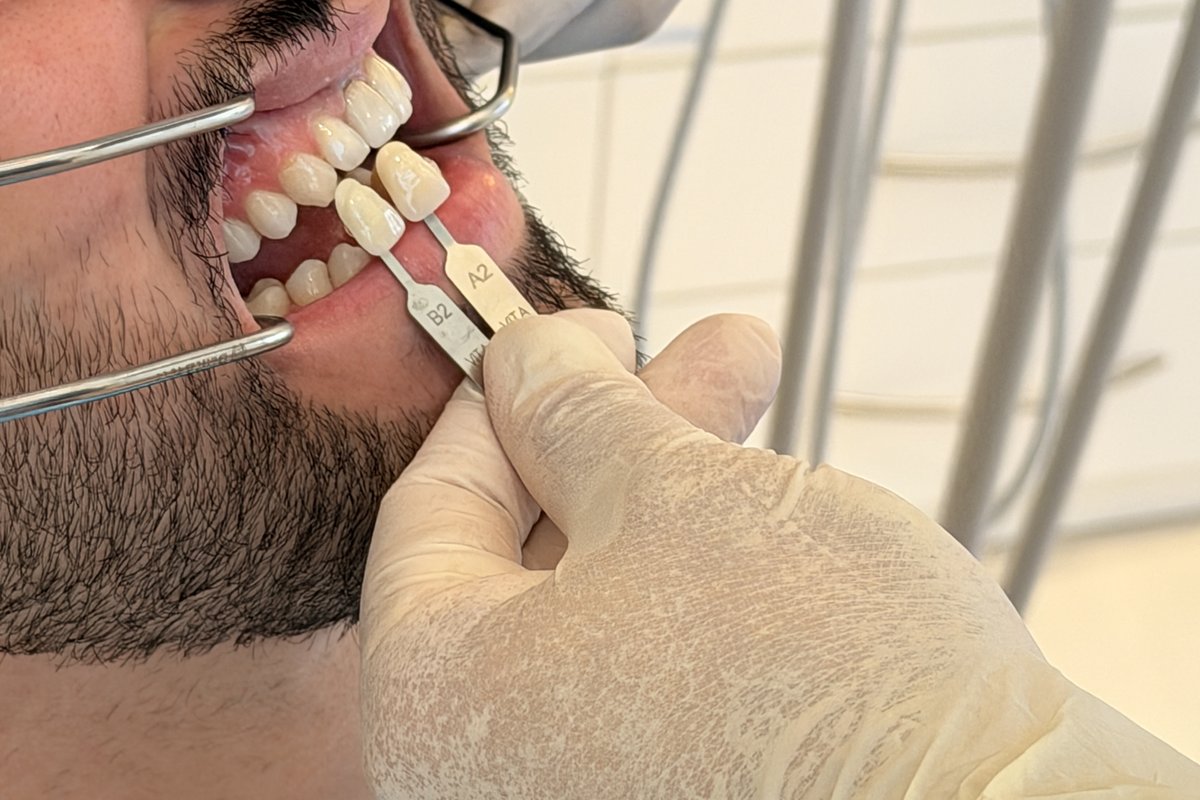
The shade is chosen with the VITA shade guide in daylight, so the colour you chose on the trial is the colour the laboratory works to.
Under local anaesthetic, a thin layer of enamel is shaped where the plan shows that space is needed, guided by the trial smile so that no more is removed than necessary. Staying in enamel matters, because ceramic bonds most reliably to enamel. Where a no prep or minimal prep veneer is possible, this step is very small or left out.
Where teeth have been prepared, you leave the clinic with temporary veneers in the shape of your trial smile. They look close to the plan and let you test the new shape in daily life for a few days.
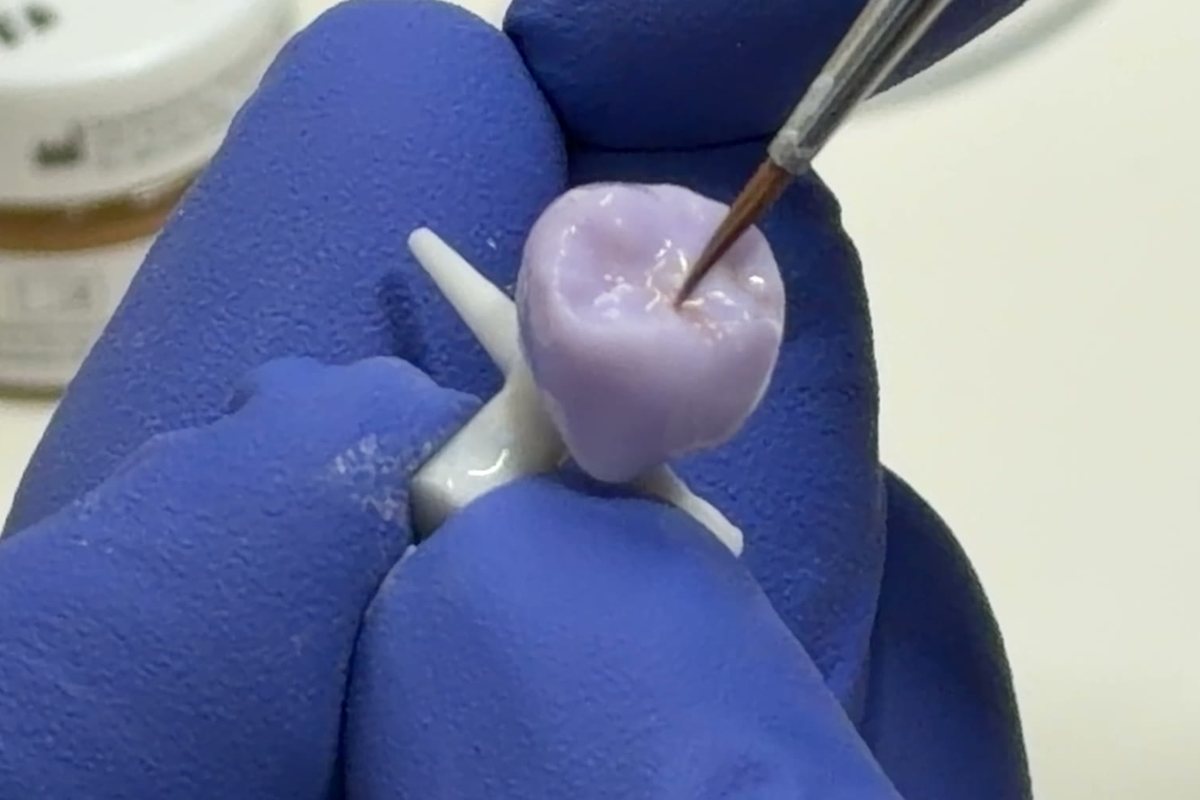
Veneers are made by our partner laboratory, Deutsche Technik DL in JLT, Dubai. The technicians work from the digital scan, the photos and the approved design, and layer or finish the ceramic by hand.
The veneers are tried in with a coloured try-in paste, checked in daylight and against your neighbouring teeth, and adjusted if needed. Only when you are happy are they bonded, one by one, with an adhesive technique that needs a dry field. Then the bite is checked in every movement of the jaw.
Well made ceramic veneers that are bonded to enamel are among the more durable cosmetic treatments in dentistry. Clinical studies often report that most porcelain veneers are still in good condition after ten years, and many last considerably longer. Composite veneers usually need polishing or repair sooner, often within five to seven years. These are general figures, and results can vary from person to person.
What decides how long your veneers last is less the brand of ceramic and more the conditions around it: how much enamel was kept, how the bite is balanced, whether you grind at night, how healthy your gums stay and how regularly you come for check-ups. This is the part of veneer work where prosthodontic training matters. A veneer that looks beautiful but is overloaded in the bite is a veneer that may chip.
Nobody can promise that a veneer lasts a lifetime. A ceramic veneer can chip, the gum can recede slightly with age and an edge can become visible, and after many years a veneer may need to be replaced. Small chips on ceramic can sometimes be polished or repaired with composite, larger damage means a new veneer. We will tell you what to expect for your teeth.
There is no standard number of veneers. Treatment may involve one tooth or several, depending on your teeth, your smile and your goals. The number depends on how many teeth you show when you smile broadly, which is visible on your photos, and on whether the neighbouring teeth already match in shade and shape.
A single veneer next to natural teeth is technically the most demanding case, because it has to match the neighbour in colour, translucency and surface texture. A typical example is a front tooth that darkened after an accident or a root canal. Sometimes the plan combines whitening of the natural teeth first and then a veneer that matches the new, lighter shade.
When you want several changes at once, for example whitening, a little alignment, bonding on the side teeth and veneers on the front teeth, it becomes a smile makeover with one design for the whole smile. If a front tooth is broken down, a crown may be the better solution, for example a ceramic crown, often made in one visit when the tooth is suitable.
Timeline
Consultation with Dr. Mohammad, photos, video, Primescan scan and, where useful, a facial scan. Gums, enamel and bite are checked. You receive a written plan with all costs.
The smile is designed with Digital Smile Design. If whitening, a cleaning or aligners come first, they are scheduled now.
Trial smile in your mouth. You decide on shape and length. If you are happy, preparation and temporary veneers often follow in the same visit.
Deutsche Technik DL in JLT makes the veneers from the scan and the approved design. This usually takes from several days to a couple of weeks, depending on the number of teeth.
Try-in, daylight check and bonding. The bite is adjusted and the surfaces polished.
Review of gums and bite. If you grind, the night guard is fitted.
Technology
Digital scan and simulation of the new smile.
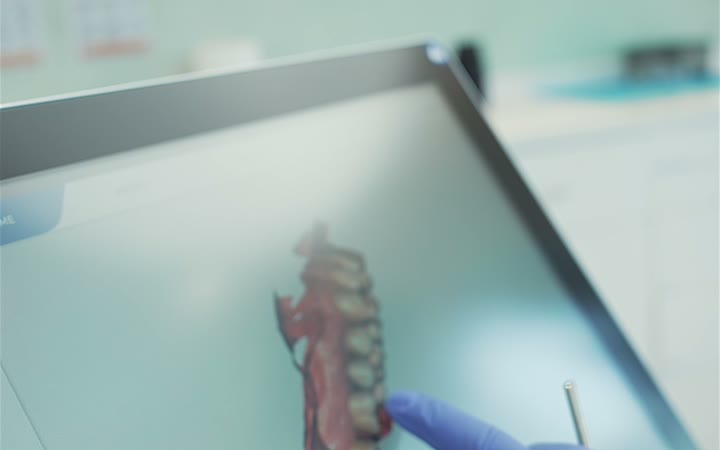
Digital impression instead of paste.
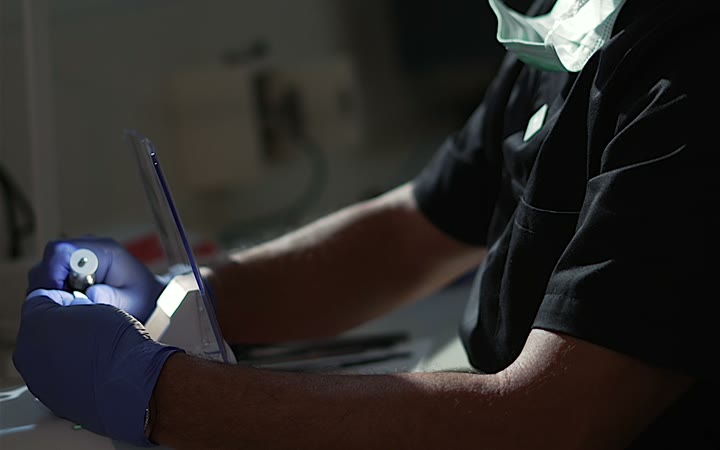
Veneers in e.max or feldspathic ceramic, layered by dental technicians.
Myth or fact
MythVeneers ruin your teeth.
FactA well planned veneer often needs only a thin layer of enamel, and sometimes none. How much is needed for you is visible on the trial smile.
MythVeneers always look fake.
FactA veneer looks artificial when it is too white, too thick or too uniform. Shade, translucency and shape are matched to your face, and you decide in daylight before bonding.
MythVeneers last forever.
FactWith good care many last ten years and longer, but they can chip or need replacing after many years. Regular check-ups help them last.
MythYou need a whole row of veneers.
FactThere is no standard number. It depends on your teeth and your smile, and sometimes whitening or bonding alone is enough.
More answers
Tap a question to open the answer. Anything else, ask us on WhatsApp.
Veneers are a well established treatment, but they are still work on living teeth. These are the points we discuss with you before you decide.
Three ways to change a front tooth. The right one depends on how much of the tooth is healthy and what you want to change.
| Composite bonding | Porcelain veneer | Crown | |
|---|---|---|---|
| Tooth preparation | Little or none | Usually minimal in suitable cases, some teeth need more or another treatment | The tooth is shaped on all sides |
| Visits | Usually one | Usually two to three, with a trial smile | One with CEREC, more for lab crowns |
| Look in daylight | Natural, depends on layering skill | Very natural translucency | Natural, covers the whole tooth |
| Stain resistance | Can stain over time | High | High |
| Typical lifespan | Often five to seven years before repair | Often ten years and longer | Often ten years and longer |
| Repair | Easy, more composite is added | Limited, sometimes polished or replaced | Usually replaced |
| Suited to | Chips, small gaps, edges | Colour, shape and length of healthy teeth | Broken, heavily filled or root treated teeth |
The cost depends on the number of teeth, the material and whether other treatment comes first. After the consultation you receive a written plan with all costs before anything starts, and it shows what is included, for example temporaries, reviews and a night guard. The first consultation is charged and credited towards your treatment if you go ahead. We do not publish prices, because a price without an examination would not be honest.
Ceramic veneers need little or sometimes no removal of enamel, and no prep veneers are possible in suitable cases. How much is needed for your teeth is shown at the trial smile. Where enamel is prepared, this cannot be undone, and veneers need care and may need replacing over the years.
Preparation is done under local anaesthetic, which helps control discomfort. Tell the dentist if you feel pain. For anxious patients there is nitrous oxide and computer controlled anaesthesia with the Wand.
With good care, many years. Ceramic veneers often last ten years and longer, composite usually needs repair sooner. The bite is checked so they are not overloaded, and a night guard is recommended if you grind.
The shade and translucency are matched in daylight and the final colour is set by hand in the laboratory. You decide on the trial before anything is bonded.
Usually two to three visits over a few weeks: consultation and design, trial smile and preparation, then try-in and bonding. Larger cases can need an extra try-in, and a short review follows. The preparation and bonding visits are longer appointments, and you hear how long when you book.
Yes. Matching a single veneer to natural neighbours is the most demanding case, and it is planned with particular care.
A Hollywood smile is a popular name, not a treatment. It usually means veneers on the visible teeth. We design the number of teeth, the shade and the shape to suit your face, not a fixed template.
Porcelain keeps its colour and polish for longer and suits larger changes. Composite needs little or no drilling, is done in one visit and is easier to repair. At German DentAllée veneers are made of ceramic. For small corrections we use composite bonding, not full composite veneers.
Whitening does not change the colour of ceramic. If you want lighter teeth, whitening is done before the veneers, so the veneers can be matched to the new shade.
Yes, composite bonding. Tooth coloured composite is shaped directly on the tooth in one visit, usually without drilling and without a laboratory.
Often yes. A gum contouring evens out the gum line, on its own or before veneers. Whether it suits you depends on the gum and bone, which we check first.
Veneers are usually treated as cosmetic by insurers. We do not bill insurers directly, but you receive the documents you need to submit a claim. Please check with your insurer before treatment. Payment is possible by cash, card, transfer, Tabby or Tamara.
Often yes. Depending on the cause, with composite, veneers or gum treatment. You see the plan at the consultation.

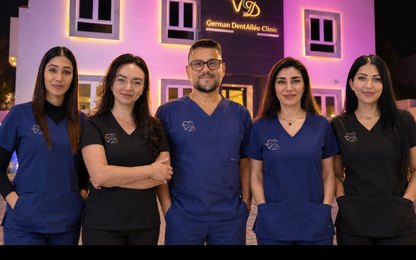
Why with Dr. Mohammad Shaker
A prosthodontist looks at more than the shade. He checks bite, gums and the load on each tooth, because a veneer that looks good but breaks in a year is not a good veneer.
Dr. med. dent. · M.Sc. Prosthodontics · DHA Specialist Prosthodontist · Specialist Senior Dentistry (GER 🇩🇪)
Meet Dr. Mohammad ShakerAlso at the clinic
You are welcome
One message is enough. No forms, no call centre. You write, the clinic answers in Arabic, English or German.
Villa 21B, La Mer · Jumeirah 1 · Dubai
Sat to Thu 9:00 to 18:00 · Fri closed