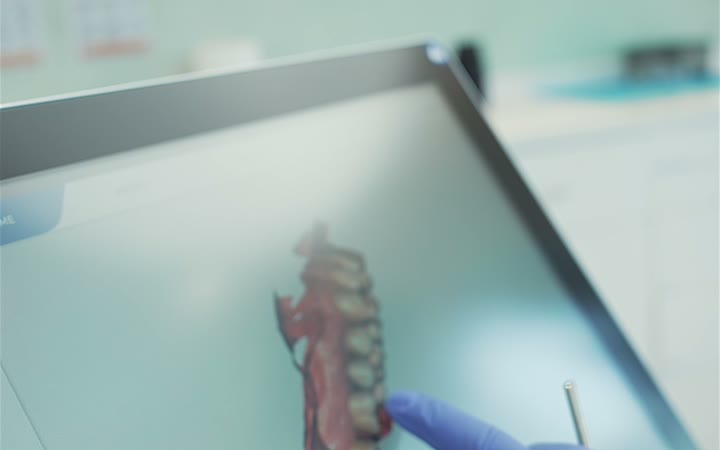
Primescan
Intraoral scanner by Dentsply Sirona. Replaces the impression tray.


CEREC · often one visit
With CEREC we can design high quality ceramic crowns for suitable teeth digitally, make them in our clinic and often fit them in one visit. Whether this is possible for you is clarified at the examination.
 With Dr. Mohammad Shaker.
Patient guide
A same-day crown is a ceramic crown that is designed, milled and fitted during one appointment, usually within a few hours. At German DentAllée in Jumeirah 1, the tooth is scanned with the Primescan, the crown is designed on screen, cut from a solid ceramic block by the Primemill and finished in the SpeedFire furnace, all in the same building.
For you that means no impression tray full of paste, no temporary crown that can come loose over the weekend and no second appointment two weeks later. If your tooth is suitable, you arrive with a broken or weak tooth and leave with the finished crown bonded in place.
The technique is called CEREC, a system by Dentsply Sirona that has been used in dental practices for decades. The machine is fast, but it does not make the clinical decisions. Whether your tooth needs a crown at all, how much tooth has to be shaped and which material suits your bite is decided by Dr. Mohammad Shaker, DHA Specialist Prosthodontist, before anything is prepared.
Not every tooth is a good candidate for a same-day crown, and this page explains honestly when it works well, when a crown from our partner laboratory is the better choice, and what to expect on the day.
Is this for you?
Step by step
Dr. Mohammad checks the tooth, the bite and, if needed, an X-ray. You hear whether a same-day crown is the right choice before anything is prepared.
The Primescan records the prepared tooth in a few minutes. No impression paste, which many patients find more comfortable.
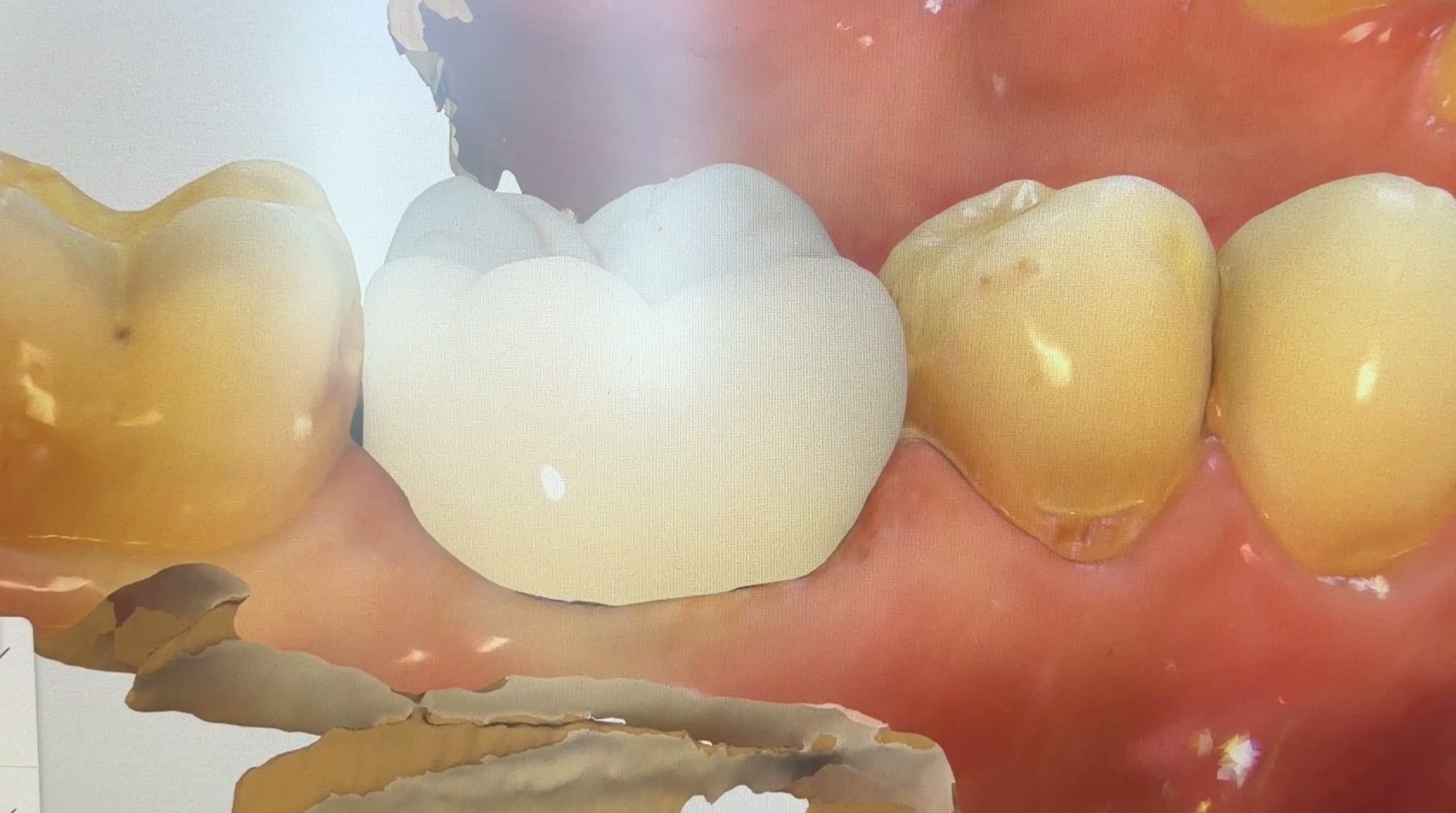
The crown is designed in 3D against your bite and your neighbouring teeth. You can watch.
The Primemill cuts the crown from a solid ceramic block. The SpeedFire oven fires and glazes it, then the final shade is added by hand.
The crown is tried in, adjusted and bonded. For suitable teeth, you leave with your final crown.
That depends on what your teeth need, so a price without an examination would not be honest. After the examination you receive a written treatment plan with all costs, before anything starts. Payment and insurance
What changes the cost
Not every tooth is suited to a crown in one visit, and some need more than one appointment. As with any crown, the tooth can be sensitive for a while afterwards.
Your next step
Or call 800 433 368 (toll free) · Sat to Thu 9:00 to 18:00 · Fri closed
A crown covers the whole visible part of a tooth, like a protective cap. It is not the first answer to every problem. Dr. Mohammad’s rule for every new patient is simple: tooth structure is precious, and we keep as much of it as we can. If a filling or a partial restoration is enough, that is what you hear first.
A crown becomes the right choice when the remaining tooth is too weak to carry chewing forces on its own. Typical situations are a large old filling with cracks around it, a cusp that has broken off, a tooth after a root canal treatment, or an old crown with dark edges, decay underneath or a shade that no longer fits your smile.
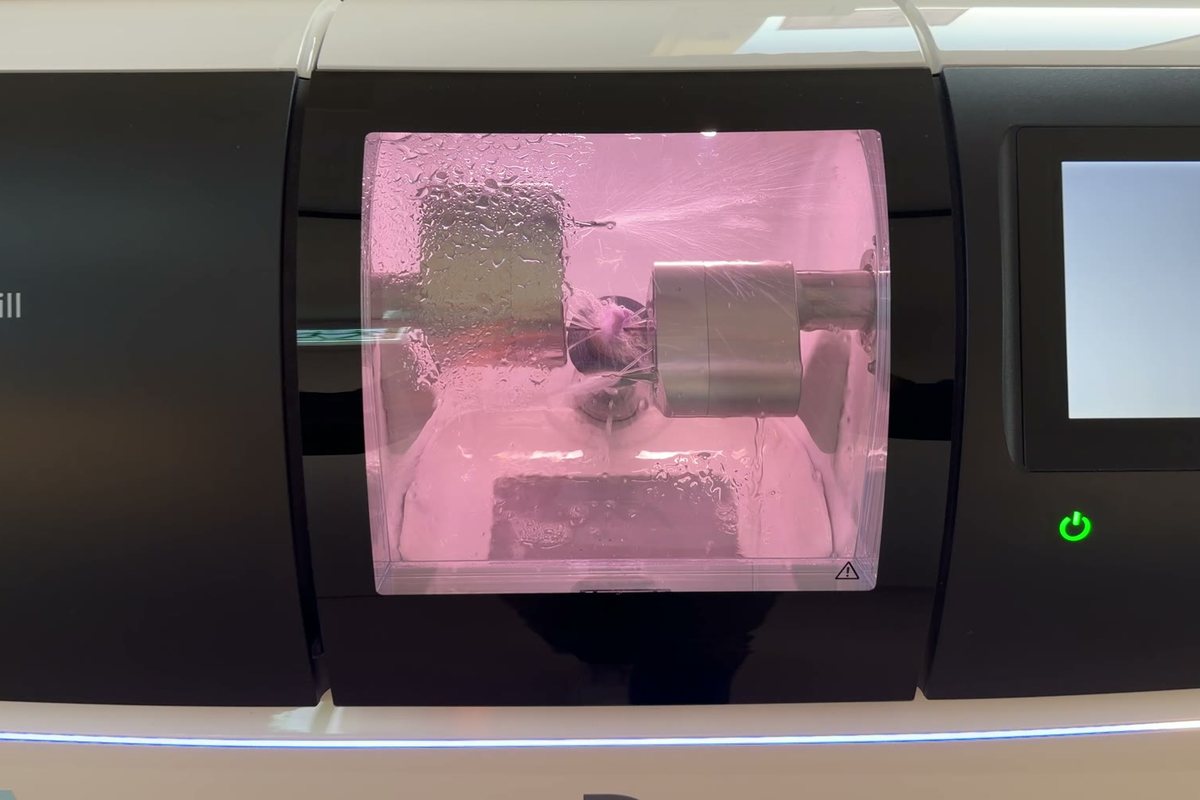
The whole chain happens in one place, and you can watch most of it. Scanner, milling unit and furnace are all in the clinic, so your crown never leaves the building.
Dr. Mohammad checks the tooth, the gum around it and your bite, and takes an X-ray where needed. You hear what will be done, how long it takes and what it costs before the tooth is touched.
Decay and old filling material are removed and the tooth is shaped so the crown can sit precisely. Where possible, the edges are kept above or at the gum line, which is better for the gum and easier to clean.
The Primescan intraoral scanner records the prepared tooth, its neighbours and the opposite teeth in a few minutes. No impression paste, which many patients find more comfortable.
The crown is designed in 3D against your real bite. Contacts with the neighbouring teeth, the chewing surface and the shape at the gum line are adjusted on the screen.
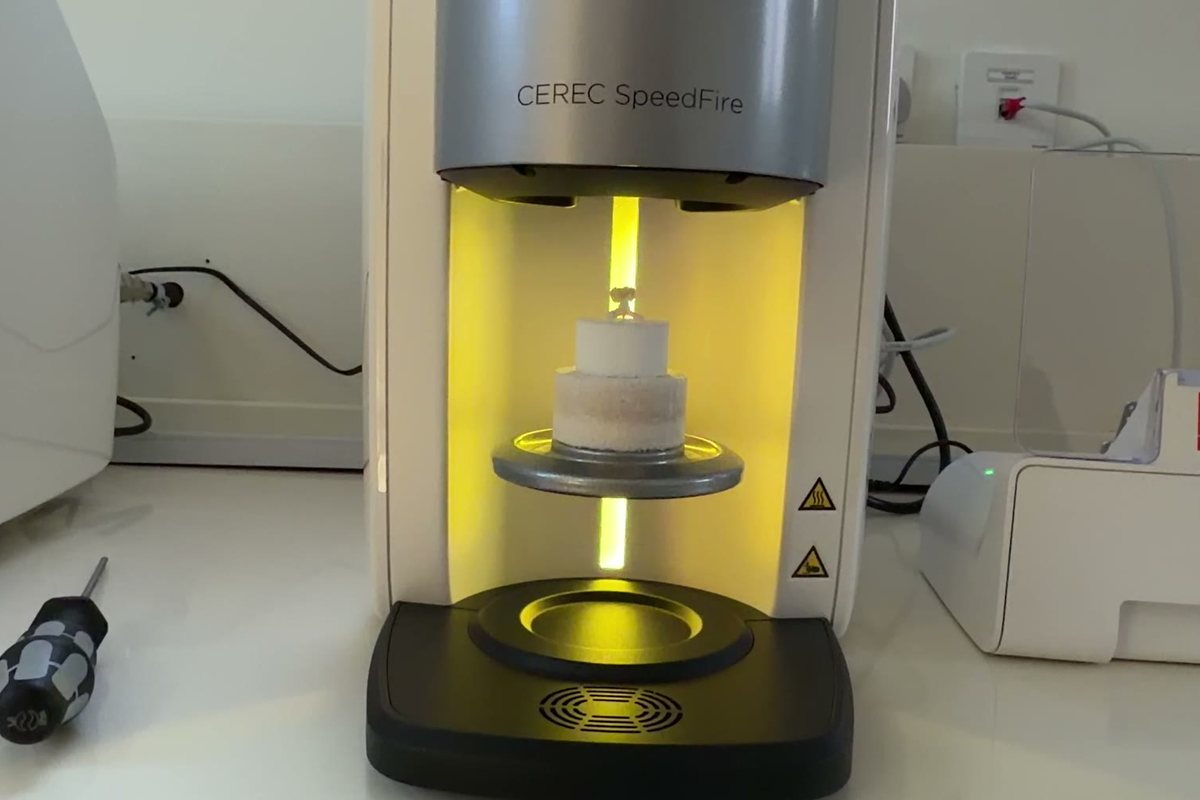
The Primemill cuts the crown from a solid ceramic block while you relax. The SpeedFire furnace fires and glazes it, and the final shade is added by hand so it matches the teeth next to it.
The crown is tried in, the bite is checked and fine-tuned, then the crown is bonded to the tooth. You leave with the final crown in place.
Same-day crowns work well for many single teeth, especially back teeth and teeth that need a strong, natural looking crown quickly. They are not automatically the right answer for every case, and we tell you so.
Some situations are better served by a crown made over several visits in our partner laboratory, Deutsche Technik DL in Jumeirah Lake Towers (JLT), Dubai. That is often the case for a bridge over a gap, for several front teeth where very fine layering of colour and translucency matters, for complex cases inside a full mouth rehabilitation, or when a different material such as zirconia suits the bite better.
Both routes start with the same digital scan, so you do not need paste impressions either way. The difference is who mills and finishes the crown and how many appointments you need. Our page on crowns and bridges explains the lab options in detail.
Very deep decay under the gum, a tooth with too little remaining structure or an unresolved infection can also change the plan. In those cases the tooth may first need a build-up, gum treatment or a root canal, and the crown follows when the tooth is ready.
A well made ceramic crown on a healthy, well cleaned tooth can serve for many years. Published studies on chairside ceramic crowns report good survival over many years. Results depend on the material, the tooth and how long patients were followed, and no study can tell you how long your own crown will last. That depends on your teeth, your bite and your habits, and results can vary from person to person.
The factors that matter most are the ones you and the clinic can influence together. A crown on a tooth with good gum health and regular cleanings has better chances than one in a mouth with active gum disease. Grinding at night puts a heavy load on any ceramic, which is why a custom night guard is often recommended for grinders. Biting on ice, nut shells or bottle caps is a common reason for chips.
Dr. Mohammad has a scientific background in this very question: his 2008 publication in the journal Dental Materials examined crack growth in all ceramic restorations. That is why the thickness of the ceramic, the shape of the preparation and the bite are checked so carefully before a crown is bonded.
Filmed in the clinic
Scan, design, milling and firing, filmed in Jumeirah.
Many single teeth that need a crown can be restored the same day. The decision is made at the examination, and you hear the reason either way. If the answer is a lab crown or a different treatment, nothing is prepared on that day until you have seen the plan and agreed to it.
A back tooth with a large filling or a broken cusp, a root treated molar or premolar, an old crown that needs replacing on a single tooth, and many front teeth where a strong, natural shade is needed without a long wait.
Bridges that replace a missing tooth, a row of front teeth with very high aesthetic demands, crowns that need a zirconia framework because of very heavy bite forces, and cases planned as part of a larger rehabilitation.
A tooth with active infection, gum disease that is not under control, decay far below the gum line, or a root that is cracked vertically. A cracked root usually cannot be saved with a crown, and an implant or another option is discussed instead.
Plan for a few hours in the clinic. When you book, we tell you how long to expect for your tooth. The active treatment time in the chair is similar to a normal crown preparation. While the crown is being milled and fired, you can sit up, have a drink in the waiting area or watch something on the screen in the ceiling.
The tooth is numbed with a local anaesthetic. For patients who are nervous about injections, the clinic uses computer controlled anaesthesia with the Wand, which delivers the anaesthetic slowly and evenly. Nitrous oxide is available if you are anxious, see relaxed treatment.
Because the tooth is numbed, you usually feel pressure and vibration rather than pain. If anything feels sore, tell us and more anaesthetic can be given. After the anaesthetic wears off, the gum around the tooth can feel tender for a day or two, and the tooth may feel slightly different when you bite until you get used to the new shape. That usually settles quickly. If the bite feels high after the numbness is gone, call us and it is adjusted in a few minutes.
Because there is no temporary crown, there is also no period of eating carefully around a provisional, and no risk of a temporary coming off before your second appointment.
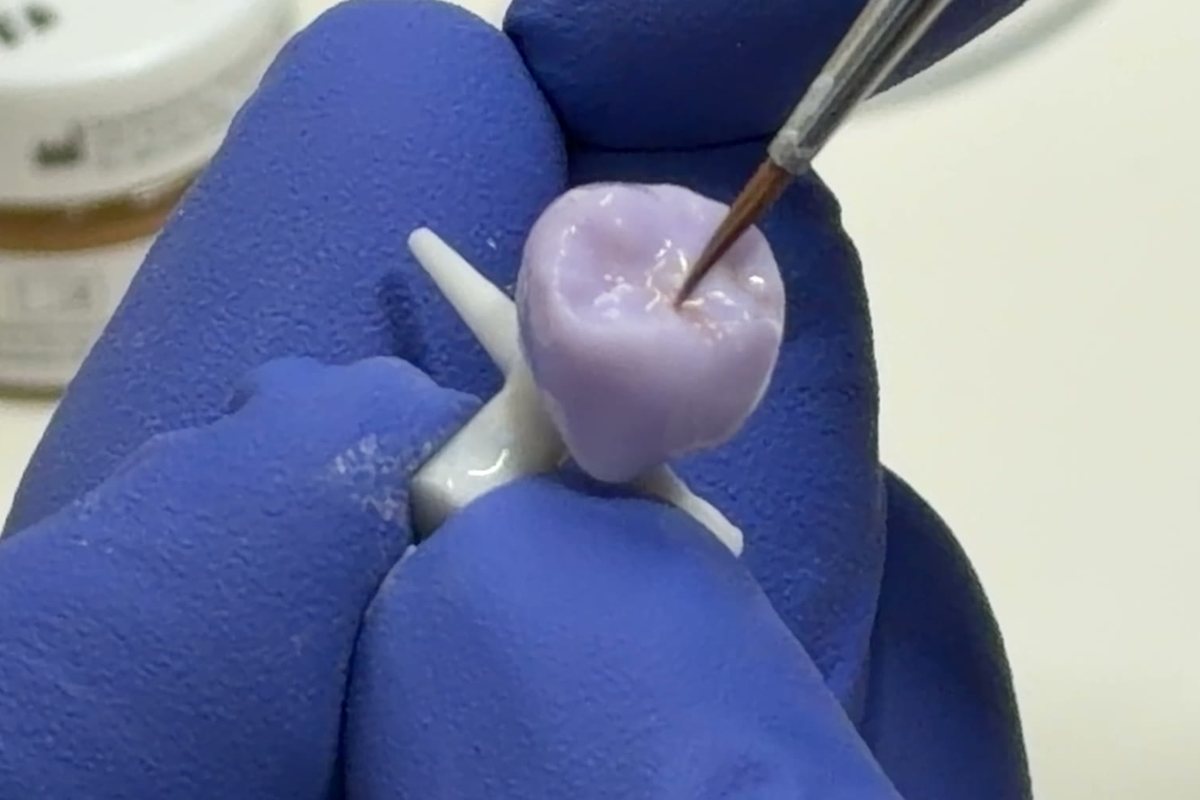
Same-day crowns are milled from industrially made ceramic blocks. Because the block is produced under controlled conditions, the material is very uniform and dense, with no air bubbles from hand mixing. It is the same class of dental ceramic that laboratories use.
The shade is first chosen with the VITA shade guide. After milling, the crown is characterised by hand: subtle colour at the neck, translucency at the edge, small details that make it look like a tooth and not like a piece of ceramic. Then it is glazed in the SpeedFire furnace.
For back teeth the main aim is strength and a precise bite. For front teeth the aim is to blend in with the natural neighbours, which is the most demanding task in crown work. Where the look of a front tooth needs more layered ceramic than a block can offer, a lab crown is the honest recommendation, and you hear that at the planning stage.
Metal free ceramic does not show a grey edge at the gum line and lets light pass through, which is part of why it looks natural.
Timeline
Short check, X-ray if needed, and the plan for the day explained.
Local anaesthetic, preparation of the tooth and the digital scan.
The crown is designed on screen against your bite.
The crown is milled, fired, glazed and the shade is finished by hand. You can take a break.
Try-in, bite check and bonding. You leave with the final crown.
Mild tenderness of the gum is possible. Call us if the bite feels high.
Technology
Intraoral scanner by Dentsply Sirona. Replaces the impression tray.
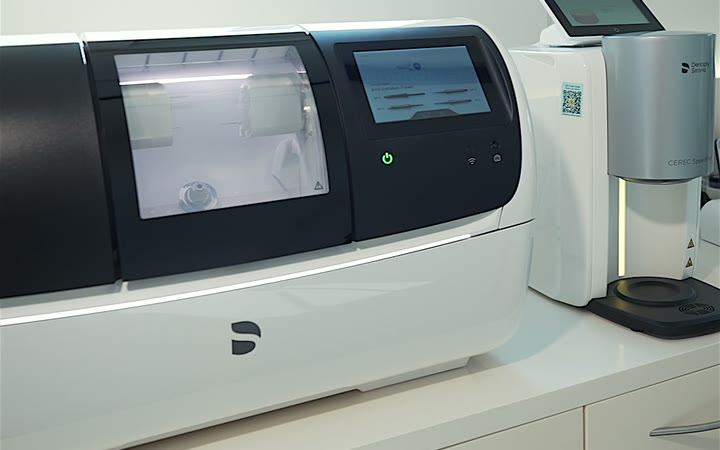
Milling unit in the clinic. The crown is cut while you wait.
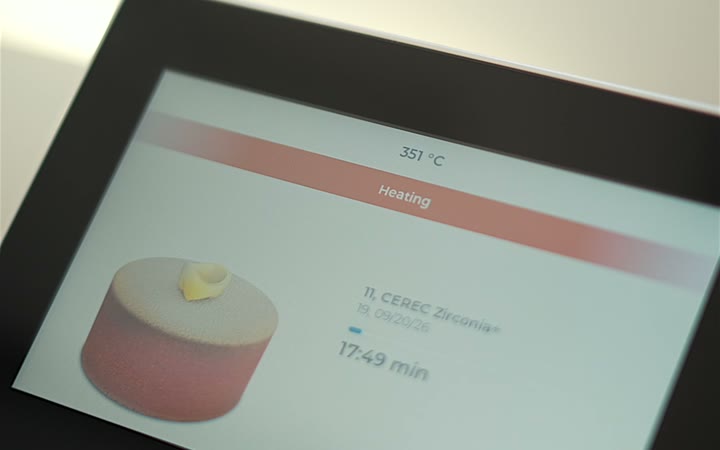
Compact ceramic furnace for firing and glazing on the same day.
Myth or fact
MythA crown made in one day cannot be as good as one from a lab.
FactThe ceramic block is made under industrial conditions and belongs to the same material class labs use. The quality depends on the preparation, the design and the bite check, not on how many days it took.
MythA crown means the tooth is dead.
FactNo. Many crowned teeth have a healthy nerve. Root canal treatment is needed when the nerve is irreversibly inflamed or infected. Occasionally this can also develop after a tooth has been prepared for a crown.
MythSame-day crowns are for back teeth.
FactMany front teeth can also get a same-day crown. For very demanding front tooth cases, a layered lab crown can be the better choice, and you hear that at the planning stage.
MythOnce a tooth has a crown it can never decay.
FactThe crown itself cannot decay, but the tooth underneath can, especially at the edge. Daily cleaning and check-ups still matter.
More answers
Tap a question to open the answer. Anything else, ask us on WhatsApp.
A crown is a routine treatment, but it is still a procedure on a living tooth, and it is fair to know what can happen. How likely each point is depends on the tooth and the treatment, and most can be handled.
Both are good crowns. The difference lies in the number of visits, the material options and the type of case. Your plan tells you which one fits your tooth.
| Same-day CEREC crown | Crown from the partner lab | |
|---|---|---|
| Visits | One appointment, usually a few hours | Usually two or more visits |
| Temporary crown | Not needed | Worn between the visits |
| Impression | Digital scan with Primescan | Digital scan with Primescan |
| Material | Solid ceramic block milled in the clinic | Ceramic or zirconia, chosen for the case |
| Ideal for | Single crowns, inlays, onlays, partial crowns | Bridges, several front teeth, complex and larger cases |
| Shade | Measured with VITA, finished by hand in the clinic | Layered by dental technicians |
One appointment, usually a few hours including milling and firing. When you book, we tell you how long to plan for your tooth.
Strength depends on the type of ceramic, its thickness, the preparation, the bonding and your bite, not only on where the crown was milled. A CEREC crown is milled from a solid block of dental ceramic. Which route suits your tooth and your bite is decided at the examination.
Many single teeth can, not all. If your tooth is better served by a crown made over several visits, you hear that before anything is prepared.
The tooth is numbed with a local anaesthetic, so you usually feel pressure and vibration rather than pain. Tell us if anything feels sore. The gum can be tender for a day or two afterwards.
For a suitable tooth usually not, because the final crown is made and bonded in the same visit. If more than one appointment is needed, you are told before the treatment.
Yes, once the numbness has worn off. The crown is already bonded, so you can usually chew normally. Follow any specific advice you receive on the day.
Yes. When the tooth does not need a full crown, a ceramic inlay, onlay or partial crown is scanned and milled the same way.
Often yes. For very demanding front tooth cases, where several teeth are restored or fine layering is needed, a lab crown can be the better choice.
Often yes. Call us, and if the tooth is suitable it can be restored in the same visit. If the nerve is affected, pain relief and a root canal may come first. See our emergency page.
With good care and regular check-ups, many years. Grinding, gum health and your cleaning habits make the biggest difference, and results vary from person to person.
Usually yes, if the tooth underneath is healthy enough. The old crown is removed, the tooth is checked and a new ceramic crown is made in the same visit where possible.
We do not bill insurance companies directly. You pay at the clinic and receive all documents to claim the costs from your insurer. Whether and how much is reimbursed depends on your policy, so please check with your insurer before treatment. Payment by cash, card, transfer, Tabby or Tamara.
It depends on the tooth and what it needs before the crown. After the examination you receive a written plan with all costs before anything starts.

Why with Dr. Mohammad Shaker
Dr. Mohammad completed the CEREC curriculum (GER 🇩🇪) of the DGCZ (2020 to 2022) and spent twenty years in prosthodontics, the specialty that decides how a crown has to fit and bite. The machine is fast. The judgement behind it comes from experience.
Dr. med. dent. · M.Sc. Prosthodontics · DHA Specialist Prosthodontist · Specialist Senior Dentistry (GER 🇩🇪)
Meet Dr. Mohammad ShakerAlso at the clinic
You are welcome
One message is enough. No forms, no call centre. You write, the clinic answers in Arabic, English or German.
Villa 21B, La Mer · Jumeirah 1 · Dubai
Sat to Thu 9:00 to 18:00 · Fri closed