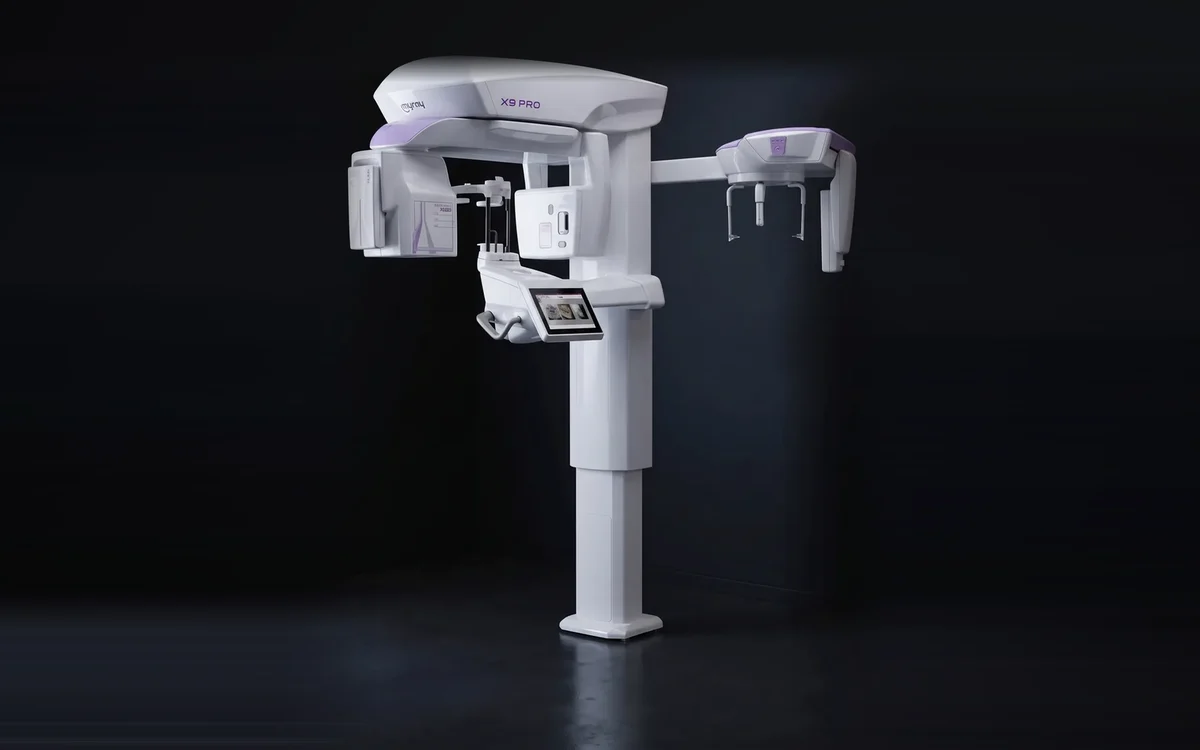
MyRay Hyperion X9 Pro
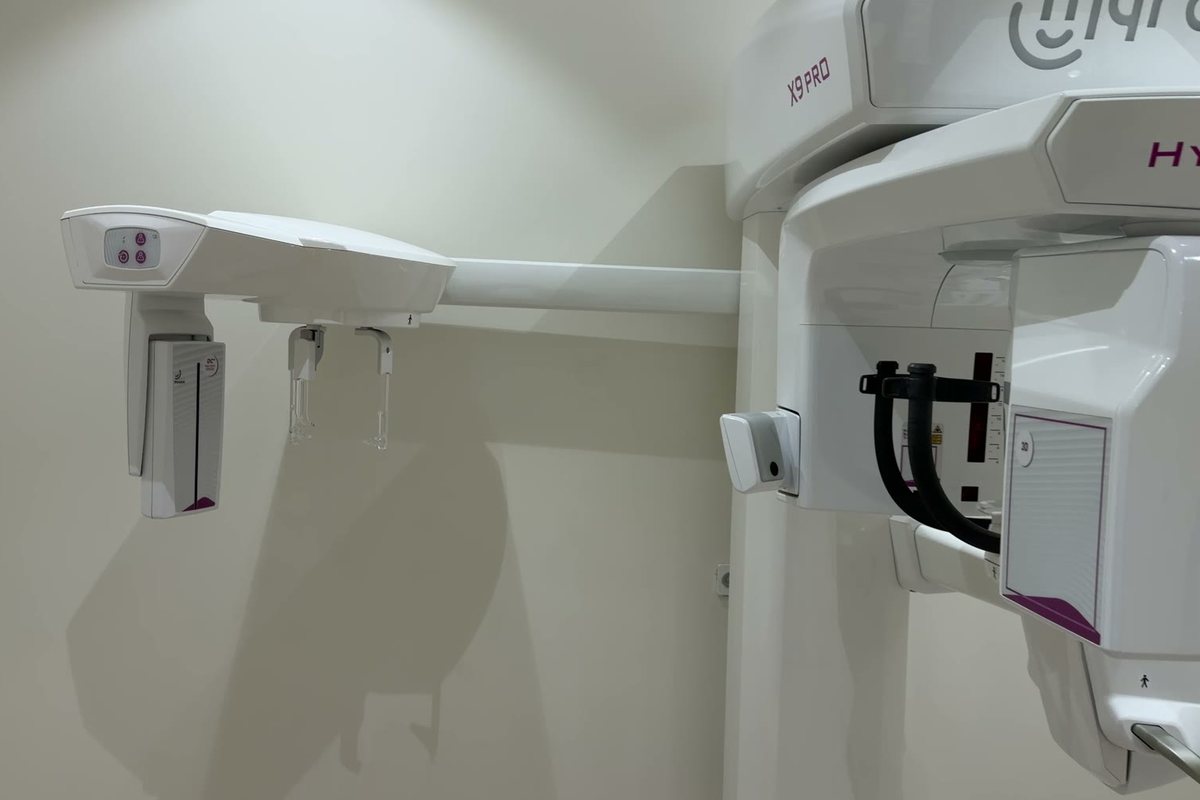
Panoramic, cephalometric and cone beam imaging and a 3D facial scan without X-rays, in one device. One 3D X-ray scan takes 6.4 seconds.


Examination · diagnostics
We take time for a careful examination of your teeth, gums and bite. You receive a clear assessment and a transparent treatment and cost plan.
 With Dr. Mohammad Shaker.
Patient guide
A dental check-up is a structured examination of your teeth, gums, bite, jaw joints and the soft tissues of your mouth, with X-rays only where they add information. At the end you know what is healthy, what needs watching and what needs treatment, and you receive a written plan with all costs before anything is done.
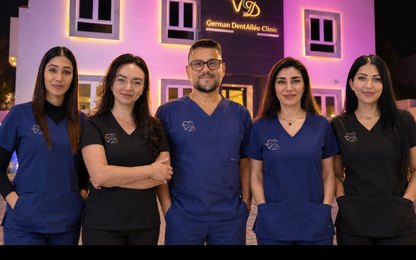
At German DentAllée Clinic in Jumeirah 1, the first visit is longer than a routine check, because we want to understand your medical history, your previous treatment and what you expect. Dr. Mohammad treats in Arabic, English and German, and the team also speaks Hindi, Turkish and Albanian. Female patients can be examined by a female doctor on request.
Many patients in Dubai come with records from several countries, or with a plan from another clinic they are unsure about. A thorough check-up brings it together in one place. This guide explains what happens step by step, which X-rays are used when, what to bring and how often you should come back.
Is this for you?
Step by step
Medical history, medication and what brings you here. You tell us what bothers you and what you would like.
Teeth, fillings, crowns, gums, bite, jaw joints, tongue, cheeks and palate, tooth by tooth.
Bitewings, a panoramic X-ray or a 3D scan, chosen for your question, not by routine.
Findings on screen with intraoral photos and X-rays, in plain words.
A written plan with options, order and all costs. Treatment starts only when you have decided.
That depends on what your teeth need, so a price without an examination would not be honest. After the examination you receive a written treatment plan with all costs, before anything starts. Payment and insurance
What changes the cost
X rays are only taken when they are medically needed. An examination is the basis for every decision, and it does not commit you to any treatment.
Your next step
Or call 800 433 368 (toll free) · Sat to Thu 9:00 to 18:00 · Fri closed
You can book by WhatsApp or phone. Urgent cases get priority, and we try to see patients in pain the same day. When you arrive, the front desk welcomes you and takes your details. The clinic is on the ground floor of a villa on La Mer, with its own parking, wheelchair access and a separate waiting area for women.
It starts with you. What brings you here, what bothers you, what you would like for your teeth. Then your medical history: illnesses, medication, allergies, pregnancy, previous surgery. Medication matters more than many patients think, for example blood thinners, bone medication or medication that causes a dry mouth.
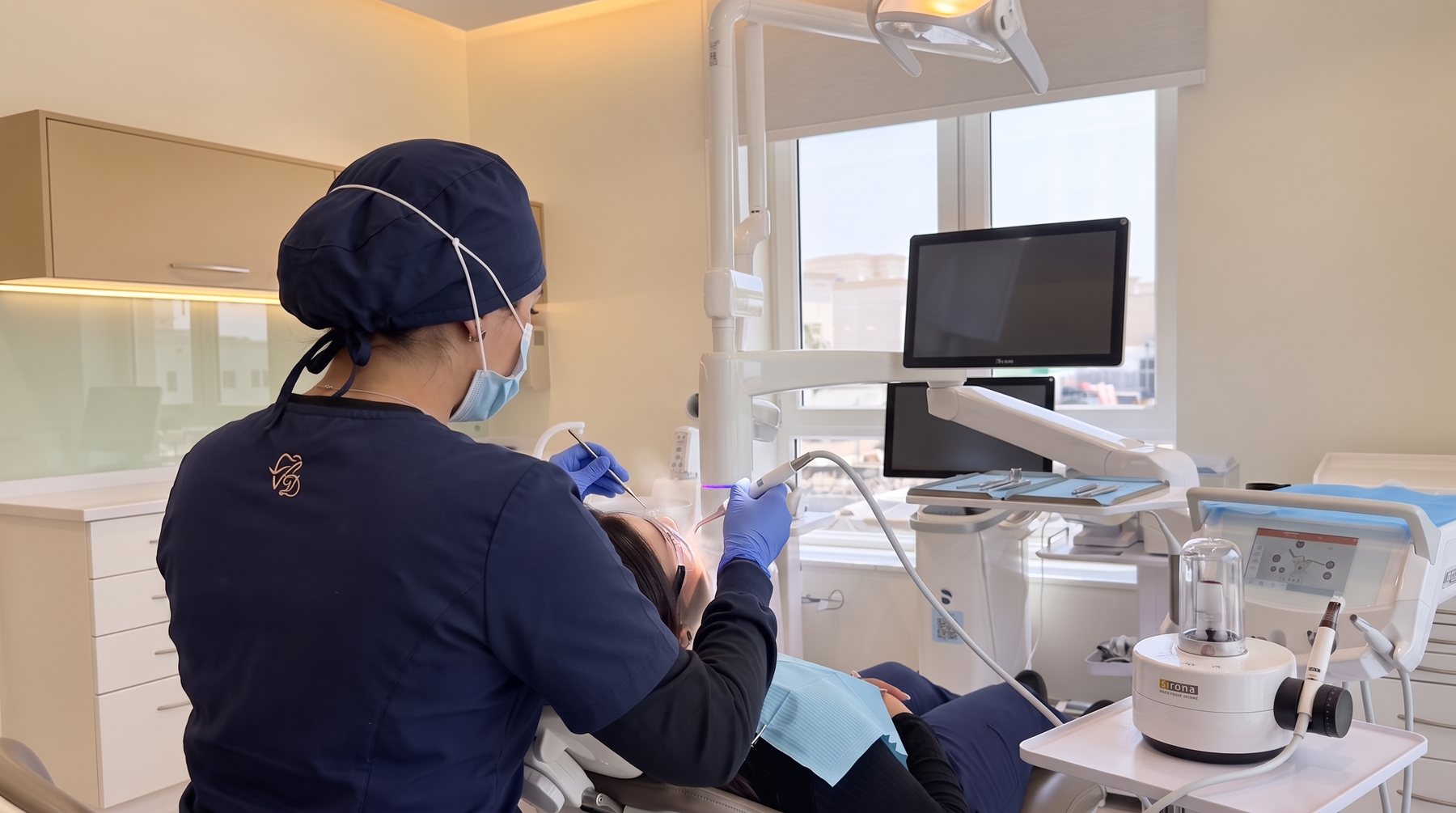
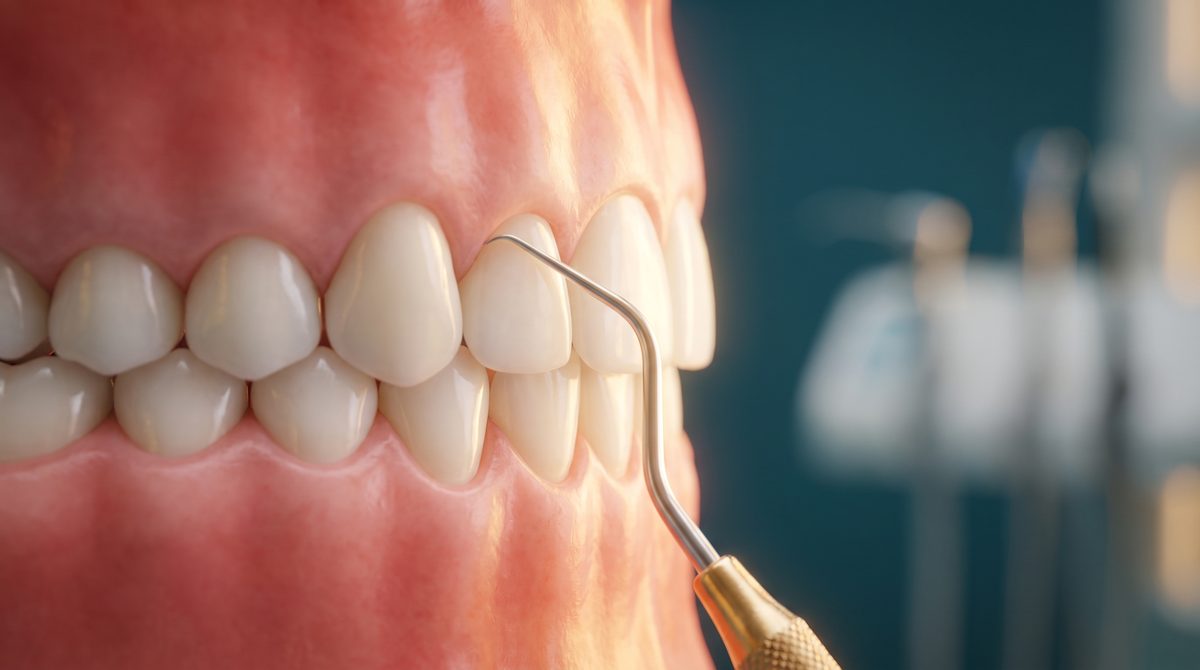
Every tooth is checked: decay, cracks, wear, old fillings and crowns, the fit of bridges or dentures. The gums are examined and, where needed, measured. The bite and the jaw joints are checked for clicking, pain or signs of grinding. Tongue, cheeks, lips, palate and the floor of the mouth are examined for changes, as part of an oral cancer screening.
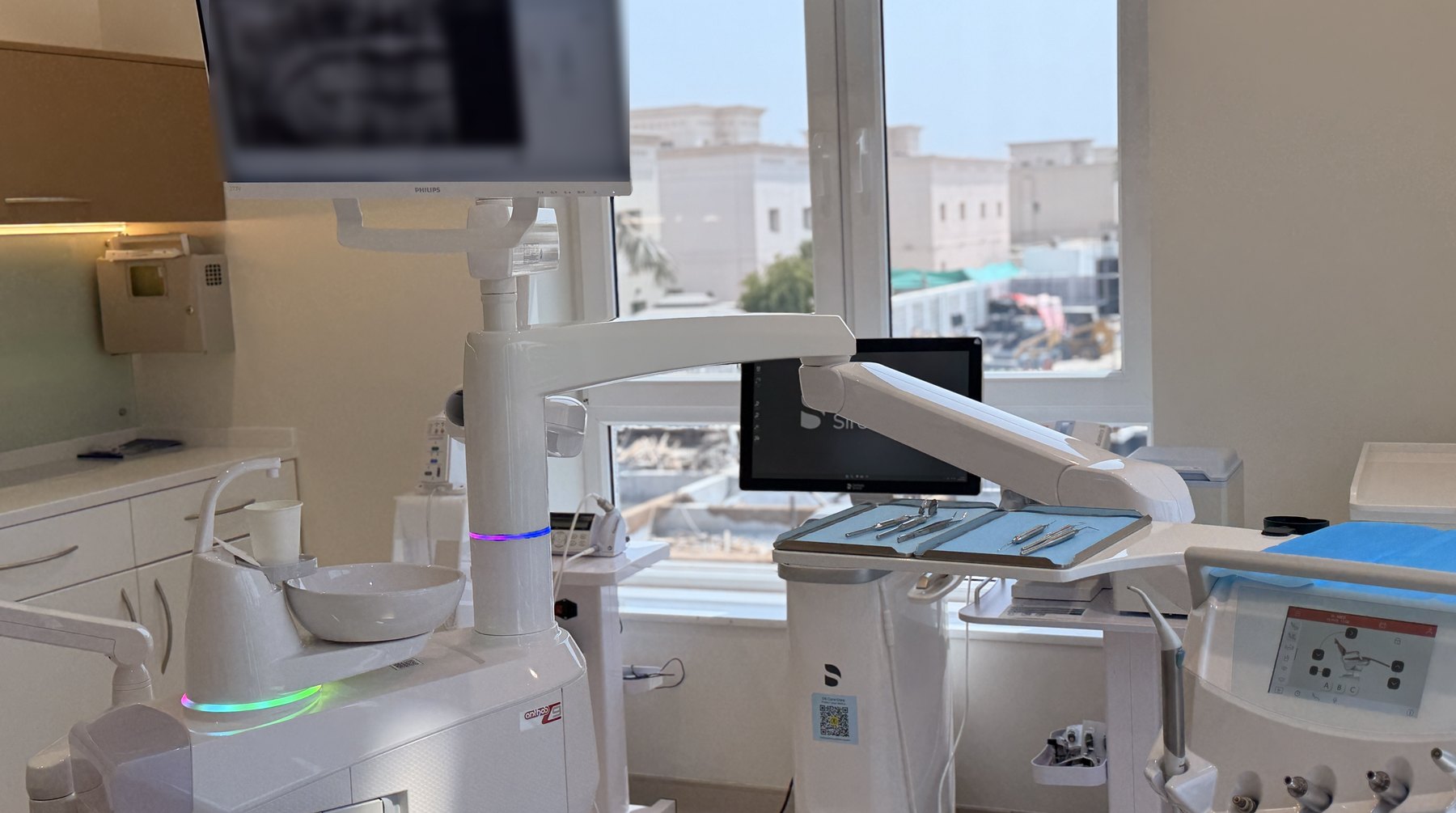
If X-rays are needed, they are taken in the clinic and shown to you on screen straight away. Intraoral photos make small findings visible that are hard to describe in words.
The findings are explained in plain words, with options where there are options. You receive a written plan with the order of treatment and all costs. Nothing is started before you have decided, and you are welcome to take the plan home and think about it.
X-rays show what the eye cannot see: decay between teeth, under fillings and crowns, infection at the root tip, bone levels and teeth that have not come through. They are not taken by routine. Each image is chosen for a question, and only when it is clinically needed. If you are pregnant or think you might be, tell us. Your dentist assesses whether an image is clinically needed and keeps the exposure as low as possible.
Small images of the back teeth, upper and lower together. The number depends on the areas that need to be assessed. They show early decay between teeth and under old fillings, and the bone level between the teeth. For adults they are often taken every one to two years, depending on the risk of decay.
A small image of one or two teeth including the whole root. Used for pain, a suspected infection or before and after a root canal treatment.
One image of both jaws, all teeth, the jaw joints and part of the sinuses. Useful at a first visit when there are many restorations, for wisdom teeth, before implants and as an overview after years without a check-up. Read our OPG X-ray guide.
A side view of the skull used for orthodontic planning and some prosthodontic cases.
A three dimensional image of bone, roots and the canals in the bone that carry the nerves, on our MyRay Hyperion X9 Pro. One scan takes 6.4 seconds. The field of view is chosen for the question, from a small area to the whole arch or the jaw joints. It is used for implant planning, wisdom teeth close to the nerve, complex root canals and jaw joint questions. Read our CBCT scan guide.
Gum disease is one of the most common reasons adults lose teeth, and it rarely hurts until late. That is why the gums are part of every check-up. A screening of the gums shows quickly whether they are healthy. If there are signs of disease, a full periodontal status is made: every tooth is measured at six points, and pocket depth, bleeding, recession and loose teeth are recorded.
The numbers are written down so the next visit can show whether things are better or worse. If treatment is needed, you see it on the chart, not just as a recommendation. More about this on our pages on gum disease treatment and receding gums.
For many patients a check-up is enough. When you are planning a larger treatment, digital records help us plan precisely and help you understand the options.
A digital impression with the Primescan intraoral scanner records your teeth in 3D in minutes, without impression paste. A facial scan with the MyRay Hyperion X9 Pro records your face in 3D without X-rays, so a new smile can be designed to fit your face with Digital Smile Design. Together with X-rays or a 3D scan, these records make it possible to see a preview of the planned result before anything is prepared, for example before veneers or crowns. The preview shows the plan, it is not a guarantee of the final result. You can see all devices on our technology page.
Your records stay in the clinic, so later visits can be compared with today. If you need them for another doctor or your insurer, ask us.
Filmed in the clinic
Your first visit at German DentAllée in Jumeirah.
Many patients come to us with a plan from another clinic, sometimes with a long list of crowns or implants, and are unsure. A second opinion is a normal part of good medicine. Bring the plan, X-rays and reports, or send them on WhatsApp first. A video consultation is also possible. An online review of your records can help, but it cannot replace an examination, gum measurements or images that are clinically needed.
We examine your teeth ourselves and tell you what we see, including when we would recommend less treatment. Dr. Mohammad’s guiding sentence is that tooth structure is precious and should be kept wherever possible: fillings where fillings are enough, a crown only where a crown is needed. We do not comment on other clinics. We tell you what your teeth need.
For most adults with healthy teeth and gums, a check-up once or twice a year, usually combined with a professional cleaning, is a good rhythm. Your dentist sets the interval after seeing your mouth.
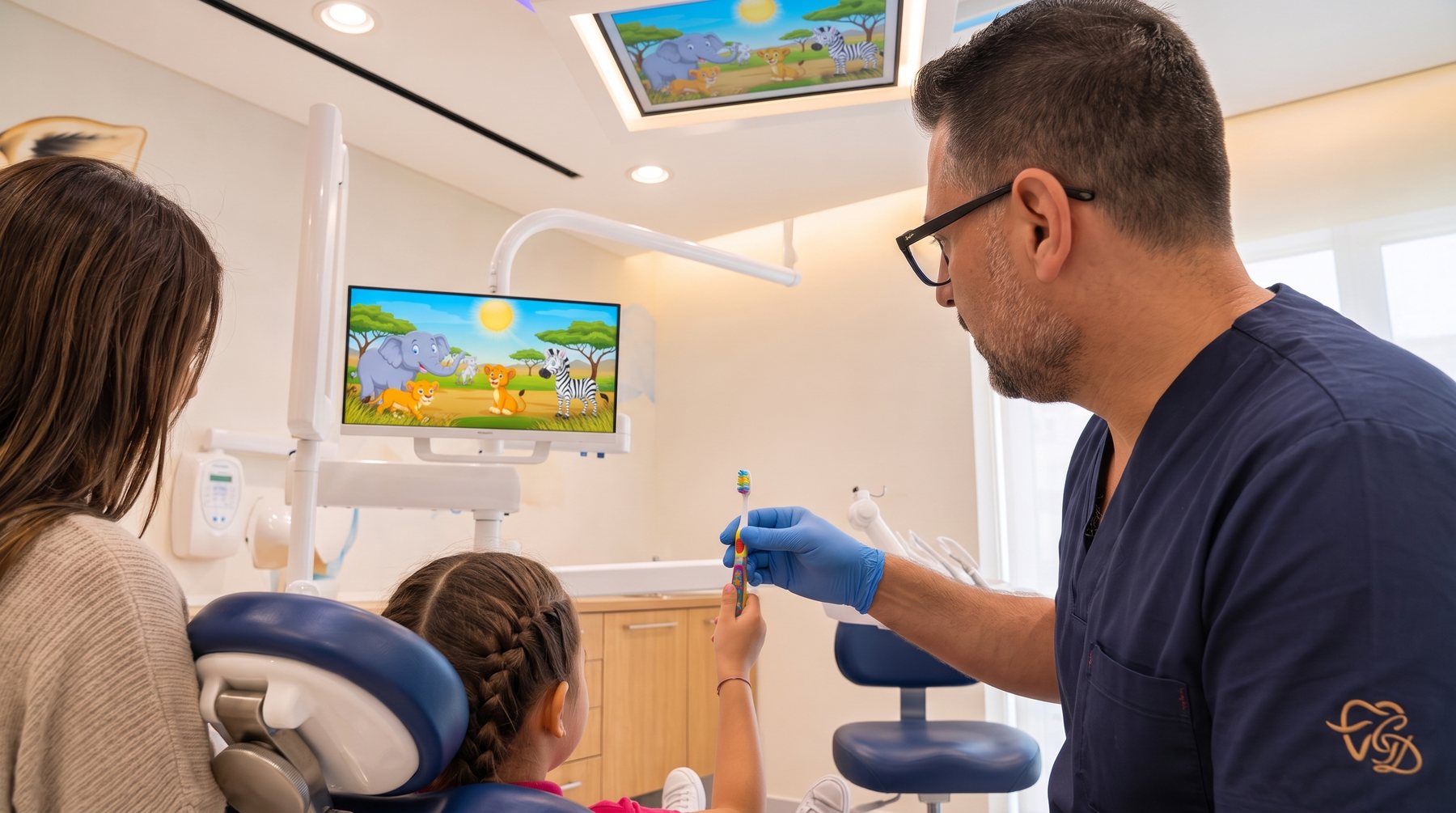
Children are seen from the first tooth. Their first visits are mostly about getting comfortable with the chair and the team. Contact us to plan appointments for several family members, see family dentistry.
A little preparation helps the first visit go smoothly and helps us collect the information we need.
Technology
Panoramic, cephalometric and cone beam imaging and a 3D facial scan without X-rays, in one device. One 3D X-ray scan takes 6.4 seconds.
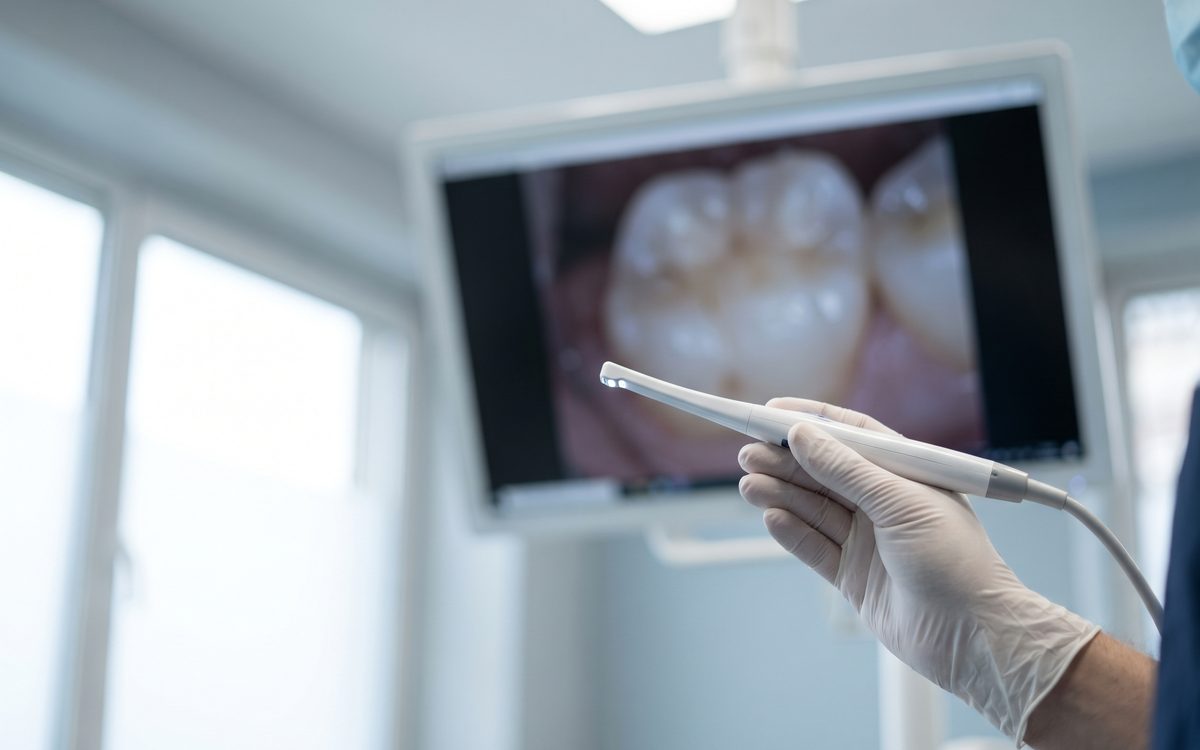
Close photos of your teeth on screen, so you see what we see.
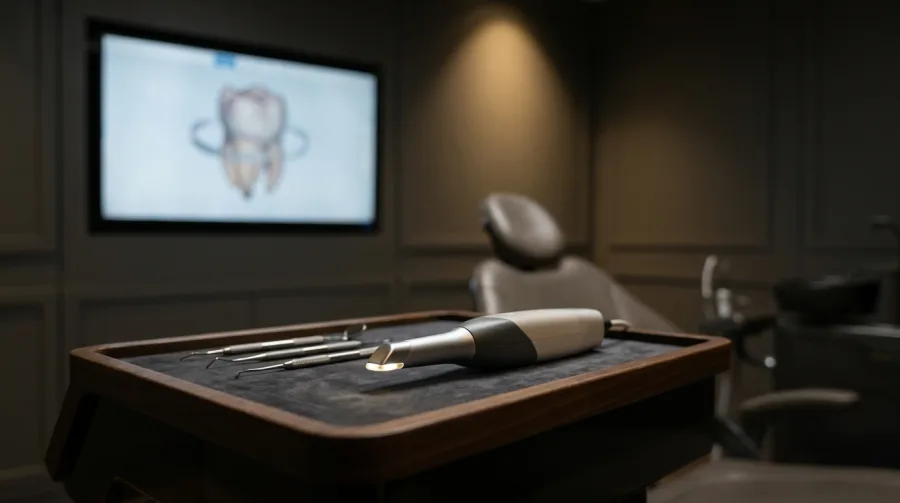
Your teeth in 3D in a few minutes, without impression paste.
More answers
Tap a question to open the answer. Anything else, ask us on WhatsApp.
A check-up itself carries practically no risk. Measuring the gums can feel tender and cause slight bleeding for a short time, especially when they are inflamed. Tell us if anything hurts. Patients mostly ask about X-rays, so here are the facts in plain words.
Not every appointment is the same. This is what each one includes.
| First visit | Regular check-up | Emergency visit | |
|---|---|---|---|
| Purpose | Full picture of your mouth and a plan | Find changes early | Find and treat the cause of pain |
| Time | Longer appointment | Shorter, often with a cleaning | Priority for patients in pain |
| Medical history | In full | Updates only | Focused on the problem |
| Typical images | Panoramic X-ray or bitewings if needed | Bitewings every 1 to 2 years, by risk | Targeted X-rays where needed, a 3D scan only if they cannot answer the question |
| Result | Written plan with all costs | Findings and next recall | Assessment, treatment aimed at relieving pain and a plan for further care |
Medical history, examination of teeth, gums, bite, jaw joints and soft tissues, X-rays where needed, and an explanation of the findings with a written plan.
No. The first consultation is charged and credited to your treatment if you go ahead.
Plan for a longer appointment than a routine check, because we take a full medical history and explain the findings.
Your Emirates ID or passport, a list of your medication, and recent X-rays or reports if you have them.
No. X-rays are chosen for a reason. Bitewings are often taken every one to two years in adults, depending on the risk of decay.
A panoramic X-ray that shows both jaws, all teeth, the jaw joints and part of the sinuses in one image.
Only if it changes the plan, for example for implants, wisdom teeth close to the nerve, complex root canals or jaw joint questions.
Every X-ray involves radiation, so an image is taken only when it is clinically needed. If you are pregnant, tell us. Your dentist assesses whether an image is clinically needed and keeps the exposure as low as possible.
Most adults once or twice a year, often together with a cleaning. With gum disease, implants or a high risk of decay, more often. Your dentist sets the interval for your risk.
Yes. Tongue, cheeks, palate and the floor of the mouth are checked for changes as part of the examination.
Yes, at the clinic or online. Send us your plan, photos and X-rays on WhatsApp. A video consultation is also possible. An online review cannot replace an examination at the clinic.
Yes, on request. There is also a separate waiting area for women.
We do not bill insurance companies directly. You pay at the clinic and receive all documents to claim the costs from your insurer. Reimbursement depends on your policy and your insurer’s approval.
Cash, card, bank transfer, or in instalments with Tabby or Tamara.

Why with Dr. Mohammad Shaker
Dr. Mohammad Shaker, DHA Specialist Prosthodontist, practised for fifteen years in his own practice in Germany and was an examiner in prosthodontics at a German university hospital. He completed a cone beam CT curriculum in 2008. A check-up with him is structured, documented and explained, so you understand your own mouth.
Dr. med. dent. · M.Sc. Prosthodontics · DHA Specialist Prosthodontist · Specialist Senior Dentistry (GER 🇩🇪)
Meet Dr. Mohammad ShakerAlso at the clinic
You are welcome
One message is enough. No forms, no call centre. You write, the clinic answers in Arabic, English or German.
Villa 21B, La Mer · Jumeirah 1 · Dubai
Sat to Thu 9:00 to 18:00 · Fri closed